AI tools now play a central role in real estate marketing by scoring leads, targeting ads, preparing listing visuals, writing content, and managing early conversations with buyers and sellers. These capabilities have expanded quickly as AI in real estate continues to mature. When applied strategically, AI real estate marketing systems can analyze user behavior, detect intent signals, and streamline listing preparation with less manual effort.
This article explains how these systems support common marketing tasks such as identifying stronger leads, choosing suitable audience groups for ads, preparing listing descriptions, improving photos and videos, and handling early inquiries from buyers and sellers.
How AI Supports Lead Generation in Real Estate
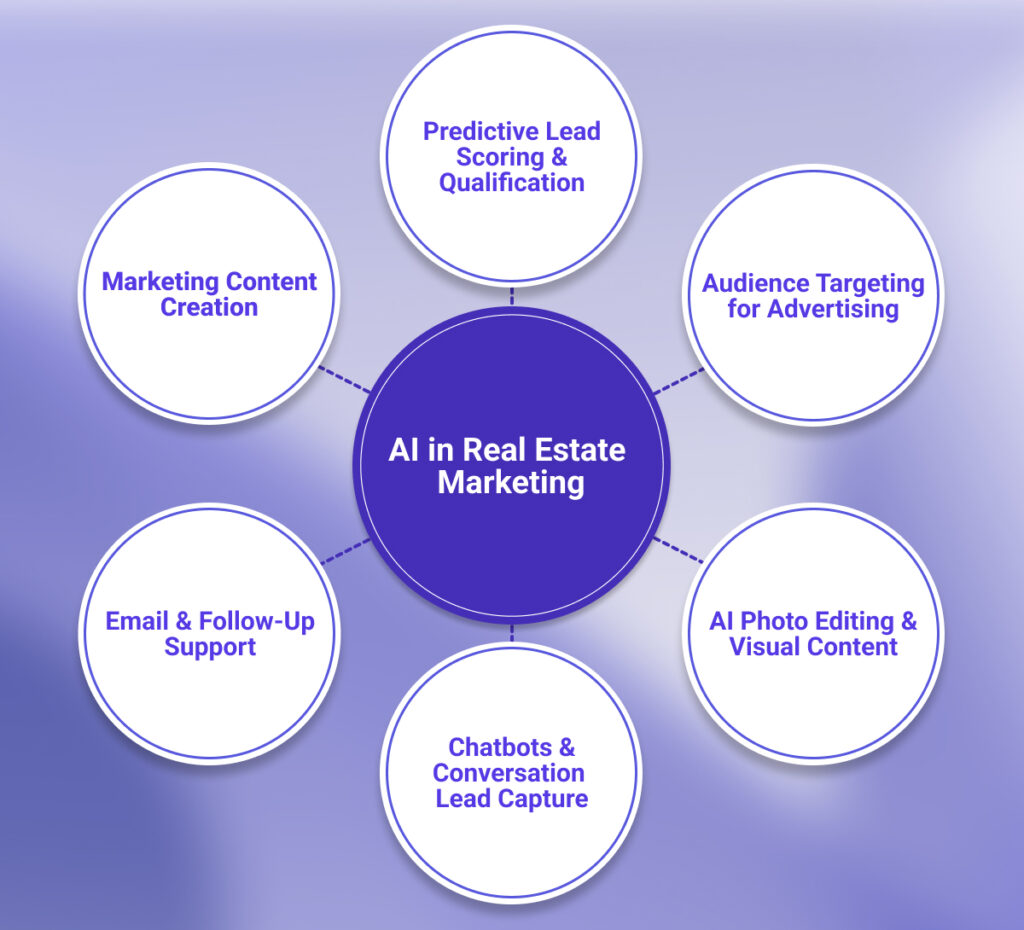
Lead generation forms the foundation of real estate marketing, and many agents spend a large part of their week trying to reach people who are ready to buy or sell. AI real estate marketing tools support lead generation by examining patterns in user behavior, search activity, and past interactions.
The goal is to identify which contacts are likely to respond, which listings match their interests, and which outreach efforts deserve priority. This allows agents to focus their time on leads with genuine intent, rather than spending hours sorting through low-quality inquiries.
Predictive Lead Scoring and Lead Qualification
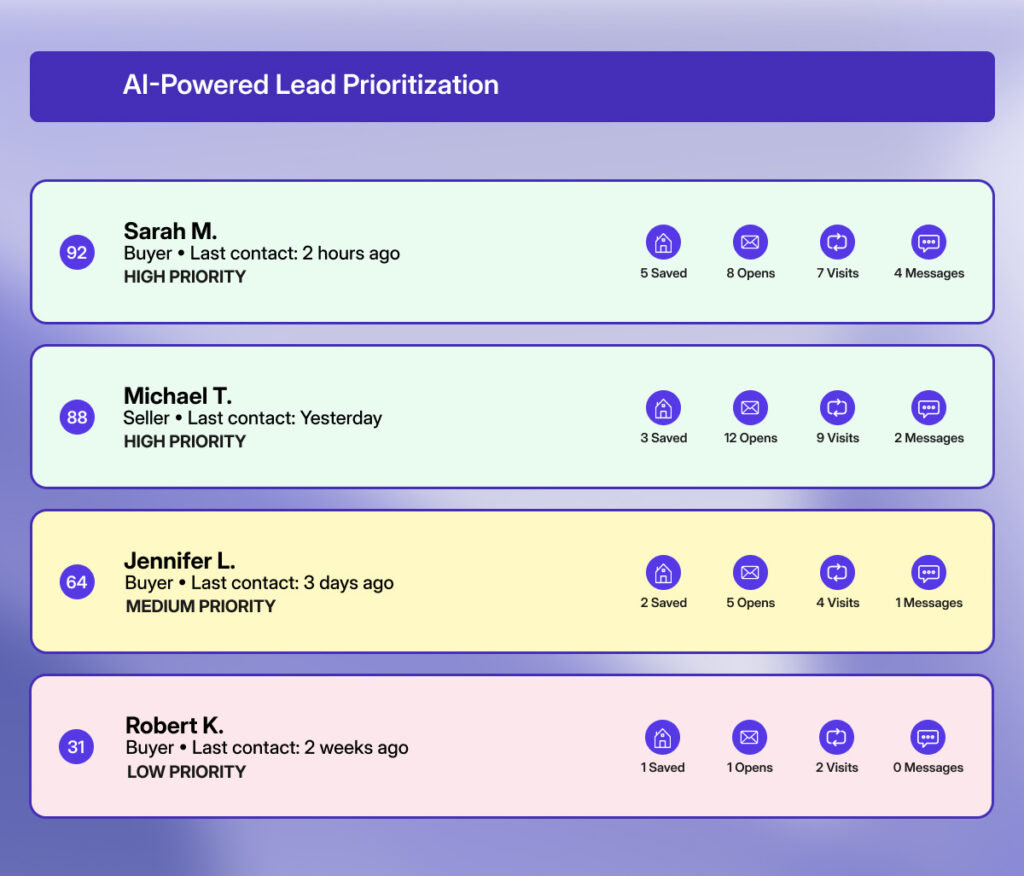
Real estate agents often receive inquiries at different stages of interest. AI real estate marketing tools analyze how users behave across websites, emails, and property searches.
They then factor in actions such as saved listings, message activity, visit frequency, and return visits. Based on these patterns, the system assigns a score indicating the likelihood that a user will take a meaningful next step.
This scoring process helps agents focus on leads who show clear intent. It also reduces the time spent on contacts who are unlikely to respond.
Examples of Tools Used for Lead Scoring and Qualification
- Follow Up Boss: Records contact behavior inside the CRM and scores leads based on activity levels.
- Chime: Reviews listing views, message interactions, and website behavior to update each lead’s interest level.
- CINC: Evaluates search history and registration behavior to identify stronger buyer and seller leads.
- BoomTown: Reviews inquiry patterns and property views to update each contact’s readiness score.
- Real Geeks: Tracks website visits and message interactions and uses these signals to rank visitors.
Audience Targeting for Real Estate Advertising
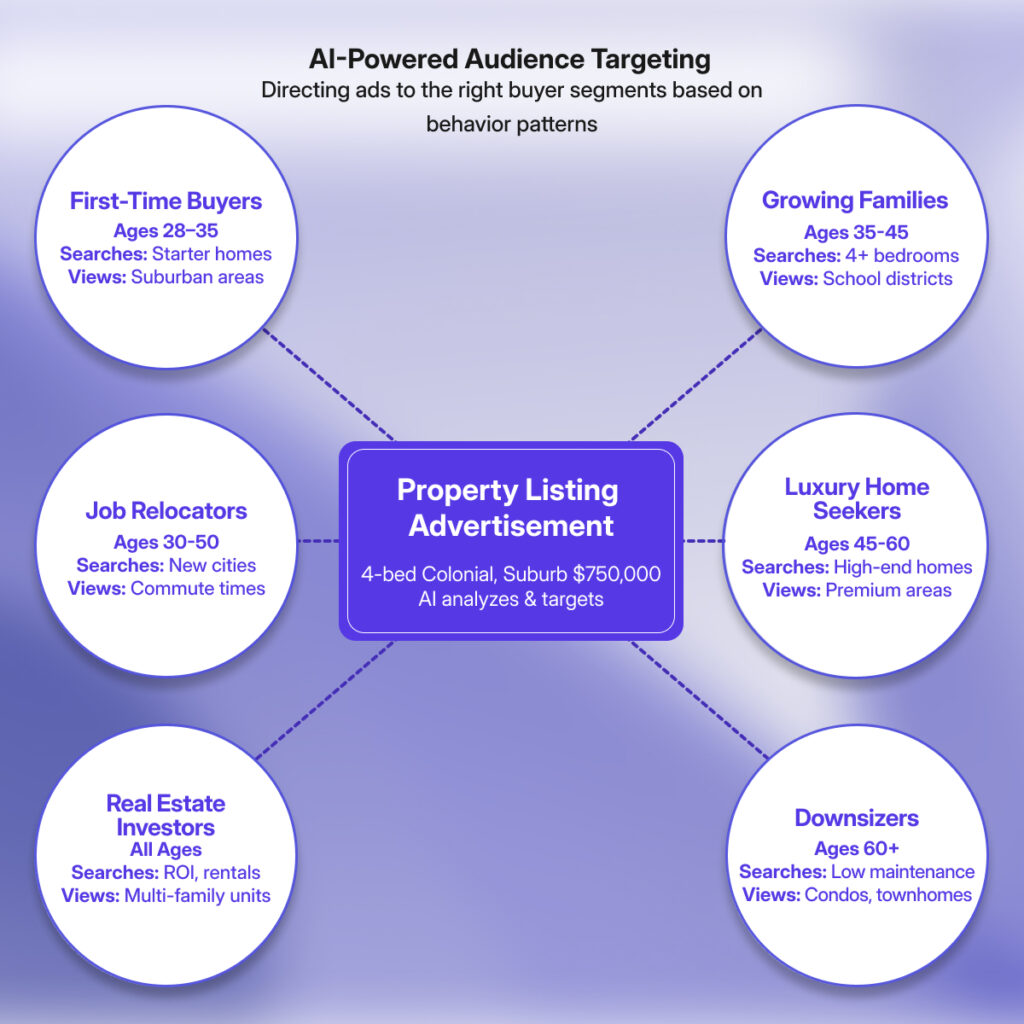
Reaching the right audience is one of the most important parts of real estate marketing. AI real estate marketing tools analyze interaction patterns across listings, neighborhoods, and property types to identify recurring interest signals.
This information helps agents direct ads toward people who share similar patterns of interest. Instead of guessing who might click on a listing, the system reviews data from search activity, browsing patterns, and demographic signals allowed by each advertising platform.
Examples of tools used for audience targeting
- Ylopo: Identifies high intent audiences using home search behavior and places listing ads accordingly.
- Realtor.com Advantage Pro: Suggests targeted ad placements based on property interest activity inside its search network.
- Adwerx: Uses automated targeting to place listing ads across social media and major websites visited by likely buyers and sellers.
- Local Logic: Analyzes location-based behavior and identifies audience segments who show consistent interest in specific neighborhoods.
- Evocalize: Provides AI-driven audience targeting for real estate teams and places ads across multiple channels automatically.
AI Photo Editing for Real Estate Marketing

Listing photos and visual content usually shape a buyer’s first impression. Another application of AI in real estate marketing is preparing listing-ready visuals when staging time, budget, or physical access is limited. These tools can remove clutter, enhance photos, stage vacant rooms, create day-to-dusk images, and generate quick listing video drafts from still images or structured inputs.
Visual updates created with AI allow agents to produce consistent marketing materials without waiting for multiple rounds of manual editing.
Examples of AI Tools Used for Real Estate Photo Editing
- AI HomeDesign: Handles virtual staging, decluttering, lighting adjustments, day-to-dusk edits, and image enhancement for listings.
- Collov AI: Offers AI-powered virtual staging, photo enhancement, and quick furnished room versions based on empty images.
- Virtual Staging AI: Creates staged room variations that help buyers understand how a space can be used.
- Stager AI: Delivers AI-based virtual staging, automatic photo cleanup, and room redesign tools for real estate images.
- Apply Design: Provides virtual staging with AI-assisted furniture placement, decluttering, and visual refinements for property photos.
Chatbots and Conversation Tools for Lead Capture
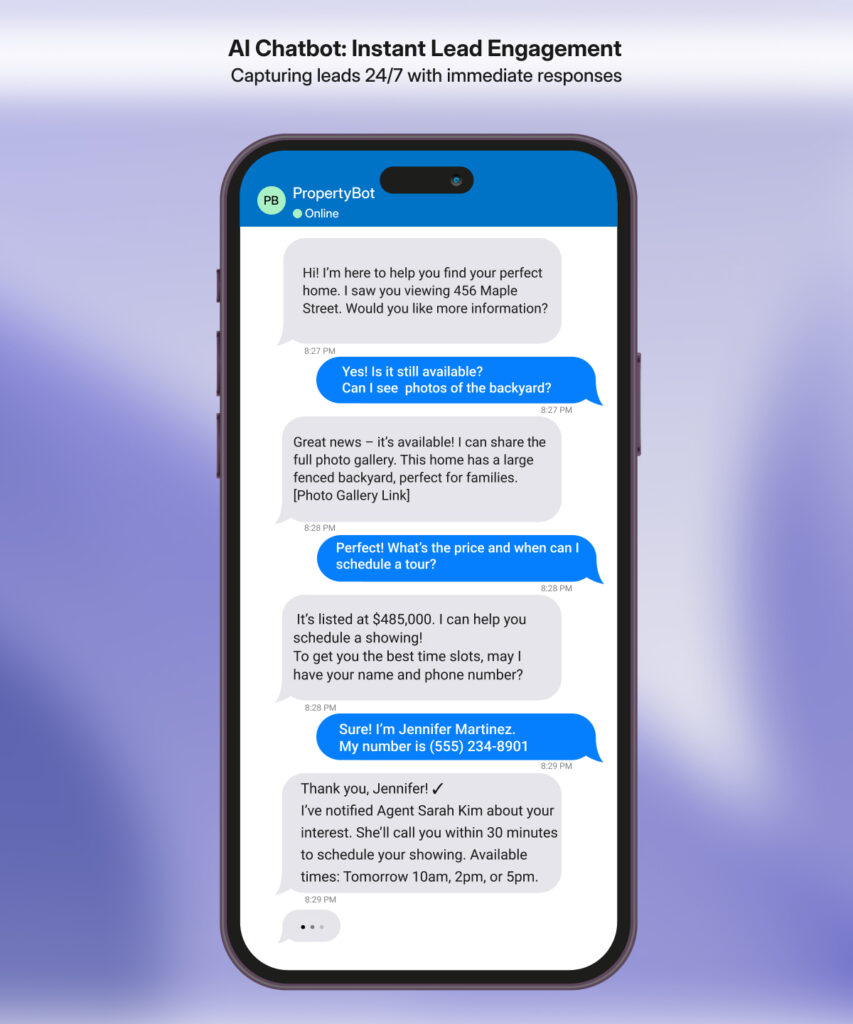
Slow replies often result in lost interest, especially when buyers or sellers are exploring multiple listings at the same time. AI-powered conversation tools help manage this early stage of communication by answering common questions, collecting contact details, and guiding users toward the right listing or action.
These systems keep the initial touchpoint active until the agent can respond personally. They do not replace one-to-one communication. They simply prevent missed opportunities by keeping conversations moving and gathering information that helps the agent understand the lead’s intention.
Examples of tools used for lead capture
- Structurely: Holds two-way conversations with new leads, asks clarifying questions, and schedules appointments when interest is clear.
- Roof AI: Manages incoming messages, identifies the user’s intention, and routes qualified leads to the right agent.
- ReadyChatAI: Assists website visitors in real time and sends verified lead information to brokerages and teams.
- Verse: Uses text-based conversations to qualify leads and forward organized reports to agents.
- Ruby: Answers incoming calls and messages, gathers prospect details, and forwards ready contacts to the agent.
Email and Follow-Up Support for Real Estate Agents
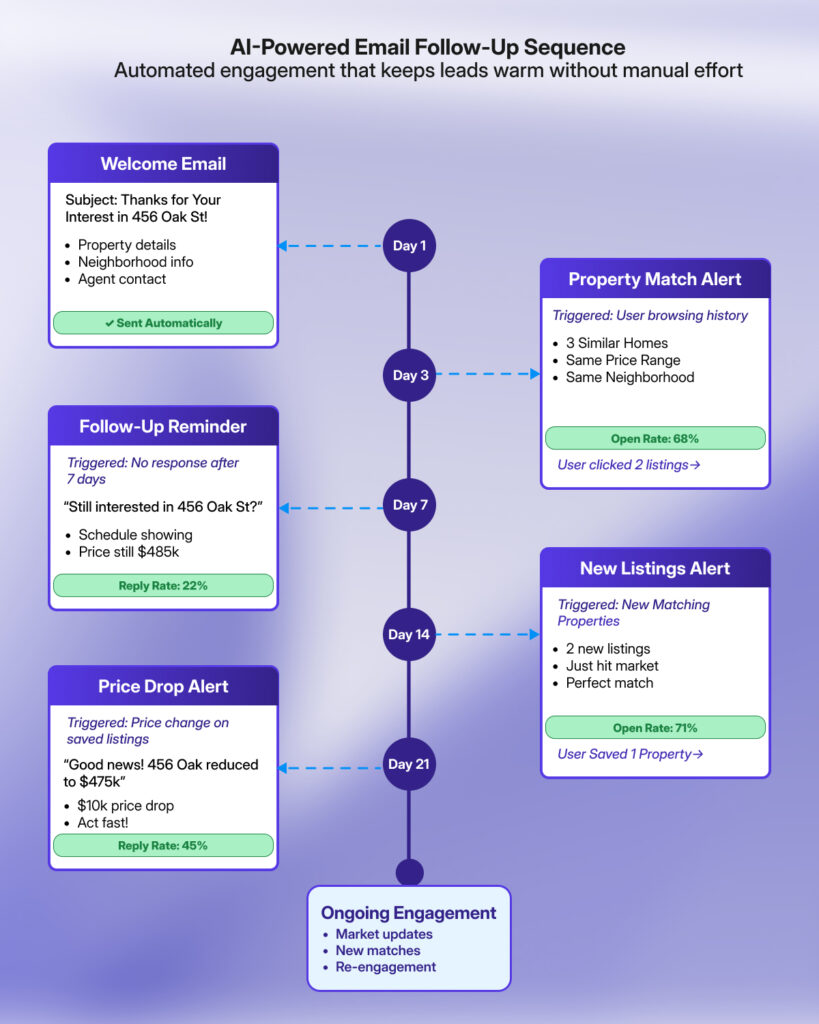
Many people browse listings during breaks, evenings, or weekends, and they often return to a property only if the agent keeps the conversation active. AI-assisted email systems help agents send timely follow-ups, organize message sequences, and respond based on individual contact behavior.
These tools can send relevant updates, such as new listings that match a contact’s search pattern or reminders to revisit a property viewed earlier. This support helps agents maintain communication without writing every message manually.
Examples of Tools Used for Email and Follow-Up Support
• Mailchimp: Sends automated follow-ups, property alerts, and behavior-based email sequences for real estate campaigns.
• Constant Contact: Helps agents set up recurring listing updates and simple drip campaigns for buyers and sellers.
• ActiveCampaign: Adjusts follow-up messages based on email engagement and property interest tracked inside the system.
• Realvolve: Creates multi-step workflows that send follow-up emails and reminders based on lead activity.
• HubSpot CRM: Provides automated email workflows triggered by website visits, form submissions, and property inquiries.
Marketing Content Creation for Listings and Social Media
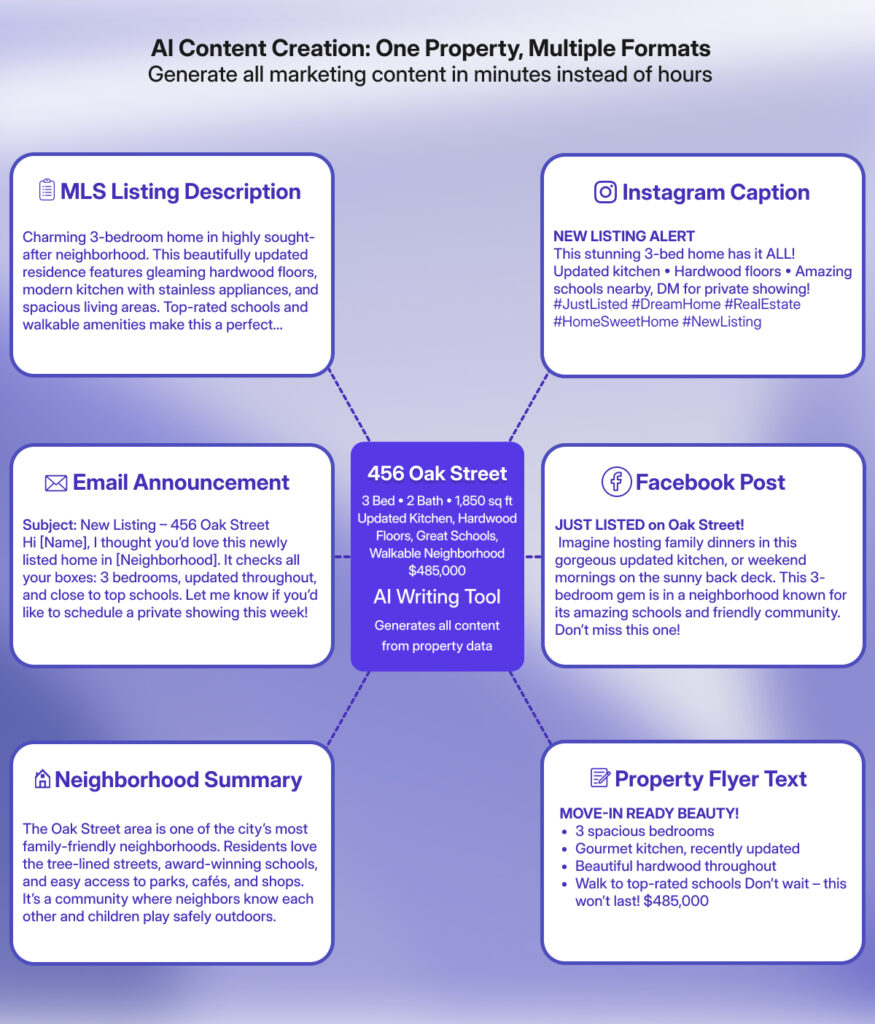
Content creation plays a central role in AI real estate marketing. Listing descriptions, social media captions, email announcements, neighborhood summaries, and short promotional texts shape how a property appears to buyers and sellers.
Producing these materials daily can require a significant time, especially for agents managing multiple listings. AI writing tools now generate drafts that agents can review, refine, and publish efficiently.
These systems assist with tasks such as summarizing property features, drafting captions for platforms like Instagram and Facebook, adjusting tone, and preparing versions for different audience segments.
Examples of Tools Used for Content Creation
- ChatGPT: Prepares listing descriptions, captions, email drafts, and neighborhood summaries based on property information provided by the agent.
- Jasper: Creates short marketing content for ads and social posts tied to real estate topics.
- Anyword: Generates ad copy, captions, and short promotional text that can support property marketing.
- Rytr: Assists with short-form writing tasks that support listing announcements and ongoing social media updates.
- Smartwriter AI: Prepares personalized outreach messages and property-related email drafts based on agent input.
What to Consider When Using AI for Real Estate Marketing
Though AI real estate marketing is now widely accepted, all AI-driven tools rely on historical data, and the quality of their output depends on the training data and configuration behind the system.
Agents should review every result produced through AI before sharing it with clients or publishing it on listing platforms. This applies to written content, visual materials, automated conversations, and audience targeting.
It is also important to understand how each tool manages collected information. Some platforms store user behavior to improve recommendations or adjust automated messages while others rely on external data sources. Agents and brokerages should review privacy policies, understand what information the tool uses, and confirm that system behavior aligns with their clients obligations and regulatory standards.
AI-edited visuals or descriptions should not misrepresent a property. Photos must show an accurate layout and structure, and edits should remain limited to clarity improvements such as lighting adjustments, decluttering, or virtual staging.
Final Thought
Real estate agents manage multiple responsibilities, including preparing listings, connecting with buyers and sellers, and handling operational details. AI real estate marketing tools support this work by automating routine tasks such as initiating conversations, drafting descriptions, organizing follow-ups, enhancing photos, and identifying higher-intent buyers.
These tools do not replace professional judgment, local expertise, or relationship management. They support operational efficiency while preserving the agent’s strategic role.
As these systems evolve, agents benefit from understanding how to apply them thoughtfully, creating more structured workflows and clearer visibility into active leads.
FAQ
AI can prepare written drafts, help with listing visuals, respond to early inquiries, and highlight leads who show stronger intent. These tools reduce repetitive work and help agents stay organized.
AI systems can identify individuals who show interest in certain property types, monitor search behavior, and guide ads toward those users. They can also manage initial conversations with new inquiries.
AI can prepare a solid first draft using property information provided by the agent. The final description should still be reviewed and edited to reflect the agent’s voice and local knowledge.
Lead scoring systems examine patterns such as listing views, return visits, saved searches, email activity, and inquiry history. They then assign a score that shows how active the lead is.
Agents can begin by selecting one or two tasks, such as email follow-ups or virtual staging. Starting small makes it easier to learn how the tool works and see where it fits within the daily workflow.
They are generally safe when used responsibly. Agents should check how each tool handles data, review privacy policies, and confirm that the system aligns with their obligations to clients.