As a realtor or seller, you may have asked the question, “Is virtual staging legal?” This is an important consideration for both agents and clients. As property sales increasingly rely on digital presentation, understanding the legal boundaries of tools used to enhance listings has become essential.
Real estate professionals benefit from virtual staging by presenting properties more clearly and helping buyers visualize space, layout, and potential use. At the same time, the rise of AI-driven tools has made staging faster and more accessible, allowing agents and sellers to apply these techniques without specialized photography or editing skills.
Since virtual staging has existed for years and its use continues to expand with AI, concerns around authenticity, disclosure, and potential misrepresentation in real estate marketing have grown. These concerns sit at the center of the legal and ethical discussion around virtual staging today.
Why “Is Virtual Staging Legal?” Matters More Than Ever
Even before the rise of AI-powered virtual staging tools, crossed unclear boundaries by presenting staged elements that did not accurately reflect the real property. As digital enhancements became more common, questions around authenticity and disclosure began to surface.
With the introduction of AI, these concerns have intensified for two main reasons.
First, AI-powered staging tools provide real estate professionals with powerful visual enhancements that can significantly change how a property appears. Without clear limits, this can result in ordinary homes being presented as overly polished or move-in ready in ways that may misrepresent their true condition.
Second, AI has lowered the technical barrier to entry. Virtual staging no longer requires specialized skills or large budgets, which means more agents can use it quickly and at scale. While this accessibility has clear benefits, it also increases the risk of overuse or misuse, especially when agents apply extensive changes without considering disclosure or credibility.
To navigate this evolving landscape responsibly, it is essential to clearly understand what virtual staging is, how it is defined, and where legal and ethical boundaries begin.
Where Virtual Staging and Legal Boundaries Begin
Virtual staging today is easier than ever. Even simple visual edits can count as virtual staging. When agents spend time arranging décor, decluttering, or making small adjustments before sharing photos on Instagram, a blog, or a listing page, they are already using a basic form of staging. At that point, it becomes important to understand the legal limits that apply to these changes.
Many effective staging approaches today lean toward a minimalist style. Using fewer bold colors and eye-catching furnishings aligns well with what today’s buyers prefer and generally stays on the safer side of legal boundaries. These choices focus on helping buyers visualize the space without dramatically changing how the property looks. With a basic understanding of minimal design and some editing skills, this approach can be applied effectively.
That brings the discussion back to the core question: Is virtual staging legal?
The short answer is yes. Virtual staging is legal. However, understanding how it works in practice and where the boundaries sit requires looking at a few key points that clarify when virtual staging remains appropriate and responsible.
Legal Tips for Successful Virtual Staging

There are a few practical guidelines agents can follow to keep virtual staging within legal boundaries. With a thoughtful approach, staging can enhance a listing’s appeal while still respecting transparency and accuracy.
Honesty Is the Best Policy
One of the most important steps in addressing concerns around whether virtual staging is legal is maintaining honesty throughout the staging process. Transparency matters. Making excessive or unrealistic changes to a property’s appearance can mislead potential buyers and create trust issues later in the sales process.
A clear and authentic presentation helps buyers understand what they are viewing and builds confidence in the listing. This careful approach plays a key role in keeping the sales process compliant and credible. When used responsibly, virtual staging should support a property’s strengths and help buyers imagine its potential, not alter or misrepresent its reality.
Mark Every Virtually Staged Photo
To keep your real estate marketing clear and transparent, agents should label every virtually staged photo. When these images appear on MLS portals or other platforms, a simple tag such as “virtually staged” helps buyers and other agents understand what they are viewing.
Transparency plays a major role in real estate because trust sits at the center of every transaction. Marking a photo as virtually staged makes it clear that the image shows visual enhancements rather than the property’s exact, physical condition. This clarity reduces confusion and helps manage expectations early in the process.
As conversations around legality continue, questions like “Is virtual staging legal?” often come up. Clear labeling reassures buyers and industry professionals that staging follows accepted rules and ethical standards. It also supports more open discussion around the legitimate use of virtual staging in real estate marketing.
Most Multiple Listing Services (MLS) allow agents to tag or label their photos, although some platforms apply specific requirements. Reviewing MLS guidelines before submitting tagged images helps agents stay compliant and avoid unnecessary issues.
By consistently labeling virtually staged photos, agents protect the integrity of their marketing efforts and demonstrate a commitment to ethical practices. Clear disclosure can also improve buyer engagement by setting honest expectations while addressing common concerns about the legality of virtual staging in today’s market.
Show Before and After Photos of the Property
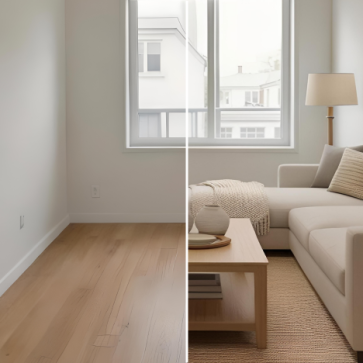
When agents add photos to an MLS or real estate portal, including “before” images alongside “after” visuals helps buyers understand what virtual staging has changed. This side-by-side approach makes the marketing more transparent and reduces the risk of buyers feeling misled.
Virtual staging often enhances empty spaces by adding furniture, décor, and other design elements. These changes help showcase a property’s potential and create a warmer, more inviting presentation. At the same time, clear boundaries matter. When staging goes beyond furniture and décor and starts altering elements such as flooring, ceilings, wall colors, or fixtures, it can move past typical staging and create a misleading impression.
Showing both the original and staged versions gives buyers a clear view of the property’s true condition while still showcasing the creative improvements. This level of openness builds trust and supports a more positive experience throughout the buying process.
Exploring the Origins and Importance of Staging

Home staging focuses on arranging furniture, décor, and layouts to create an inviting atmosphere that photographs well and feels easy to imagine living in. Interior designers originally used staging to prepare spaces for photos and tours, but over time it became a core part of real estate marketing. Today, staging plays a meaningful role in attracting buyers and supporting stronger sales outcomes.
Empty homes often present a challenge in the market. Without visual cues, buyers may struggle to understand scale, layout, or potential, which can affect perceived value. Professional staging addresses this by guiding attention and shaping first impressions. While staged homes may not always feature bold or dramatic designs, the visual flair found on social media, their real strength lies in helping buyers connect with the space in a practical, emotional way.
It’s also important to distinguish staging from decorating. Decorating focuses on personal style and visual enhancement, while effective staging centers on buyer appeal and market expectations. Skilled home stagers understand how buyers think and what details influence decision-making, which makes their role especially valuable during the selling process.
Traditional staging can require time, coordination, and budget. Still, understanding how staging works helps sellers and agents approach the process with confidence. When applied thoughtfully, staging supports clear presentation, reduces potential concerns around virtual enhancements, and increases the chances of a successful sale.
Is Virtual Staging Really Worth the Effort?
When staged photos appear on an MLS or real estate portal, clear disclosure around edits matters. Even though legal concerns around virtual staging are generally limited, some clients hesitate once they realize images have been digitally altered. In certain cases, this can create the impression that a property is not truly move-in ready, which may affect buyer perception.
It’s also understandable that virtual staging can feel intimidating at first. Achieving good results requires an understanding of both the local market and the tools used to enhance listing photos. That naturally leads to an important question: is the time and effort invested in virtual staging actually worth it?
In most cases, the answer is yes. Data and industry experience consistently show that virtual staging adds value by improving presentation and helping listings stand out. To make the process easier and more accessible, platforms like AI HomeDesign offer tools designed specifically for real estate use.
AI HomeDesign’s virtual staging tool allows agents to transform listing photos efficiently and create polished visuals without advanced editing skills. By simplifying the technical side of staging, this tool supports better presentation while allowing agents to stay focused on pricing, positioning, and client relationships.
Final Thoughts
According to the National Association of REALTORS, 71% of buyers seek homes that feel move-in ready. In this context, virtual staging can play a meaningful role in helping listings present more clearly and competitively.
Staging sits at the intersection of art and strategy, and virtual staging has become an increasingly vital part of that mix. Understanding how both traditional and virtual staging work makes it easier to navigate legal considerations and avoid common missteps. This knowledge strengthens listing presentations while supporting more confident, informed decision-making.
Approaching staging without a clear foundation, however, may lead to wasted effort or unnecessary legal risk. As real estate marketing continues to evolve, staying informed about current tools, expectations, and best practices remains essential.
To support that process, platforms such as AI HomeDesign offer virtual staging tools designed to simplify workflows and reduce technical barriers. Used thoughtfully, these tools can help agents stay current, refine their approach to staging, and handle listing presentations with greater clarity and confidence.
FAQ