Mailbox marketing still creates listing conversations, even in a screen-first market. The difference in 2026 is execution. Most agents still treat just listed postcards like a one-time announcement, then quit before recognition compounds.
Direct mail also plays a different role than ads or email. A postcard sits in a kitchen, gets seen twice, and creates familiarity before any call happens. That makes it a strong complement to real estate marketing strategies for 2026, not a replacement for them.
The guide below breaks postcards into a repeatable system: when each card type works, how to pick a farm, what to put on the card, and how to track results without guessing.
The Case for Postcards in 2026
Inbox competition has gotten brutal. A postcard avoids the spam tab, skips ad fatigue, and forces a quick decision at the mailbox: keep it, pin it, or toss it. That physical moment matters because sellers do not start with a formal interview. Many start with name recognition and a single “maybe.”
Data in the 2026 market still favors physical mail for cold outreach. Direct mail averages a 4.4% response rate, while email averages 0.12%. Those numbers do not guarantee leads. They do show why postcards keep showing up in agent playbooks, even as digital spend rises.
One other advantage rarely gets planned for: shelf life. A typical postcard has a 17-day average in-home lifespan. That turns one drop into repeated impressions, especially when the card has a strong photo and a simple message. Agents who mail sporadically waste that carryover effect.
Skepticism usually comes from three real problems: generic creative, weak targeting, and no follow-up. Postcards still fail fast when copy reads like bragging or when the hero image looks like an MLS screenshot. They also fail when the campaign has no tracking, so attribution becomes guesswork. That gap explains the “postcards do not work” narrative more than the channel itself.
Just Listed Postcards vs Just Sold Postcards
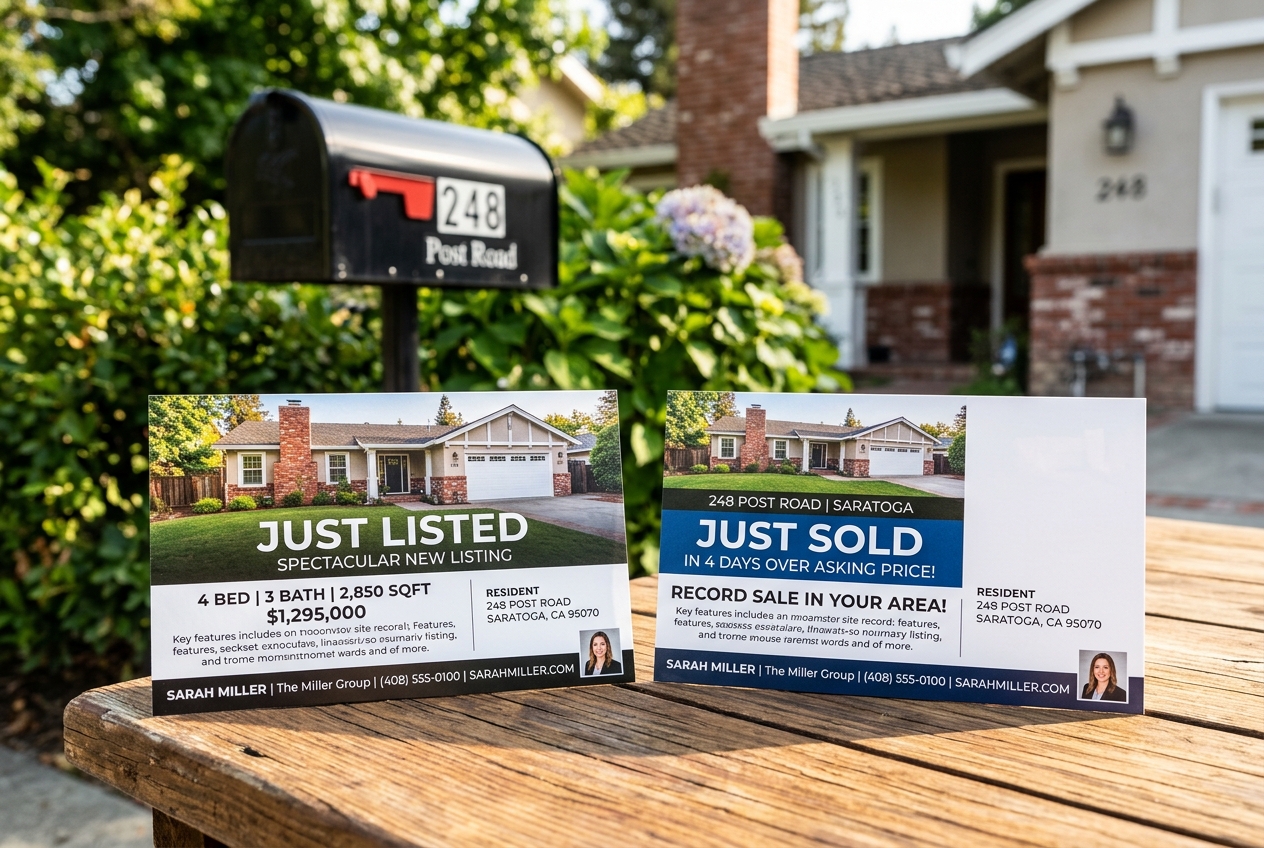
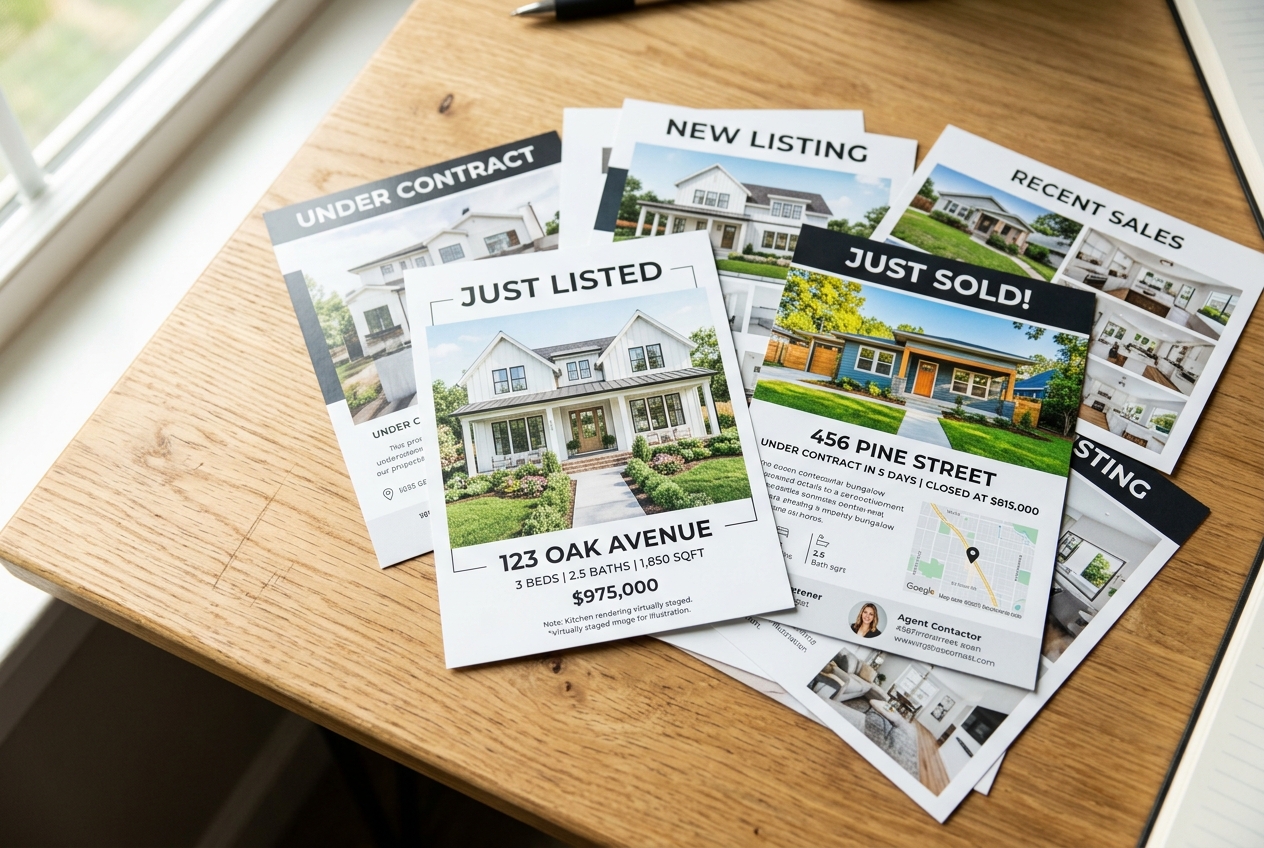
Many campaigns collapse because they ask one postcard to do two jobs. “Just listed” creates awareness and buyer activity. “Just sold” builds proof and starts seller conversations. A farm needs both, because households sit at different stages of intent.
Just listed: this card pulls in buyer leads, signals momentum, and plants a question in neighbors’ minds about timing and pricing. The strongest call to action usually points to a showing link, an “open house” page, or a neighborhood inventory update. Curiosity does the heavy lifting.
Just sold: this card works best as a credibility tool. It supports pricing confidence, reduces fear about days on market, and sets up a simple seller question: “what would mine sell for?” Agents who only mail “just sold” often miss early seller intent. Agents who only mail “just listed” often fail to earn trust.
| Attribute | Just listed postcard | Just sold postcard |
|---|---|---|
| Primary purpose | create buyer demand and neighborhood visibility | build proof of performance and seller confidence |
| Best audience | closest surrounding homes and the farm | closest surrounding homes and the farm |
| Strongest CTA | showing interest, open house, inventory update | home value request, market report, listing consult |
| Best timing | immediately after the listing goes live | immediately after closing posts publicly |
| Best outcome | buyer leads and early seller curiosity | listing conversations and referral prompts |
Copy discipline matters here. The card should carry one idea and one action. Extra detail belongs in the follow-up call, text, email, or a landing page. Pricing nuance, negotiation stories, and commission talk should stay out of the postcard entirely. A postcard earns attention; the appointment earns trust.
Geographic Farming Real Estate and Mailing Cadence
Most agents do not lose at design, they lose at scope. A farm that is too large forces inconsistent mailing. A farm that is too random prevents name recognition. Strong geographic farming real estate starts with an area that an agent can cover repeatedly without budget panic or logistics chaos.
A practical farm usually means a tight neighborhood cluster: similar price bands, similar housing stock, and a clear identity that residents already use. The area also needs enough annual turnover to create steady opportunity. When turnover runs low, postcards still build brand, but listing conversations arrive slower and feel more random.
USPS Every Door Direct Mail helps agents test or expand a farm without building a full mailing list. EDDM can work well for subdivisions, carrier routes around a recent listing, and early-stage farming where list quality is unknown. Mailing list campaigns still matter for past clients and sphere contacts, where personalization raises response.
Consistency beats intensity. A farm program works best on a steady monthly rhythm, plus event-driven drops for new listings and new closings. Agents who want deeper strategy and variations by neighborhood type can pair this plan with the full guide to real estate farming and a lighter touch for sphere follow-up using real estate newsletter ideas for monthly SOI emails.
Three situations call for adjustments. Rural routes often need larger map-based coverage because neighbors live farther apart. Condo towers need lobby access planning and a heavier digital layer because mail gets filtered. Luxury pockets usually respond better to fewer claims and cleaner design, with a value-led call to action rather than urgency-led messaging.
Real Estate Postcard Design That Gets Kept
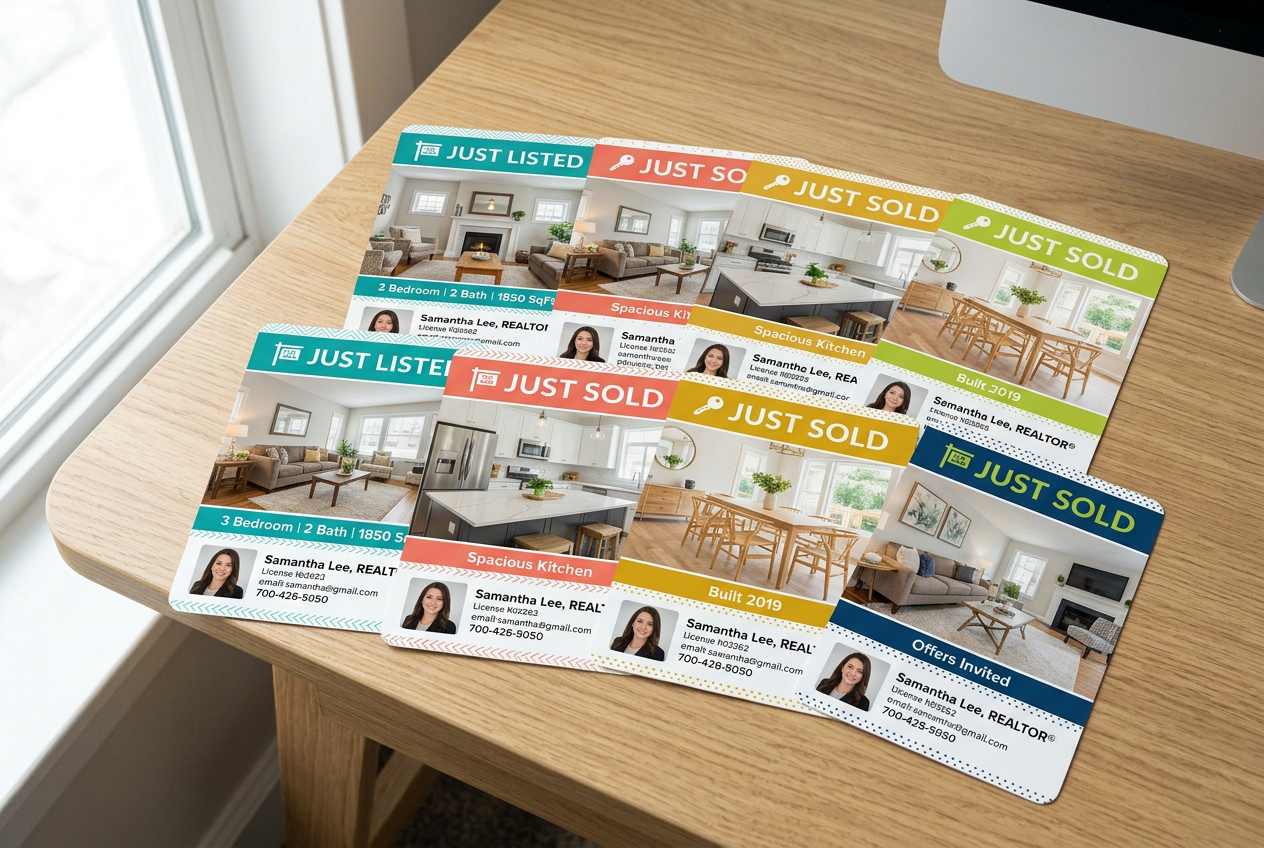
A postcard wins or loses in a glance. The hero image carries most of the work. A bright, well-framed room photo signals competence before the headline gets read. A dark photo, awkward verticals, or cluttered countertops signal the opposite, even if the agent runs an excellent business.
Design rules stay simple because households scan quickly. One hero image, one headline, and one call to action usually beats a crowded “kitchen sink” layout. White space matters. So does repeating the same brand look every month so residents recognize the sender without reading.
The hero image also offers a major advantage in 2026: tasteful AI editing. AI HomeDesign tools like AI Virtual Staging, Image Enhancement, AI Item Removal, and AI Day to Dusk can improve postcard visuals when a listing photo set includes a vacant room, harsh lighting, or distracting objects. That upgrade connects directly to visual marketing and staging’s impact on listings and supports a broader habit of polishing marketing assets across channels.
Two guardrails keep AI edits safe for a postcard. First, structure must stay true. Second, clear Disclosure needs to appear when a photo is virtually staged. Many teams use a simple line like: “Virtually staged image for illustration.” If local MLS Rules require it, agents should add a Virtually Staged Watermark and match the language used on the listing itself. Practical guidance and examples also sit in enhance your real estate listings.
Tracking, Follow-Up, and Compliance That Protects ROI
Postcards fail most often after the mailbox, not before it. A campaign needs tracking that matches digital standards, plus follow-up that turns recognition into a conversation. Otherwise, results show up as “random” inbound, and the channel gets cut.
A simple tracking stack fits almost any budget. Agents can use a unique phone number per farm or campaign. QR codes should point to one focused landing page, with UTM parameters and a single conversion goal. Every inbound lead should get a CRM source tag tied to the postcard drop. That data makes the ROI of real estate postcards measurable instead of emotional.
Follow-up needs an exact window, not a vague plan. The strongest play is a door knock or call within two days of estimated in-home delivery. The script should mention the card, not pretend the contact is cold. Agents can also run retargeting ads to QR scanners, which ties postcards to social media marketing for real estate agents and keeps the brand consistent across touchpoints.
Compliance deserves a pre-print checklist. Marketing materials should include the agent and brokerage identifiers required by local rules and professional standards. Fair housing language should stay neutral and property-focused. MLS Rules and photo rules also matter when the same images appear online, so teams often keep a short compliance reference like Do’s and Don’ts of MLS in the marketing folder.
Agents also need a clear content boundary. The postcard should include the proof point, the offer, and the next step. Commission, fee ranges, and pricing arguments belong in the in-person consult, where context reduces confusion and complaints. For agents building stronger language across all materials, headlines often improve after reviewing writing effective real estate listing descriptions.
A workable launch plan fits in a single quarter. Week one covers farm selection, route or list setup, and tracking links. Week two finalizes one just listed and one just sold template with consistent branding. Week three sends the first drop, then runs follow-up within the two-day window. The final weeks repeat the cadence, review tracking data, and tighten the call to action based on what households actually click and call.
Frequently Asked Questions
Do just listed and just sold postcards still work in 2026?
Yes, postcards still work when agents treat them like a system instead of a one-off. A consistent farm cadence, one clear call to action, and reliable follow-up create the compounding effect. Postcards also perform best as a brand and recognition channel that feeds conversations, not as a standalone lead source with instant results.
How many homes should a postcard farm cover?
A farm should be small enough to mail consistently and large enough to create repeated neighborhood exposure. Many agents start with a few hundred homes in a tight subdivision and expand only after tracking proves the message and offer work. A smaller, consistent farm usually beats a larger, sporadic one.
How long does it take for postcard marketing to generate leads?
Most farms take multiple touches before households recognize a name, so early drops often feel quiet. Measurable results usually show up after consistent mailings, tracking, and follow-up calls or door knocks that reference the card. Consistency matters more than perfect design during the first cycle.
What is USPS EDDM and when does it make sense for agents?
USPS Every Door Direct Mail lets agents mail to every address on a chosen carrier route without buying a separate mailing list. It fits new farm tests, subdivisions around a recent listing, and areas where list accuracy is uncertain. List-based mail still works better for past clients and sphere contacts.
How should postcard ROI be tracked without guessing?
Attribution works best with a simple stack: a campaign-specific phone number, a QR code that links to one landing page with UTM tags, and consistent CRM source tagging for every inbound lead. A short intake question also helps: “what prompted the call?” That combination turns postcards into a measurable channel.
What disclosure should appear when a postcard uses AI virtual staging?
When a postcard shows a virtually staged room, the card should include clear Disclosure that the image is virtually staged. Many teams use a short line near the photo and match the same language used in online marketing. If local MLS Rules require it, a Virtually Staged Watermark should also appear.