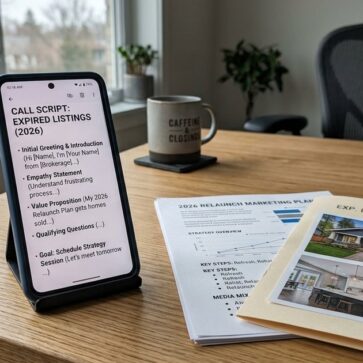
A lot of agents start real estate farming with good intent and bad visibility. Postcards go out, events get sponsored, and social posts get published. Then month four hits, nothing closes, and the farm gets dropped.
A farm pays off when it runs like a pipeline, not a presence campaign. Every touchpoint becomes a trackable record, every response triggers follow-up, and every month has a measurable target.
The sections below show how to pick a profitable area, concentrate early effort, blend mail with digital, and build a CRM pipeline that makes progress visible.
Real Estate Farming as a Trackable Lead Pipeline
Name recognition rarely fails because of effort. It fails because agents cannot see movement between touches and listings. A pipeline fixes that. It gives a reason to keep spending when the inbox stays quiet.
A geographic farm works best as a closed system with inputs and outputs. Inputs include postcards, door conversations, community events, and neighborhood ads. Outputs include new contacts captured, conversations booked, CMAs requested, and listing appointments held. Agents can track those outputs weekly, not annually.
Four stages keep the pipeline simple enough to run every day. Aware means the homeowner has seen the name and message. Engaged means the homeowner replied, clicked, called, or talked. Nurturing means the homeowner gave contact info and accepted ongoing value. Pipeline-ready means the homeowner signaled a clear timeframe or requested pricing guidance.
Farm activity also needs a place inside a broader marketing plan. A farm should not replace open house follow-up, sphere work, or online lead capture. Many agents plan farming inside a larger mix, then connect the systems through consistent creative and tracking. A useful reference point is this set of digital marketing for real estate agents priorities, then farming becomes one lane with its own scorecard.
How to Choose a Farm Area and Micro-Farm the Core Zone
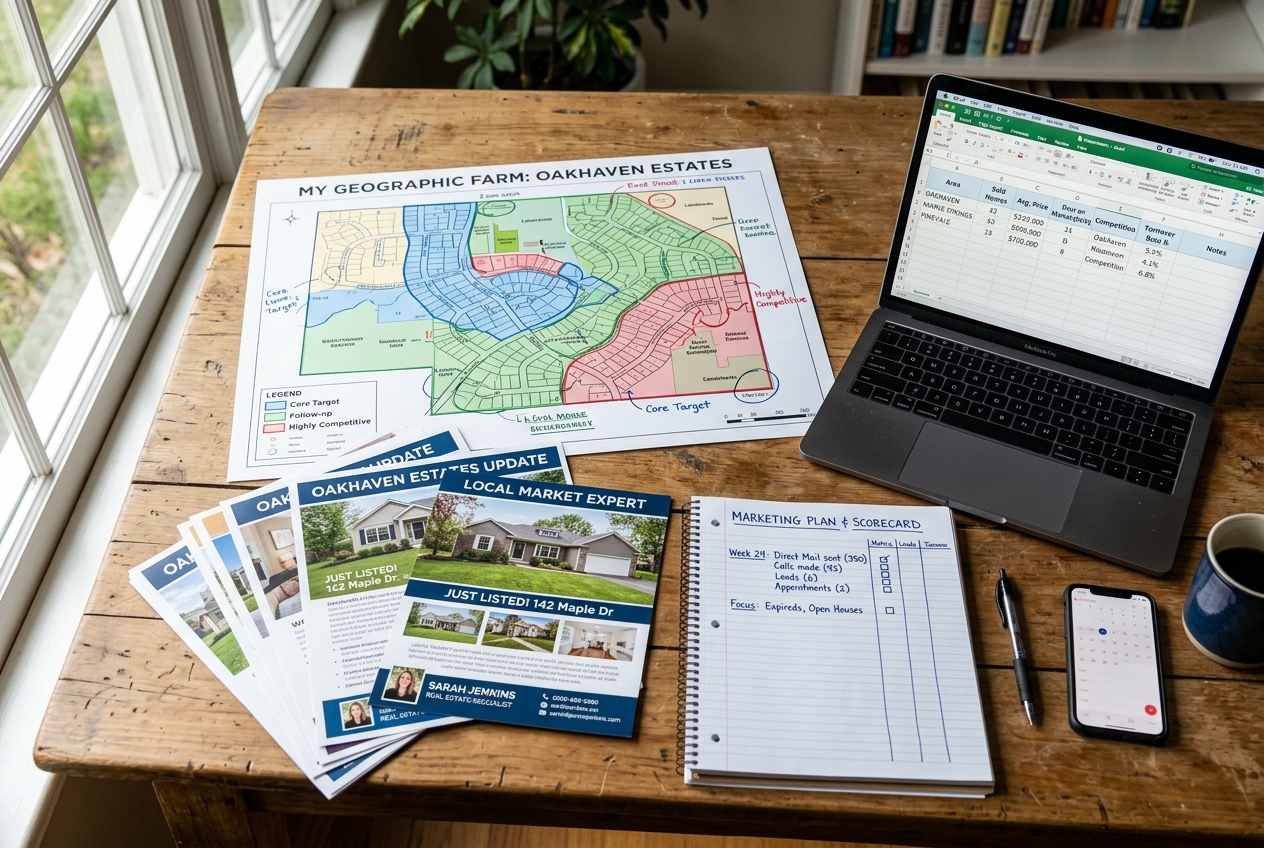
Most farm mistakes start before the first mail drop. A neighborhood can look busy and still waste budget. Smart selection focuses on three signals, turnover, competition, and homeowner tenure.
Turnover answers a simple question, do enough homes sell here to create listing opportunities. Competition answers another, how many agents fight for those listings. Tenure helps forecast who might move sooner. Areas with long tenure can still work, but the pipeline often matures slower.
A practical scoring method compares neighborhoods before any spend. Agents can rank areas by a simple score, turnover divided by competition, then multiplied by typical price level. The exact math matters less than the discipline. A “good” area should beat other local options on at least two of the three signals.
Data sources should come from more than one place. MLS sold data shows turnover and price bands. County records show owner names and mailing addresses. USPS routes help map delivery boundaries. Predictive platforms and lead scoring inside CRMs can also help prioritize blocks inside the farm. This is where AI-powered real estate marketing tools can support the selection process without guessing.
Micro-farming speeds up early traction inside the chosen area. Instead of spreading touches evenly, agents pick a smaller core zone and increase frequency there first. The best core zone usually has consistent home style, similar price band, and clear “front door” streets that neighbors recognize. That concentration creates earlier replies and more recognizable presence.
How to Launch the Farm in Two Weeks
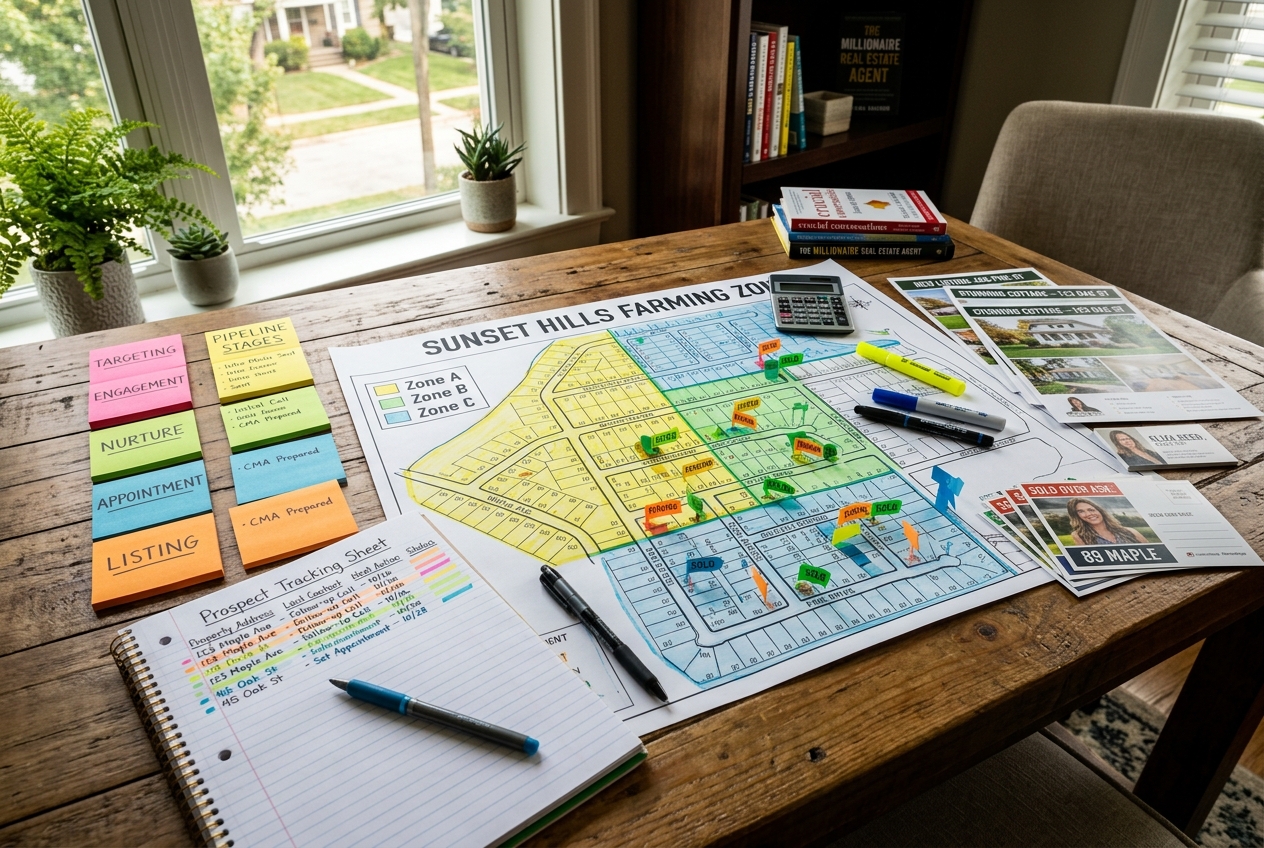
A farm launches faster when the first two weeks focus on infrastructure, not printing. The goal is simple, every response must land in a pipeline stage with a next action. Without that, early responses disappear.
Agents can also decide the hard rules before outreach starts. A clear standard prevents sloppy follow-up. A strong baseline is this, capture every response in the CRM within one day, and make a personal follow-up attempt within two days. Speed signals professionalism, and it prevents cold leads.
The launch plan also needs a clear line between what goes into public materials and what stays private for conversations. General market information belongs in mailers and ads. Address-level pricing opinions, negotiation strategy, and any commission discussion belong in a direct conversation after a homeowner raises a hand.
Creative comes last. Copy and design should stay consistent across mail and digital so the farm recognizes the brand. Visual consistency matters more than a clever slogan.
Step one: Map the farm and the core zone
The agent draws the boundary, then selects a smaller core zone for higher frequency. The map should match real walking and driving routes. A clean boundary also prevents wasted spend on homes that will never get consistent touches.
The result is a list of addresses split into two groups, core and rest-of-farm.
Step two: Build the tracking spine in the CRM
The agent creates four pipeline stages and a required source tag set. The CRM should include tags for mail, door, event, sign call, and ad. Clean tagging keeps later ROI reviews honest.
The result is a pipeline that shows where each contact sits and what happens next.
Step three: Set the first thirty days of touches
The agent schedules a first postcard, a follow-up door block, and one community presence touch. A short initial burst creates recognition faster than a slow start. The plan should also include a single call to action per touch, not a menu of options.
The result is a calendar that prevents skipped weeks.
Step four: Create the landing page and call capture
The agent builds a neighborhood page with one offer, such as a monthly market update or a home value review on request. The page must capture name, email, and address before it delivers the download. That gate turns anonymous traffic into CRM records.
The result is a trackable path from postcard or ad to contact record.
Step five: Set the follow-up windows and automations
The agent sets an instant confirmation message, a next-day personal outreach task, and a short nurture sequence. The windows should be strict, one day to log, two days to reach out, seven days to deliver the first value item. Tight timing keeps the conversation warm.
The result is consistent follow-up even during busy listing weeks.
Postcards, Door Work, and Community Presence That Earns Trust

Direct mail still works in a farm because it creates repeated visual memory. Most failures come from weak offers and inconsistent branding. A postcard should carry one idea, one proof point, and one next step.
Postcard content should stay neighborhood-level. Market snapshots, sold highlights, and short “what changed this month” notes fit well. A QR code can point to the neighborhood landing page, which ties mail to tracking. Address-specific pricing claims should stay off the card unless a homeowner requested it.
Commission and fee figures should not appear on postcards or neighborhood flyers. Those numbers trigger price shopping and distract from value. Agents can discuss compensation during a listing consultation and in required agency paperwork, not in mass marketing.
Door work and community presence add trust that mail cannot earn alone. A simple approach works, pick a small set of streets, walk them on a fixed cadence, and treat every conversation as a CRM event. Event sponsorships also matter, but only when every conversation gets captured.
Visual quality often separates one agent from the next in crowded neighborhoods. AI HomeDesign supports this part of the system through Image Enhancement, AI Item Removal, and AI Day to Dusk for listing photos used in postcards and local ads. For empty listings, AI Virtual Staging can produce room visuals that support the story, as long as proper labeling is used.
AI-edited visuals require clear Disclosure and strict MLS Rules compliance. Use direct language on print and digital placements: “Virtually staged. Digitally altered. Furniture and decor are added for illustration only.” Add a Virtually Staged Watermark on any virtually staged image, and keep the original photos on file.
A deeper design guide helps keep materials consistent across channels. The principles in visual marketing for real estate apply well to postcards, door hangers, and neighborhood ads.
Digital Farming That Keeps the Message in Front of Homeowners
Paid digital touches solve the biggest weakness of mail, the long gap between drops. Small, local ads can keep the same message running between postcards. Agents can also use digital to retarget anyone who visited the neighborhood page.
Two digital channels usually carry the early load. Social ads work well for simple awareness and soft offers. Search and map visibility capture active intent when a homeowner starts exploring value or agent options. Content should stay aligned with the farm message and offer.
Neighborhood group participation works when it stays service-first. Posting event photos, local vendor lists, and short market notes builds familiarity. Hard selling in groups often backfires. Agents can learn the platform mechanics and content types in social media for real estate agents.
Local intent also lives in search. A neighborhood landing page should match the farm name and include clear headings, a map, and recent market context. A complete Google Business Profile matters too, since many homeowners search by neighborhood and “realtor” phrases. The playbook in local SEO for realtors helps tie that traffic back to the farm.
| Channel type | What it is best for | Tracking method that keeps it honest |
|---|---|---|
| Postcards | consistent recognition and credibility | unique QR code or URL plus call tracking |
| Door conversations | fast trust and objections surfaced early | event tag plus same-day notes |
| Community events | borrowed trust and referrals | attendee list or signup form |
| Geo-targeted social ads | frequency between mail drops | UTM tags to neighborhood page |
| Retargeting ads | staying visible after a click | pixel audiences plus form completion |
| Neighborhood SEO page | long-term local lead capture | rank tracking plus form source tag |
Turn Neighborhood Touchpoints Into a CRM Pipeline

A farm becomes a pipeline only after the CRM holds the truth. Every response should create a contact record. Every record should carry a source tag and a pipeline stage. Missing tags erase ROI clarity later.
A strict capture rule keeps the system clean. Agents should enter new contacts within one day of the touch. Agents should attempt a personal follow-up within two days. That follow-up can be a call, text, or door revisit, but it must be logged. A simple time rule prevents “someday” follow-up.
Automation should support, not replace, the relationship. Aware contacts can receive a monthly market note. Engaged contacts can get a short series that offers a home value review and a seller checklist. Nurturing contacts should receive neighborhood-specific updates plus a quarterly check-in task. Pipeline-ready contacts need human outreach, with clear next steps toward a CMA and listing timeline.
Tagging structure matters as much as stages. A clean set might include tags for “farm core,” “farm outer,” and the exact touch type. Notes should record what the homeowner cared about, timeline, and any property constraints.
Apps help agents keep capture fast on walk days and event nights. The roundups in best real estate apps can help teams choose tools for scanning cards, logging calls, and assigning follow-up tasks.
ROI and Timeline Benchmarks for Expansion Decisions
Farming ROI becomes readable when the pipeline has defined conversion events. Cost-per-touch matters early, but cost-per-engaged-contact matters more. Engagement includes calls, form fills, replies, and real conversations. That number guides which channel deserves more budget.
Break-even planning can stay simple. Agents can estimate how many listings the farm needs by dividing total farm spend over a period by average gross commission per listing. If the required listing count feels unrealistic, the farm size or channel mix needs adjustment. A quarterly review cadence prevents emotional decisions based on one slow month.
Timeline expectations protect consistency. A clear milestone map keeps the team focused on activities and leading indicators.
- At 30 days, the goal is clean tracking, early recognition, and the first engaged contacts logged.
- At 90 days, the goal is repeat engagement, early CMAs requested, and a stable touch cadence.
- At 180 days, the goal is a visible nurturing pool, more listing conversations, and proof that certain channels outperform others.
- At 365 days, the goal is repeat listings or referrals from the area and a plan to expand beyond the core zone.
Some situations require a different plan. Rural or agricultural properties may need relationship-first outreach and longer cycles. Distressed sales often require sensitive conversations before marketing. New construction neighborhoods can restrict solicitation and change turnover patterns. Condo buildings can block door access and limit signage. Price-sensitive markets can punish high-cost mail, so digital and community presence may carry more weight.
Expansion should follow evidence, not optimism. Agents can expand the farm when the core zone produces consistent engagement and follow-up capacity exists. Agents can pause or exit when engagement stays flat across quarters, even after creative and targeting changes.
Paid media often becomes the adjustable lever once the system works. The channel mix ideas in real estate advertising ideas can support testing without breaking the farm cadence.
For agents who want to place farming inside a larger plan, the complete real estate marketing guide offers a wider channel map and budgeting context.
Frequently Asked Questions
How many neighborhoods can a single agent farm at once?
Most agents can run one farm well and two farms poorly. A second farm makes sense only after the first farm has a stable cadence, clean CRM capture, and enough follow-up capacity. A safer approach is to keep one main farm and add a small micro-farm that shares the same templates, landing page structure, and automation.
What should a first postcard offer in a new farm?
A first postcard should offer one low-friction next step, such as a neighborhood market update, a home value review on request, or a seasonal maintenance checklist. The offer should route to one trackable landing page. Avoid starting with a hard “thinking of selling” message, since most homeowners are not ready yet.
Is geographic farming real estate worth it for newer agents?
Geographic farming real estate can work for newer agents when the plan emphasizes speed to follow-up and strict tracking. Newer agents often win by focusing on a smaller core zone, logging every response, and running a simple nurture sequence. The risk is over-spending on mail without enough daily time for conversations and CRM hygiene.
How can agents stand out in a farm with a dominant agent already present?
Agents can stand out by narrowing the target, not by matching volume. A focused core zone, a clearer offer, and better follow-up often beat generic postcards. Hyper-local content also helps, such as street-level market notes or a building-specific update for condos. Consistent visual quality across mail and ads can also shift perception.
Do farming materials need special labeling when visuals are edited?
Yes. If images are virtually staged or digitally altered, marketing should include clear Disclosure language and follow local MLS Rules. Add a Virtually Staged Watermark to any virtually staged image. Keep the original photos available, and avoid edits that misrepresent permanent features or condition. Clear labeling protects trust and reduces complaints.