Digital marketing for real estate starts before a buyer clicks on a listing. A home does not compete only with nearby properties. It also competes with search results, listing photos, ads, reviews, social posts, and every other piece of content a buyer sees that day.
That is why digital marketing should not sit outside the listing process. It shapes how agents appear in search, how listings look online, how prospects judge expertise, and how quickly interest turns into a conversation.
What a Real Estate Digital Marketing Plan Should Cover
Digital marketing for real estate works best when agents treat it like a connected system. A website without local search work brings weak traffic. Social posts without strong listing visuals lose attention quickly. Paid ads without a follow-up plan waste budget.
A complete plan usually needs six parts:
- A verified Google Business Profile
- A clear website with useful local pages
- SEO content that answers buyer and seller questions
- Social media posts that build trust over time
- Listing visuals that make homes easier to understand
- Lead follow-up through email, retargeting, or direct outreach
These channels should support broader real estate marketing strategies from listing promotion and agent branding to client follow-up. The goal is not to be active everywhere. The goal is to make each channel support the next one.
Local visibility matters too. Agents can list their business on local directories, brokerage pages, chamber of commerce websites, neighborhood platforms, and other trusted local listings. These profiles give prospects more ways to find contact details, service areas, and website links.
Offline materials can also feed the same system. Agents can use a free QR code generator on flyers, postcards, open house signs, or printed listing sheets to send people directly to a website, contact page, listing portfolio, or open house page.
Start With Local SEO and Google Visibility
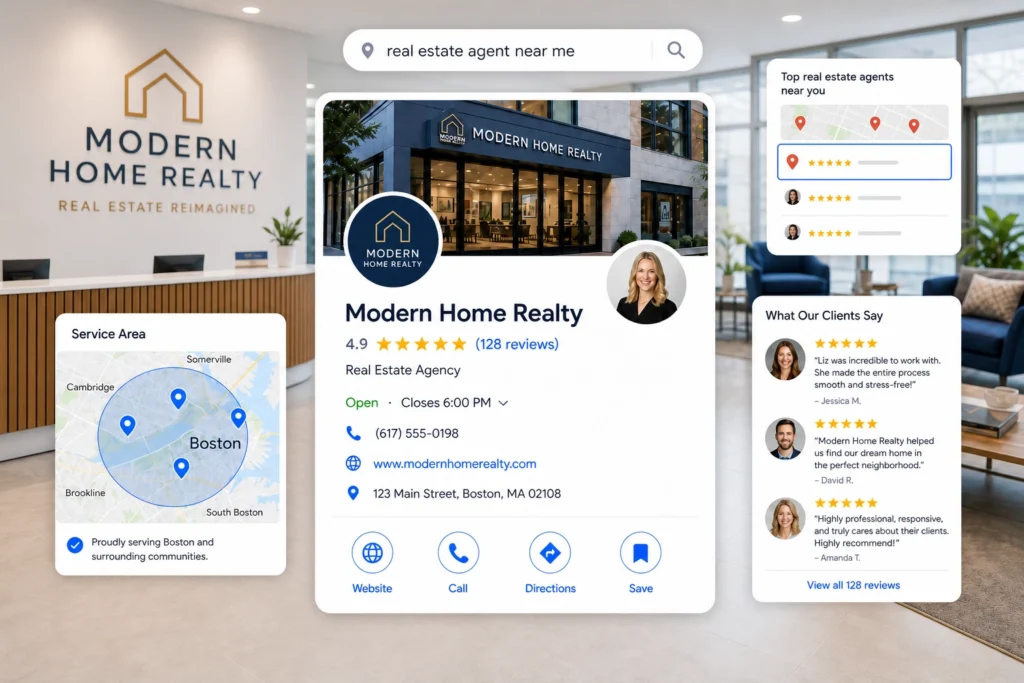
Local search is one of the strongest parts of digital marketing for real estate because many clients search by place.
Queries such as “real estate agent near me,” “listing agent in Austin,” or “best realtor in Brooklyn” show location-based intent. If an agent appears in those moments, the path from search to inquiry becomes shorter.
The first step is a complete Google Business Profile. Add the service area, phone number, website, business hours, photos, services, and a clear business description. Keep the profile active with updated images, posts, and review replies.
From there, local SEO for real estate agents should connect the business profile with the agent’s website and local pages. The agent’s name, phone number, service areas, reviews, neighborhood content, and directory listings should all support the same local presence.
This gives search engines more context about where the agent works and which searches the website should appear for.
A simple local SEO checklist includes:
- Add location terms naturally to service pages.
- Create pages for major neighborhoods or service areas.
- Write clear title tags and meta descriptions.
- Add internal links between related local pages.
- Keep name, address, and phone details consistent across directories.
- Ask satisfied clients for honest reviews after closing.
Build a Website That Turns Interest Into Contact
Real estate marketing needs a home base. Social platforms change rules, ad costs shift, and third-party listing platforms control much of the audience. A website gives agents one place to publish services, local guides, market updates, testimonials, listing pages, and contact forms.
A clear website makes digital marketing for real estate easier to convert. Visitors should quickly understand where the agent works, who they help, what listings they represent, and how to take the next step.
The site does not need to be large. It needs to be clear. A practical agent website should include:
- Buyer and seller service pages
- Active listings
- Neighborhood or service-area pages
- Helpful resources or market updates
- Testimonials or proof of experience
- Contact details and a calendar link
- Privacy or email consent language
Agents who need a faster starting point can review real estate website templates before planning the site structure.
Make Listing Visuals Part of the Marketing Plan
Real estate marketing does not begin after a listing goes live. It starts with the assets buyers see first: photos, floor plans, listing copy, short videos, and virtual tours. These assets feed the website, MLS, social media, email campaigns, and paid ads.
This is where digital marketing for real estate often succeeds or falls short. If the visuals look dark, cluttered, or hard to understand, every channel has to work harder. If they look clean, bright, and easy to read, the campaign starts with more momentum.
Use Real Estate Photo Editing Before Publishing the Listing
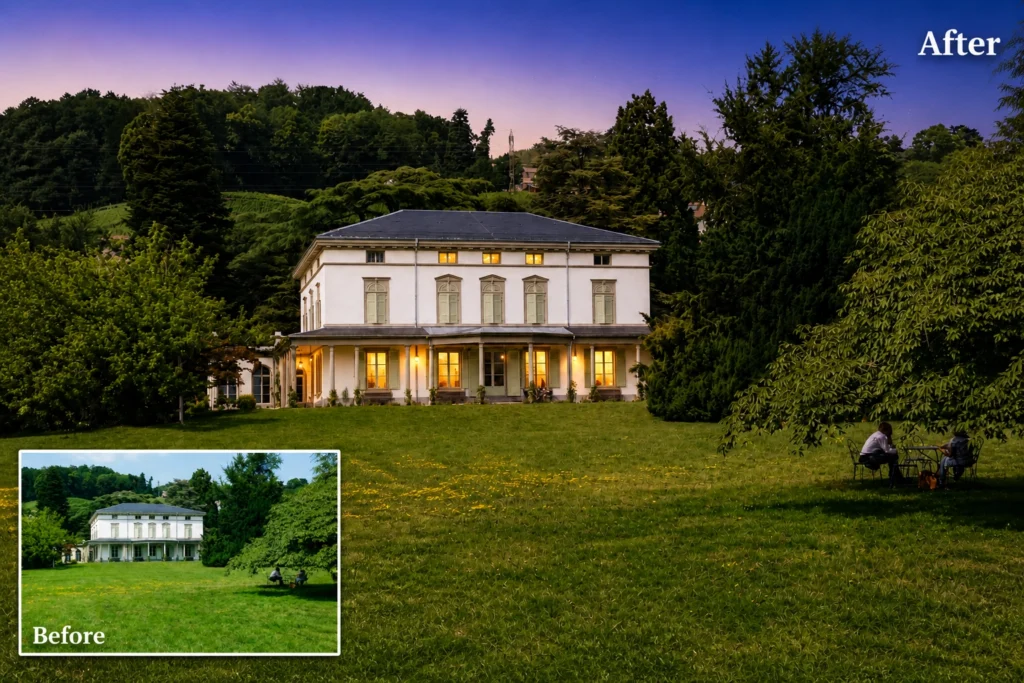
Real estate photo editing helps agents prepare brighter, cleaner, and easier-to-read listing images. The work often includes exposure correction, white balance, perspective correction, image cleanup, and removal of small distractions that pull attention away from the room.
The same photo set appears across several channels. Weak photos can hurt the listing page, social posts, ads, brochures, and email campaigns at the same time. Clean visuals give the whole marketing plan a stronger base.
Use Virtual Staging for Empty or Hard-to-Read Rooms
Vacant rooms create a marketing gap. The property is visible, but the sense of use is missing. Virtual staging helps close that gap by giving buyers a clearer idea of scale, layout, and room purpose.
helps close that gap by giving buyers a clearer idea of scale, layout, and room purpose.
Virtual staging works especially well in rooms where buyers need help reading proportion or function, such as living rooms, bedrooms, dining areas, home offices, and open-plan layouts. The staged images can support the listing page, MLS presentation, social posts, paid ads, email campaigns, and open house materials.
The edit still needs clear limits. Staging should not change the property itself, hide defects, or suggest permanent features that do not exist. Agents should also check MLS rules before publishing staged photos.
Use Social Media for Trust, Not Random Posting
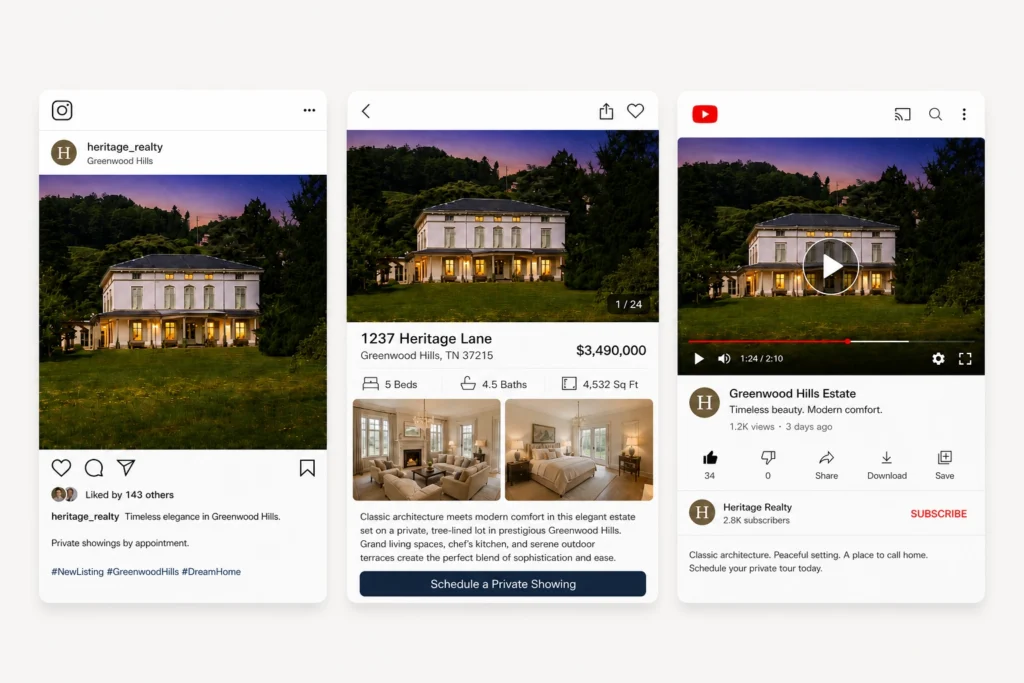
Social media works best when it has a clear role. The strongest posts help prospects answer one question: Does this agent understand my situation?
Agents do not need to post on every platform. Instagram, Facebook, LinkedIn, YouTube, TikTok, and local groups all serve different habits. A local agent can often start with one visual platform and one relationship platform.
A simple weekly rhythm might include:
- One listing post
- One local market note
- One buyer or seller tip
- One short video answering a common question
- One client story
- One community post about a local place or event
That rhythm helps the agent stay visible without sounding like a billboard. Social media should feel like a conversation in the neighborhood, not a megaphone in a hallway.
Add Paid Ads When the Funnel Can Handle Leads
Paid ads can help agents reach local buyers and sellers faster than organic channels alone. Google Ads works best for high-intent searches, such as “listing agent near me” or “homes for sale in [city].” Meta Ads can support listing promotion, seller guides, open houses, and retargeting warm audiences.
Before spending money, agents need three things: a clear offer, a focused landing page, and a follow-up process. Without those pieces, paid traffic turns into wasted attention.
A simple paid-ad funnel should answer:
- What is the user clicking for?
- Where does the click land?
- What action should the visitor take?
- Who follows up, and how fast?
Paid ads should not replace SEO, referrals, or content. They work best when the rest of the digital marketing system is ready to capture and respond to demand.
Run Email Campaigns With Permission and Purpose
Email works best when the list comes from real relationships: past clients, open house visitors, website form fills, webinar signups, and people who ask for market updates.
A useful email plan can include monthly market updates, new listing alerts, open house reminders, seller prep tips, buyer education sequences, past-client follow-ups, and seasonal home maintenance notes.
Every email should have a clear next step. Ask readers to book a call, view a listing, read a guide, or reply with a question.
Agents should also keep consent and unsubscribe rules in mind. Email should feel helpful and expected, not like another cold message in the inbox.
Use AI Tools to Save Time Across the Workflow
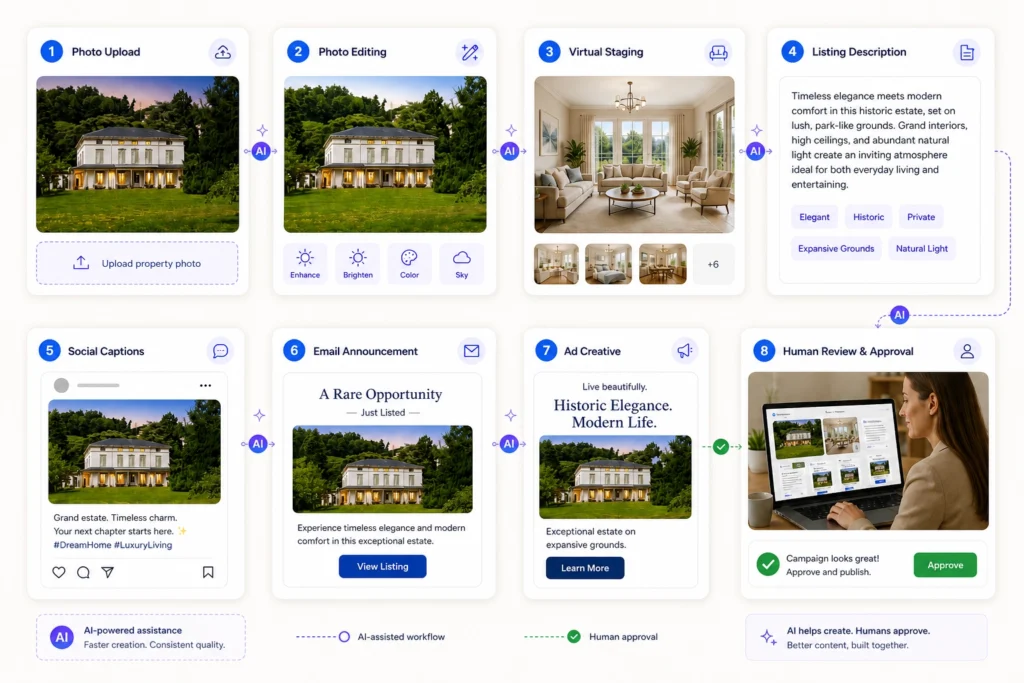
AI can help agents move faster across the marketing workflow. It can draft listing descriptions, summarize market notes, create social post variations, plan email sequences, stage vacant rooms, and prepare first drafts of campaign assets.
Still, AI should work as a production helper, not the final decision-maker. Agents know the property, the client, the local market, and the compliance limits. They should review facts, claims, photo accuracy, and tone before anything goes live.
A practical AI workflow might look like this:
Edited and staged photos → verified listing copy → social captions → email announcement → retargeting ad → human review
That last step matters. AI can speed up production, but agents still own the final message.
Mini Case Study: A Vacant Condo Before Launch
An agent has a vacant two-bedroom condo, average lighting, and one week before listing day. The property needs more than a quick MLS upload.
A better plan starts with the visuals. The agent enhances the photos, virtually stages the main living room and primary bedroom, and selects the strongest images for the listing page.
Then the same assets support the full campaign:
- MLS listing
- Property page
- Google Business Profile post
- Instagram carousel
- Email to active buyers
- Small retargeting campaign for recent website visitors
The workflow follows one clear path: prepare the listing visuals first, then carry them into every marketing channel.
Digital marketing for real estate works better when the property looks ready before the campaign begins.
Final Checklist for Real Estate Agents
Before the next listing or campaign, agents should check the basics:
- Google Business Profile is complete and active.
- Website pages are clear, updated, and easy to navigate.
- Local SEO basics are in place.
- Listing photos are edited before publication.
- Virtual staging is used where rooms need visual context.
- Social posts are planned before the listing goes live.
- Email announcement is ready.
- Paid ads lead to a focused landing page.
- Follow-up process is ready for new leads.
- Results are tracked after launch.
Conclusion
Digital marketing for real estate works best when every channel supports the same goal: helping the right people find, understand, and act on a listing or agent brand.
SEO helps agents appear in local searches. A clear website gives prospects somewhere to go. Social media builds trust over time. Email keeps warm contacts engaged. Paid ads can add speed when the funnel is ready. Strong listing visuals make the property easier to understand across every channel.
The results rarely come from one big push. Agents usually build momentum through repeated signals: useful content, accurate local visibility, clear listing photos, consistent follow-up, and steady activity on the channels they can manage well.
FAQs
How do listing photos affect real estate marketing?
Listing photos affect nearly every online channel. They appear on MLS, property pages, social posts, email campaigns, and ads. Cleaner photos help buyers understand the property faster.
Should real estate agents use AI for marketing?
Agents can use AI for first drafts, image editing, staging, social captions, email ideas, and campaign planning. Human review remains necessary for accuracy, compliance, and local market judgment.
How long does digital marketing for real estate take to show results?
Digital marketing for real estate usually needs steady work before results become clear. SEO, content, reviews, and social trust build over time, while paid ads and email campaigns can bring faster feedback when the offer and follow-up process are clear.