Many real estate marketing strategies now rely on the right mix of tools. Some real estate apps help agents capture leads, while others support listing preparation, property search, investment research, or buyer decision-making.
Because of that, real estate apps play a bigger role in how properties are marketed, evaluated, and managed. This guide breaks down the best real estate apps in 2026 by use case, making it easier to understand where each one fits.
Best Real Estate Apps for Home Search
Zillow
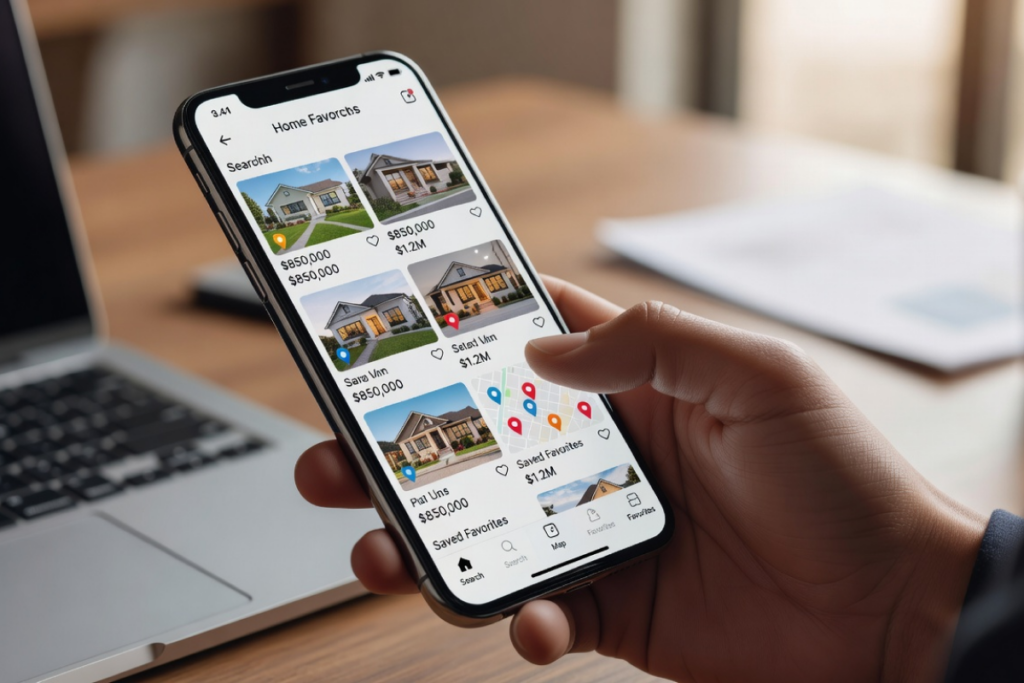
Zillow is one of the most widely used home search platforms because it combines listing discovery with pricing context and search tracking. Users can search homes for sale and rent, save listings, set alerts, compare home values through Zestimate, and narrow results with map-based filters.
That makes Zillow especially useful during the early stages of a property search. Buyers and renters can explore neighborhoods, compare inventory, follow pricing patterns, and keep up with new listings over time rather than relying on a single search session.
Best for:
- Listing discovery
- Saved searches and alerts
- Neighborhood and market comparison
Redfin
Redfin is also a home-search app, but it is geared more toward active buyers than casual browsing. Beyond listing search, it is known for features that help users move from research to action, including tour booking, saved homes, and market data.
Its search tools and housing data make it useful for buyers who want clearer comparisons between homes, price changes, and local inventory. In practice, Redfin fits users who are already narrowing their options and want a closer connection between search, tour scheduling, and decision-making.
Best for:
- Buyers ready to book tours
- Users comparing multiple homes
Realtor.com
Realtor.com is a strong option for users who want a more guided home-search experience. The app includes map-draw search, alerts for new listings and price drops, 3D tours, room-based photo sorting, and mortgage tools such as payment calculators.
Together, these features make Realtor.com useful not just for finding listings, but also for comparing affordability and screening properties more efficiently.
Best for:
- Buyers who like comparing property details
- Users tracking price changes
Best Real Estate Apps for Agents
AI HomeDesign
AI HomeDesign supports the listing-preparation side of an agent’s workflow. It helps agents use virtual staging to present vacant rooms more clearly and make listing photos feel more complete and inviting.
Agents can also use it to remove unwanted items, improve image quality, and turn daytime exterior photos into dusk-style visuals. Together, these features make AI HomeDesign useful before a listing goes live, especially when the goal is to present the home more clearly and strengthen its online appeal.
Best for:
- Pre-listing photo preparation
- Vacant-room staging
- Stronger online listing visuals
Open Home Pro
Open Home Pro is built for one specific task: running open houses in a more organized way. Instead of relying on paper sign-in sheets or scattered follow-up notes, agents can collect visitor details digitally, customize sign-in forms, and keep open-house leads in one place for later follow-up.
Its value lies in creating a cleaner process. Open houses often generate names and numbers that never turn into a usable workflow. Open Home Pro helps agents turn foot traffic into an organized lead list and follow up more consistently after the event.
Best for:
- Open house lead capture
- Digital sign-in management
- Post-event follow-up
Best Real Estate Apps for Investors
PropertyRadar
PropertyRadar is built for prospecting and property intelligence. Its main use case is helping investors and real estate professionals identify properties and owners using filters tied to location, ownership, equity, foreclosure signals, and related data.
The app supports lead generation, territory planning, and targeted outreach more directly than general listing apps built mainly for browsing active properties. For users who work from data rather than waiting for inbound leads, PropertyRadar fits that workflow especially well.
Best for:
- Prospecting
- Direct outreach
- Geographic lead targeting
LoopNet
Unlike most real estate apps, which focus on residential properties, LoopNet is designed for commercial real estate. It helps users search office, retail, industrial, multifamily, and land listings, while offering property details that matter more in commercial decisions, such as building type, location fit, and broker contact options.
That makes LoopNet especially useful for commercial investors, brokers, tenant reps, and business owners looking for lease or purchase opportunities. Rather than functioning as a consumer home-search app, it serves as a marketplace for commercial property search and evaluation.
Best for:
- Commercial investors
- Tenant reps
- Business owners seeking space
Best Real Estate Apps for Design Ideas and Room Planning
Houzz
Houzz works like a large visual reference library for home design and renovation planning. Its main strength is its photo database, where users can browse millions of interiors, exterior spaces, kitchens, bathrooms, materials, and furniture ideas by style, room type, and theme.
Users can also save images into Ideabooks, which act as project folders for collecting references, comparing styles, and organizing ideas before making renovation or purchase decisions.
Houzz also connects users with home service professionals and products, making the path from inspiration to execution more direct.
Best for:
- Planning home updates
- Design inspiration
- Finding design-related products and professionals
RoomSketcher
RoomSketcher focuses on planning how a space will function, not just how it will look. Users can draw floor plans, place walls, windows, doors, and furniture, and review layouts in 2D or 3D.
That helps homeowners, designers, and property professionals think through room arrangement, movement, and scale before making changes in real life.
Best for:
- Layout planning
- Floor plan visuals
- Space flow and measurement planning
Quick Comparison of the Best Real Estate Apps in 2026
The table below summarizes the apps covered in this guide by main use case. It gives buyers, agents, investors, and property owners a quick way to compare options before looking at each app in more detail.
| Use Case | Best Picks | Best For |
|---|---|---|
| Home search | Zillow, Redfin, Realtor.com | Buyers and renters |
| Open houses | Open Home Pro | Agents hosting open houses |
| Pricing reports | RPR Mobile | Real estate agents |
| Investor leads | PropertyRadar | Investors and prospecting teams |
| Commercial property | LoopNet | Investors, brokers, and tenant reps |
| Design ideas | Houzz | Homeowners and renovators |
| Floor plans | RoomSketcher | Homeowners, designers, and agents |
| Listing photos | AI HomeDesign | Agents preparing listings |
Final Thought
Real estate apps now do far more than support property search alone. Some help buyers track listings and compare markets, some help agents manage leads and prepare listings, some support investor research, and others make renovation planning or design decisions easier.
That range gives users more choice, but it also makes selection more important. In most cases, a small set of reliable tools that fit daily work offers more value than a crowded phone full of apps that rarely get used.
FAQs
Which real estate apps are most useful for agents?
Agents often need support in three areas: lead capture, follow-up, and listing preparation. Open Home Pro helps with open house sign-ins and post-event follow-up, AI HomeDesign supports listing photo preparation, and RPR Mobile helps agents handle pricing work and property reports in the field.
What are the best real estate apps for homebuyers?
Popular real estate apps for homebuyers include Zillow, Redfin, and Realtor.com. These apps help users browse listings, track price changes, compare neighborhoods, and follow new properties that match their saved searches.
Which real estate apps are useful for investors?
Investors often need more than general home-search tools. PropertyRadar supports prospecting and owner research, while LoopNet is better suited to finding and evaluating commercial properties.