The first step in ranking for local searches is to define the exact cities and neighborhoods a real estate agent wants to target. Then, using reliable keyword tools like Google Keyword Planner, Ahrefs, or Semrush, identify the search terms buyers and sellers use in those specific areas. Trying to cover every nearby town usually makes pages vague and difficult to rank. A focused list of target cities and neighborhoods also makes it easier to plan pages, listings, and posts without constantly changing direction.
Start with searches that include geo terms:
- “real estate agent in [City]”
- “listing agent [Neighborhood]”
- “homes for sale in [Neighborhood] [City]”
- “sell my house in [City]”
- “realtor near me” (support this intent with well-structured city pages and optimized Google Business Profile )
It also helps to review how buyers and sellers search for nearby agents by checking Google’s “People also ask” and Google Search Console.
Step 2: Set Up and Improve Your Google Business Profile
A Google Business Profile often appears before your website for local intent searches, so it functions like a first impression. It also gives search engines a clear set of signals about your service area, contact details, and business category.
Treat it as an asset that requires regular updates, not a one-time setup. Small, steady updates keep the profile active and useful to clients comparing agents quickly. This matters because prospective clients use the profile to call, message, or request assistance directly.
Here are the details that should remain complete and consistent:
- Business name, address, and phone (match the website and other listings)
- Service areas that reflect where you actually work
- Business hours
- Photos that reflect the current team and recent work
- Short posts that reference local activity when relevant (for example, an open house in [Neighborhood]
Step 3: Add City and Neighborhood Names Across Your Website
Search engines cannot guess a service area. They rely on consistent location signals across pages. Clients also look for that clarity when they land on a site.
In practice, SEO for real estate agents means being specific about the audience’s needs in key on-page elements, including page titles, headings, and descriptions.
When someone searches, for instance, “3-bedroom homes” in a given area, Google needs clear confirmation that the page truly focuses on that neighborhood. The agents who rank highest are not being vague or overly clever. They simply place the neighborhood name where search engines expect to find it.
Add city and neighborhood names where they provide real context:
- Page titles and meta descriptions
- Main headings (H1) and section headings (H2/H3)
- The opening lines of core pages like home, services, and contact
- URLs for location pages (for example: /real-estate-[city]/ and /homes-[neighborhood]-[city]/)
- Internal links between related pages, using descriptive anchor text
- Image file names and alt text when the image matches the area or a local listing
After updating these areas, read the page as a human. If the location terms feel forced, reduce them and keep only what feels natural.
Step 4: Create City pages and Neighborhood Pages
Location pages give agents a dedicated place to answer local searches like “agent in [City]” or “homes in [Neighborhood].” Local details only need to be written once, but those pages can be linked from blogs, listings, and your main navigation.
A city page can act as a hub, while neighborhood pages support it with more focused detail. This structure helps buyers who already have a neighborhood in mind, as well as those who are comparing different areas.
A useful location page usually includes:
- What the agent helps clients with in that area (buying, selling, relocation, investment)
- Practical local context (commute options, schools, amenities) written in a factual tone
- Links to related guides and listings on the site
- A clear contact path (form, phone, or booking link)
Step 5: Add Geo Context Inside Listings and Publish Local Content
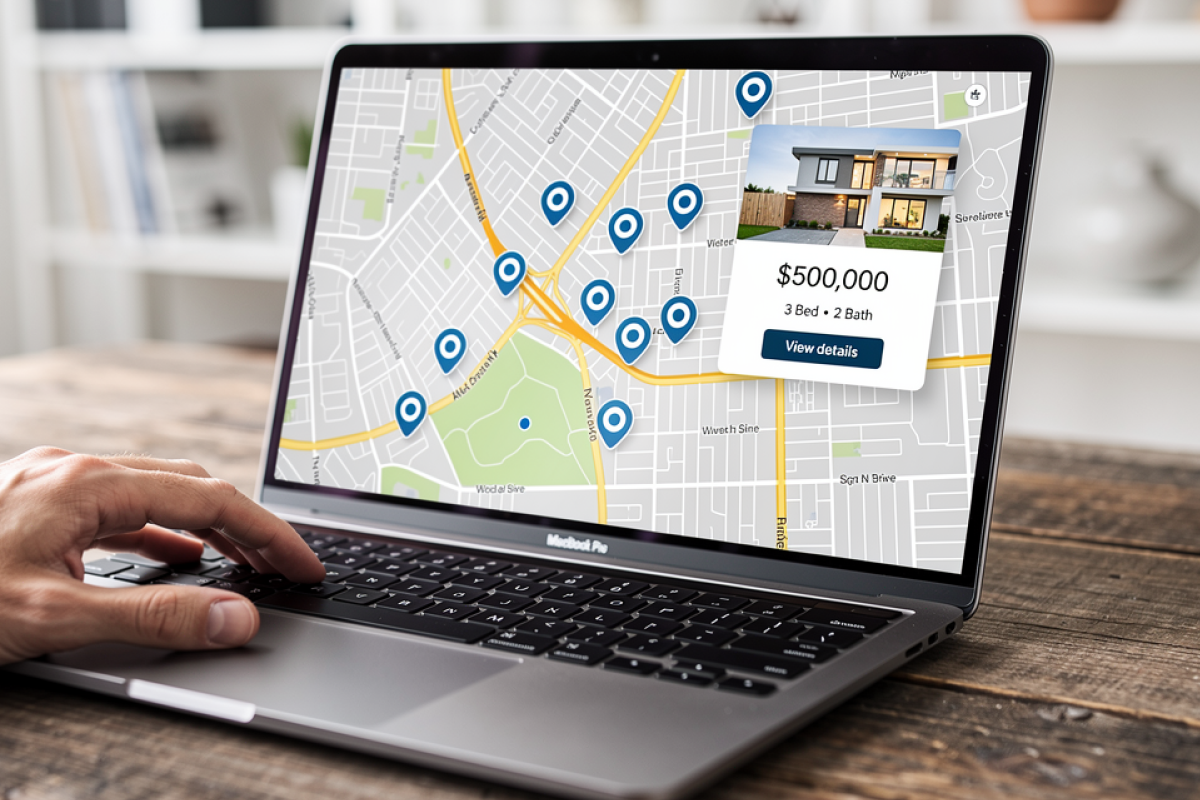
Listings and local posts prove active work within specific neighborhoods, not just general coverage. When a listing mentions the actual neighborhood and nearby landmarks, it can appear in more specific searches and encourage longer page engagement.
These details also help early-stage buyers and sellers who are comparing areas and narrowing down options. Because each listing or post can link back to core neighborhood pages, this builds a connected content structure that strengthens those main pages. The more relevant local content published, the more entry points search engines and users have to find the site.
For listings, include details such as:
- Neighborhood name and nearby landmarks where relevant
- Schools, transit, parks, and practical nearby features
- Local terms clients actually use when describing the area
For local posts, include the city or neighborhood when the topic is genuinely local:
- Put the location in the title
- Use it in at least one heading
- Mention it early in the post where it reads naturally
Step 6: Ask For Reviews and Citations

Trust signals matter in local search. Reviews influence how many people contact an agent after discovery, and they show evidence of real client work.
Citations matter because search engines compare your business name, address, and phone across the web to confirm consistency. This step often fixes hidden issues like duplicate listings or outdated phone numbers that confuse both clients and search engines.
What to do:
- Ask for reviews after closings and reply to each review (positive and negative)
- Keep business name, address, and phone consistent across the website and major directories
- Check for duplicate profiles and outdated listings, then update or remove them
- Add the business to reputable local and industry directories when relevant
Step 7: Track Results and Adjust Monthly

Local SEO for agents does not mean focusing on location pages. Search patterns shift with seasons, inventory levels, and buyer demand.
Start simple by tracking a few reliable metrics rather than building a complex dashboard. The goal is not to monitor everything; but to identify patterns that guide the next adjustment.
Performance data shows which neighborhoods generate interest and which topics resonate with potential clients. If a specific area repeatedly appears in search queries without a dedicated page, that signals an opportunity to create one. If certain content types drive more calls or form submissions, those formats deserve more attention.
Review performance monthly, then make one or two targeted adjustments based on clear trends. This steady rhythm prevents overreacting to short term fluctuations while keeping the strategy aligned with real client behavior. Small, consistent updates compound over time.
Track:
- Google Business Profile actions (calls, direction requests, website clicks)
- Search Console queries that include city and neighborhood names
- Leads (forms, calls, booked meetings)
- Performance of city and neighborhood pages
Then adjust:
- Expand pages that already get local searches visibility
- Add a neighborhood page when repeated demand appears
- Write a post when a local question surfaces frequently in calls or emails
Final Thoughts
Understanding the fundamentals of SEO for real estate agents gives a structured path to reach buyers and sellers already searching within specific service areas. However, agents don’t need to become a digital marketing expert or master all real estate marketing strategies to benefit from local searches. Many agents hire freelance SEO specialists or partner with SEO agencies that handle technical implementation while they focus on clients.
That said, a working knowledge of digital marketing for real estate agents supports better decisions about where to invest and how to evaluate results. Local SEO functions as one channel within a broader strategy that includes social media, email, paid ads, and content marketing.