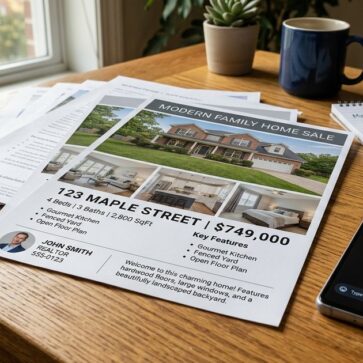
Agents rarely stop sending newsletters because they dislike email. Most stop because the blank page shows up every month, right when showings, inspections, and listing prep take over. A real estate newsletter works best when it runs on a simple system, not last-minute inspiration.
A monthly send also fits inside bigger real estate marketing strategies and supports lead sources that take time to mature. Email keeps the sphere of influence warm while other channels do the reach work in the background.
The sections below lay out a calendar, a segmentation method, subject lines, multimedia, and a safety net for compliance and list hygiene.
Real Estate Newsletter System That Prevents Monthly Burnout
A sphere of influence real estate list usually holds mixed intent. Some contacts browse listings for fun. Others plan a move, but avoid pressure. A single one-size email blast often misses both groups. That mismatch explains many unsubscribes.
A stable system uses one monthly cadence and one repeatable layout. Agents can send between day three and day five of each month. That window lands after most holiday inbox spikes and before weekends fill up. It also gives time to pull fresh market notes from the prior month.
Content belongs in two buckets. The email itself should hold public, non-sensitive value, such as a short market pulse, one homeowner tip, and one community item. The in-person or phone conversation should hold anything that can create tension or confusion in writing, such as pricing ranges for a specific home, net sheet estimates, and strategy critiques of a neighbor’s listing.
Fee and commission figures also fit the private bucket. A newsletter reaches the full list and lives forever in screenshots. Agents can explain compensation clearly in a consult, with brokerage-approved language and local rules in mind.
Twelve-Month Calendar for a Monthly Send

A calendar removes the hardest part of email marketing, deciding what to say. Agents can pick one theme per month and keep the format the same. Readers learn what to expect, so engagement stays steadier.
| Month | Theme and content hook | Send window | Subject line example |
|---|---|---|---|
| January | Year-ahead outlook plus a simple market pulse | Day three to day five | “A clear look at the market for the year ahead” |
| February | Love where the home is, neighborhood spotlight | Day four to day six | “A local favorite worth trying this month” |
| March | Spring market preview, timing notes for movers | Day three to day five | “Spring market preview for [City]” |
| April | Home maintenance checklist, storm prep, filters | Day three to day five | “April home checklist that saves headaches later” |
| May | Move-season planning, family-friendly logistics | Day three to day five | “Move-season tips that reduce last-minute stress” |
| June | Summer market check, school and commute guide | Day four to day six | “Summer market check plus a neighborhood guide” |
| July | Mid-year snapshot, community events roundup | Day three to day five | “Mid-year market snapshot and local events” |
| August | Back-to-school routines, fall prep projects | Day three to day five | “A simple fall prep list for homeowners” |
| September | Fall shift, pricing and negotiation patterns | Day four to day six | “What changed in the market since summer” |
| October | Safety and insurance reminders, local events | Day three to day five | “Home safety check and October events” |
| November | Gratitude note plus year-end homeowner tips | Day four to day six | “A quick thank you and a useful year-end tip” |
| December | Year in review, planning prompts for next year | Day three to day five | “The year in housing, plus what to watch next” |
Agents can batch the first quarter in one sitting and schedule sends in advance. Each month can also create a web version as a short blog post. That habit supports local SEO for realtors and gives a clean link to include inside the email.
The calendar stays flexible for local seasonality. Snow markets can shift spring themes later. Coastal markets can add storm readiness earlier. The theme stays the same, while the examples adapt.
Segmentation That Keeps Each Group Interested
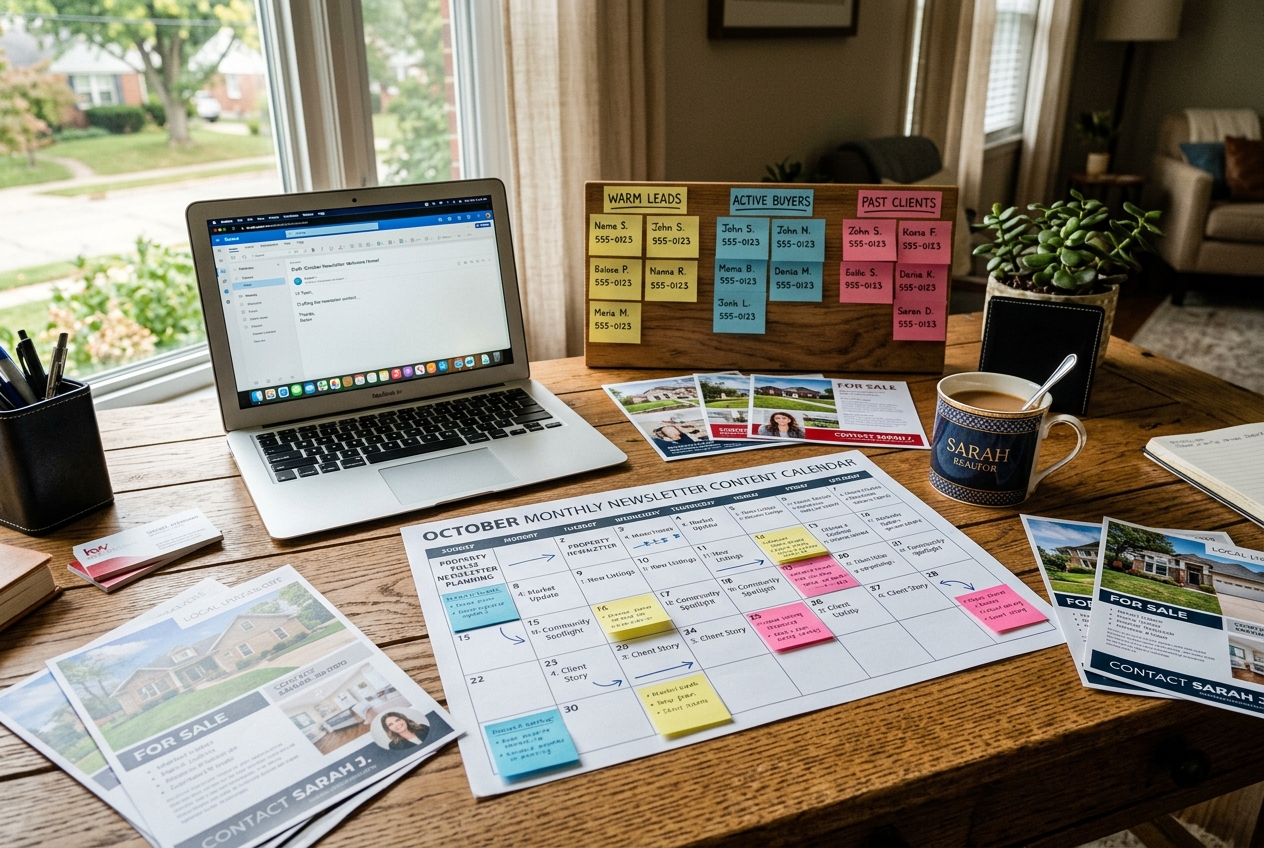
Most spheres contain at least four groups, even if the database is messy. Segmentation does not require four separate newsletters. It requires four variations of the same core email, with different openers and one different call to action.
A simple tagging model works in most CRMs. Agents can tag contacts as active buyer, active seller, past client, or cold lead. A fifth tag can mark a geographic niche, such as a farm area. That approach pairs well with real estate farming because the same monthly theme can carry a neighborhood-specific add-on.
January offers a clean example. The same market outlook can become four different emails:
- Active buyers get inventory notes, a short “what to watch” list, and a link to schedule a needs refresh call.
- Active sellers get timing guidance, a short prep checklist, and a prompt to request a pricing walk-through.
- Past clients get a homeownership check-in, maintenance value, and a soft referral reminder.
- Cold leads get community value first, plus a low-pressure “reply with a neighborhood” prompt.
Standard segmentation also has exceptions. Distressed sales often require a human-first, sensitive approach before any marketing cadence resumes. Rural or agricultural properties may need content that focuses on land use, water, and access, not only median prices. Off-market or pocket listing conversations belong in direct outreach, not a newsletter. Price-sensitive markets also reward shorter, value-heavy emails with fewer calls to action.
Real Estate Newsletter Templates as Reusable Content Categories
Agents who rely on “market update only” content usually run out of runway fast. A better approach treats the newsletter as a set of reusable modules. The send stays monthly, but the content rotates across categories.
Market and data modules work well when they explain one idea, not a data dump. Examples include “what days on market signals,” “how buyers use concessions,” or “why list price and sale price differ.” A short chart screenshot can work, if it stays readable on mobile.
Homeowner value modules keep past clients engaged even when they never plan to move. Topics include seasonal maintenance, insurance review reminders, simple energy-saving projects, renovation planning pitfalls, and contractor hiring tips. These modules also support soft seller nurture without asking for a listing.
Community and lifestyle modules often earn the most replies. Agents can highlight local events, new small businesses, school calendar reminders, park updates, and dining guides. The email becomes a local bulletin, not a sales letter.
Proof and personality modules add credibility without turning the email into a highlight reel. Examples include one recent success story with permission, one lesson learned from a transaction, or a behind-the-scenes “what happens before a listing goes live” note. For paid list growth, a short sign-up landing page can be promoted with real estate advertising ideas, then the same modules can fuel the welcome email.
Real Estate Newsletter Subject Lines That Win the Open
Inbox competition rarely comes from other agents. It comes from group chats, retail emails, and work alerts. Subject lines need clarity, local relevance, and a reason to open right now.
Five formulas usually cover most monthly themes. A local specificity line signals relevance, such as “What changed in [City] housing this month.” A value promise line offers a list, such as “Three homeowner tasks that prevent expensive calls.” A curiosity line works when it stays honest, such as “A small market shift most owners missed.” A personalization line can use a first name token if the CRM data is clean. A timeliness line works for seasonal windows, such as “Before spring showings start, check this.”
Preview text matters as much as the subject line. Many phone inboxes show it before the body. Agents can use preview text to finish the promise, name the neighborhood, or set one clear expectation.
Mobile reading also changes formatting. Agents can keep the opening paragraph short, use short section headers, and include one main call to action. Too many buttons create friction and reduce clicks.
A simple rule helps quality control. If the subject line cannot pass the “neighbor test,” it needs a rewrite. A neighbor should understand what the email contains in a single glance.
Video and Visuals That Make the Email Clickable
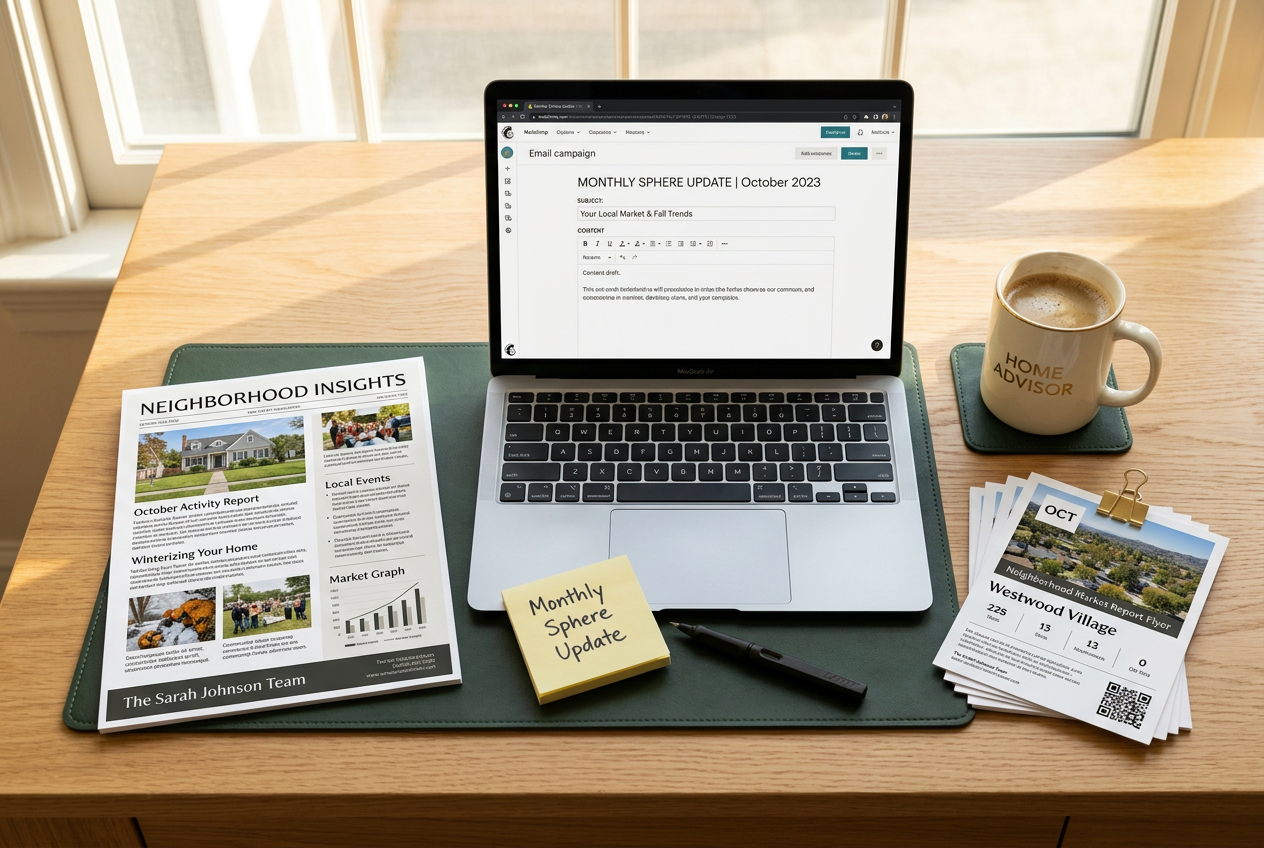
Text-only newsletters often feel interchangeable. Visuals create pattern breaks. Video creates a voice connection without a call. Both can fit inside a monthly email without complex editing.
Most email clients do not autoplay video. Agents can place a clean thumbnail image that links out to YouTube, Vimeo, or a landing page. A short caption under the thumbnail can set expectations, such as “sixty-second market note” or “two-minute tour highlight.” The click goes to the hosted video, not the inbox.
Listing and neighborhood visuals also matter. Agents can use AI HomeDesign tools to tighten presentation without rebuilding a photo shoot. Image Enhancement can correct lighting and clarity for web use. AI Item Removal can remove distractions that pull attention from the room. AI Virtual Staging can help a vacant room read as livable, as long as the agent adds the right Disclosure.
A safe disclosure pattern keeps messaging clean and consistent. “Disclosure: virtually staged image. Furniture and decor added digitally. See listing for current condition.” Many MLS Rules also require a clear label and a Virtually Staged Watermark on the image itself.
For agents building automation, AI-powered real estate marketing tools can draft market summaries, generate subject line variants, and create social captions from the same content. The workflow stays simple, and the agent still reviews for accuracy.
Benchmarks, Compliance, and Re-Engagement That Protect Deliverability

Metrics prevent guesswork. A healthy sphere newsletter often shows a strong open rate on the warmest segments and a lower open rate on cold leads. Clicks matter more than opens, because clicks signal intent. Unsubscribes matter most when they spike after a specific theme.
A practical benchmark set can stay qualitative and still guide action. Warm SOI lists can aim for “around a third” opens on the core monthly send. Click-through should land in the low single digits or better when the email includes one strong link. Unsubscribes should stay well under one percent per send. When opens drop, the subject line and send time usually need work. When clicks drop, the call to action often lacks focus.
Tool choice shapes execution. Some agents need a simple email builder. Others need CRM-based tags and automations. Reviews of best real estate apps often highlight which stacks integrate cleanly.
| Platform | Best fit | Strength | Watch-out |
|---|---|---|---|
| Mailchimp | Newer agents and small lists | easy templates and basic segmentation | CRM sync varies by setup |
| Flodesk | Brand-forward newsletters | strong design control | lighter reporting depth |
| Constant Contact | Agents who want support | good onboarding and event tools | less flexible automation |
| Follow Up Boss | CRM-first agents | tags and pipeline context | email design is simpler |
| kvCORE or BoomTown | teams and brokerages | lead capture plus routing | admin setup takes time |
| Klaviyo | advanced segmentation needs | strong data-driven flows | more complex to manage |
Compliance protects sender reputation and reduces risk. CAN-SPAM requires clear identification, an unsubscribe link, a physical mailing address, and honest subject lines. CASL often requires express or valid implied consent before sending. Agents can document consent, avoid purchased lists, and honor opt-outs fast. Broker guidance and local counsel can confirm rules for a specific region.
Re-engagement should happen before deleting dormant contacts. Agents can define dormant as no opens for six months or more. A simple three-email sequence works well: email one checks in and offers value, email two asks for preferences or a topic request, and email three confirms removal unless the contact opts back in. The sequence can run on day one, around day fifteen, and around day thirty. Clean removal protects inbox placement and keeps future sends healthier. Repurposed snippets from the newsletter can also support real estate social media marketing without creating extra work.
Frequently Asked Questions
How often should a real estate agent send a newsletter?
A monthly cadence works well for most spheres because it sets a reliable rhythm without crowding the inbox. Teams that publish frequent local content can add one extra email for major market shifts or community events. Consistency matters more than frequency. A stable monthly send beats a burst of weekly emails that stops after a few weeks.
What should go in a real estate market update email?
A strong market update email explains one or two clear changes, then ties them to decisions buyers and sellers face. A short narrative often beats a pile of stats. A single link, such as a “sold highlights” page or a request-a-report form, gives readers one simple next step. The rest can stay educational.
What is the safest disclosure for virtually staged images in newsletters?
A plain disclosure works best: “Disclosure: virtually staged image. Furniture and decor added digitally. See listing for current condition.” Many MLS rules also require the image itself to carry a Virtually Staged Watermark. Agents can keep the disclosure near the image and avoid implying that renovations, views, or finishes exist if they do not.
How can an agent grow a newsletter list without buying emails?
Consent-based list growth starts with existing contacts and clear opt-in points. Agents can add a website form, open house sign-up with permission, and a simple lead magnet like a neighborhood report. Social posts can point to the same sign-up page. Purchased lists usually harm deliverability and can violate consent laws.
What should an agent do when open rates keep dropping?
First, list hygiene usually fixes the biggest issues. Agents can remove hard bounces, suppress chronic non-openers, and confirm tags stay accurate. Next, subject lines often need more local specificity and clearer value. Finally, agents can reduce the number of links and focus each email on one call to action to lift clicks.