Most agents find real estate photographers the same way every time, a quick search, a few clicks, and a guess based on reviews. That approach breaks fast in busy markets, where photographers book out early and editing styles vary.
This guide helps agents and sellers find real estate photographers by city and hire with fewer surprises. It covers what to ask, what to expect for real estate photography pricing, and how to plan a listing timeline that does not slip.
The sections below move from selection criteria into a city index, then finish with ways AI HomeDesign can extend the value of any professional shoot.
What This Guide Covers
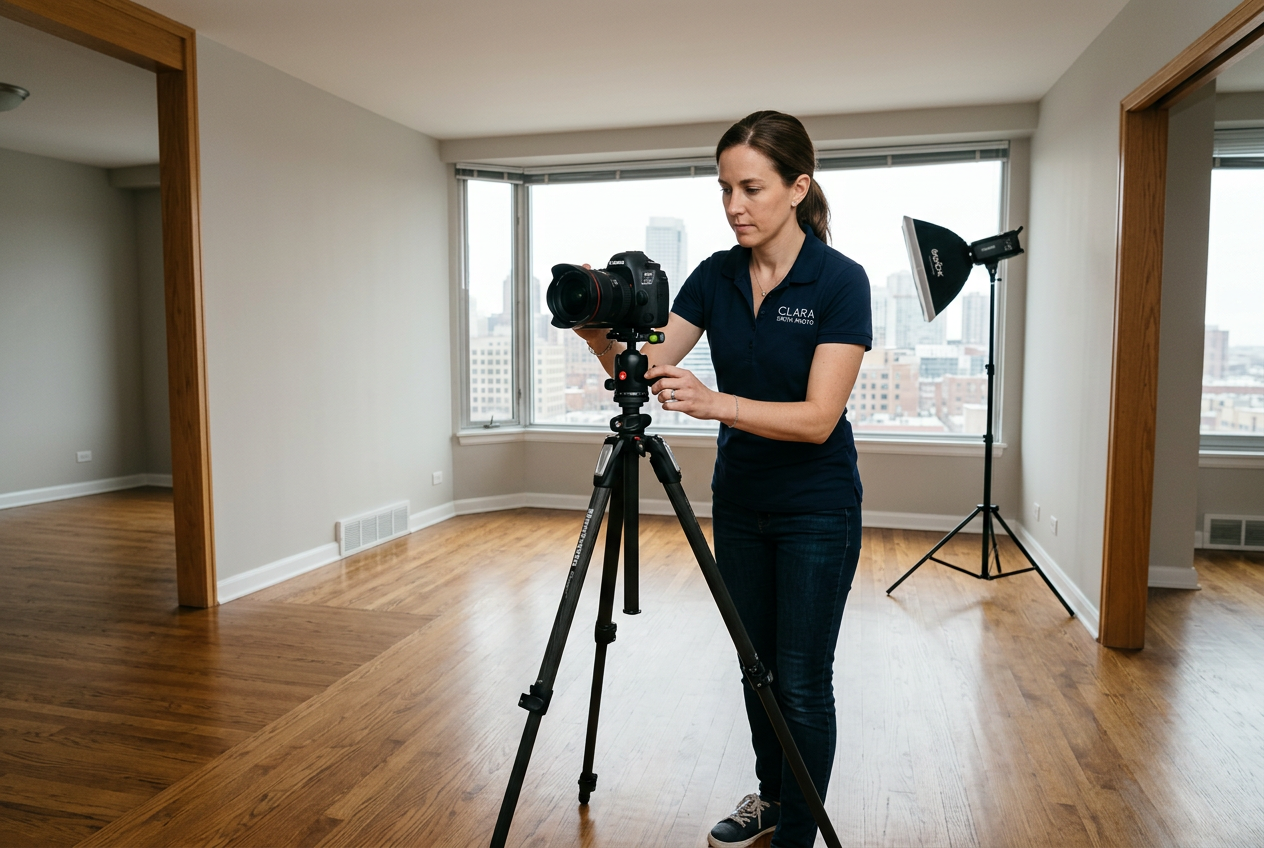
Listings rise or fall on the first swipe. A directory alone does not solve the real problem, which is picking the right specialist and setting clean expectations. This guide keeps the directory, then adds the buyer intelligence that most directories skip.
Agents can skim the scope, then jump to the city section that matches the market. Sellers can use the same framework to compare quotes and avoid mismatched packages.
The guide covers:
- how hiring standards differ between residential, luxury, and commercial work
- what a solid booking brief includes, and what belongs in a live conversation
- pricing patterns by service tier, plus what changes costs in major metros
- turnaround time norms, including a timeline that supports an MLS launch
- a city-by-city index for major U.S. markets, organized for fast lookup
Why Professional Photography Wins Attention in 2026 Markets
Fast-moving markets punish sloppy media. Buyers scroll past dim interiors and tilted lines in seconds. A strong photo set gives a listing a fair shot, even before a showing happens.
Photography also sits inside a wider plan. Good images support the listing page, social clips, email blasts, and paid ads. That is why many teams treat media as a baseline cost, not a nice extra. The planning framework in real estate marketing strategies shows where photos fit alongside pricing, distribution, and follow-up.
Competition changes the bar. Tight inventory often raises buyer expectations, because every listing looks polished. Softer markets create a different pressure, because photos must defend price and condition. Broader context in 2026 real estate market trends helps explain why media quality matters more when buyers hesitate.
Photography does not solve pricing, repairs, or staging by itself. It does reduce friction. A clean set of images makes condition clearer, makes layouts easier to read, and gives agents stronger assets for marketing.
How to Choose a Real Estate Photographer Without Guesswork
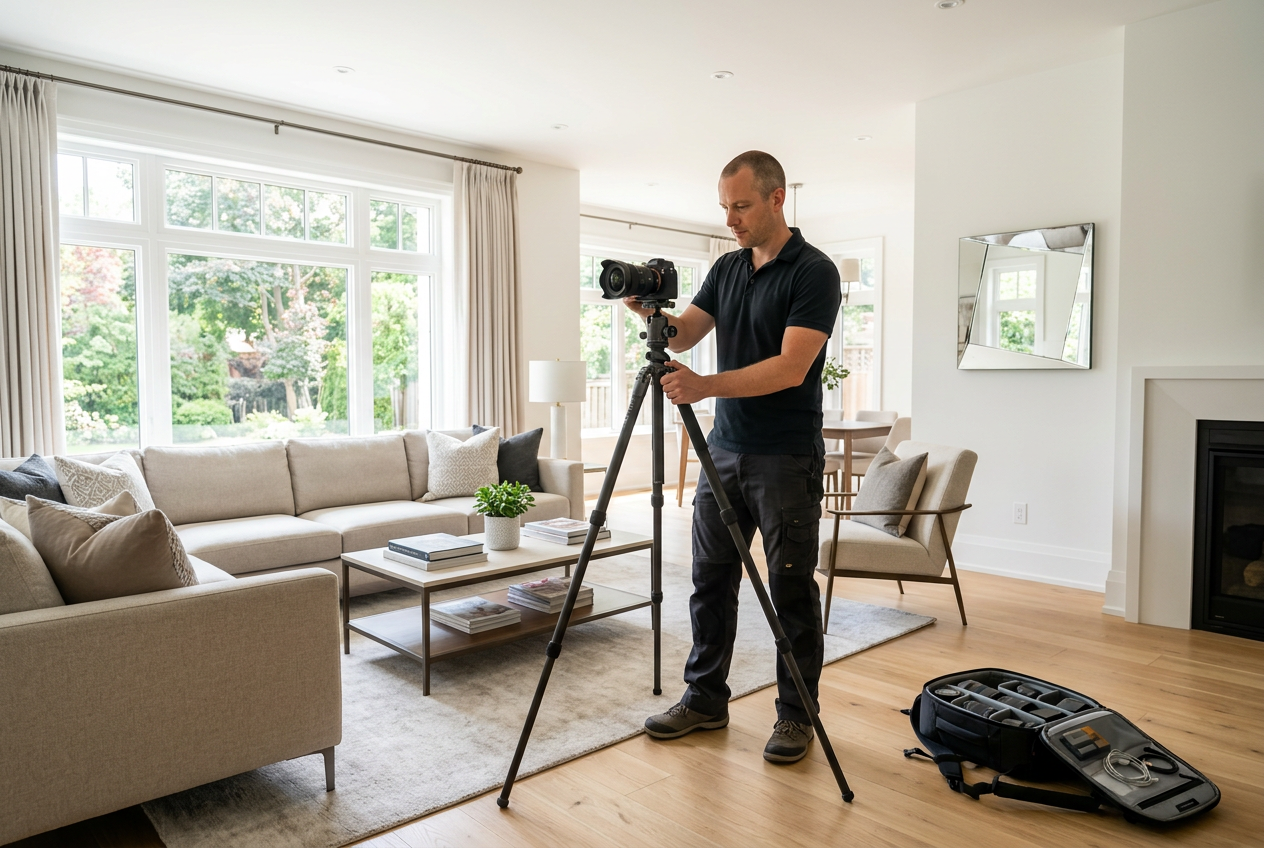
A portfolio can look great and still fail for a specific listing. Many misses come from mismatched style, unclear licensing, or timelines that do not match an MLS go-live date. A short vetting system prevents most of that.
Portfolio match: ask for recent work that matches the property type and condition. A luxury portfolio does not prove skill in small condos. A bright, airy style may not fit a wood-toned home.
Editing approach: confirm whether the photographer uses natural light, flash, HDR blending, or a mix. Look for straight vertical lines, true color, and clean window views. The technical basics in real estate photography tips help teams spot quality fast.
Scope control: define the shot list in writing. Include exterior angles, feature rooms, and any must-have details. Save pricing strategy, negotiation history, and commission terms for the listing appointment. Those topics do not belong in a media brief.
Usage rights: clarify licensing, term length, and where images can appear. Many photographers allow MLS and marketing use, but restrict resale to other agents. Ask whether the photographer releases unedited files. Many do not, and that can be fine.
Delivery and format: request MLS-ready JPEGs plus web versions sized for portals. Ask about naming conventions and delivery method. Confirm the delivery window in days before booking.
Proof of professionalism: confirm a contract, cancellation terms, and business insurance. Drone work also needs compliance.
Red flags: no full gallery samples, heavy distortion that bends walls, unclear licensing language, and vague delivery promises. Another red flag is pressure to discuss listing commission inside the media agreement.
Real Estate Photography Pricing Benchmarks by Service Tier
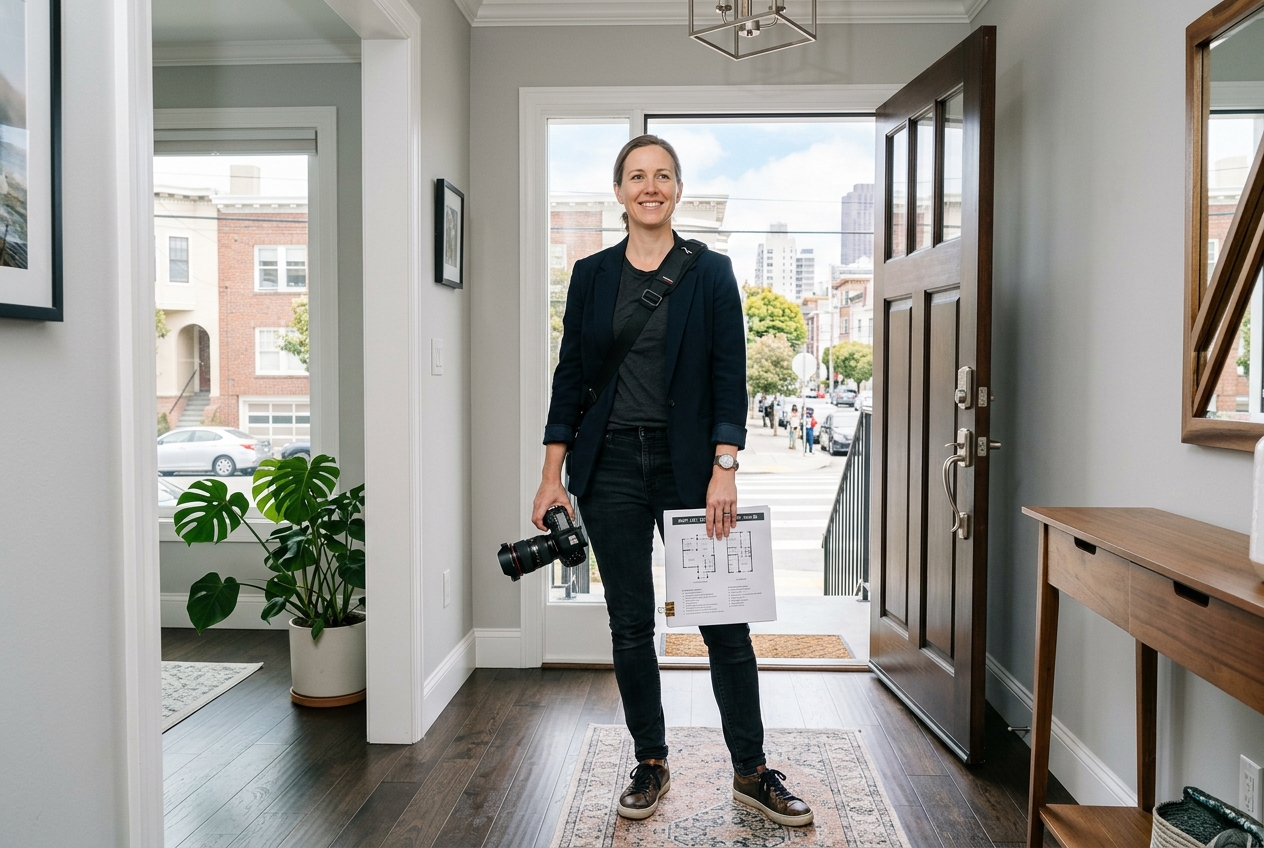
Sticker shock often comes from unclear scope, not greedy pricing. A small home with photos only can cost far less than a larger home with drone, video, and a 3D tour. City tier also matters. Dense metros often run higher because parking, travel, and demand push schedules.
Pricing conversations work best when the photographer quotes a package with a clear photo count target, add-on options, and a defined revision policy. A line-item menu can help too, but packages reduce confusion for sellers.
Agents can also separate media costs from listing commission conversations. A photographer quote should show media fees only. Commission or fee splits belong in a listing agreement discussion, not in a vendor estimate.
| Service tier | What is usually included | Common fit | Budget signal |
|---|---|---|---|
| Photo only | edited interiors and exteriors, MLS-ready delivery | entry-level and mid-market homes | low hundreds |
| Photo plus aerial | photo set plus drone stills, sometimes short clips | lots, views, waterfront, acreage | mid hundreds |
| Full media package | photos plus video walkthrough plus 3D tour or floor plan | competitive listings needing broad reach | high hundreds to low thousands |
| Luxury or commercial | longer shoot, more angles, detail work, special scheduling | high-end homes, retail, office, hospitality | thousands |
A quote can still vary inside a tier. Square footage, travel time, stairs, and access restrictions all change time on site. Editing style also changes cost. Some photographers deliver a bright HDR look, others deliver a more natural finish.
Real Estate Photography Turnaround Time and Listing Timeline Planning
A listing timeline falls apart when media arrives late. Photos often control the MLS launch date, which then controls showing volume. A standard delivery window for edited photos is one to two days, because photographers need time for color work, straightening, and window pulls.
Video and 3D work take longer. A video walkthrough often needs two to four days because editing includes audio cleanup, pacing, and export. A 3D tour also runs two to four days when processing and hosting setup come into play.
Agents can plan backward from a target launch date. Schedule the shoot early in the week when possible. That timing leaves room for weather shifts, small reshoots, and seller cleanup.
Rush options exist, but teams should treat them as exceptions. Same-day delivery can work in dense markets where photographers run large editing pipelines. It can also reduce quality if the photographer cuts corners.
Edge cases change the timeline:
- Distressed sales often need safety checks and sensitive scheduling.
- Tenant-occupied units may only allow short windows.
- Rural or agricultural properties may require extra travel and weather timing.
- Off-market or pocket listings may prioritize speed over full packages.
- Price-sensitive markets may call for photo-only first, then upgrades if traction lags.
Real Estate Media Services Explained Beyond Standard Photos
Many listings need more than stills, but add-ons only help when they match the property story. The goal is not to buy every option. The goal is to remove the buyer questions that block a showing.
Drone media fits properties where land, views, or access matters. Agents should confirm FAA compliance and ask whether the pilot holds FAA Part 107 certification. That question also signals professionalism.
Video walkthroughs support social posts and listing pages. A good walkthrough shows flow and scale. It should avoid fast pans and heavy fisheye distortion. Agents can ask for a sample that matches the home size.
A 3D tour helps remote buyers understand layout. It can also reduce wasted showings. Some sellers dislike it, because it exposes clutter. A clean prep matters more when a tour exists.
Floor plans add clarity for buyers who scan fast. Some photographers create measured plans. Others create schematic plans from photos or scans. Ask whether room labels and exterior dimensions are included.
Before booking add-ons, agents can ask one question: which service will change buyer behavior for this property. If the answer is unclear, photos may be enough.
Matching Property Type to the Right Photography Specialist
A photographer who shines in one niche can struggle in another. Matching the listing type to a specialist reduces retouching fights and reshoot risk. It also keeps sellers calm, because expectations stay realistic.
Luxury homes often need controlled lighting, clean window views, and optional twilight exteriors. A luxury real estate photographer should show consistent vertical lines and restrained color. The portfolio should include high-end kitchens and baths with mixed lighting.
Commercial real estate photographer work needs a different eye. Retail and office listings need context, signage, parking, and approach shots. Tenants may require privacy. The photographer should understand access rules and timing.
Vacation rentals need a lifestyle feel. The photographer should show bedding, outdoor seating, and amenities that sell weekends. Bright photos help, but the set should still stay honest.
New construction and builder listings often need repeatability. The photographer should handle progress documentation, model homes, and consistent angles across phases.
| Property type | Specialist signals to look for | Media add-ons that often help |
|---|---|---|
| Luxury residential | controlled lighting, twilight experience, clean windows | twilight, drone, video |
| Condo and urban | small-space composition, bright but natural finish | floor plan, short video |
| Commercial | context shots, signage, access planning | drone, video, measured plan |
| Vacation rental | lifestyle framing, amenity coverage, brand consistency | video, detail set |
| New construction | repeatable angles, schedule discipline, site safety | progress set, drone |
Real Estate Photographers: City Directory and Search Shortcuts
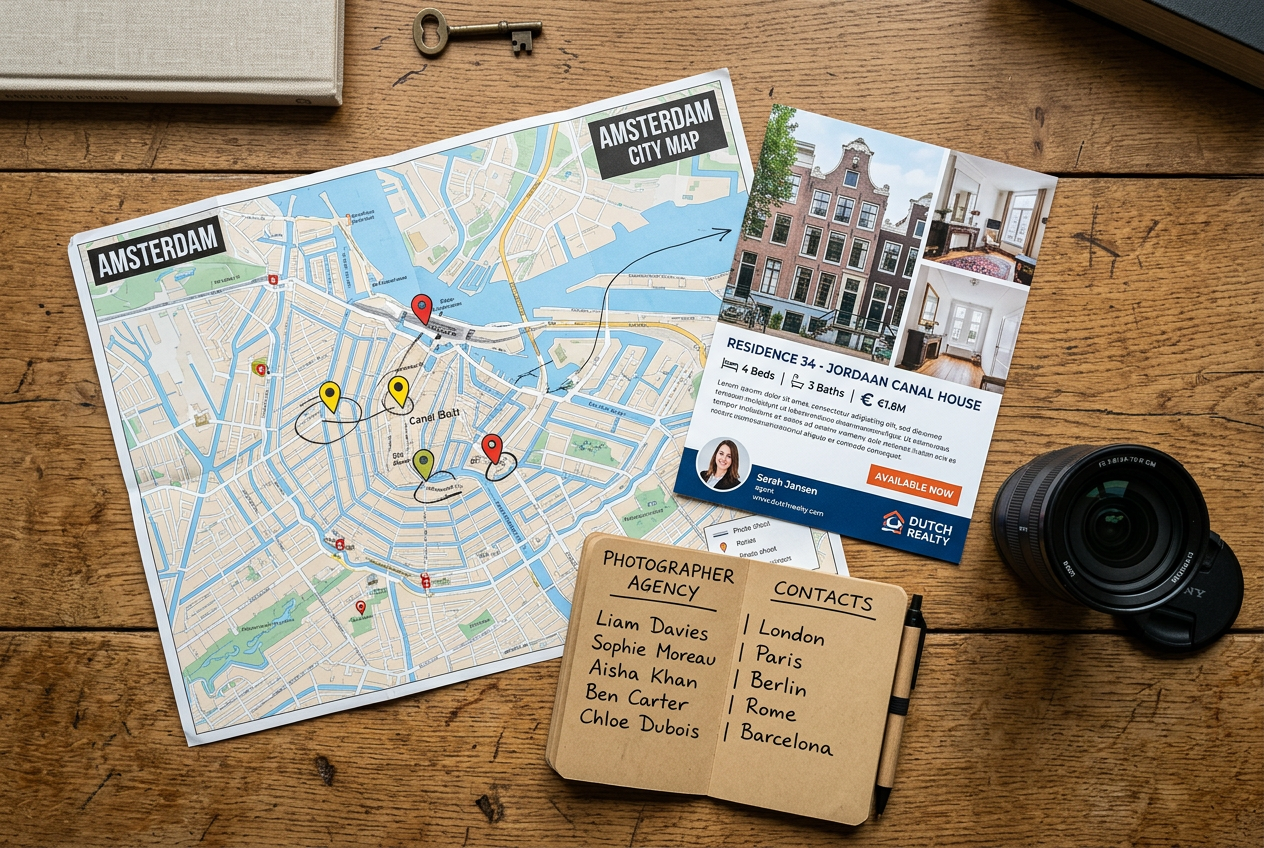
A city index works best when it pairs local search tactics with realistic expectations. Aggregator lists can still help, but they rarely explain what makes one photographer a fit for a specific listing. The notes below focus on supply, scheduling, and common service availability.
Search shortcuts that work in most markets include Google Business profiles, local real estate media studios, broker referral lists, and Instagram portfolio searches. Many photographers also post full galleries on their own sites, which reveal consistency better than a highlight reel.
Northeast: demand spikes in spring and early fall, so early booking matters.
New York City
Dense buildings and tight access rules push photographers toward efficient workflows. Condo specialists matter here, because window exposures and mixed lighting can get tricky. Many teams also prefer fast delivery to support quick launch cycles.
Boston
Seasonality drives demand. Snow, rain, and early sunsets affect exterior scheduling. Floor plans and 3D tours often help buyers who compare similar neighborhoods quickly.
Philadelphia
Row homes and tight streets call for clean verticals and careful lens choice. Many local studios offer photo plus video bundles, which can support social marketing in competitive zip codes.
Washington, DC
Security-conscious condos and townhomes often require strict access timing. Agents can confirm building rules for tripods, drones, and common-area shots before the shoot.
Southeast: exterior light and greenery create strong curb shots, but weather shifts fast.
Miami
Bright sun and reflective surfaces demand controlled exposure. Waterfront and high-rise listings often justify drone stills and clean balcony shots.
Atlanta
Suburban inventory creates steady demand for photo-only packages, plus optional video. Photographers with consistent color work can help, because red clay and green lawns can skew tones.
Charlotte
Newer builds and mixed inventory make generalists common. Agents can look for photographers who show both interiors and exteriors across different light conditions.
Jacksonville
Coastal light can look harsh at midday. Photographers who schedule exteriors for softer light often produce cleaner results. Drone work can help when waterways and lots add value.
Tampa
Water views and outdoor living spaces drive value. Teams often add aerial angles for homes near bays, bridges, or beach access.
Nashville
Demand can swing with market cycles and seasonality. Photographers who offer fast delivery and consistent editing style often win repeat agent work.
Midwest: interiors often need strong lighting control, especially in winter.
Chicago
High-rises and condos make small-space composition important. A photographer should show clean window pulls and true color in mixed lighting.
Indianapolis
Many listings fit photo-only needs. Agents can still ask for a full gallery sample to confirm consistency across bedrooms and basements.
Columbus
Suburban homes often benefit from simple, bright edits. Floor plans can help buyers compare layouts when multiple similar listings hit at once.
Minneapolis
Seasonal exteriors can challenge curb appeal. Photographers who handle snow scenes and gray skies well can protect listing presentation.
Detroit
Older housing stock can bring low light and tight rooms. A photographer with flash skill can show space accurately without turning interiors orange.
Southwest: big skies and new construction create strong exterior opportunities.
Austin
Fast schedules and steady new inventory raise demand. Photographers who offer drone add-ons can help when lots, trails, or skyline views matter.
Dallas
Large homes and bright sun reward controlled exposure. Many media teams here offer packages that scale from entry listings to luxury.
Fort Worth
Inventory mix ranges from urban to acreage. Agents can match photographers to the property story, because wide lots and ranch features need different angles.
Houston
Weather changes quickly, so flexible scheduling matters. A photographer who plans exteriors around storms can prevent reshoots.
San Antonio
Many sellers want value-focused packages. Photo-only can work well, with upgrades reserved for premium properties or scenic lots.
Phoenix
Desert light can blow out exteriors. Photographers with strong color control can keep stucco and stone textures accurate.
Las Vegas
High contrast light makes timing important. Photographers who handle reflective surfaces and pools can protect the look of luxury listings.
Denver
Mountain views often justify aerial angles, but weather can shift fast. Booking earlier in the week can help avoid weekend demand spikes.
West Coast and Pacific Northwest: high expectations and diverse architecture raise the skill bar.
Los Angeles
Photographers often specialize by neighborhood and price tier. Twilight and lifestyle framing can matter for high-end listings. Traffic and parking also affect scheduling.
San Diego
Coastal light and outdoor spaces drive buyer interest. Photographers who balance indoor and patio exposures can show flow better.
San Francisco
Victorian homes and tight rooms require careful lens work. Agents can look for portfolios that handle mixed lighting without oversaturation.
San Jose
Tech-driven buyers often respond well to clean, minimal presentation. Floor plans and 3D tours can help when buyers compare layouts quickly.
Seattle
Overcast skies call for strong interior lighting and clean white balance. Photographers who keep greens and grays natural tend to produce a calmer look.
Portland
Craftsman homes and mature trees create lower interior light. A photographer with flash skill can keep wood tones accurate.
Sacramento
Suburban inventory supports steady demand for photo packages. Teams can still prioritize photographers who show consistent edits across large batches.
Salt Lake City
Mountain backdrops and newer builds create strong exteriors. Aerial angles often help when views or lot lines matter.
AI Virtual Staging After the Shoot With AI HomeDesign
Professional photos capture the structure. AI tools can then help listings show a better lifestyle story, especially when rooms sit vacant or dated. The best results start with sharp, well-lit images from a local pro.
AI HomeDesign supports post-shoot upgrades that agents can deploy fast. AI Virtual Staging can add furniture and decor that matches the target buyer. AI Item Removal can clear clutter and small distractions. AI Day to Dusk can create a twilight look when a dusk shoot does not fit the schedule. Image Enhancement can correct exposure and color issues that survive the first edit.
Disclosures matter. MLS Rules and state Disclosure standards can require clear labeling for altered images. Use direct language in captions and remarks. Recommended language includes: “This image has been virtually staged.” For broader edits, use: “This image has been digitally altered.” Many MLS systems also expect a Virtually Staged Watermark on the image itself.
AI fits inside a larger trend toward AI tools transforming real estate listings. For teams comparing options, AI virtual staging tools can help frame what to look for after the photos arrive.
A strong workflow pairs both layers. A skilled photographer delivers accurate composition and light. AI HomeDesign then extends that work into multiple listing looks, without adding another on-site appointment.
Frequently Asked Questions
What is the difference between a real estate photographer and a general photographer?
A real estate photographer builds skills around interior lighting, straight lines, and room-to-room flow. They also understand MLS-ready delivery and how portals crop images. A general photographer may shoot people or products well, but may not manage mixed lighting, small spaces, or window exposures as consistently.
Should a photographer provide unedited files?
Most real estate photographers do not deliver unedited files, and that is normal. The edited images represent the finished product and the photographer’s style. If a team needs extra flexibility, a better ask is alternate crops, a smaller set of lightly edited images, or clear usage rights for marketing and ads.
What should be included in a booking brief for a real estate shoot?
A strong brief includes the property address, access plan, parking notes, a shot priority list, and any must-have features. It should also note occupant status, pets, and any areas that should not be photographed. Pricing strategy, seller motivation, and commission terms belong in a live client conversation.
Is drone media always allowed for real estate listings?
No. Drone work depends on FAA rules, local airspace, and property-level restrictions. Some neighborhoods sit near airports or controlled zones. Even when flight is allowed, the photographer should show a safety plan and proof of proper certification. Agents should also confirm HOA rules and neighbor privacy concerns.
When does a 3D tour add more value than a video walkthrough?
A 3D tour helps buyers measure flow and make layout decisions without a showing. It often suits remote buyers and larger homes with complex floor plans. A video walkthrough sells emotion and pace, which can work better for social marketing. Many teams pick one based on audience, then add the other for high-stakes listings.
Can AI Virtual Staging fix bad photos?
AI Virtual Staging works best on clean, sharp photos with accurate perspective. It can improve presentation, but it cannot recover heavy blur, severe exposure errors, or poor composition. When the base images are weak, a reshoot often costs less than time spent trying to repair every frame. AI HomeDesign then adds the most value after a strong shoot.