Real Estate Video Marketing Playbook for More Listings
In short
- Aim at sellers: film formats that sell the marketing, not just the house.
- Distribute with roles: use YouTube for search, short-form for reach, and email for intent.
- Track appointments: measure inquiries and listing consults, not views.
An agent can film ten walkthroughs, stack up views, and still fail to name one seller call those videos created. That gap is why real estate video marketing feels like extra work instead of a listing engine.
The shift is simple. The walkthrough sells the current house. The highest-leverage videos sell the marketing itself, so the next seller sees proof of work before the appointment. This playbook sits inside a broader real estate marketing strategy and stays focused on formats, distribution, repurposing, and measurement.
Gear and editing apps stay brief on purpose. The goal is a system that produces listing appointments, not a production hobby.
How real estate video marketing wins listings before the first call
A seller cannot watch negotiation skill in a feed. A seller can watch five minutes of on-camera clarity and decide which agent feels organized. Video creates trust before a conversation starts, which moves an agent into the short list faster than a postcard ever will.
Familiarity does most of the work. A face, voice, and calm delivery lower friction when a homeowner finally reaches out. That matters most for quiet homeowners who follow for weeks, then book once. Those homeowners rarely comment, so the absence of comments can mislead.
Proof beats promises. A short clip that shows what happened on the last listing like this one, photos, edits, distribution, and results, gives sellers something concrete to compare. That same proof can live on a listing page, in email, and inside a listing presentation. Video also pairs naturally with the still-photo work discussed in how visual marketing moves buyer attention.
Local authority is the final lever. Sellers trust agents who speak to a street, a building, or a micro-market, not the entire metro in vague terms. The REALTORS® Technology Report reinforces how tightly real estate performance ties to tools and media choices, even when the content itself looks simple.
The five video formats that win listings and who each is for
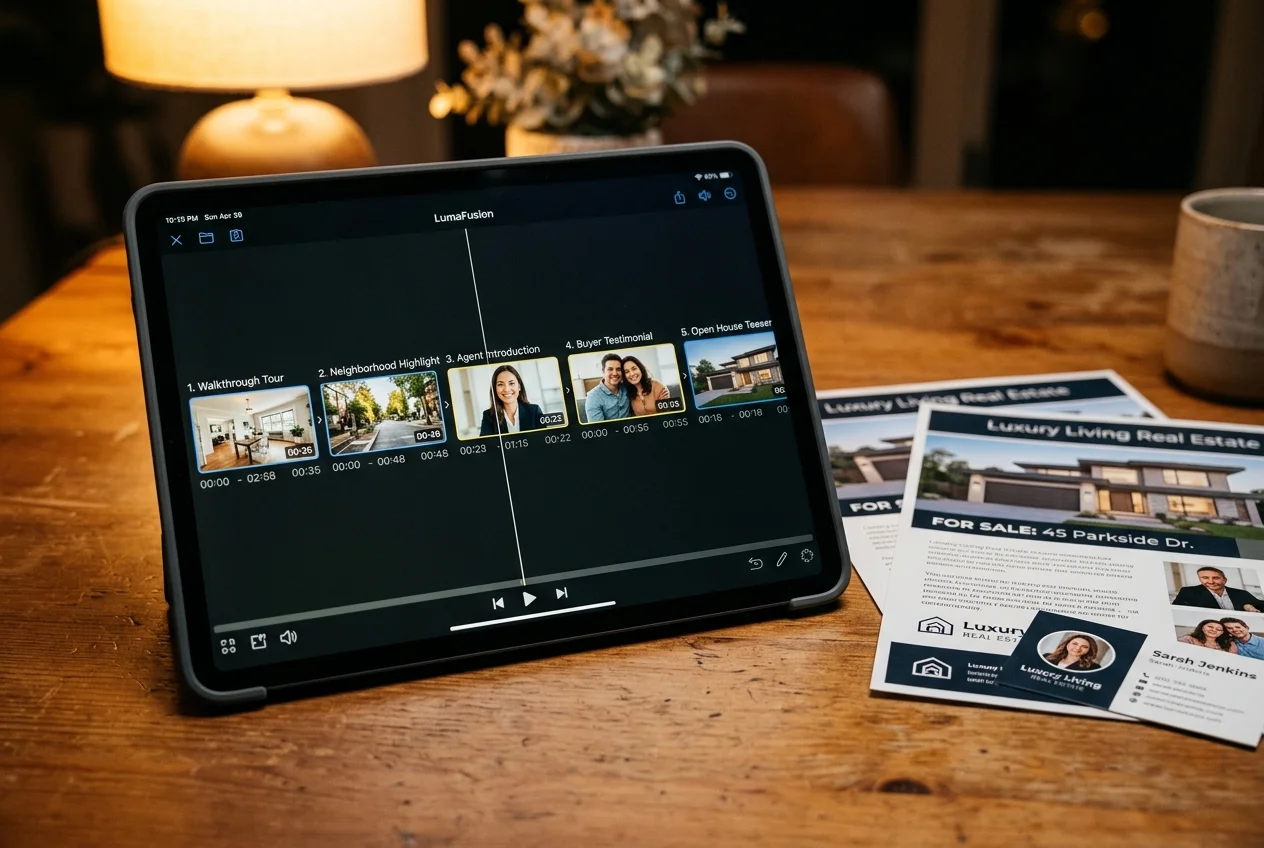
Each format needs a named audience and a named next step. Without that pairing, a video becomes entertainment and stops at views. The same rule applies to a real estate listing video that targets buyers. It still needs a buyer action, like a showing request or open house sign-in.
A useful way to plan is to split formats into two lanes. Seller-lane videos create listing appointments. Buyer-lane videos help move an active listing. Confusing the two leads to weak calls to action and empty measurement.
| Format | Primary audience | Platform home | Next step that fits the intent |
|---|---|---|---|
| Monthly market update | Future sellers | Reels, Shorts, stories | Reply with a keyword for street-level numbers |
| Neighborhood guide | Future sellers and relocating buyers | YouTube | Visit a neighborhood landing page |
| How an agent sells a home | Future sellers | YouTube and a listing presentation | Book a pricing and prep consult |
| Before and after transformation | Future sellers | Reels, Shorts, stories | Ask for the same upgrade plan |
| Sold story or testimonial | Future sellers | Email, Google surfaces, socials | Request the marketing plan used |
Mapping each format to audience, surface, and the next action.
Market updates work because they give homeowners a low-risk reason to stay connected. The video stays short, the language stays local, and the call to action stays simple. A clean next step is a reply prompt that routes to a saved response and a short link.
Neighborhood guides build search equity and reputation. The script should focus on lifestyle facts that stay true, commute patterns, housing stock, walkability, and price bands by block. Buyer interest matters, but the listing win comes from the seller who sees a steady library.
The most underused seller format is the “how an agent sells a home” walkthrough. It shows pricing logic, prep, photography, distribution, and reporting in one calm take, filmed at a real property. Before and after cuts then prove the work. An agent intro video still matters, but it functions as table stakes, not differentiation.
Turning listing media into the next listing presentation
A listing video’s second life can matter more than its first. The clip that markets a property this week can also market the agent’s process next quarter. That is why every shoot should produce one asset that fits into a listing presentation without extra editing.
The core artifact is a single slide or one-page “marketing package” summary. It lists deliverables, where each asset gets posted, and what the seller receives as weekly updates. It also includes a QR code or short link that opens the best example video. This artifact complements the pre-listing package you hand a seller and makes the promise visible.
Pricing and commission figures do not belong on that slide. Sellers forward decks. Broker compliance teams review decks. A deliverables slide should show work, not trigger a negotiation before rapport exists. Numbers can live in the live conversation, where context and terms can be explained.
A simple delivery rule keeps the system moving. Agents can send the slide and the primary video link within 2 days of going live, then follow with a one-paragraph performance note after the first weekend. That note becomes the raw material for a sold story later.
Listing video distribution that is role-based, not everywhere
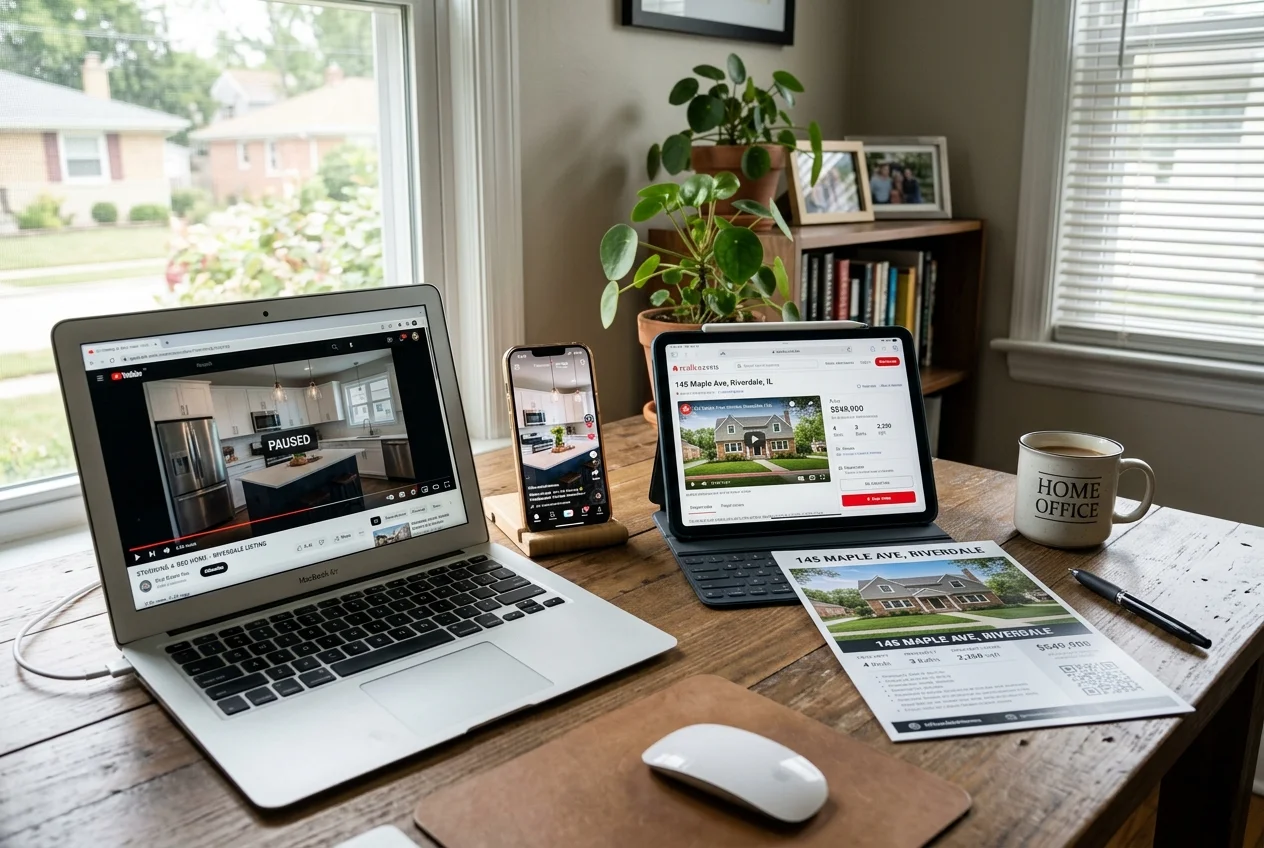
Distribution works when each surface has a job. YouTube holds shelf life and local search value. Short-form earns attention and first impressions. The listing page and portal video field carry buyer conversion intent. Email reaches the highest-intent audience, because recipients already know the agent.
YouTube basics stay simple. Titles need the neighborhood and property type. Descriptions need a few local keywords and a clean link to the listing page or booking page. Chapters help watch time, especially on neighborhood guides and seller walk-throughs. Embedding the video on the listing page keeps the asset working.
Short-form needs discipline. Captions should always stay on-screen. Hooks should land in the first second, and the shot should stay steady with slow movement. Reels, Shorts, and TikTok can share the same cut, but each post needs a unique first line and a unique on-screen headline. A cadence comes from a social media posting strategy that actually holds a cadence, not from motivation.
Organic reach plateaus, even for good clips. A clean rule helps: promote only the single clip that already earned saves, shares, or profile visits. That keeps spend focused and avoids boosting weak creative. A starting point is paid distribution for your best-performing clip.
Checklist
0 of 5 done


Every tool a listing needs, on one account
Free trial credits, no credit card. Staging, photo editing, and renovation on one account.
Try AI HomeDesign freeHow to make a listing video from photos when no footage exists
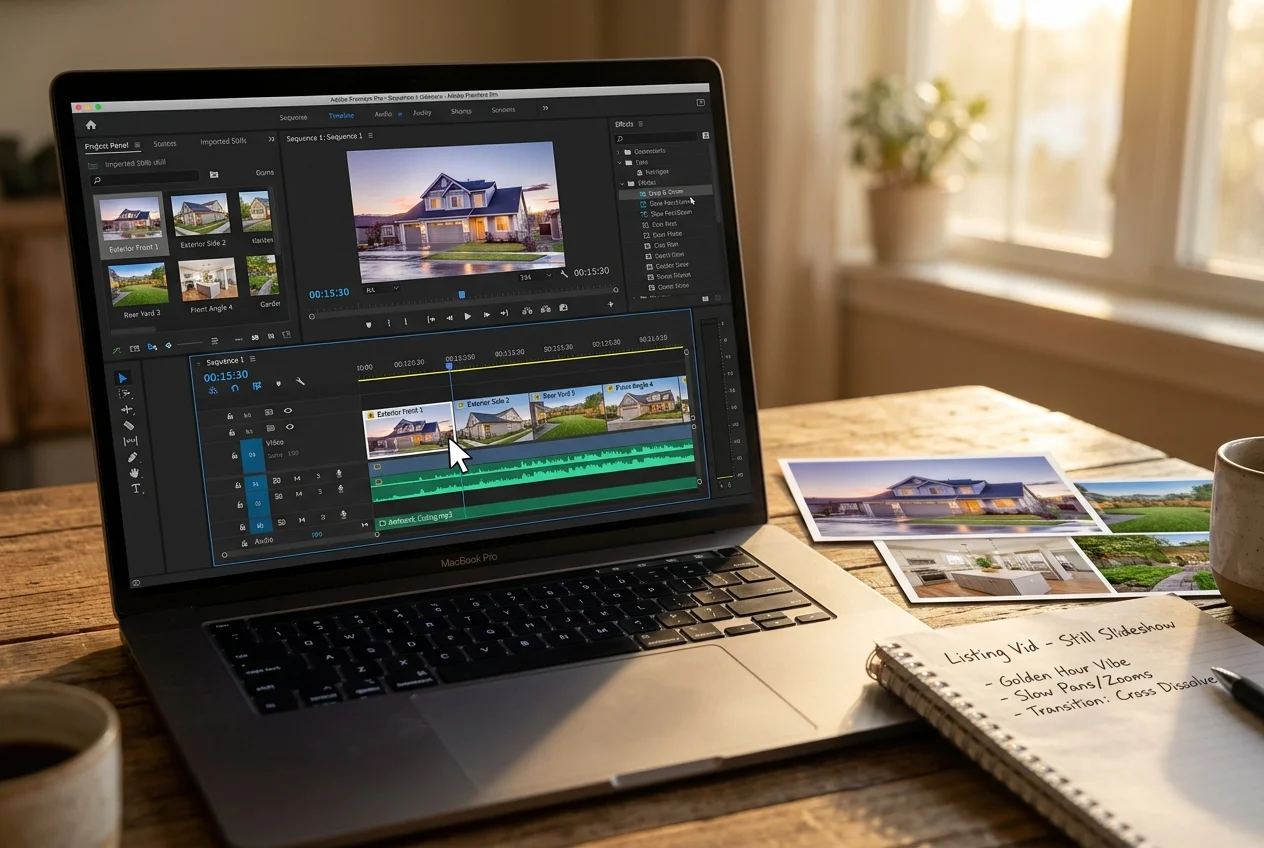
Some listings never get filmed. Tenants decline access, schedules collapse, and agents inherit old photo sets. A strong still set can still become video, and it can still support seller-facing marketing. The format is a slideshow or slow-pan sequence with gentle motion, clear room order, and simple on-screen captions.
Start with stills that can carry motion. Straight vertical lines, clean windows, and consistent exposure matter more in video because each frame stays on screen longer. A set that starts sharp avoids heavy correction later, which is why sharper source photography sets the ceiling.
Photo-to-video becomes more persuasive when the stills show a story arc. Virtual staging can add context to empty rooms. Item removal can clear clutter and personal effects. A day-to-dusk edit can create a hero exterior beat that feels like a reveal. One way teams handle those edits is AI HomeDesign, which groups virtual staging, photo editing, and renovation into three hubs with 11 specialized tools, seven of them for renovation, one account and one shared credit pool, unlimited free regenerations, and MLS-compliant output by default from $0.24 a photo.
Disclosure is not optional. Any staged or enhanced frame should show a visible label that reads “Virtually staged” on screen, and that same wording should appear in the caption. Structure and condition should remain accurate. The video can improve presentation without changing what exists.
Compliance, disclosure, and the things that cannot be filmed
Rules vary by market, but the risk patterns stay consistent. Scripts and captions should describe property features, not the likely buyer or the character of a neighborhood’s residents. That keeps language aligned with Fair Housing norms and avoids accidental targeting.
Music needs equal care. Platform-native audio libraries work for organic posts inside the platform. A client-deliverable file, or a clip used in a paid ad, often needs properly licensed music. A single unlicensed track can trigger takedowns and wasted editing time.
Privacy issues show up fast in real estate video. Agents should avoid filming neighbors, children, license plates, and personal documents in the home. Tenant-occupied properties need written permission and clear boundaries. HOA rules can limit exterior filming, especially around amenities.
Edited visuals need consistent labeling, even in video. “Virtually staged” should appear on any staged clip, and captions should match. For media rules that govern listing fields and syndication, start with what MLS rules allow in listing media.
A 30-day real estate video calendar that starts from zero

A calendar matters because posting “when time allows” fails. A useful plan builds one habit per week, then adds formats only after the habit exists. The goal is a repeatable month, not a heroic launch.
Week one builds the base. Agents can set a bio link, a booking link, and one quiet filming spot with stable light. One short agent intro clip and one market update start the library. The market update should end with one clear reply prompt that routes to a saved response.
Week two adds one seller-facing walkthrough. A borrowed property works fine with permission. That single long take then produces several short clips, each with a different hook. Agents can also cut one buyer-lane listing tour if an active listing needs it.
Week three builds search. A neighborhood guide goes to YouTube first, then a short clip points to the full video. Week four adds proof, a before-and-after reveal, a sold story, or a short testimonial. A one-paragraph performance note closes the loop and feeds the next month’s topics.
A minimum viable version fits into 2 hours a week. One batch filming block per month creates one evergreen piece and one market update. Editing produces three vertical cuts, then one email shares the best clip with a simple link and a one-line point.
Measuring real estate video KPIs from views to appointments
Views help, but applause cannot pay for time. Metrics need two tiers, and the second tier has to end at appointments and listings won. That shift stops agents from chasing formats that entertain strangers.
Leading indicators show whether creative holds attention. Three-second retention, average watch time, saves, and shares beat likes as signals. Profile visits and link clicks show intent. Those numbers can be checked weekly in a quick dashboard glance.
Lagging indicators show business impact. Seller inquiries attributable to video, listing-appointment requests, and listings won matter most. A basic attribution setup can stay simple: one unique short link per format, one dedicated booking link, and one “how did this contact start” field in the CRM.
Review cadence keeps decisions sane. A weekly glance can catch creative issues early. A monthly review can decide which format earns another month. Video then becomes one channel inside the rest of your listing-generation system, not a standalone project.
Frequently asked questions
How long should a real estate listing video be?
Most listing video length comes from the surface, not the size of the house. Short-form reveal clips often work best in the 15 to 30 second range, while a sold story or market update can sit around 60 to 90 seconds. For search and higher-intent viewers, a walkthrough or neighborhood guide can run 2 to 6 minutes without dragging.
Do agents need a videographer, or can listing videos be filmed on a phone?
A current phone can cover most agent-facing and listing-facing video needs, especially for short-form clips and simple walk-throughs. The first upgrade that changes outcomes is audio, because poor sound reads as unprofessional faster than imperfect video. When time runs tight, outsourcing editing tends to free more weekly capacity than outsourcing filming.
Can a listing video be made if the property was never filmed?
A listing video can still exist without footage by turning still photos into a vertical slideshow or slow-pan sequence with light motion and on-screen captions. Virtual staging, item removal, and day-to-dusk edits can help stills carry the story, especially for vacant or dated homes. Any staged or enhanced frame should carry a visible “Virtually staged” label on screen and in the caption.
Which platform should a new agent start with for video?
A stable start usually comes from one short-form surface for reach plus YouTube for shelf life. Short-form clips build familiarity with homeowners who are not ready to call, while YouTube captures neighborhood searches and keeps working over time. After a consistent cadence exists, adding email and a listing page embed often drives higher-intent traffic.
How can agents tell if video marketing is working?
Video works when it produces attributable seller conversations, not when it produces views. Weekly checks can focus on leading indicators like watch time, three-second retention, saves, and link clicks. Monthly reporting should count seller inquiries, listing-appointment requests, and listings won, using a unique link per format and a consistent intake question in the CRM.
What needs to be disclosed in a real estate video?
Virtual staging and enhanced imagery should be disclosed both in-frame and in the caption using clear wording such as “Virtually staged.” Scripts and captions should describe property features rather than implying who should live there. Music should come from properly licensed sources, and filming should avoid neighbors, children, license plates, and personal documents unless explicit permission exists.