MLS Directory: Rules by State and Official Rulebooks
In short
- Rules are layered: national policy sets a baseline, local MLS rulebooks enforce the details, and state license law sits above both.
- Media rules change locally: photo standards, branding limits, and edited-image disclosure text differ across MLSs.
- Treat compliance as workflow: save the current rulebook, use a pre-publish checklist, and get written rulings for unclear edits.
An agent searching for an mls directory often lands on a national policy page, a blog recap, or a PDF that belongs to a different market. That search path creates risk, because MLS enforcement is local and rulebooks change.
This guide works like an index. It explains how multiple listing service rules stack across national policy, local MLS rulebooks, and state license law. It also provides a state-by-state worksheet for locating the official rule source, plus the rulebook sections that tend to create the most expensive mistakes.
Rulebooks get revised between seasons, and a brokerage can operate under more than one MLS at once. That reality is part of where the industry is heading in 2026, and it is why the official rule source matters more than any summary.
What this guide covers
- How MLS rules stack across national policy, local rulebooks, and state law
- A state-by-state worksheet for finding the correct MLS rule source
- The rule families that vary most between MLSs and what to search for
- How fine schedules work and how to read them without guessing
- A repeatable compliance workflow for listing media and status changes
How MLS rules are actually layered

MLS rules work like layers of authority, not a single national binder. A clean mental model prevents agents from arguing the wrong document when a violation notice shows up.
Layer one starts with the National Association of REALTORS policy framework, including the Handbook on Multiple Listing Policy used by many Realtor-affiliated MLSs as a baseline. This layer explains broad principles and model language, but it rarely answers market-specific questions like what belongs in remarks or what disclosure text the MLS expects.
Layer two is the local or regional MLS rulebook. That is where participation requirements, subscriber access rules, listing input standards, media restrictions, and discipline procedures usually live. This is also where a fine schedule typically appears. Two MLSs can share the same software platform and still enforce differently because the organization, not the software, owns the rules.
Layer three is state real estate commission and license law. This layer can govern advertising claims, disclosure rules, and in some states how marketing materials may be presented. MLS rules do not override state law.
One phrase in many rulebooks causes confusion: participant versus subscriber. Participants usually hold the brokerage-level relationship with the MLS and accept the MLS’s participant obligations. Subscribers usually access the MLS through a participant and still must follow the rules for data, listings, and media.
MLS directory: how to find the right MLS and rulebook

The fastest way to find the correct rulebook starts with a listing already in the market. A brokerage often belongs to more than one MLS, and a state line does not define the service area for many large regional MLSs.
Start with a recent listing published by the brokerage. Look for the data source or the MLS name inside the MLS system used day to day. When the listing system shows an MLS name that differs from local branding, the MLS name shown in the system is the one that matters.
Next, go straight to that MLS’s own website and look for a governance, rules, or policies area. Rulebooks sometimes sit behind a member portal. When that happens, the public governance landing page still helps, and MLS support can usually provide the current rules document to participants and subscribers.
For data standards language that often appears inside MLS documents, the RESO Data Dictionary helps teams align field names and definitions across systems. That reference does not replace an MLS rulebook, but it clarifies why a field behaves the way it does.
MLS rules by state: directory worksheet for all states
MLS footprints do not stop at state borders, and many large metros sit inside regional MLS service areas. The worksheet below helps teams start in the right place, then confirms the rule source on the MLS’s own domain.
Alabama
Primary markets to check first: Birmingham, Huntsville, Mobile
Official rule source to look for: MLS website → governance or rules
What is unusual about this market: Metro coverage can span multiple associations
Alaska
Primary markets to check first: Anchorage
Official rule source to look for: MLS website → rules and regulations
What is unusual about this market: Limited providers, member portals are common
Arizona
Primary markets to check first: Phoenix, Tucson
Official rule source to look for: MLS website → rules or compliance
What is unusual about this market: Large metro MLSs can cover wide suburbs
Arkansas
Primary markets to check first: Little Rock, Northwest AR
Official rule source to look for: MLS website → policies or documents
What is unusual about this market: Multi-association structures are common
California
Primary markets to check first: Los Angeles, Bay Area, San Diego
Official rule source to look for: MLS website → rules and fines
What is unusual about this market: Multi-MLS state, regional coverage varies
Colorado
Primary markets to check first: Denver, Colorado Springs
Official rule source to look for: MLS website → governance
What is unusual about this market: Mountain markets can sit in separate systems
Connecticut
Primary markets to check first: Hartford, New Haven
Official rule source to look for: MLS website → rules and compliance
What is unusual about this market: Many agents work across state lines
Delaware
Primary markets to check first: Wilmington
Official rule source to look for: MLS website → policies
What is unusual about this market: Often influenced by nearby regional MLSs
District of Columbia
Primary markets to check first: Washington metro
Official rule source to look for: MLS website → rules and regulations
What is unusual about this market: Regional footprint often crosses borders
Florida
Primary markets to check first: Miami, Orlando, Tampa
Official rule source to look for: MLS website → rules and policies
What is unusual about this market: Multiple large MLSs operate in one state
Georgia
Primary markets to check first: Atlanta, Savannah
Official rule source to look for: MLS website → governance
What is unusual about this market: Coverage may split by metro and coast
Hawaii
Primary markets to check first: Oahu, Maui
Official rule source to look for: MLS website → rules
What is unusual about this market: Portal-only rulebooks are common
Idaho
Primary markets to check first: Boise
Official rule source to look for: MLS website → governance documents
What is unusual about this market: Border metros can share regional systems
Illinois
Primary markets to check first: Chicago, downstate metros
Official rule source to look for: MLS website → rules and fines
What is unusual about this market: Large metro MLS can dominate, not statewide
Indiana
Primary markets to check first: Indianapolis
Official rule source to look for: MLS website → rules
What is unusual about this market: Border areas often follow neighboring metros
Iowa
Primary markets to check first: Des Moines, Cedar Rapids
Official rule source to look for: MLS website → policies
What is unusual about this market: Multi-board participation is common
Kansas
Primary markets to check first: Kansas City area, Wichita
Official rule source to look for: MLS website → governance
What is unusual about this market: Kansas City footprint can be multi-state
Kentucky
Primary markets to check first: Louisville, Lexington
Official rule source to look for: MLS website → rules and regulations
What is unusual about this market: Split by metro systems near borders
Louisiana
Primary markets to check first: New Orleans, Baton Rouge
Official rule source to look for: MLS website → compliance
What is unusual about this market: Coastal metros can have separate systems
Maine
Primary markets to check first: Portland
Official rule source to look for: MLS website → governance
What is unusual about this market: Smaller markets may use consolidated MLSs
Maryland
Primary markets to check first: Baltimore, DC suburbs
Official rule source to look for: MLS website → rules
What is unusual about this market: Frequently served by regional MLSs
Massachusetts
Primary markets to check first: Boston, Worcester
Official rule source to look for: MLS website → governance
What is unusual about this market: Multiple coverage areas inside one state
Michigan
Primary markets to check first: Detroit, Grand Rapids
Official rule source to look for: MLS website → rules and policies
What is unusual about this market: Regional footprints often overlap
Minnesota
Primary markets to check first: Minneapolis Saint Paul
Official rule source to look for: MLS website → rules and fines
What is unusual about this market: Statewide-adjacent coverage can exist
Mississippi
Primary markets to check first: Jackson, Gulf Coast
Official rule source to look for: MLS website → governance
What is unusual about this market: Coast and inland can differ
Missouri
Primary markets to check first: St. Louis, Kansas City
Official rule source to look for: MLS website → rules
What is unusual about this market: Two major metros pull in different directions
Montana
Primary markets to check first: Billings
Official rule source to look for: MLS website → policies
What is unusual about this market: Large geographic areas, fewer providers
Nebraska
Primary markets to check first: Omaha, Lincoln
Official rule source to look for: MLS website → governance
What is unusual about this market: Metro MLS can cover cross-state suburbs
Nevada
Primary markets to check first: Las Vegas, Reno
Official rule source to look for: MLS website → compliance documents
What is unusual about this market: Two-metro split coverage is common
New Hampshire
Primary markets to check first: Manchester
Official rule source to look for: MLS website → rules
What is unusual about this market: Often tied to a broader regional footprint
New Jersey
Primary markets to check first: North Jersey, South Jersey
Official rule source to look for: MLS website → governance
What is unusual about this market: Dense overlaps and many local options
New Mexico
Primary markets to check first: Albuquerque
Official rule source to look for: MLS website → rules and regulations
What is unusual about this market: Border metros can share regional systems
New York
Primary markets to check first: NYC area, Buffalo, Albany
Official rule source to look for: MLS website → rules or governance
What is unusual about this market: Strong regional splits across the state
North Carolina
Primary markets to check first: Charlotte, Raleigh
Official rule source to look for: MLS website → policies
What is unusual about this market: Large metros can use separate MLSs
North Dakota
Primary markets to check first: Fargo
Official rule source to look for: MLS website → governance
What is unusual about this market: Multi-state regional coverage can apply
Ohio
Primary markets to check first: Cleveland, Columbus, Cincinnati
Official rule source to look for: MLS website → rules
What is unusual about this market: Several major metros drive coverage
Oklahoma
Primary markets to check first: Oklahoma City, Tulsa
Official rule source to look for: MLS website → governance
What is unusual about this market: Two-metro split coverage is common
Oregon
Primary markets to check first: Portland, Eugene
Official rule source to look for: MLS website → rules and compliance
What is unusual about this market: Portland metro coverage can be multi-state
Pennsylvania
Primary markets to check first: Philadelphia, Pittsburgh
Official rule source to look for: MLS website → governance
What is unusual about this market: Regional MLSs can span multiple states
Rhode Island
Primary markets to check first: Providence
Official rule source to look for: MLS website → rules and policies
What is unusual about this market: Small state, often tied to a regional footprint
South Carolina
Primary markets to check first: Charleston, Columbia
Official rule source to look for: MLS website → governance
What is unusual about this market: Coastal metros may differ from inland
South Dakota
Primary markets to check first: Sioux Falls
Official rule source to look for: MLS website → rules
What is unusual about this market: Multi-state metro footprints can apply
Tennessee
Primary markets to check first: Nashville, Memphis, Knoxville
Official rule source to look for: MLS website → policies
What is unusual about this market: Three-metro split coverage is common
Texas
Primary markets to check first: Houston, Dallas Fort Worth, Austin
Official rule source to look for: MLS website → governance
What is unusual about this market: Many major metros with distinct MLSs
Utah
Primary markets to check first: Salt Lake City
Official rule source to look for: MLS website → rules and fines
What is unusual about this market: Large metro MLS can cover wide area
Vermont
Primary markets to check first: Burlington
Official rule source to look for: MLS website → governance
What is unusual about this market: Often linked to regional systems
Virginia
Primary markets to check first: Northern VA, Richmond
Official rule source to look for: MLS website → rules and regulations
What is unusual about this market: Northern VA often aligns with DC metro
Washington
Primary markets to check first: Seattle, Spokane
Official rule source to look for: MLS website → policies
What is unusual about this market: Two-metro split plus border markets
West Virginia
Primary markets to check first: Charleston WV
Official rule source to look for: MLS website → governance
What is unusual about this market: Often tied to neighboring metro MLSs
Wisconsin
Primary markets to check first: Milwaukee, Madison
Official rule source to look for: MLS website → rules
What is unusual about this market: Multiple metro systems in one state
Wyoming
Primary markets to check first: Cheyenne, Casper
Official rule source to look for: MLS website → policies
What is unusual about this market: Border metros can share regional coverage
State-by-state worksheet for locating the official MLS rule source.
A quick cross-check helps avoid the most common directory mistake. A shared front end or shared data exchange does not guarantee a shared rulebook. The rules and fine schedule follow the MLS organization, even when several MLSs use the same technology vendor.
For a concrete example of an MLS organization homepage and governance footprint, agents can start at Bright MLS and then use the site navigation to locate its rules or governance area.


Stage your first listing in under 5 seconds
15 space types, 10 styles, MLS-compliant by default. 10+ tools, including social pack. Free trial credits, no credit card.
Start staging freeThe rules that vary most between MLSs

Most MLS disputes do not come from rare edge cases. They come from routine listing tasks done under deadline pressure, then audited later by a compliance desk.
Below are the rule families that vary the most from one MLS to the next, with the exact question to answer in the local rulebook. A rulebook search bar, or a PDF search, usually gets to an answer faster than reading cover to cover.
Photo and image standards
Local rules often set media requirements around file type, image orientation, branding, and what counts as an acceptable listing photo. Many MLSs also control whether watermarks, logos, phone numbers, yard signs, or agent contact details may appear in images.
A second layer sits behind the pixels: licensing. A photographer contract can limit reuse, editing rights, or syndication. MLS rules can also define what rights a participant grants the MLS at upload.
Agents who want a practical baseline for image quality can start with real estate photography fundamentals and then map those habits to local rules. For ownership and licensing, the fastest operational fix is a written license and a clear vendor standard such as vetting a local real estate photographer.
Rulebook question to answer: what content is prohibited inside listing photos, and what rights transfer at upload?
Virtual staging and AI-edited image disclosure
Many MLSs allow enhanced, staged, or twilight-style images as long as the marketing stays truthful and the edit is disclosed where the MLS requires it. The rulebook detail that matters is local: exact disclosure wording, where it must appear, and what the MLS treats as a material alteration.
Search terms that often locate the governing paragraph include “virtual staging,” “digitally altered,” “enhanced,” “rendered,” “AI,” and “misrepresentation.” When a rulebook stays general, MLS compliance staff often answers with a written interpretation that becomes a practical rule for that office.
Broader context can help teams train consistently, especially across vendors, and how AI is being used across real estate covers the scope of edits that now show up in listing workflows.
Rulebook question to answer: what exact disclosure text is required, and does it belong in remarks, captions, or both?
Coming-soon, delayed marketing, and office-exclusive windows
Local MLSs define what “coming soon” means in that market. The detail can cover whether showings are allowed, what public marketing may occur, and what the MLS expects when a listing transitions to active.
This is also where an internal marketing plan can get out of sync with MLS status rules. A team can write great pre-market content and still trigger a compliance issue if the MLS treats the promotion as active marketing.
An operational way to reduce missteps is to align pre-market content to an internal checklist and a calendar. The planning logic that supports this lives in listing marketing planning.
Rulebook question to answer: what marketing is allowed before active status, and what status fields must match that activity?
Cooperation requirements and Clear Cooperation Policy
Many MLSs adopt cooperation rules influenced by the Clear Cooperation Policy concept. The practical effect usually centers on when a publicly marketed listing must be submitted to the MLS and how office-exclusive marketing is treated.
Implementation can still differ market to market. Some MLSs add local definitions, exceptions, or forms that control how a listing may be marketed before or after MLS entry.
Rulebook question to answer: what counts as public marketing in that MLS, and what is the submission standard tied to that marketing?
Status-change deadlines
Agents rarely get disciplined for a status issue because a buyer backed out. Discipline often appears when a status stays wrong after a meaningful change. The hard part is that timing expectations vary locally.
A compliance workflow should treat status changes like accounting entries. A status shift that happens in the transaction file needs a matching change in the MLS, within that MLS’s stated standard.
Rulebook question to answer: what is the MLS’s standard for reporting price changes and status changes, and what triggers a violation?
Remarks-field restrictions
Local rulebooks often restrict what belongs in public remarks, private remarks, and showing instructions. Some MLSs restrict contact information, off-platform links, or language that conflicts with fair housing rules.
These restrictions often surprise teams because the listing already includes agent contact information elsewhere in the MLS interface. The MLS may still prohibit repeating it in remarks.
Rulebook question to answer: what content is prohibited in each remarks field, and how does the MLS define public versus private remarks?
IDX, VOW, and syndication controls
IDX and VOW rules can affect how a brokerage displays MLS content and what opt-outs exist. Syndication rules can also affect where listings may be published and what data fields must remain intact.
This is where state-by-state operations can break if a brokerage assumes one display rule applies everywhere. The operational fix is a documented standard tied to the MLS rule source.
Rulebook question to answer: what display rules apply to IDX and VOW, and what opt-out controls exist for syndication?
Rulebook search checklist for a new market:
Checklist
0 of 5 doneHow to read a fine schedule without guessing
A fine schedule usually has a predictable shape, even when the amounts differ. Reading the structure first helps teams focus on the violations that repeat.
Start by finding the enumerated violation list. Many schedules group violations by category, such as listing input, media, status accuracy, or cooperation requirements. Each category then maps to an escalation ladder, often tied to first, second, and later offenses.
Next, separate administrative fees from discipline. Some schedules describe a fixed administrative fee for an easily cured issue, while others treat a violation as disciplinary conduct. The schedule or the governance section may describe who can file a complaint and what the MLS treats as a compliance desk correction versus a formal hearing.
A cure period, when it exists, changes how teams respond. Cure language often explains whether fixing the listing removes the penalty, reduces it, or only stops further escalation.
The last section to locate is the appeal path. Some MLSs require an internal review first. Others route the dispute to a compliance committee. The correct steps belong in the local rulebook.
Verifying that a rulebook is real and current
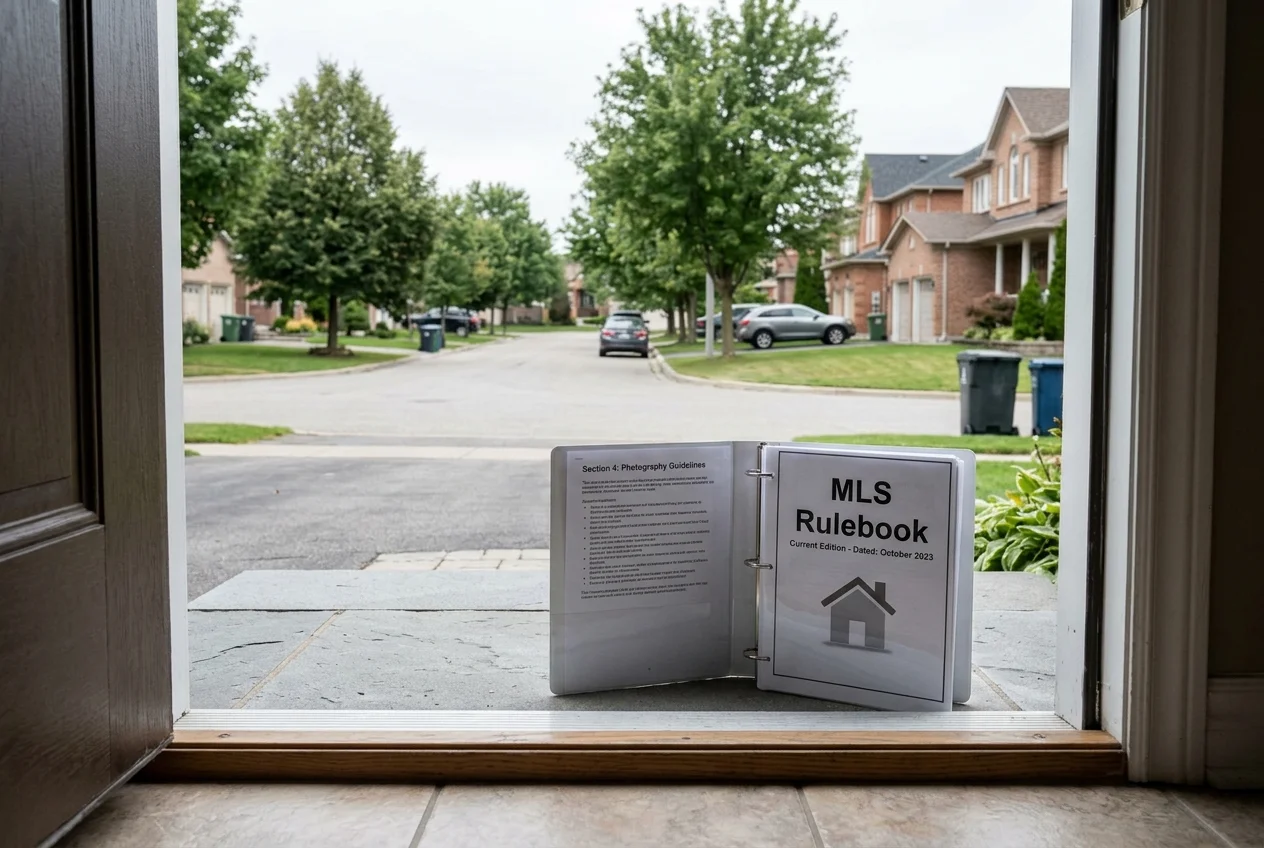
A compliance process breaks when it trains agents on a document that is unofficial, outdated, or silently amended. A verification routine prevents teams from chasing PDF files around email threads.
The most reliable starting point is the MLS’s own domain. A rules or governance landing page beats a loose PDF link because it is harder to orphan. When the MLS posts a PDF, the document should show a revision or effective date, and that date should make sense next to the MLS’s notices.
A second check looks for amendments. Some MLSs publish a separate policies page, board actions page, or compliance bulletin that modifies the main rulebook. That secondary page can function like a patch note, and a team policy should reference it when it changes how listings are handled.
When a rulebook sits behind a member portal, MLS support can still confirm the current version. A brokerage operations desk can request the current rulebook and fine schedule in writing and store the file with its printed revision date.
A re-check cadence keeps the internal policy alive. Many teams re-check quarterly and again after any major MLS notice, then archive the prior rulebook version alongside the training materials tied to it.
A compliance workflow for listing media
A practical workflow treats MLS compliance like a repeatable production line. It starts with the correct rule source, then turns the most common rule families into a checklist.
First, identify the MLS that actually receives the listing. A listing coordinator can usually confirm it from a prior listing record. Next, open the MLS rules page on the MLS’s own site, then save the current rulebook and fine schedule with its revision date.
Brokerages that want fewer surprises usually standardize templates and storage. A shared folder for rulebooks, disclosure language, and approved media examples reduces one-off judgment calls.
Teams that want a bigger operations toolkit can keep the workflow vendor-neutral and still use a reference hub like real estate tools agents actually use to map tasks to systems.
Pre-publish MLS compliance checklist for listing media:
Checklist
0 of 7 doneWhen a rulebook section reads ambiguous, the safest operational pattern is a written ruling. MLS compliance or support can confirm how the MLS wants the disclosure shown when the message includes the exact image and the proposed remarks text.
Running one policy across several MLSs
Multi-state operations fail when each market invents its own habits. A single internal standard works better, but it has to be built deliberately.
Start with an inventory: every MLS where the brokerage participates, plus any adjacent MLS where the brokerage regularly lists. Build an internal matrix with one row per MLS and one column per rule family, such as images, disclosure, coming soon status, cooperation, status changes, and remarks restrictions.
Next, write one standard operating procedure to the strictest requirement across that MLS set. That approach gives agents a single habit pattern and reduces market-to-market surprises.
Some rules do not resolve by picking the strictest version, because the requirements conflict rather than differ in degree. When one MLS requires disclosure in captions and another requires it in remarks, a single standard can include both. When a field use conflicts, the internal SOP needs a market-specific exception.
A named owner keeps the policy current. Brokerage operations teams often assign one compliance owner to monitor MLS notices, update the internal matrix, and version training against the saved rulebook files.
Where AI-edited listing images fit
Enhanced, staged, and twilight-style images are common in listing marketing. Many MLSs accept them when the edit is disclosed the way that MLS requires and the image remains truthful about the property’s structure and permanent features.
For teams that prefer a tool-based workflow, AI virtual staging can support MLS-compliant virtual staging that preserves original fixtures and structure, alongside Day to Dusk, Item Removal, and Image Enhancement. AI HomeDesign lists turnaround as in seconds and includes a social pack with 20 templates in Carousel, Single Image, and Story formats.
Tool choice does not replace disclosure wording. The correct disclosure text and placement live in the local MLS rulebook, and MLS compliance staff can confirm the market’s expectation when the wording stays unclear.
To compare other options and workflows across the category, a separate guide to AI virtual staging tools can help teams map features to listing needs without assuming one tool fits every market.
Frequently asked questions
Is there a single national MLS rulebook?
No. NAR’s MLS policy framework sets a baseline for many Realtor-affiliated MLSs, but each local MLS publishes its own rules and fine schedule. State real estate commission and license law can add separate advertising and disclosure requirements on top. The document that gets applied to a listing is the rulebook of the MLS that actually receives that listing.
How can an agent find the MLS that governs a listing?
Check a recent brokerage listing inside the MLS input system and note the MLS organization name shown there. Brokerages often participate in more than one MLS, even inside a single metro. Then go to that MLS’s own website and locate its rules, governance, or policies area so the current rulebook and fine schedule come from the official source.
Can virtually staged photos go in an MLS listing?
In many markets, yes, as long as the images remain accurate about permanent features and the listing includes the disclosure wording that MLS requires. What varies locally is the exact wording and whether it belongs in a photo caption, public remarks, or both. The controlling answer sits in the local MLS rulebook or a written compliance ruling.
Do AI-edited listing photos require a special disclosure?
Some MLSs address AI-edited imagery explicitly, while others rely on general accuracy and altered-image language. The safest approach is to follow the local rulebook’s disclosure text and placement rules for enhanced or staged images. When the rulebook does not name AI, MLS compliance can usually confirm in writing whether the standard disclosure covers it.
Can logos, phone numbers, or watermarks appear in MLS photos?
Many MLSs restrict branding and contact information inside listing photos, but the specifics differ by market. Some rulebooks allow limited marks in certain fields, while others prohibit any identifying content in images. The fastest way to avoid a violation is to read the media section of the local MLS rulebook before uploading.
How do MLS fine schedules usually work?
Most fine schedules list specific violations by category and then map them to escalation tiers, such as first and later offenses. Many also define cure rules, administrative fees versus disciplinary actions, and an appeal path. The structure tends to look similar across markets, but the amounts and cure rules are local and must be read in the MLS’s current schedule.