AI in Property Search: Smarter Recommendations for Homebuyers
In short
- AI can narrow property searches using your preferences, saved homes, and listing details.
- Conversational and voice search already exist on some platforms, with access varying by market and rollout.
- Use recommendations as a starting point, then check the details and visit shortlisted properties.
House hunting can oftentimes feel like searching for a needle in a haystack. With endless listings, competing priorities, and ever-changing market trends, buyers often find themselves overwhelmed by choice yet underwhelmed by options that truly fit their needs. Thankfully, AI-powered property search tools are stepping in, leveraging machine learning to sift through numerous listings and bring homes that match each buyer’s unique preferences.
By learning your preferences and organizing listing information, AI can make finding a home more personalized. Instead of endless scrolling, first-time home buyers can use AI in property search to explore options that balance budget, location, and lifestyle, including homes they might otherwise miss. In this blog, we’ll explore what these tools can do and where your own judgment still matters.
What is AI in property search?
Artificial intelligence refers to computer systems capable of performing tasks that historically required human intelligence, like recognizing patterns, learning from data, and making decisions. AI in property search uses algorithms (step-by-step instructions for solving problems) to analyze data, spot patterns, and make decisions.
Here’s how it works for property searches.
Some real estate platforms use machine learning to personalize recommendations from your searches, saved homes, and other activity. Conversational tools can also turn an everyday description of your priorities into a more focused search. The information used and the features available vary by platform.
Search tools can bring together listing details, price history, and local market information to help you compare homes. A recommendation is not a reliable forecast that a property will rise in value. Some platforms also analyze property photos and descriptions to identify features. For example, Realtor.com’s engineering team describes using image classification and text analysis to enrich listings with searchable details.
Alongside these innovations, a good property search tool can help users dig into detailed property histories and neighborhood insights, making it easier to narrow down options with solid, data-driven context. Major platforms like Zillow and Realtor.com use AI to personalize searches and streamline decisions.
Adoption is measurable, too. In its June 23, 2026 Homebuyer Insights Report announcement, Bank of America reported that 20% of prospective buyers and current homeowners had used AI tools or chatbots for homebuying research in the previous year. The figure was 28% for Millennials and 32% for Gen Z. Sparks Research surveyed 2,000 adults, including 1,000 homeowners and 1,000 renters, from April 13 to May 10, 2026. These figures measure reported research use, not completed purchases or better buying outcomes.
How AI provides smarter property recommendations
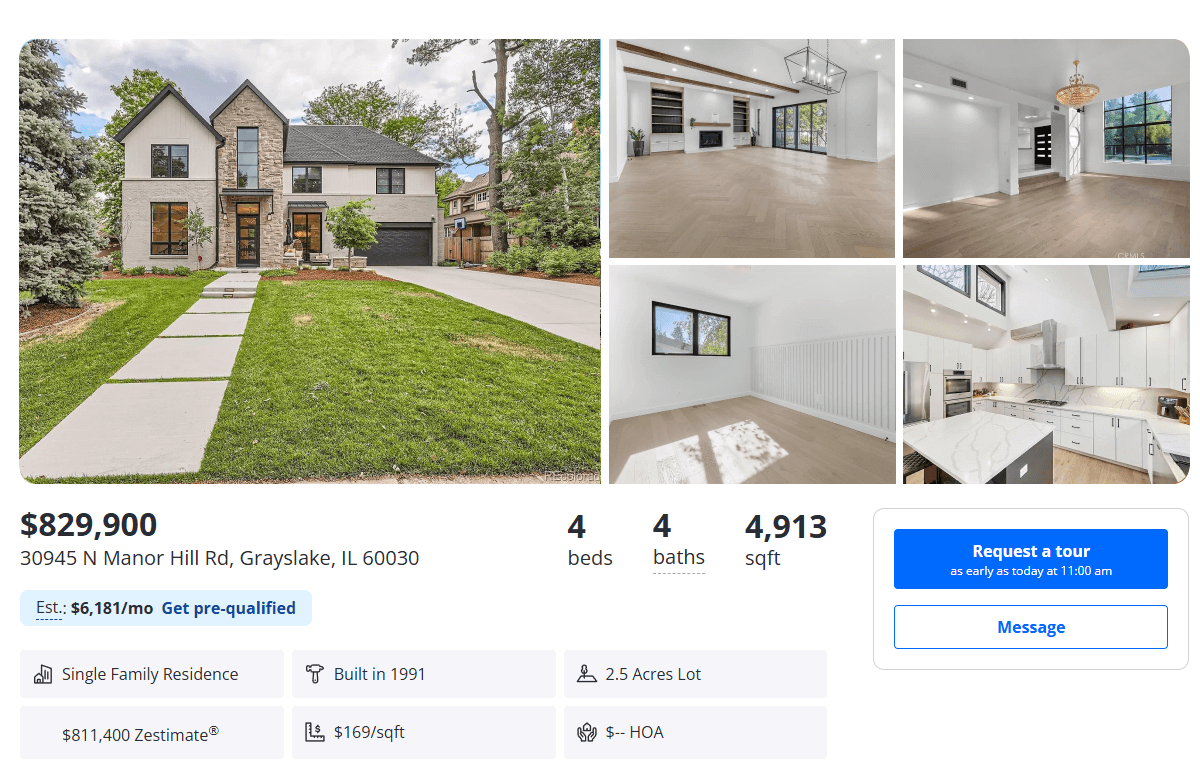
AI can help organize a home search and make recommendations more relevant to your stated preferences. Here are five ways these tools can support the process:
Personalized listings
AI can use saved properties, search filters, and browsing activity to adjust recommendations. Keeping your preferences current may improve the fit, but each suggestion still needs a check against your budget and must-haves.
Predictive insights
By using your past activity, a recommendation system can suggest homes with features you have shown interest in. If you frequently view three-bedroom homes with gardens, it may prioritize similar listings. Predicting a preference is different from forecasting a property’s future value.
More efficient listings
AI also helps agents prepare listings. Tools for AI-generated property descriptions, real estate photo generation and editing services, and AI virtual staging can support the production process. Buyers should still confirm which images show the property’s current condition and which have been digitally altered.
Location matching
Some tools can use your stated commute, budget, and preferred amenities to suggest locations as well as individual homes. Treat those suggestions as a shortlist, then check travel times and visit the areas yourself.
Property alerts
Saved-search and saved-home alerts can notify you about matching listings, price changes, and other updates. These are standard search features as well as useful companions to AI recommendations. Zillow’s search guide explains how to choose notification frequency and manage saved searches. Check your settings and listing availability; an alert does not guarantee you will hear about a home before other buyers.
Consider a hypothetical example: Joe, a first-time home buyer in Chicago, wants a modern townhouse close to downtown but keeps finding listings that miss his priorities. He enters a budget and saves homes with open layouts, smart home features, and access to public transit.
A recommendation tool could help Joe explore similar homes or nearby areas he had overlooked. If he saves a search, an alert could prompt him to review a new listing. He would still need to confirm its price and availability, assess the neighborhood, and arrange a viewing before deciding whether to make an offer.
Benefits for homebuyers

Here are some benefits you enjoy as a homebuyer when you conduct property searches with the help of AI in property search:
Saves time by filtering irrelevant listings
AI can help narrow a large set of listings using your preferences, although you still need to check whether the suggested homes fit.
Helps discover overlooked properties
AI systems can identify properties that align with your preference but might not have been on your radar. By learning from your interactions and preferences, AI can suggest homes in emerging neighborhoods you hadn’t initially considered, expanding your options.
Reduces decision fatigue
Too many property listings can be overwhelming. AI in property search narrows your options based on what truly matters to you, reducing the mental burden of decision-making. While AI simplifies the search, consulting with a real estate attorney can help ensure that all legal aspects of the property transaction are properly handled.
Improves confidence in choice
Organized listing information and comparisons can help you ask better questions. Check the source and freshness of the data before relying on it.
AI can help you feel more confident by presenting data-driven suggestions. But for long-term decisions, like buying a home that may be passed down through generations, it’s wise to speak with an estate planning attorney who can help align your purchase with your legacy goals.
Are there any downsides?
Although AI has revolutionized the property search experience, it has its limitations:
AI can’t read emotions
While it can crunch data easily, it can’t replicate that gut feeling you get about a property or the neighborhood during a walk-through. It won’t notice a home’s cozy feel or warn you about noisy neighbors.
Human judgment is still important
An algorithm can miss distinct features like future neighborhood development or local peculiarities. A seasoned realtor can spot these oddities, such as a street prone to overflooding, filling the gap that the AI tool can’t.
AI may use your personal data
When sensitive data is not adequately protected, it can result in a vulnerable breach or misuse. Avoid oversharing your data, and ensure the platform uses encryption and has clear privacy policies.
AI property search features available now
Conversational assistants and voice search are already part of some property-search products. The examples below were checked for this October 6, 2026 update. Availability can differ by account, location, and rollout stage; a launch announcement does not establish access for every buyer.
Conversational search and comparisons
Zillow announced AI mode on March 25, 2026, describing conversations about homes, comparisons, affordability, and nearby amenities. In its August 5, 2026 shareholder letter, Zillow said AI mode was live for about 20% of signed-in users. That figure describes the rollout at that date, rather than universal availability today.
Assistants that remember preferences
Realtor.com launched RealAssist AI on June 2, 2026, with conversational home search, commute context, comparisons, and preferences carried across sessions. Its launch announcement described beta access for selected logged-in users on desktop, mobile web, and the app.
Voice and text search
Real Brokerage’s November 4, 2025 HeyLeo launch announcement (PDF) described a beta that accepted spoken or typed home-search requests. The initial rollout covered selected markets across 20 states, so buyers should check availability in their own area.
Visual property discovery
Image analysis can help identify features within listing photos. Realtor.com’s engineering explanation describes image classification alongside text analysis to enrich searchable listing information. This is different from a general promise that uploading any house photo will find matching layouts or neighborhoods.
These tools can help you prepare a shortlist and questions for an agent. Property visits, local knowledge, and checks of the underlying information remain essential.
Time to integrate AI in your search
AI can help organize a home search by turning your priorities and browsing activity into suggestions. Use the results to build a shortlist, then check the details that matter to you.
Look for features like smart filters, saved-search alerts, or conversational assistants, and confirm which ones are available in your market. By exploring these technologies, you can navigate the real estate market with greater confidence and ease.
As these tools evolve, keep your budget and must-haves clear, review privacy settings, and verify important information with the listing source and relevant professionals.
Frequently asked questions
How does AI improve property search?
AI can use your search criteria, saved homes, and listing details to suggest properties that fit your preferences. Depending on the platform, it may also identify features in listing photos or descriptions and help you discover homes that basic filters miss.
How is AI property search different from standard filters?
Standard filters narrow listings by fixed criteria such as location, price, and bedroom count. Some AI-powered search tools also let you describe what you want in everyday language or personalize recommendations from your activity. The available features depend on the platform.
Are AI property recommendations always accurate?
No. Recommendations depend on the quality and freshness of the listing data and how well the tool understands your preferences. Check the listing details and current availability, and visit shortlisted homes to judge factors such as condition, noise, and how the space feels.
Can AI property search replace a real estate agent?
AI can help you narrow a long list of homes, but it cannot replace local knowledge or your own judgment. An agent can help you investigate a property, arrange viewings, and understand details that a recommendation tool may miss.
What personal information do AI property search tools use?
Depending on the platform, recommendations may use your search filters, saved listings, browsing activity, and information you choose to provide. Review the privacy policy and account settings, and avoid sharing sensitive documents or information that is unnecessary for browsing homes.
How can I get more relevant property recommendations?
Start with a clear budget range, preferred locations, property type, and must-have features. Save homes that genuinely fit, update your filters when priorities change, and use feedback controls where available. Review the results yourself so your search stays aligned with your needs.