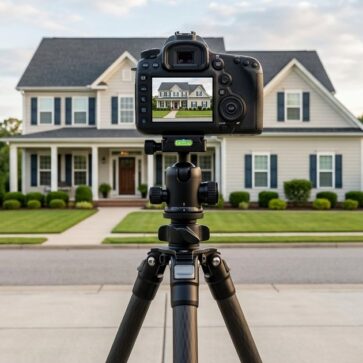
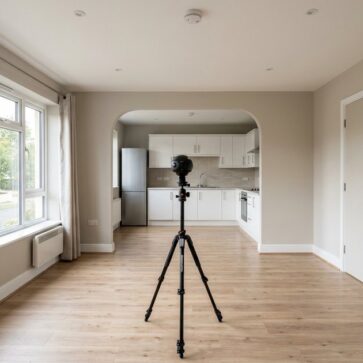
Perspective plays a major role in real estate marketing. Interior photos explain room layout and design, yet aerial views reveal something ground-level images cannot show clearly: the relationship between a property and its surroundings.
A drone photo can show property boundaries, nearby streets, landscaping, and the distance to neighboring homes. For those seeking real estate photography tips, aerial imagery adds another layer of visual context to a property listing.
Over the past decade, drones have moved from hobby equipment to standard tools for property photographers. Many professionals searching for the best drones for photography focus on three things: camera quality, flight stability, and battery life long enough to capture several angles of a property.
Aerial images rarely stand alone in a listing gallery. Drone photos usually appear alongside interior photos that may later go through editing or staging. Platforms such as AI HomeDesign help refine interior listing photos after the shoot, so drone photography and photo editing often complement each other within the same marketing workflow.
The following drones represent five reliable options commonly used in real estate photography.
Best Drones for Photography
| Drone | Camera | Flight Time | Weight | Approx. Price | Best For |
|---|---|---|---|---|---|
| DJI Mini 4 Pro | 48 MP | ~34 min | 249 g | ~$759 | Travel and portability |
| Autel Evo II Pro | 20 MP (1-inch sensor) | ~40 min | 1191 g | ~$1795 | Image quality |
| DJI Air 2S | 20 MP (1-inch sensor) | ~31 min | 595 g | ~$999 | Balanced performance |
| DJI Air 3 | Dual 48 MP cameras | ~46 min | 720 g | ~$1099 | Versatility |
| DJI Mavic 3 Pro | Triple camera system | ~43 min | 958 g | ~$2199 | Professional work |
Best Overall: DJI Air 3
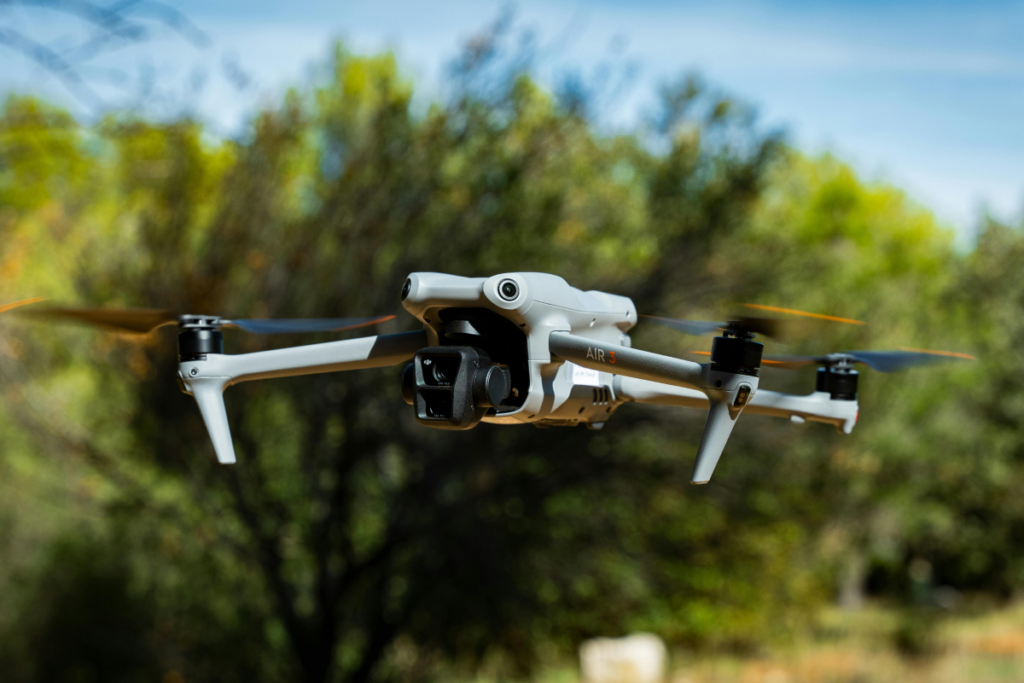
The DJI Air 3 often appears at the top of lists discussing the best drones for photography because it balances camera capability, battery life, and portability.
The drone includes two cameras: a wide-angle lens and a telephoto lens. Both rely on 48-megapixel sensors. Photographers can document an entire property from one altitude and then shift to a tighter perspective without flying closer to the building. This makes it easier to photograph both the full lot and selected exterior details, such as rooflines, balconies, or landscaping features.
The dual-camera setup also helps create more variety in the final listing gallery without requiring additional flight adjustments. Battery life can reach about forty-six minutes under ideal conditions. That flight time allows for several aerial angles to be captured during a single flight session.
Advantages
- Dual cameras provide multiple perspectives
- Long battery life
- Reliable transmission system
Limitations
- Higher cost than entry-level drones
- Larger than ultra-compact models
Best for: photographers who require flexibility for both wide property views and detailed architectural elements.
Best Compact Drone: DJI Mini 4 Pro
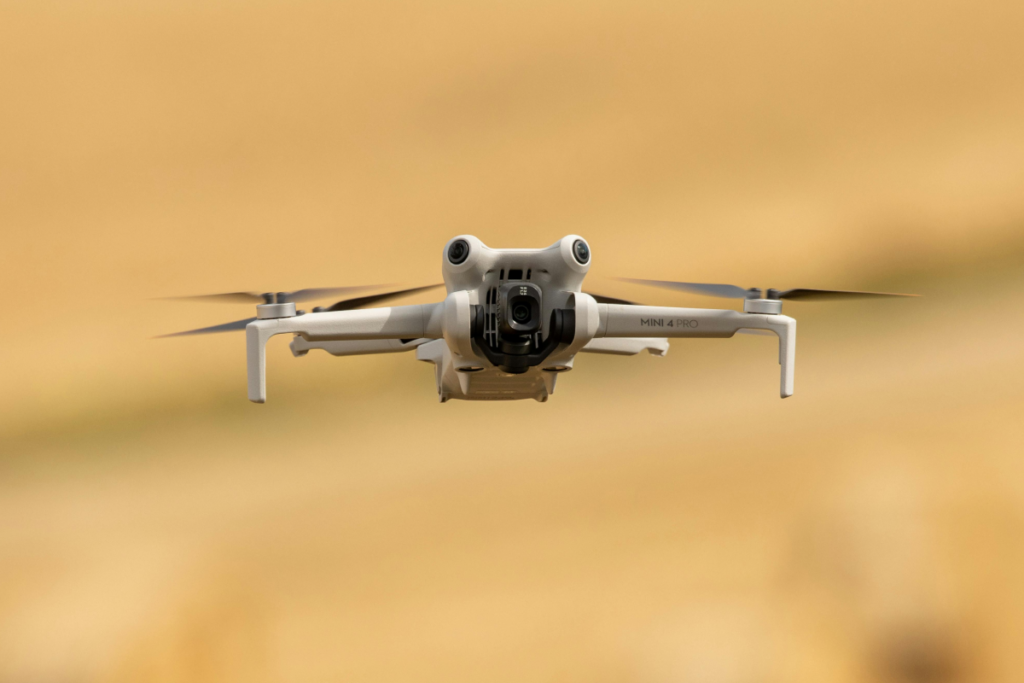
The DJI Mini 4 Pro belongs to the ultra-portable drone category. Its body weighs under 250 grams, which simplifies transport and reduces regulatory restrictions in many regions.
The drone carries a 48-megapixel camera with a 1/1.3-inch CMOS sensor. This setup records high-resolution still images and 4K video that works well for property listings.
Many real estate photographers prefer small drones during busy shooting days because they are easy to carry and move quickly between properties.
Advantages
- Very portable
- High-resolution images
- Obstacle detection sensors
Limitations
- Smaller sensor compared with larger drones
- Wind can affect small aircraft
Best for: photographers who travel frequently between properties.
Because of its portability, the Mini 4 Pro often appears among the best drones for photography used for residential real estate listings.
Best for Image Quality: Autel Evo II Pro V3
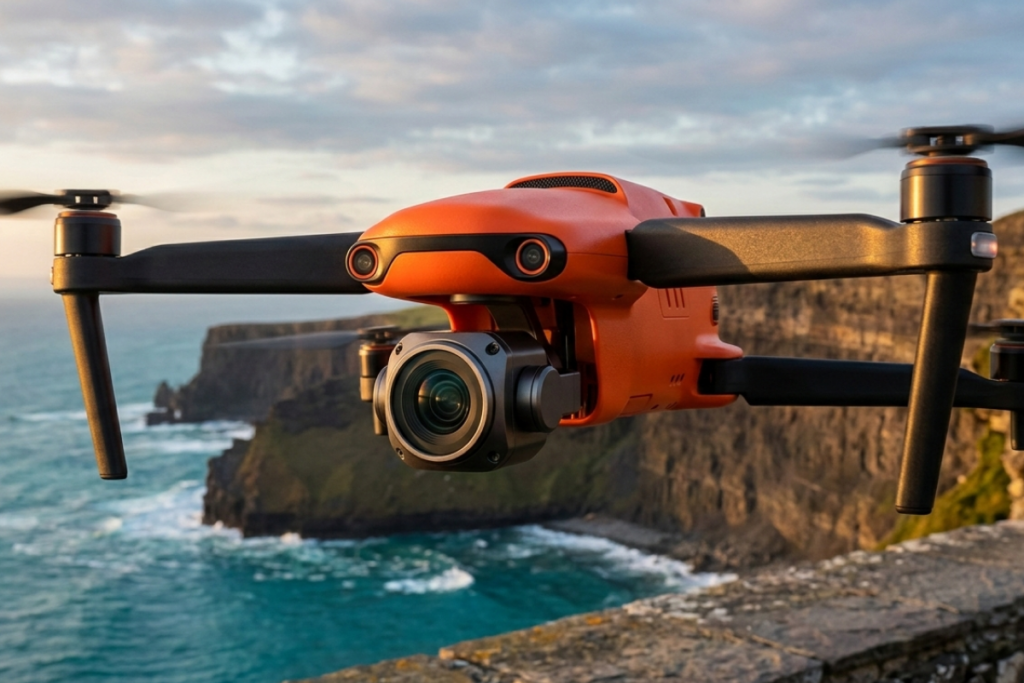
The Autel Evo II Pro V3 focuses primarily on camera performance. It includes a 1-inch image sensor capable of recording 20-megapixel photos and 6K video.
Larger sensors generally perform well in scenes with strong contrast between sunlight and shadows. Real estate photography often faces these conditions, especially during sunrise or sunset shoots.
Battery life reaches close to forty minutes, which supports aerial documentation of large estates or commercial buildings.
Advantages
- Large sensor suited for detailed images
- Long battery life
- High-resolution video
Limitations
- Heavier drone
- Higher purchase price
Best for: photographers who prioritize camera quality above portability.
For image detail alone, the Evo II Pro often appears in rankings of the best drones for photography used for property media and aerial listing photos.
Best Balance of Size and Performance: DJI Air 2S
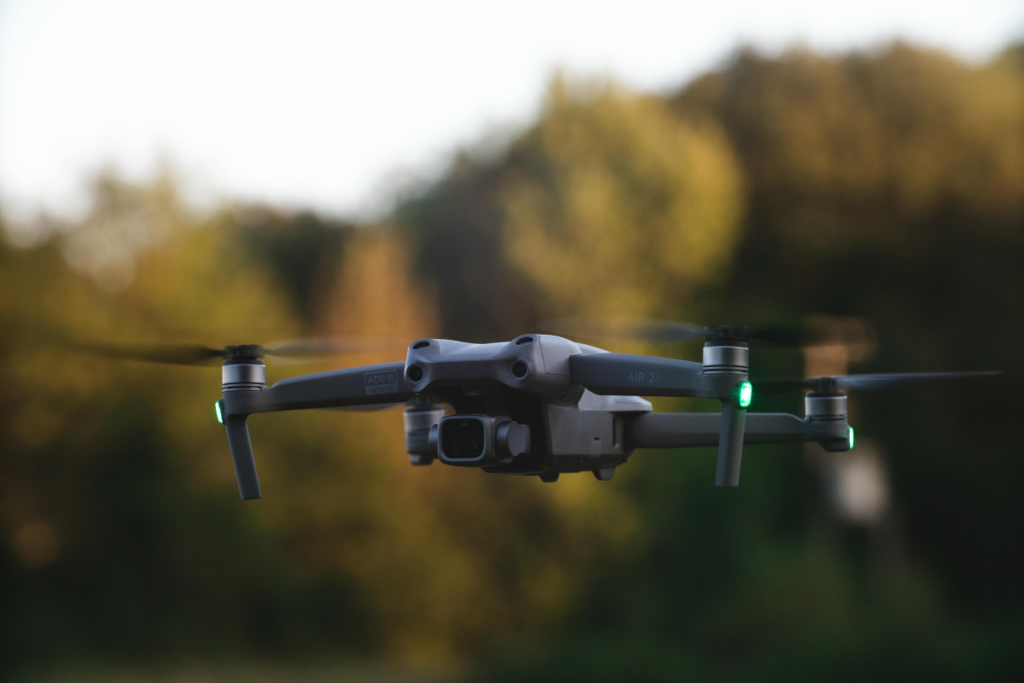
The DJI Air 2S sits between compact drones and larger professional models. It includes a 1-inch sensor that records 20-megapixel photos and 5.4K video.
Its moderate size and strong camera performance explain why many real estate photographers still rely on this model.
The aircraft weighs about 595 grams and offers a flight time close to thirty-one minutes.
Advantages
- Strong image quality from a 1-inch sensor
- Manageable size
- Automated flight modes
Limitations
- Shorter battery life than newer drones
- Performance may decline during extremely cold weather
Best for: photographers who want a balance between portability and camera performance.
Because of that balance, the Air 2S remains one of the best drones for photography used in residential property marketing and aerial listing photos.
Best for Professional Work: DJI Mavic 3 Pro
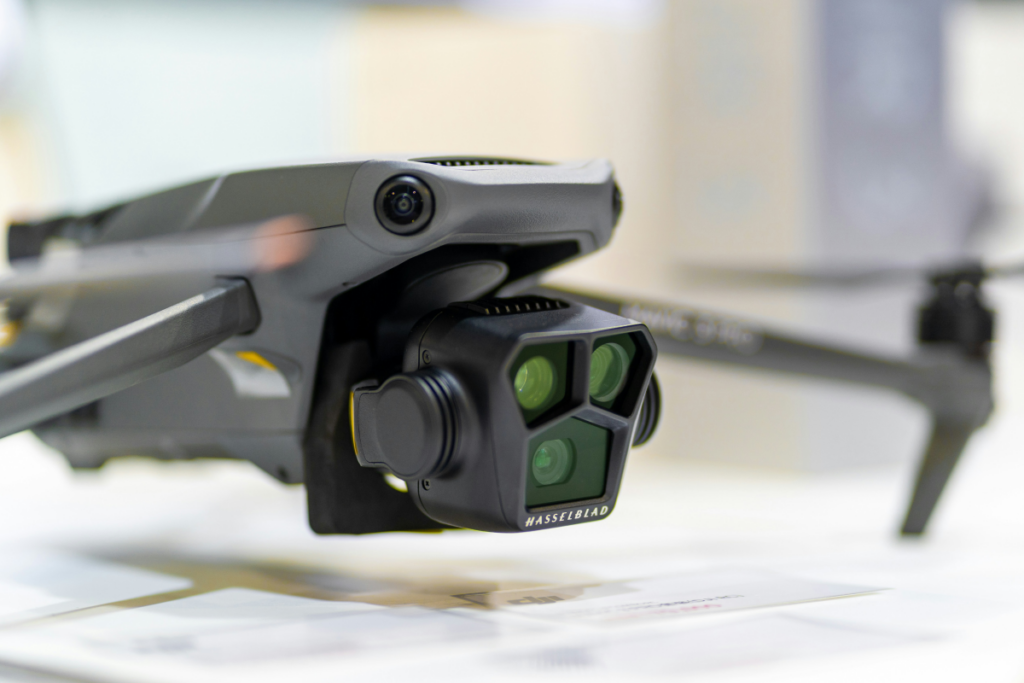
The DJI Mavic 3 Pro sits near the top of the consumer drone market. It includes three cameras: a 4/3 Hasselblad sensor and two telephoto lenses.
The primary Hasselblad camera records 20-megapixel photos with strong color accuracy. Telephoto cameras allow photographers to frame buildings from several distances without needing to reposition the camera repeatedly.
Flight time approaches forty-three minutes.
Advantages
- Large 4/3 image sensor
- Multiple focal lengths
- Strong stabilization system
Limitations
- High price
- Heavier aircraft
Best for: professional photographers who require several focal lengths during aerial shoots.
Because of its camera system, the Mavic 3 Pro frequently appears among the best drones for photography used in commercial real estate media and large property listings.
Buyer’s Guide: Choosing a Drone for Real Estate Photography
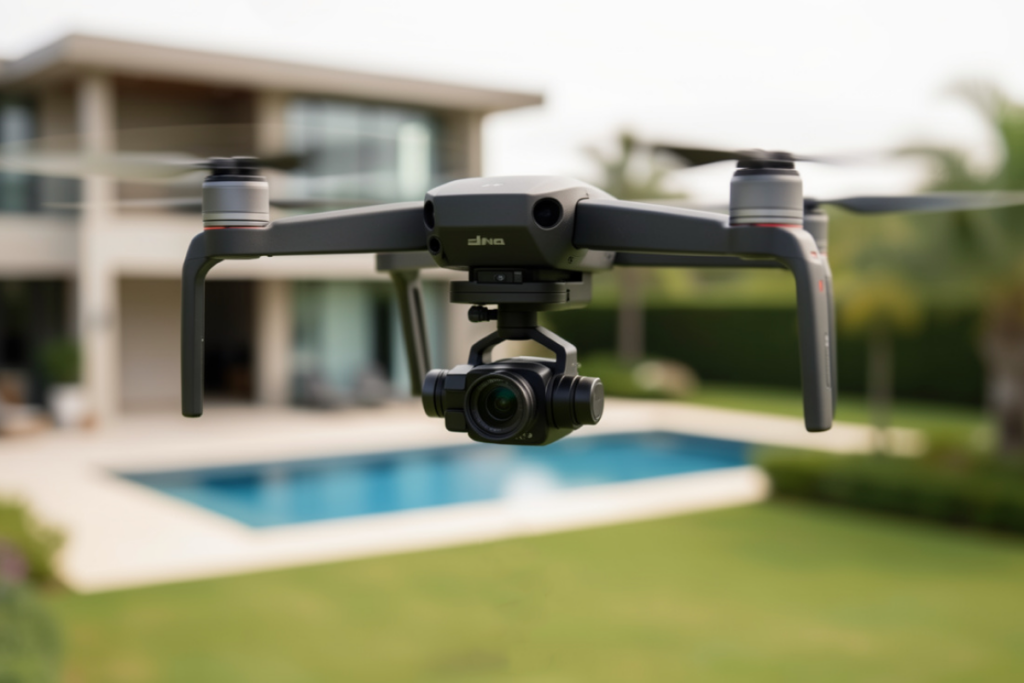
Several technical characteristics influence drone selection. Before looking at those details, it helps to understand the market structure. DJI and Autel dominate real estate photography because they offer a practical mix of camera quality, flight stability, and battery life suited to routine property shoots.
There are other well-known brands like Skydio, Parrot, Yuneec, and Sony; many of these models are designed for specialized uses like inspection, mapping, or cinema production rather than for day-to-day property shoots.
As a result, the decision usually depends less on brand count and more on technical characteristics, like the ones discussed below, that matter most in property photography.
Camera sensor
Sensor size affects image clarity and performance in low-light scenes. Larger sensors often produce cleaner images with better dynamic range.
Flight Time
Battery duration determines how many aerial angles can be photographed during a single flight session before landing.
Stabilization
Most photography drones rely on a three-axis gimbal that keeps the camera stable and level during flight.
Transmission Range
Signal transmission determines how far the aircraft can travel from the controller while maintaining a reliable connection.
Obstacle Detection
Sensors located around the drone detect nearby objects such as trees or buildings and help reduce collision risk.
These characteristics help photographers identify the best drones for photography that fit their workflow and typical property shoots.
Tips for Real Estate Drone Photography
Real estate drone photography requires more than simply flying above a property and taking a few images. Careful planning, timing, and camera positioning often determine how clearly a property appears in aerial listing photos. The following tips focus on practical steps that help photographers document properties clearly and present useful visual context.
Plan the Flight Path
Photographers often study the property layout before takeoff. Planning helps identify the most informative aerial angles.
Choose Balanced Lighting
Early morning and late afternoon often produce softer lighting across buildings and landscaping. This lighting also helps reduce harsh shadows that can hide architectural details in aerial property photos.
Adjust Altitude
Lower heights emphasize architectural features such as rooflines, balconies, and landscaping details around the property. Higher altitudes reveal the surrounding neighborhood, nearby streets, and the general layout of the land. Using several flight heights during a shoot helps create a more complete visual overview of the property.
Edit Aerial Photos Carefully
Exposure correction and color adjustments help aerial photos match interior images in a listing gallery. Balanced editing across all images helps the listing appear visually consistent.
When Drone Photography Adds Value to a Listing
Drone photography becomes especially useful when the surrounding environment plays an important role in how a property is understood. Aerial images help viewers see more than the building itself; they reveal the setting and the scale of the land around it.
Properties with large lots often benefit from aerial photos because buyers can clearly see boundaries, driveways, gardens, and how the home sits within the property. Waterfront homes also gain value from drone images since they show the relationship between the house and the shoreline, docks, or nearby water access.
In commercial real estate, aerial photos help explain parking areas, nearby roads, and how the building connects to surrounding infrastructure. For residential listings, drone photography is also helpful when the property features landscaping, gardens, outdoor amenities, or scenic views that are difficult to capture from ground level.
In these situations, aerial photos complement interior images by giving buyers a clearer understanding of both the property and its surroundings.
Improving Listing Photos After the Shoot
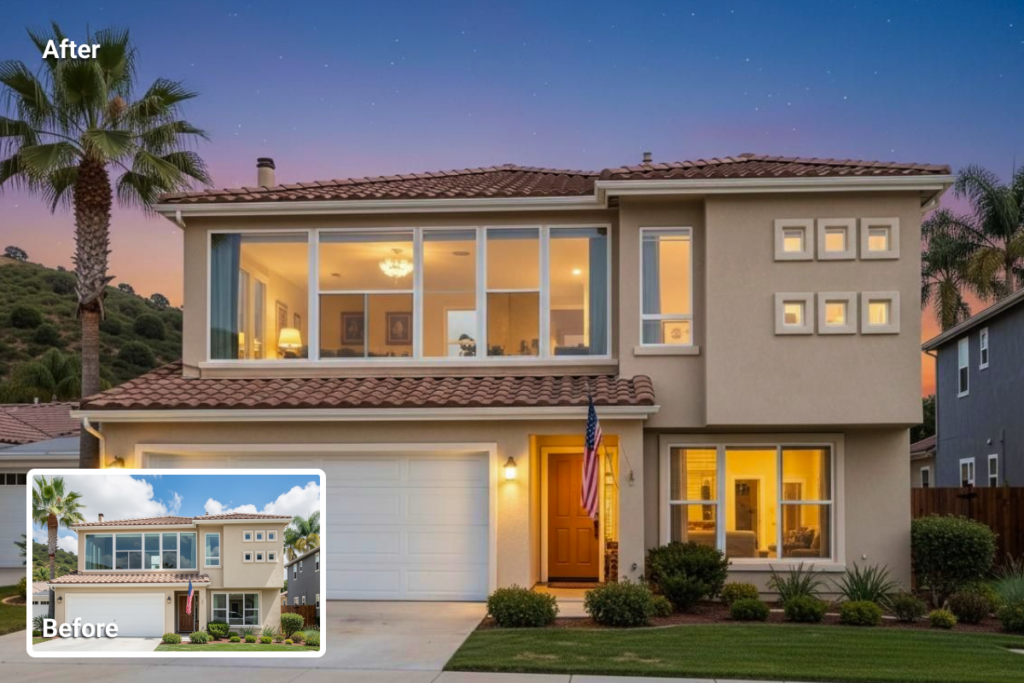
After photography, many agents refine listing photos through editing techniques such as virtual staging, lighting adjustments, or object removal.
Platforms such as AI HomeDesign provide tools for furniture staging, day-to-dusk conversion, and image enhancement. When aerial photos from the best drones for photography appear alongside edited interior photos, the listing gallery presents both the surrounding environment and the living space more clearly.
Final Thoughts
Drone technology has added a new perspective to property marketing. Aerial images reveal the relationship between a home and its surroundings, while interior photos describe the living space.
The models discussed above represent some of the most reliable options among the best drones for photography used in real estate today. Camera sensors, flight time, and stabilization systems often guide the final decision.
In modern listings, aerial photos and edited interior images work together to present properties clearly to potential buyers.
FAQs
Most real estate listings benefit from drones that record 20 megapixels or higher. Higher resolution allows photographers to crop aerial images while preserving clear details of the property and its surroundings.
For most residential listings, a drone with 25–40 minutes of flight time is sufficient. This duration allows photographers to record several aerial angles, including overhead property views and neighborhood perspectives.
Aerial images show the property environment, while interior photos may need adjustments such as lighting correction or virtual staging. Editing tools help present both exterior and interior images clearly within the listing gallery.
Drone images often appear at the beginning or end of a listing gallery. These photos provide a view of the property’s location, surrounding streets, and nearby landscape before interior photos show the living spaces.