A camera body gets plenty of attention, but the lens often decides how useful a property photo feels. In real estate photography the lens controls how much of the room fits in the frame, how straight the walls look, and how accurately buyers read the space.
The best lens for real estate photography is usually a wide-angle zoom with sharp corner detail and controlled distortion. It should make rooms feel clear, open, and accurate without stretching furniture, bending walls, or turning a small bathroom into a funhouse mirror.
What Makes a Good Real Estate Photography Lens?
The best lens for real estate photography is not just the widest lens available. It needs to capture enough of the room while keeping the space accurate, sharp, and natural.
Most good real estate lenses have five traits:
A useful wide-angle range: Full-frame photographers often work around 14–24mm or 16–35mm. APS-C photographers usually need around 10–20mm to get a similar field of view.
Low distortion: Straight walls, cabinets, windows, and door frames matter. A rectilinear wide-angle lens keeps lines much straighter than a fisheye lens.
Sharp corner detail: Important room details often sit near the edge of the frame. Soft corners can make flooring, walls, furniture, and room borders look less polished.
Practical handling: Weight, filter size, stabilization, and weather protection can matter during long shoot days, especially for photographers working across several properties.
A practical aperture: Many real estate interiors are shot with a tripod, bracketed exposures, flash, or narrower apertures such as f/5.6 to f/8. A fast f/2.8 lens can help in dark spaces, but it is not always necessary. For many property shoots, an f/4 wide-angle zoom offers enough flexibility while keeping the kit lighter and more affordable.
Best Focal Length for Real Estate Photography
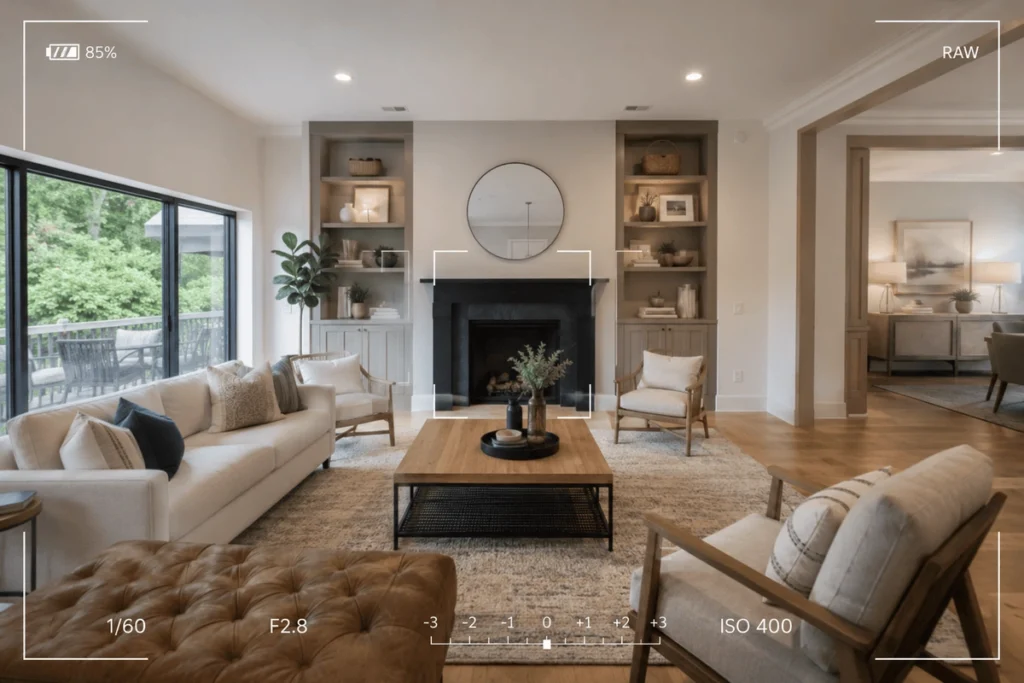
Focal length affects both room coverage and visual accuracy. If the lens is too narrow, the room can feel cramped. If it is too wide, the photo may make the space look larger or more stretched than it really is.
For full-frame cameras, 14–24mm works well for many interiors. The 14–16mm range helps with small bathrooms, tight bedrooms, and narrow hallways. The 18–24mm range often looks more natural for living rooms, kitchens, and larger bedrooms.
For APS-C cameras, a common range is around 10–20mm. Because APS-C sensors crop the view, a 10–18mm or 10–20mm lens often gives a similar field of view to a 15–30mm or 16–35mm lens on a full-frame camera.
The best lens for real estate photography gives you enough width to show the room clearly without exaggerating its size. A practical rule is simple: go wide enough to explain the space, but not so wide that the photo feels misleading.
Distortion Matters More Than Width
Real estate photography depends on trust. A lens should make the room look clear and spacious, but it should not stretch furniture, bend walls, or make the space feel larger than it is.
Distortion usually appears in two ways. Optical distortion bends straight lines, especially near the edges of the frame. Perspective distortion happens when the camera is tilted up or down, placed too close to furniture, or used from an awkward angle.
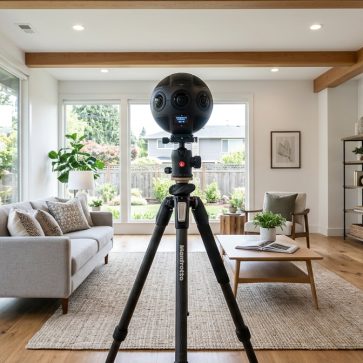
A better lens helps, but technique matters just as much. Keep the camera level, avoid placing large furniture too close to the edge of the frame, and leave a little room for correction in editing. For most real estate shoots, a rectilinear wide-angle zoom is a better choice than a fisheye lens because it keeps architecture looking more natural and accurate.
Top 5 Lenses for Real Estate Photography in 2026
This list focuses on current mirrorless systems from widely used camera brands. DSLR lenses can still work well, especially for photographers who already own them. But for new buyers, mirrorless lenses usually offer better long-term system support.
1. Canon RF 14-35mm f/4L IS USM
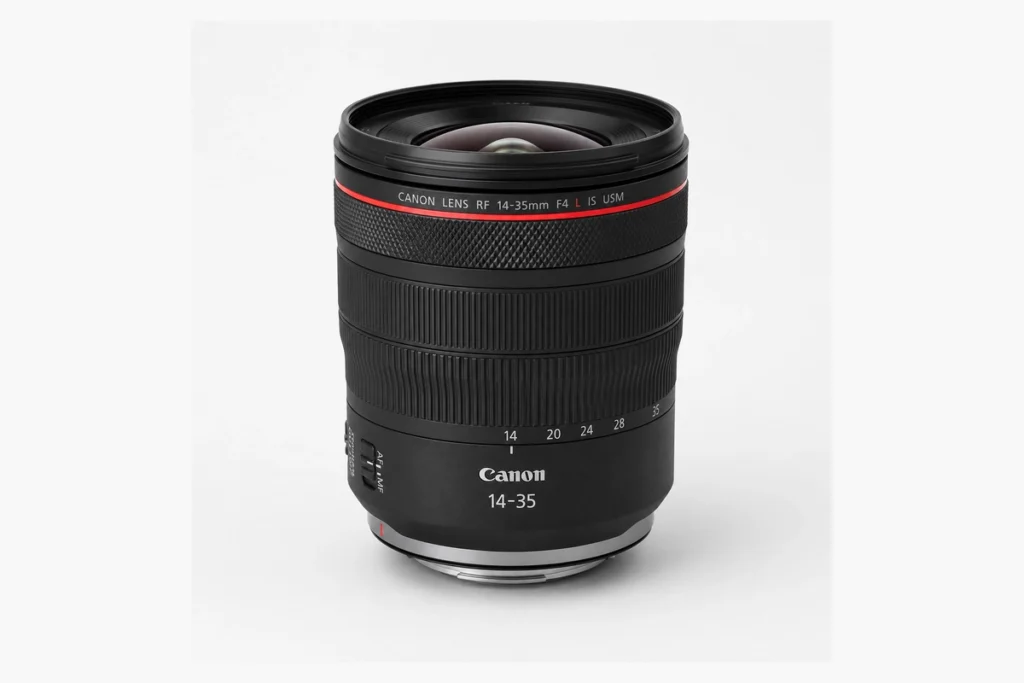
Best for: Canon full-frame users who want a lighter wide zoom
The Canon RF 14-35mm f/4L IS USM gives Canon shooters a practical 14–35mm range in a compact L-series body. Its 14mm end is useful for tight interiors, while the longer end works for exterior angles, room details, and wider lifestyle-style shots.
It also supports a 77mm filter thread, which is helpful for photographers who use filters for exterior work or glare control. Canon lists the lens at 540g, so it is easier to carry through long property shoots than many faster ultra-wide zooms.
Best point: Wide 14mm view, image stabilization, and front filter support.
Watch out: The f/4 aperture is less flexible than f/2.8 for handheld low-light work.
2. Nikon NIKKOR Z 14-30mm f/4 S
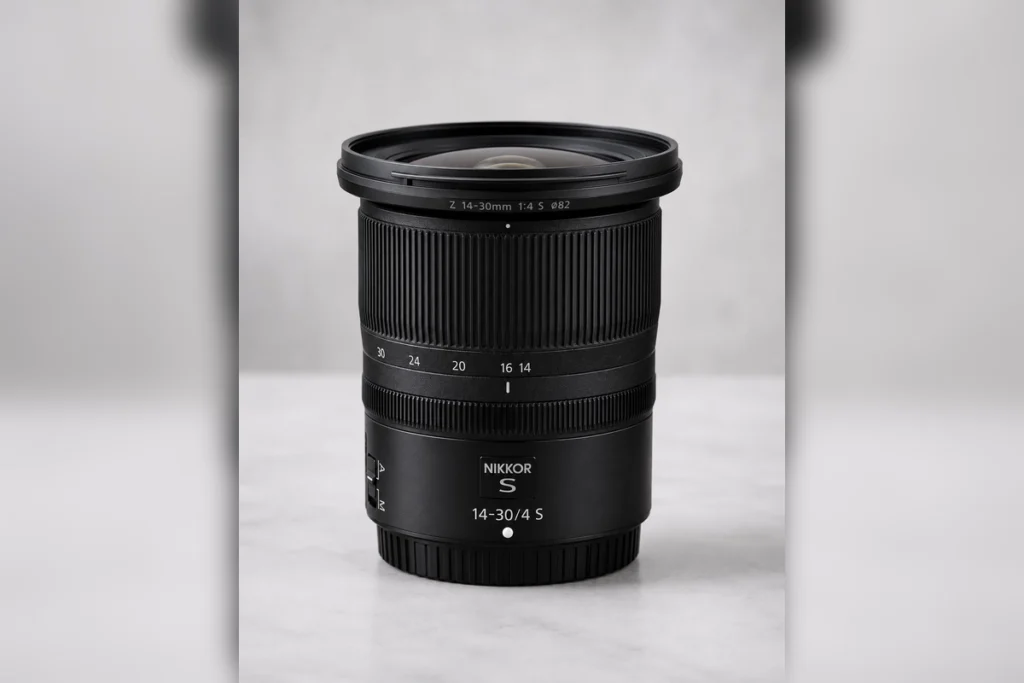
Best for: Nikon Z full-frame users
The Nikon NIKKOR Z 14-30mm f/4 S is a strong real estate option for Nikon mirrorless photographers. It covers a useful 14–30mm range and keeps the kit relatively light for full-frame work.
The lens also accepts 82mm filters, which helps with exterior photos, reflections, and some window-glare situations. Nikon lists it at about 485g, making it one of the more portable full-frame ultra-wide zooms in this group.
Best point: Lightweight 14–30mm full-frame coverage with front filter support.
Watch out: The f/4 aperture is not ideal for dark handheld shooting.
3. Sony FE 16-35mm f/2.8 GM II
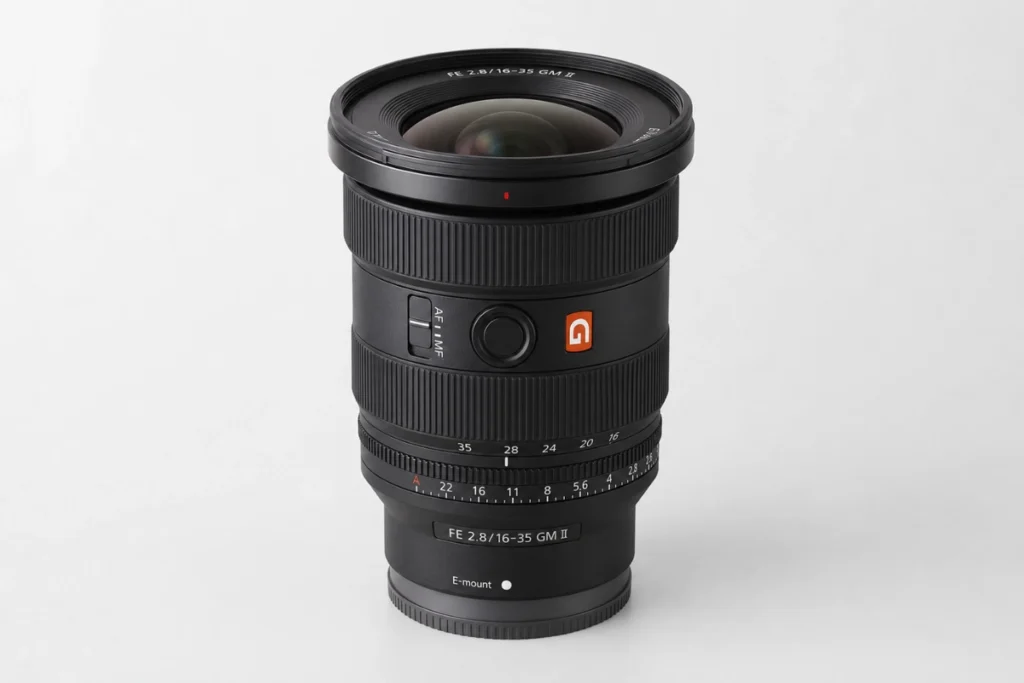
Best for: Sony full-frame professionals
The Sony FE 16-35mm f/2.8 GM II is a premium wide-angle zoom for Sony E-mount users. It covers the classic 16–35mm range and offers a constant f/2.8 aperture, which gives more flexibility in low light than f/4 lenses.
Sony describes it as the world’s smallest and lightest full-frame f/2.8 wide-angle zoom, and lists strong edge-to-edge resolution as one of its key selling points. That combination makes it attractive for photographers who want professional image quality without carrying a very heavy lens
At 16mm, it handles many interiors. At 24–35mm, it works well for exteriors, room details, and more natural-looking property photos.
Best point: Premium image quality in a lighter f/2.8 wide-angle zoom.
Watch out: 16mm may feel tight in very small rooms.
4. Sigma 14-24mm f/2.8 DG DN Art
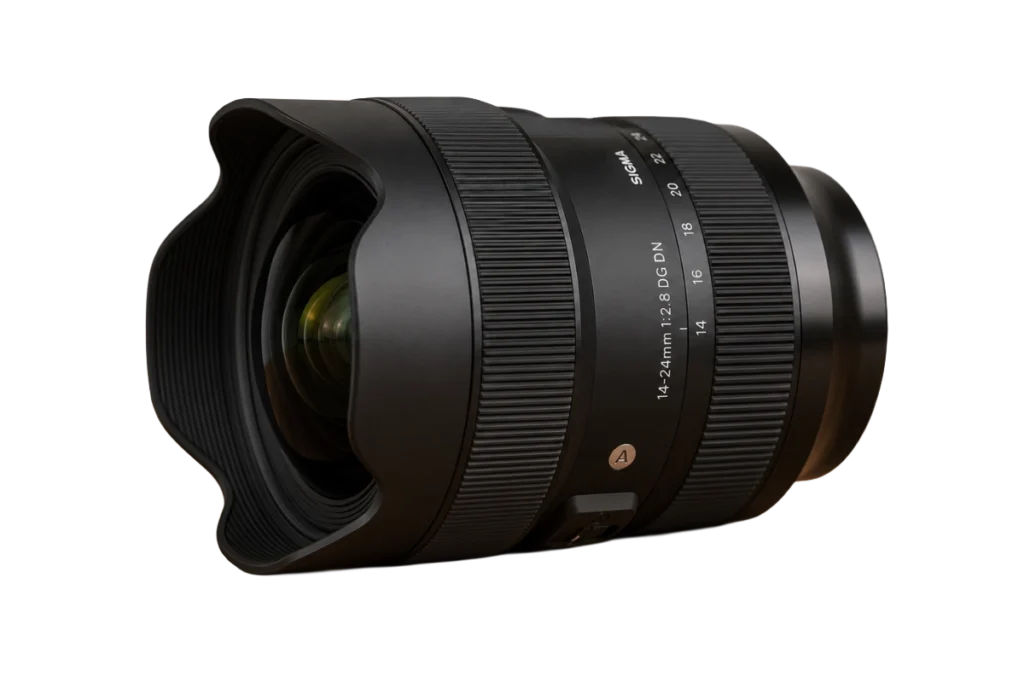
Best for: Sony E and L-mount users who need ultra-wide coverage
The Sigma 14-24mm f/2.8 DG DN gives full-frame Sony E and L-mount photographers a wide 14–24mm range with a constant f/2.8 aperture. It suits small interiors, premium property shoots, and photographers who want wider coverage than a 16–35mm lens provides.
The main tradeoff is handling. Sigma lists the filter size as unavailable, which reflects the front design; this is less convenient for photographers who rely on standard screw-in filters. It also gives less reach at the long end than a 16–35mm lens.
Best point: Wide 14–24mm coverage with a constant f/2.8 aperture.
Watch out: No standard front filter thread and less flexibility at the long end.
5. Sigma 10-18mm f/2.8 DC DN Contemporary
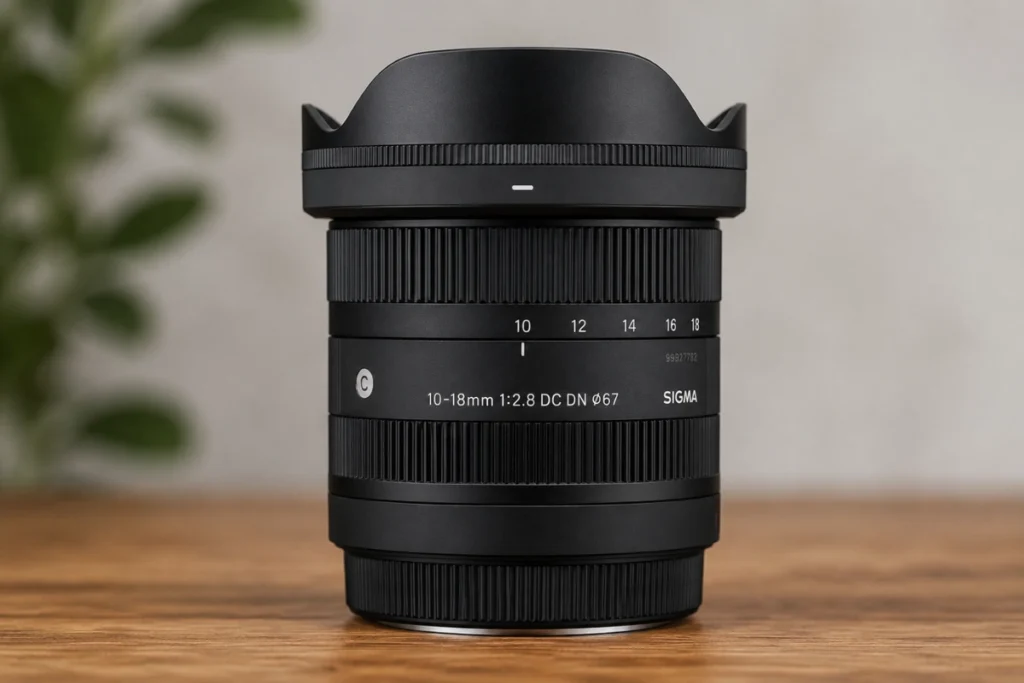
Best for: APS-C mirrorless users
The Sigma 10-18mm f/2.8 DC DN Contemporary is a practical APS-C option for real estate photographers using Sony E, Fujifilm X, Canon RF, or L-mount cameras. Sigma lists those mounts officially, and the lens is designed for APS-C mirrorless systems.
Its 10–18mm range gives many APS-C users a field of view similar to about 15–27mm on full frame, with Canon RF closer to 16–29mm. That makes it wide enough for many interiors without forcing a full-frame upgrade.
Best point: Compact APS-C ultra-wide zoom with a constant f/2.8 aperture.
Watch out: It does not cover full-frame sensors, and mount support is not universal.
Lens Comparison Table
| Lens | Best For | Focal Range | Aperture | Key Advantage | Watch Out |
|---|---|---|---|---|---|
| Canon RF 14-35mm f/4L IS USM | Canon full-frame users | 14-35mm | f/4 | Wide 14mm view, image stabilization, and front filter support. | Less flexible than f/2.8 for handheld low-light work. |
| Nikon NIKKOR Z 14-30mm f/4 S | Nikon Z full-frame users | 14-30mm | f/4 | Lightweight full-frame coverage with front filter support. | Not ideal for dark handheld shooting. |
| Sony FE 16-35mm f/2.8 GM II | Sony full-frame professionals | 16-35mm | f/2.8 | Premium image quality with a brighter aperture. | 16mm may feel tight in very small rooms. |
| Sigma 14-24mm f/2.8 DG DN Art | Sony E and L-mount users | 14-24mm | f/2.8 | Ultra-wide full-frame coverage for tight interiors. | No standard front filter thread and less reach at the long end. |
| Sigma 10-18mm f/2.8 DC DN Contemporary | APS-C mirrorless users | 10-18mm | f/2.8 | Compact APS-C ultra-wide zoom with a bright aperture. | Does not cover full-frame sensors, and mount support is not universal. |
How to Choose the Right Lens by Camera Brand
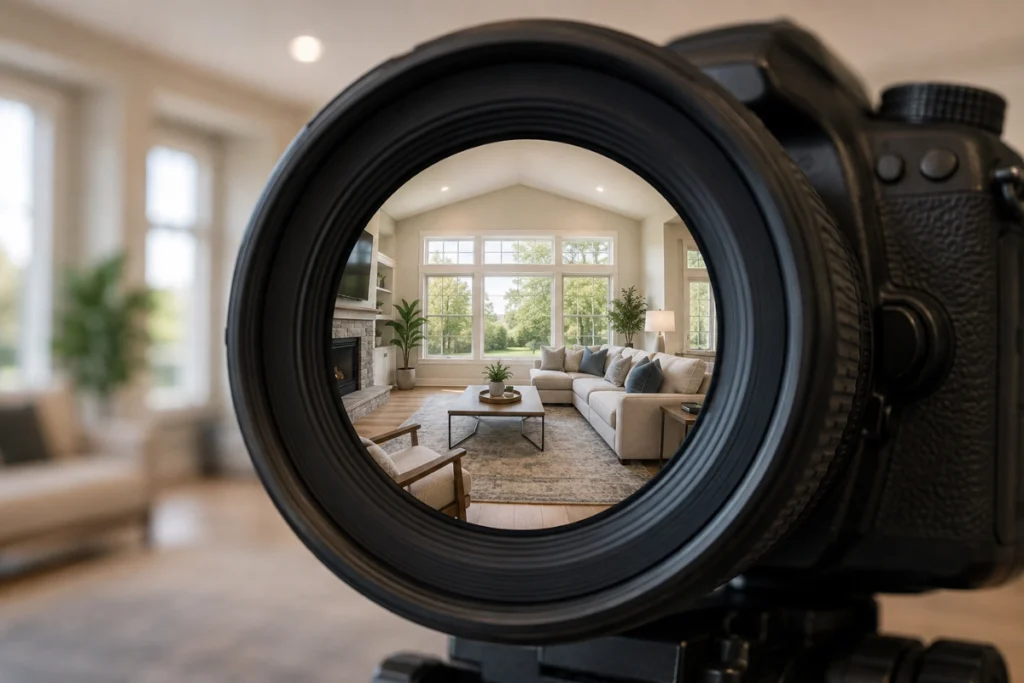
Start with the camera mount. A great lens is only useful if it fits your system, covers your sensor size, and matches the type of properties you usually shoot.
Canon
Canon full-frame users can compare the RF 14-35mm f/4L IS USM and RF 15-35mm f/2.8L IS USM. The RF 14-35mm f/4L is a strong fit for real estate photographers who want a wider 14mm view, image stabilization, and a lighter setup. Canon positions it as a flexible ultra-wide zoom with a constant f/4 aperture.
The RF 15-35mm f/2.8L makes more sense for photographers who also shoot video, events, or handheld low-light work. For real estate interiors on a tripod, though, f/4 is often enough.
Nikon
Nikon Z full-frame users should start with the NIKKOR Z 14-30mm f/4 S. It gives a practical ultra-wide range for interiors while keeping the kit manageable.
For Nikon APS-C users, the NIKKOR Z DX 12-28mm f/3.5-5.6 PZ VR is an option, but it is not as wide as a 10–20mm APS-C lens. Nikon describes it as a DX-format zoom with a 12–28mm range, equivalent to about 18–42mm on full frame. That can work for larger rooms, but it may feel tight in small bathrooms or narrow bedrooms.
Sony
Sony full-frame users have several strong options. The Sony FE 16-35mm f/2.8 GM II suits premium work, especially for photographers who want a fast aperture and professional image quality.
The Tamron 17-28mm f/2.8 Di III RXD is a lighter alternative for Sony E-mount users. Tamron lists it as a Sony E-mount ultra-wide zoom with a constant f/2.8 aperture and a compact 420g body.
The Sigma 14-24mm f/2.8 DG DN Art is better for photographers who need a wider 14mm view. Sigma lists it for Sony E-mount and L-mount full-frame mirrorless systems.
Fujifilm X and Other APS-C Systems
Fujifilm X and other APS-C users should usually look for lenses around 10–18mm or 10–20mm. That range gives enough width for most interiors without moving into fisheye territory.
For APS-C photographers, the key is not only width. The lens should also control distortion, stay sharp near the corners, and fit the way you shoot.
Match the Lens to the Property Type
The best lens for real estate photography should match the camera mount first, then the property type, then the shooting style. A large luxury home, a small apartment, and a rental unit do not always need the same lens.
For most users, the safest choice is a wide-angle zoom with low distortion. Go wide enough to show the room clearly, but not so wide that the photo exaggerates the space.
Common Lens Mistakes in Real Estate Photography
The first mistake is going too wide. Ultra-wide lenses help in tight rooms, but extreme width can stretch furniture, bend edges, and make spaces look larger than they are. Buyers may notice the difference during a showing.
The second mistake is ignoring vertical lines. Even the best lens for real estate photography cannot fix a tilted camera on its own. Keep the camera level, use a tripod when needed, and correct verticals during editing.
The third mistake is choosing a lens only by aperture. A bright f/2.8 lens sounds attractive, but many real estate photos are shot at narrower apertures for better depth, sharpness, and corner detail. For some photographers, a lighter f/4 lens is the smarter buy.
The fourth mistake is treating the lens as the whole setup. A camera body, tripod, lighting, editing workflow, and lens all work together. For the camera side of the kit, see our guide to the best cameras for real estate photography.
Final Thoughts
The best lens for real estate photography is not always the widest or most expensive option. It is the lens that shows the room clearly, keeps lines natural, and fits the camera system you already use.
Full-frame photographers should usually compare lenses in the 14–24mm, 15–35mm, and 16–35mm ranges. APS-C photographers should look around 10–20mm. From there, the right choice depends on budget, weight, filter use, and how often you shoot tight interiors.
A good lens gives you a cleaner starting point, but it does not replace technique. Level framing, careful composition, proper lighting, and clean editing still decide whether the final listing photo feels accurate, polished, and ready to publish.
FAQs
What is the best lens for real estate photography?
For most full-frame users, the best lens for real estate photography is a wide-angle zoom around 14–24mm or 16–35mm. APS-C users usually need a 10–20mm lens for a similar view.
Is 16mm wide enough for real estate photography?
Yes, 16mm works well for many full-frame real estate interiors. Very small rooms, bathrooms, and narrow hallways often benefit from 14mm or 15mm.
Do real estate photographers need a prime lens?
Not usually. A zoom lens works better for most property shoots because rooms vary in size. A 14–24mm, 16–35mm, or 10–20mm zoom gives more framing control than a fixed focal length lens.
What lens should beginners use for real estate photography?
Beginners should start with a wide-angle zoom that matches their camera system. Full-frame users can start around 16–35mm. APS-C users should look around 10–18mm or 10–20mm. This range covers most interiors without making the image look too distorted.