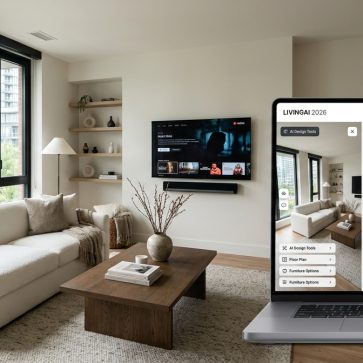
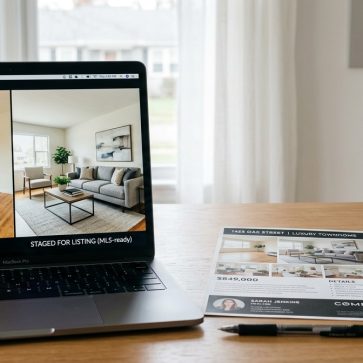
Real estate photo editing companies help agents, photographers, brokerages, and listing teams prepare cleaner listing visuals before buyers even read the property description. A dark room, tilted wall line, cluttered counter, or empty living room can make a good property harder to understand online.
The right choice depends on the type of editing the listing needs. A photographer processing 300 images a week needs a different workflow from an agent staging three vacant rooms before a weekend launch. Some teams need quick AI edits. Others need manual retouching, HDR blending, floor plans, or video support.
What Real Estate Photo Editing Services Usually Cover
Most real estate photo editing companies offer a mix of basic cleanup, visual enhancement, and presentation services. The exact menu varies by provider, but the goal is usually the same: turn raw property photos into clearer, more useful listing visuals.
Core services often include Image enhancement for exposure, white balance, sharpness, sky correction, and lens correction. Many providers also offer Item removal for temporary clutter such as cords, bins, personal objects, or unwanted movable furniture.
For vacant or under-furnished rooms, virtual staging can help buyers understand scale and room function. Exterior images may use day-to-dusk editing when agents need a stronger hero photo for listings, ads, or social posts.
Some companies also offer virtual renovation for unfinished or outdated spaces. This can include visual changes to walls, floors, cabinets, backsplashes, or fixtures. For active listings, these edits need careful disclosure because they may show a possible future version of the property rather than its current condition.
Full-service providers may also handle floor plans, 360° image editing, video editing, rendering, or marketing visuals.
A typical listing workflow often starts with enhancement, then adds item removal, virtual staging, or dusk edits only where needed. A wider service menu can reduce handoffs, but only if the provider maintains consistent quality across every edit.
How to Choose a Real Estate Photo Editing Company
1. Start With the Photo Problem, Not the Provider Name
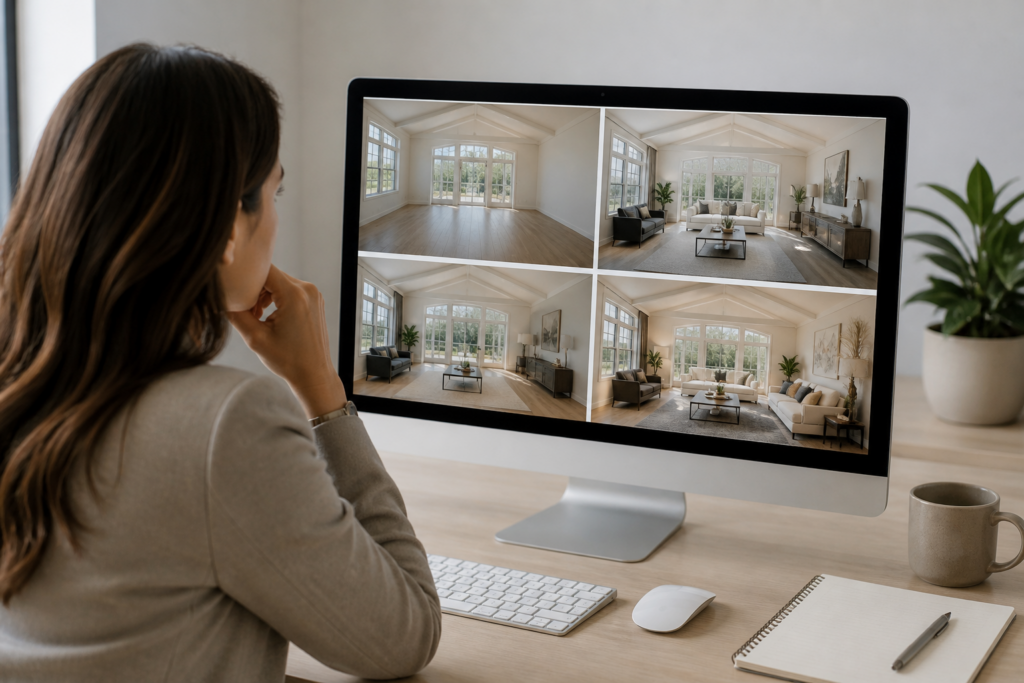
Before comparing real estate photo editing companies, define the job. A vacant condo may need virtual staging. A lived-in home may need item removal. A luxury listing may need manual retouching or flambient blending. A high-volume photographer may need reliable batch delivery more than one perfect hero image.
Source photo quality also matters. Stronger capture gives editors better material to work with, so basic real estate photography tips can help teams reduce correction work before photos are even uploaded.
This first step keeps provider comparisons fair. You are not just choosing a company. You are matching a service model to the actual photo problem.
2. Check Turnaround Time Against Listing Deadlines
Turnaround time matters when the listing date is close. AI services can often return standard edits faster than manual editing teams. Manual providers may offer same-day, 12-hour, 24-hour, or 48-hour options depending on the service.
For example, Phixer lists 12, 18, and 24-hour turnaround options for photo editing and Photoshop edits, plus 24 and 48-hour options for video editing and virtual staging.
Speed is useful, but it should not be the only filter. Complex edits, luxury interiors, window pulls, flambient blends, and heavy object removal may still need human review. For routine listing photos, AI editing can handle many common fixes with less waiting.
3. Compare Price by Job Type
Real estate photo editing prices vary by service. Basic enhancement usually costs less than virtual staging, renovation previews, floor plans, or video editing. Some providers charge per image. Others use credits, subscriptions, or dedicated editor plans.
The best price is not always the lowest price. A cheap edit that needs two rounds of correction can cost time. A higher price may make sense for images that carry more listing value, such as the lead exterior photo, main living room, kitchen, or primary bedroom.
4. Test the Same Image With Several Providers
A small test can prevent a bigger workflow problem. Use the same photo, request the same service, and compare the results.
Look at lighting, color, realism, wall lines, furniture scale, artifacts, shadows, and small details near windows or corners. Photographers should also test batch consistency. One polished sample does not prove that a provider can handle a full listing set under deadline pressure.
5. Review Revision Rules and MLS-Safe Editing
Real estate editing has limits. Photos should improve presentation without misrepresenting the property. Virtual staging, item removal, day-to-dusk edits, and renovation previews need careful handling, especially when MLS rules require labels or disclosures.
Choose a provider that treats listing accuracy as part of the service. That protects the agent, the photographer, and the seller from avoidable corrections or compliance issues.
Real Estate Photo Editing Companies to Compare in 2026
The list below is not a ranking. It gives agents, photographers, and listing teams a practical starting point for comparing real estate photo editing companies by service fit, workflow, speed, and editing style.
| Company | Main Focus | Key Services | Best Fit |
|---|---|---|---|
| AI HomeDesign | Fast AI-based real estate photo editing | Virtual staging, image enhancement, item removal, day-to-dusk, renovation-style edits | Agents, photographers, and teams that want quick online editing, free testing options, and multiple services in one place |
| BoxBrownie | Broad human-edited real estate visual services | Image enhancement, day-to-dusk, virtual staging, floor plan redraws, item removal, virtual cleaning, color change, 360° editing | Users who want a wide service catalog with clear per-service pricing |
| PhotoUp | Editing capacity and broader marketing support | Single-photo editing, HDR, flambient work, dedicated editor plans, AI virtual staging | Real estate photographers or studios that need repeat editing capacity and team-style support |
| Phixer | Production support for real estate media teams | Photo editing, virtual staging, video editing, floor plans, 3D work, listing media support | Photographers, brokerages, and teams that want professional editing with defined delivery windows |
| PadStyler | Virtual staging, rendering, and property visualization | Virtual staging, 3D rendering, renovation concepts, visual materials for unfinished or unfurnished spaces | Agents, investors, and property marketers who need staging, renovation previews, or rendering-related services |
| Apply Design | Self-serve AI virtual staging | Virtual staging, furniture removal, revision options, large furniture library | Agents and photographers who want more control over staging style and furniture choices |
| Styldod | Wide real estate visual marketing services | Image enhancement, virtual staging, day-to-dusk, object removal, floor plans, renovation visuals, video services | Users who want editing, staging, floor plans, renovation visuals, and video-related services from one provider |

AI HomeDesign
AI HomeDesign is a good fit for users who want AI-based real estate photo editing in one online workspace. Its tools cover virtual staging, image enhancement, item removal, day-to-dusk editing, and renovation-style visuals.
The site lists 10+ instant real estate photo editing AI tools, with pricing from $0.24 per photo and results in about 30 seconds.
Best fit:Users who want a human-edited service catalog with clear service categories and broad listing-visual support.

BoxBrownie
BoxBrownie is a well-known real estate image editing provider with a broad service catalog. Its services include image enhancement, day-to-dusk editing, virtual staging, floor plan redraws, item removal, virtual cleaning, color change, and 360° editing.
The company works across several listing-visual needs, from simple photo corrections to more involved visual presentation tasks.
Best fit: Users who want a human-edited service catalog with clear per-service pricing.

PhotoUp
PhotoUp focuses on real estate photo editing and broader marketing support for photographers and real estate professionals. Its site promotes ready-to-hire editors, high daily editing capacity for single-photo editing, HDR and flambient work, and dedicated editor plans.
PhotoUp also offers AI virtual staging through its help center, with credit-based pricing.
Best fit: Real estate photographers or studios that need editing capacity, repeat work, and team-style support.

Phixer
Phixer is a real estate media editing company that works mainly with photographers, brokerages, and listing teams. Its services cover photo editing, virtual staging, video editing, floor plans, 3D work, and listing media support.
The company positions itself as a production partner for real estate professionals who need regular editing capacity, not just one-off image fixes.
Best fit: Photographers and teams that want professional editing with defined delivery windows.

PadStyler
PadStyler is a real estate visual marketing company with a strong focus on virtual staging, 3D rendering, and property visualization.
Its services suit agents, investors, and property marketers who need staged interiors, renovation concepts, or visual materials for unfinished and unfurnished spaces. Compared with general photo editing providers, PadStyler sits closer to the staging and rendering side of the market.
Best fit: Agents and photographers who need virtual staging, renovation previews, or rendering-related services.

Apply Design
Apply Design is an AI virtual staging platform focused on self-serve property staging. Its service includes virtual staging, furniture removal, revision options, and access to a large furniture library.
The platform centers on giving users more direct input over how a space is furnished and presented.
Best fit: Agents and photographers who want control over staging style and furniture choices.

Styldod
Styldod offers a wide range of real estate visual marketing services, including image enhancement, virtual staging, day-to-dusk editing, object removal, floor plans, renovation visuals, and video services.
Its enhancement work covers common listing-photo corrections such as color balance, brightness and contrast adjustment, sharpening, distortion correction, and reflection cleanup. The company serves agents, photographers, and real estate teams that need several visual services from one provider.
Best fit: Users who want editing, staging, floor plans, renovation visuals, and video-related services under one provider.
AI Editing or Manual Editing?
| ✨ AI-Driven Editing | 👤 Manual Editing | |
|---|---|---|
|
◷
Time
|
Fast for standard edits Often returned in seconds or minutes |
Usually slower Often 12–48 hours depending on the service |
|
🏷️
Price
|
Lower cost per image |
Higher cost for more labor-intensive work |
|
🏠
Best Use Case
|
Standard listing photos, quick turnaround, common fixes |
Complex edits, luxury interiors, window pulls, flambient blends |
AI editing works best for routine listing tasks, while manual editing is better for complex or high-value images.
AI editing works well when the task is common, the source photo is clear, and the result needs to be ready quickly. Virtual staging, image enhancement, object removal, and day-to-dusk edits can all fit AI-assisted workflows for many standard listings.
Manual editing still has a place. Luxury listings, complex lighting, difficult flambient blends, detailed window work, and high-end retouching often need a careful eye. For many teams, the smartest setup is not AI against manual editing. It is AI for routine work and manual review for high-value images.
Some AI-based platforms, including AI HomeDesign, combine several common editing tasks in one workflow. That can help agents and photographers test enhancement, item removal, staging, and dusk-style edits without sending each image to a different vendor.
Still, the right choice depends on the job, the deadline, the budget, and the quality standard. A standard vacant room may only need fast AI staging. A luxury kitchen with difficult window light may need manual review. The best workflow is the one that matches the image, not the one that sounds most advanced.
Final Thought
Choosing among real estate photo editing companies should come down to fit. The right provider is the one that can handle the specific photo problem, meet the listing deadline, and return images that look realistic enough for buyers and safe enough for MLS use.
Before committing, test one or two images with a few providers. Compare the results for lighting, color, realism, revision rules, turnaround time, and price.
A good editing partner should make listing photos clearer, not less trustworthy. The best output helps buyers understand the property quickly without changing what the property actually is.
FAQs
How much do real estate photo editing services cost?
Costs vary by service type. Basic enhancement is usually cheaper, while virtual staging, floor plans, 360° edits, renovation visuals, and video work cost more. Public prices range from low per-image AI edits to higher manual or specialized services, so agents should confirm current rates before ordering.
How long does real estate photo editing take?
AI tools can often return standard edits quickly. Manual services usually take longer, with turnaround depending on the edit type, provider, and order size.
What should agents look for in real estate photo editing companies?
Compare turnaround time, price, service range, revision rules, editing quality, MLS-safe practices, and upload flow. A small test order is the best way to judge fit.