Home staging tips for sellers should start with one practical question: which changes make the home easier to price, photograph, show, and sell? Staging is not just decorating. It shapes how buyers read the home before they decide whether to keep looking.
Most sellers hear “declutter and add flowers,” but those steps alone rarely fix weak presentation. The bigger priority is knowing where staging effort actually matters: the living room, kitchen, primary bedroom, entry, lighting, repairs, and listing photos.
The goal is not a perfect showroom. It is a home that feels clean, cared for, and easy for buyers to understand. Strong staging helps the property photograph better, show better, and give buyers fewer reasons to hesitate.
Staging Is a Pricing Strategy, Not a Design Project
Most sellers treat staging as optional decorating. If the home already looks “fine,” they assume it can be skipped. But staging is not just about style. It affects how buyers judge the home’s condition, value, and readiness before they ever walk through the door.
That matters even more as buyer expectations shift. Sellers who understand what home buyers want in 2026 can make better staging decisions because they know which details buyers notice first: space, light, condition, function, and online presentation.
The purpose of staging is to make the home easier for buyers to imagine as their own. Personal photos, bold paint choices, crowded furniture, and highly specific decor can make that harder. A cleaner, calmer room gives buyers more room to focus on layout, light, storage, and how the space might fit their daily life.
Listing photos make this even more important. For many buyers, the photo gallery is the first showing. If the home looks dark, crowded, dated, or confusing online, it may lose attention before the in-person visit ever happens.
The Cost of Sitting on Market
A home that sits without serious interest can become harder to position. Buyers may notice the time on market, question the price, or expect room to negotiate. That does not mean staging guarantees a faster sale, but it can reduce the visual friction that makes buyers hesitate.
The better way to think about staging is cost control. A modest investment in cleaning, light, layout, repairs, and presentation may be easier to justify than a larger price reduction later.
For sellers asking how to stage a house to sell fast, the answer is not to decorate more. It is to remove the doubts buyers notice first, then make the home feel clear, cared for, and ready to consider.
The ROI Stack: A Mental Model for Deciding What to Stage
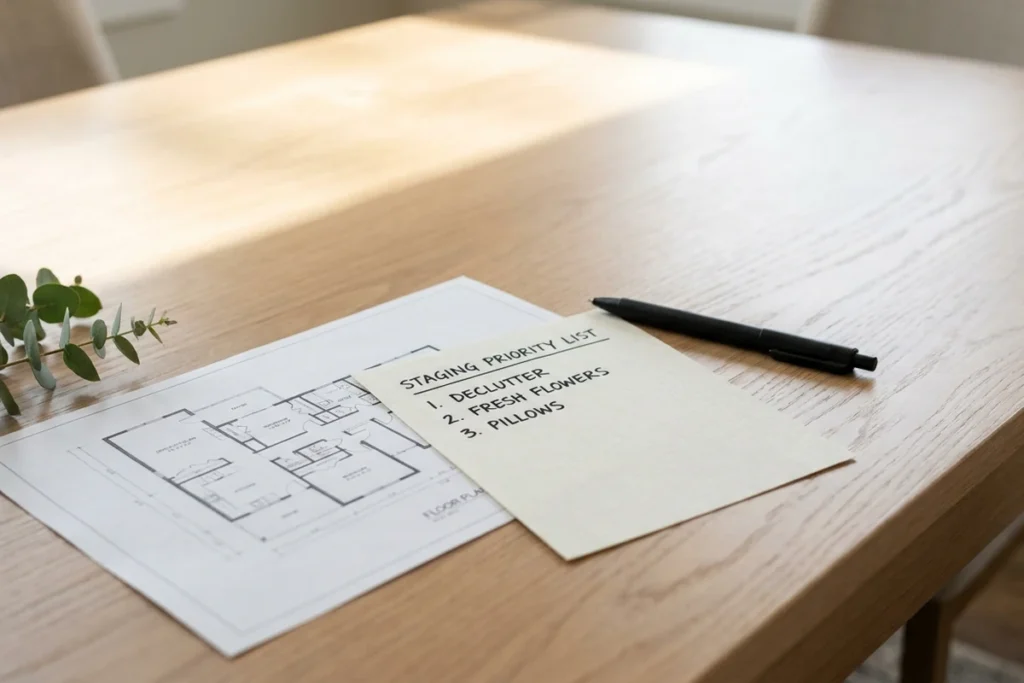
Sellers often treat staging as all or nothing: stage every room or skip staging entirely. That can waste money. Not every room carries the same weight with buyers, so the smarter approach is to stage in order of likely impact.
The ROI Stack is a simple way to prioritize. Start with the rooms buyers notice most, then move to secondary spaces only if the budget allows.
Tier 1: Living Room and Kitchen
The living room should usually come first. NAR’s 2025 Profile of Home Staging found that 37% of buyers’ agents said the living room was the most important room to stage, making it the highest-priority space in the survey.
The kitchen also deserves attention because buyers read it quickly for cleanliness, function, and maintenance. It may not always need full staging, but counters should be clear, lighting should be strong, and the room should photograph cleanly.
Tier 2: Primary Bedroom
The primary bedroom comes next. NAR’s 2025 report found that buyers’ agents ranked the primary bedroom at 34%, for staging importance, close behind the living room.
This room helps buyers imagine rest, privacy, and daily routine. It does not need heavy decor, but it should feel calm, clean, and clearly functional.
Tier 3: Home Office
A home office can be valuable when the floor plan supports it. A spare bedroom, nook, or small bonus room can be staged with a desk, chair, lamp, and simple storage to show a credible work-from-home setup.
This is especially useful when the room might otherwise feel undefined. The goal is not to overbuild the space, but to show buyers a practical use.
Tier 4: Secondary Rooms and Outdoor Spaces
Secondary bedrooms, guest rooms, bathrooms, dining rooms, and outdoor areas still matter, but they do not always need the same staging budget. Often, cleaning, lighting, fresh towels, simple bedding, plants, and minor curb appeal work are enough.
The practical rule is simple: complete the highest-impact rooms first. Then use the remaining budget for small touches in the spaces buyers see next.
DIY vs. Professional Staging: An Honest Trade-Off Analysis
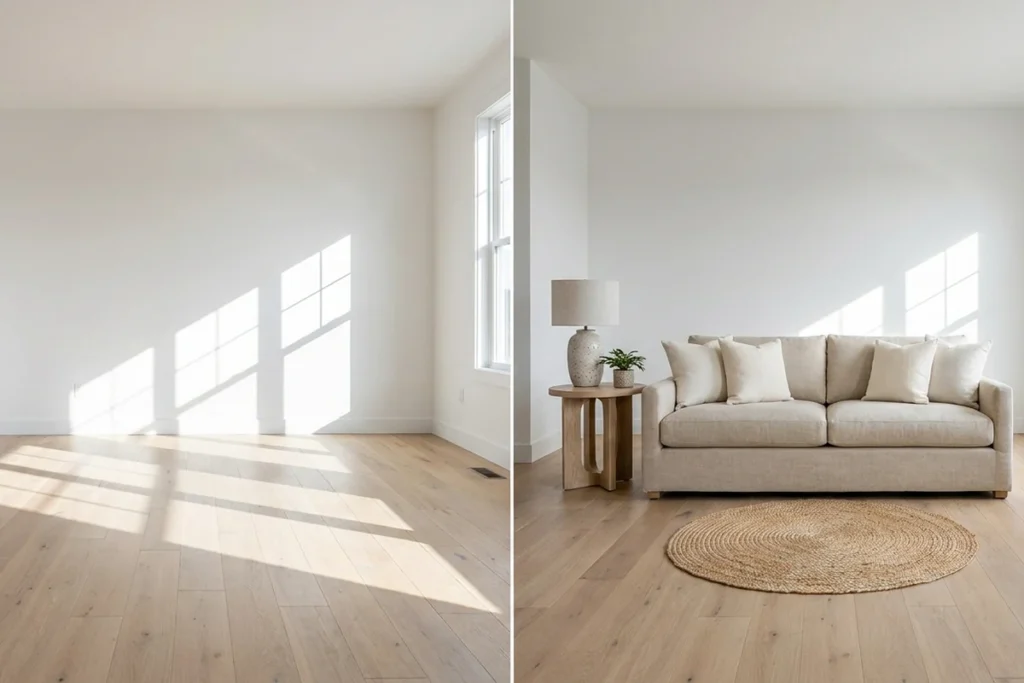
Most sellers know their home well, but that can make staging harder. What feels warm and personal to the owner may look crowded, specific, or distracting to a buyer scrolling through listing photos.
That does not mean DIY staging is a bad choice. It means the right approach depends on the home, budget, price point, timeline, and how much work the seller can realistically handle.
Matching the Approach to the Property
DIY staging works best when the home is already clean, neutral, and mostly furnished. In those cases, sellers may only need to declutter, rearrange furniture, improve lighting, and add a few simple accessories.
Professional staging can make more sense for vacant homes, higher-price listings, awkward layouts, or competitive markets where presentation needs to be stronger from the start. A professional stager brings furniture, scale, layout judgment, and a buyer-focused eye that many sellers do not have.
Virtual staging sits between those options. It is most useful when the home is empty, the seller is remote, or the main goal is improving the online photo gallery without physically furnishing the property. Sellers comparing that route can review the best virtual staging software for real estate before choosing a tool or service.
The Financial Frame
The main trade-off is cost versus control. DIY staging costs less but requires time and objectivity. Professional staging costs more but can improve room flow, scale, and buyer perception in person. Virtual staging is usually more affordable than full physical staging, but it mainly helps with online presentation.
The best choice is not always the most expensive one. Sellers should start by asking where the listing is weakest: the photos, the in-person showing, the room layout, or the overall condition. Then they can choose the staging method that solves that specific problem without overspending.
Room-by-Room Staging: Where to Focus and What to Do
Most staging mistakes come from spending effort in the wrong places. A spotless basement will not help much if the living room still feels crowded, dark, or hard to photograph. Sellers should start with the rooms buyers notice first, then move to secondary spaces if time and budget allow.
Living Room
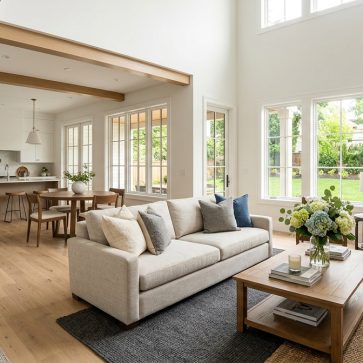
The living room should feel open, comfortable, and easy to understand. Scale and arrangement matter more than style. Oversized furniture can make the room feel smaller, especially in listing photos.
Remove extra chairs, side tables, decor, and anything that blocks natural movement through the room. Keep only the pieces that define the seating area and help buyers understand how the space works.
Mirrors can help reflect light, but placement matters. Avoid angles that create glare or reflect clutter. A neutral throw, fresh pillow covers, and one or two simple accessories are usually enough to make the room feel warmer without adding visual noise.
Kitchen
Kitchen staging should start with cleaning, not decor. Countertops should be mostly clear so buyers can see workspace, storage, and surface condition.
One or two simple items, such as a bowl of fruit, a small herb plant, or a clean cutting board, can add warmth without cluttering the view. Grout, cabinet hardware, sinks, faucets, and appliance fronts should be cleaned carefully because buyers often read these details as signs of maintenance.
Primary Bedroom
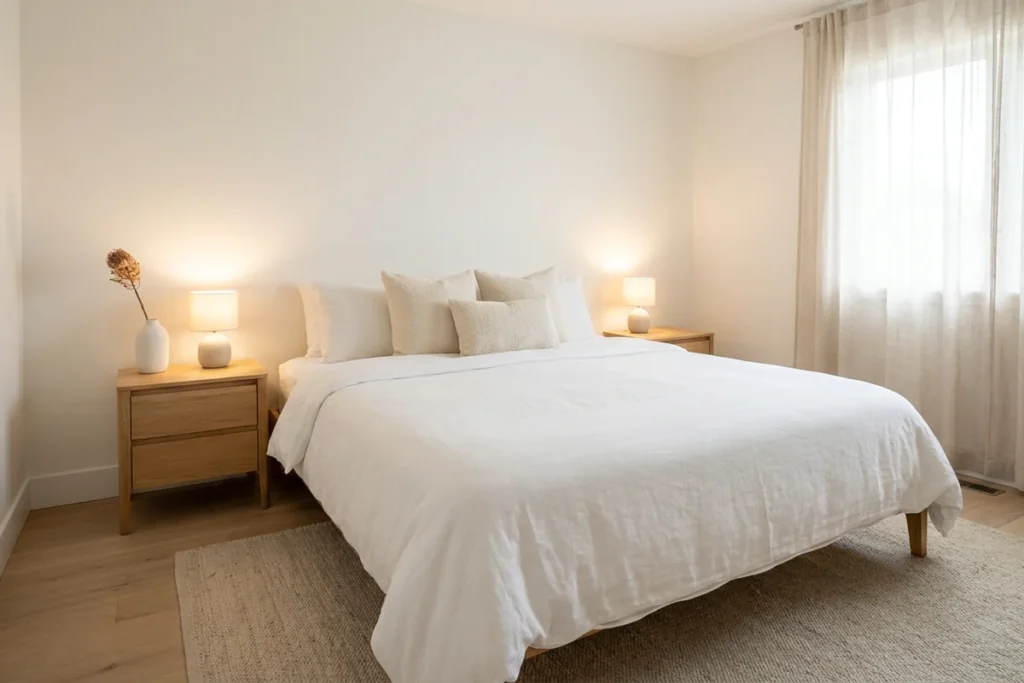
The primary bedroom should feel calm, clean, and easy to imagine as a retreat. Light bedding, simple nightstands, matching lamps, and minimal decor usually work better than bold colors or highly personal styling.
Remove personal photos, extra furniture, laundry baskets, and anything that makes the room feel crowded. For sellers who want a deeper room-specific approach, bedroom design tips for property appeal can help connect staging choices with buyer expectations.
Home Office
A home office does not need to be elaborate. It needs to look functional, quiet, and uncluttered. A simple desk, chair, lamp, notebook, and one clean wall can be enough to show purpose.
This matters most when a spare room or awkward corner could otherwise feel undefined. In some cases, ai visual marketing for real estate can help present a small or empty workspace more clearly in listing visuals, especially when the physical room is difficult to stage.
Where Not to Over-Invest
Secondary bedrooms, basements, garages, and storage areas still need to be clean and organized, but they usually do not need the same staging budget as the living room, kitchen, primary bedroom, or office.
The goal is a tidy, intentional presentation. A spare room can stay simple, but it should not feel forgotten. Clean floors, neutral walls, good lighting, and a clear purpose are usually enough.
The Pre-Photography Rule: Why Timing Changes Everything
Staging works best before the photographer arrives. Once listing photos are taken, the home’s first impression is already mostly set. Editing can improve a good photo, but it cannot fully rescue a room that still feels cluttered, dark, or poorly arranged.
That is why sellers should treat staging and photography as one workflow. Clean first, repair what buyers will notice, arrange the key rooms, then take photos. If virtual staging or item removal is part of the plan, decide that before the gallery is published so the final images feel consistent.
The Pre-Photography Staging Checklist
Before the photographer arrives, focus on five areas:
- Lighting: Open blinds, replace dim bulbs, and add lamps to dark corners.
- Furniture placement: Anchor seating around a clear focal point and keep walkways open.
- Surface clearing: Remove personal items, paperwork, excess decor, and small appliances from counters.
- Scent and air quality: Air out the home and remove pet, cooking, or musty odors before shoot day.
- Priority rooms: Stage the living room, kitchen, and primary bedroom first, since these spaces usually shape the strongest buyer impression.
Photo Editing Is a Complement, Not a Substitute
Real estate photo editing can improve brightness, color balance, vertical lines, and overall clarity. It helps a well-prepared room look its best.
But editing should not replace staging. It cannot make a crowded room feel spacious, fix poor furniture flow, or create the warmth buyers expect during a showing. Physical preparation and photo editing work best together: staging creates the scene, and editing polishes the final image.
Staging Decision Tree: A Checklist to Apply Before Listing
Most staging mistakes start with the wrong strategy. Sellers may spend too much on rooms that do not matter, skip the rooms that do, or choose physical staging when a lighter approach would work.
A simple decision framework helps match the staging method to the home, budget, timeline, and buyer expectations.
Five Questions to Ask First
Is the home vacant?
Consider professional staging, virtual staging, or a mix of both. Empty rooms can feel smaller and colder online, so they usually need extra help before photos go live.
Is the asking price above the local median?
Higher-price listings often need stronger presentation because buyers expect more polish. Professional staging may be worth considering if the property is competing against well-presented homes.
Is the home already neutral and lightly furnished?
DIY staging may be enough. Focus on decluttering, lighting, furniture placement, and small repairs before adding anything new.
Is the seller remote or on a tight timeline?
Virtual staging can help when physical setup is difficult. It works best for online listing photos and should still be reviewed for realism, scale, and disclosure requirements.
Has the listing been live with weak interest?
Review the photos, room presentation, price, and buyer feedback before making a reduction. Sometimes better staging or a refreshed gallery can reduce visual friction, but pricing and market fit still matter.
Budget and Non-Negotiables
When the staging budget is tight, prioritize the rooms buyers notice most: living room, kitchen, and primary bedroom. These spaces usually shape the strongest first impression online and during showings.
Before any listing goes live, handle the basics:
- declutter
- depersonalize
- deep clean
- fix obvious defects
- improve lighting
- prepare the main rooms before photography
Decluttering before selling a house costs little more than time, but it can make the home feel larger, calmer, and easier for buyers to imagine as their own.
Red Flags: When Standard Staging Advice Does Not Apply
Standard staging advice does not fit every property. In some cases, a full staging investment may not make financial sense. Sellers should look at the market, property condition, price point, and buyer type before spending heavily.
When Staging May Not Be Worth the Cost
In a strong seller’s market with very low inventory, buyers may be more forgiving. A clean, well-lit, decluttered home may be enough if demand is already high.
Teardown properties and land-value listings are different too. Buyers are often focused on the lot, zoning, location, or redevelopment potential rather than the existing interior. In those cases, basic cleaning and clear photography may matter more than furnishing the home.
Very low price-bracket homes also need careful budgeting. If staging costs approach the likely price benefit, the money may be better spent on cleaning, repairs, curb appeal, or pricing correctly from the start.
When Staging Cannot Fix the Real Problem
Staging should not be used to distract from major condition issues. Structural problems, water damage, roof concerns, plumbing issues, electrical problems, or visible deferred maintenance need honest handling. Styling a room will not remove buyer concern if the home still has serious repair risks.
Niche properties may also require a different approach. Rural acreage, mixed-use properties, unusual layouts, and investor-focused homes often attract buyers with different priorities. Standard staging assumptions may not apply.
Virtual staging and real estate photo editing can improve online presentation, but they should not create a gap between the listing photos and the in-person showing. If buyers arrive and the home feels very different from what the images suggested, trust can weaken quickly. The safest approach is to improve clarity and presentation without hiding the property’s real condition.
Final Verdict: What Actually Moves the Needle
Staging works best when it supports pricing, photography, and buyer confidence. Focus first on the living room, kitchen, and primary bedroom because these rooms shape the strongest first impression.
Professional staging fits vacant homes, luxury listings, and awkward layouts. DIY staging works for homes that are already clean, neutral, and well maintained.
Before photography, finish cleaning, repairs, furniture edits, and lighting. Sellers who want to prepare real estate photos for mls should treat the shoot like a production day, not a quick tidy-up.
For vacant homes, ai virtual staging tools can help show how empty rooms might function once furnished. Use clear base photos, realistic scale, and proper disclosure where required.
The rule is simple: stage what buyers notice first, photograph it well, and avoid spending on changes that do not improve confidence.
FAQs
Does staging help if the home is already modern and updated?
Yes. Even updated homes need good furniture scale, clear room flow, and neutral styling. Staging helps buyers understand how the space lives, not just how new the finishes are.
Can a seller stage a home while still living in it?
Yes. Occupied staging usually means editing what is already there: removing personal items, reducing clutter, rearranging furniture, and adding simple neutral accents. The main challenge is keeping the home photo-ready during showings.
Can a home look too staged?
It can. Staging should make the home feel clean, natural, and easy to imagine living in. Over-styled rooms, too many props, or furniture that blocks flow can make the space feel less believable.
Is AI virtual staging allowed on MLS listings?
Often, yes, but rules vary by MLS and market. Virtually staged images should be clearly labeled where required, and agents should check local MLS and brokerage policies before publishing AI-edited listing photos.