Best Time of Year to Sell a House: Seasonality by Market
Best time of year to sell a house depends on buyer demand vs inventory. Use a local framework, month-by-month guide, and an off-season playbook.
In short
- Seasonality is a ratio: strong demand matters less when inventory spikes even faster.
- Local data wins: monthly days on market plus inventory trends often reveal a shoulder-week sweet spot.
- Off-season can work: fewer buyers is manageable when pricing stays tight and photos stay bright.
Homeowners looking for the best time to sell a house usually hear the same advice: list in spring. That is directionally true at the national level, but it is not a calendar rule that fits every ZIP code.
Seasonality works like a ratio. More buyers help, but more competing listings can cancel that advantage. A strong window often shows up in the shoulder weeks just before peak inventory hits, not in the peak itself.
The goal is a defensible list date that fits the local market, the property type, and a real move deadline. The sections below lay out the national pattern, the regional shifts that change it, and a repeatable method for picking a listing window from local data.
The National Pattern and What It Really Measures

Spring and early summer usually bring the broadest buyer traffic. Families plan moves, weather improves, and more listings hit the market. Winter usually brings fewer shoppers, fewer showings, and slower momentum.
That headline hides the two forces that matter most: buyer demand and competing inventory. Demand can spike, but so can the number of similar homes a buyer can choose from. Inventory can fall, but demand can fall faster.
National research helps set a default, not a decision. The National Association of REALTORS has described the market as seasonal in both supply and demand, which is the key point for sellers. A month that feels “busy” can still be a hard month to stand out.
A practical read is simple: peak seasons reward sellers who can win the first week with price, photos, and availability. Off-season months reward sellers who can remove friction and look better than the few competing listings.
Why the Best Month Shifts by Region
Seasonality changes when climate and local calendars change. “Spring” can mean an early warmup in one market and a late thaw in another. Some regions also have second peaks that matter as much as the national spring story.
Warm-climate markets often see meaningful winter demand. Snowbird travel, second-home shopping, and relocation timelines can keep January and February more active than national averages suggest. In many Sun Belt submarkets, summer heat also makes midday showings harder, which can soften late-summer momentum.
Cold and snow markets often compress the prime window. Curb appeal disappears under snow, exterior work pauses, and family buyers still want to close before the next school year starts. That combination can create a short spring-to-summer burst where competition rises fast.
Coastal vacation markets and mountain towns follow their own cycles. Buyers often shop around travel seasons, short summer windows, or storm risk. Sellers can treat that as a local calendar to verify, not a universal rule. Sellers facing a hard deadline can also shift the strategy toward tactics that shorten time on market, even if the “ideal” season sits months away.
Best Time to Sell a House Using Local Signals

A local “best” window shows up where buyer demand rises faster than competing inventory. The simplest way to find it is to pull monthly market snapshots for the same property type and price band over several years, then look for repeating patterns.
Agents can usually pull this from MLS market reports. Many local boards publish monthly statistics as well. Public market trackers can help, but ZIP-level filtering matters more than metro-level headlines.
A homeowner-friendly framework can use five signals, all by month of listing:
For a simple decision rule, target the month where days on market and pricing power look strongest while inventory is still building. That often lands just ahead of the most crowded month.


Stage your first listing in under 5 seconds
15 space types, 10 styles, MLS-compliant by default. All 11 tools on one account. Free trial credits, no credit card.
Start staging freeMonth by Month, Read as Demand Versus Competition
This lens stays useful even without local data in hand. Each season tends to reward a different seller profile, and each season creates a different kind of risk.
Early-year weeks often bring fewer casual browsers and more deadline-driven buyers. Relocation shoppers, lease-timing buyers, and rate-watchers often show up here. Competition stays thin, but the listing has to look sharp because there are fewer total showings to “make up” for weak photos.
Spring to early summer brings the most activity and the most competing inventory. The season rewards homes that show well and are priced close to recent comps. It also punishes listings that drift high, because buyers have choices and can wait.
Late summer and early fall can bring a real second window in some markets. Inventory can clear, and remaining buyers often act faster. In many areas, a national analysis has pointed to mid-April as a strong window, including a Realtor.com best-time-to-sell study, but local inventory surges can shift that earlier or later.
January to February
Typical demand: focused buyers, fewer total tours
Typical competing inventory: low
What the window often rewards: strong presentation and flexible showing access
March to May
Typical demand: highest buyer volume
Typical competing inventory: rising fast
What the window often rewards: homes that show well and price close to comps
June to July
Typical demand: steady demand, school deadlines
Typical competing inventory: high
What the window often rewards: tight pricing, fast prep, clear showing plan
August to September
Typical demand: second-wave buyers in many markets
Typical competing inventory: easing
What the window often rewards: motivated buyers, clean positioning, good photos
October to November
Typical demand: fewer buyers, more decisive
Typical competing inventory: lower
What the window often rewards: crisp value story, fewer “lookers,” cleaner negotiations
December
Typical demand: lowest volume
Typical competing inventory: very low
What the window often rewards: sellers who remove friction and look better than the competition
Month groupings show how demand and competition usually move together.
School Calendars and Move Deadlines That Drive Timing
Family buyers do not shop by month, they shop by move deadline. The list date needs to back into the closing window, not the other way around. A seller who wants to close in summer often needs to list well before summer.
A financed purchase often takes at least a month from accepted offer to closing, and buyers also need time to tour and negotiate. That pushes many family-home listings into spring, even in markets where the weather story starts earlier or later.
Many buyer segments care far less about school calendars. Downsizers can move any time. Investors often buy around lease cycles and rent demand. Relocation buyers follow employer timelines. In those segments, sellers can prioritize competition levels and mortgage-rate direction.
Macro conditions can also override a seasonal default. If rates, supply, or affordability swing, the calendar can matter less than the pricing band and the competing inventory. That is where a quick check of wider market conditions heading into 2026 can help frame whether “waiting for spring” carries extra risk.
Go-Live Week and the 90-Day Runway
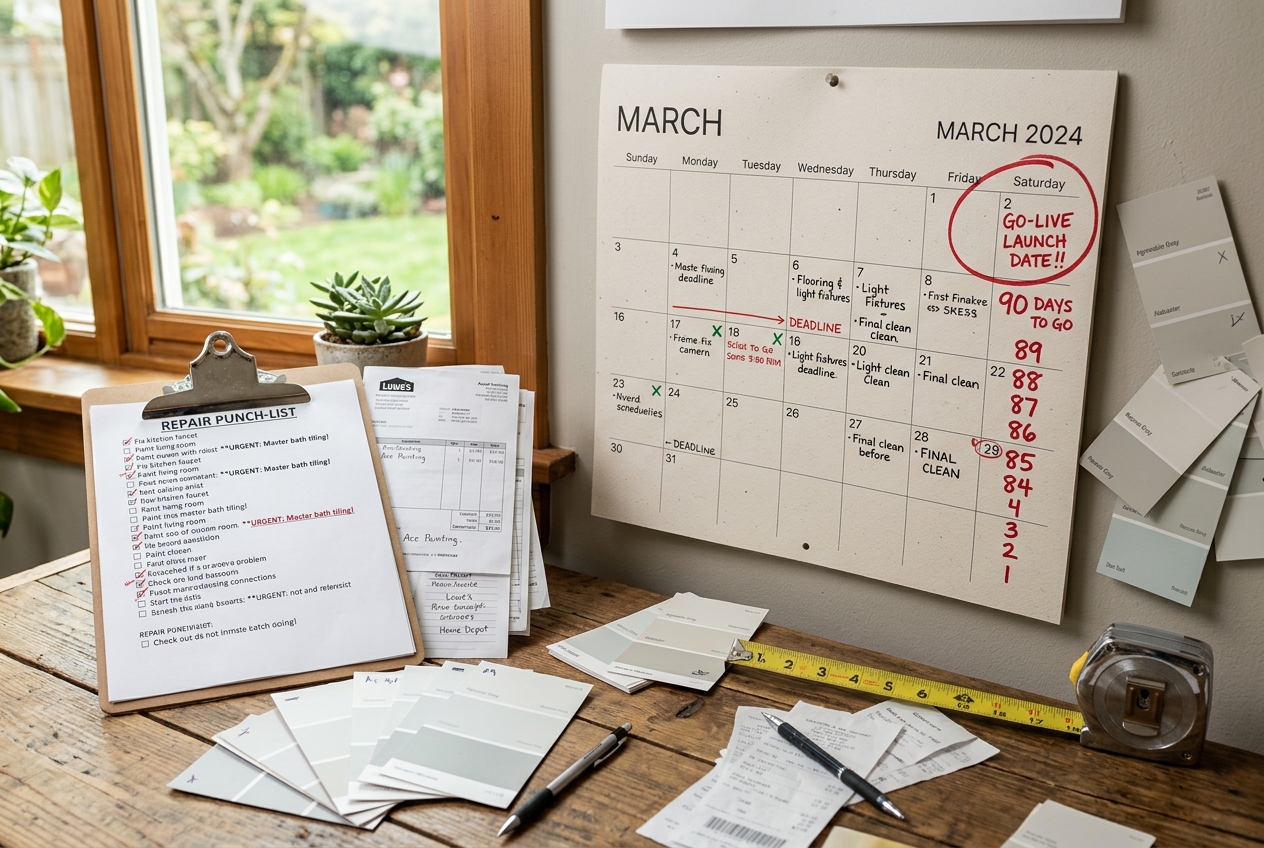
A good window is wasted if the listing is not ready. Many missed spring launches happen for one reason: repairs and vendor lead times slide. A seller targeting a specific season can treat the list date like an event date.
Agents can keep the written plan data-heavy and short. The document can hold the target list date, the five local signals, and the task timeline. The in-person conversation can hold the subjective decisions like pricing posture, concession strategy, and how much disruption showings can create.
A practical timeline uses a ninety-day runway, plus a short final push. A timing recommendation can also arrive fast. Two days is a realistic turnaround for an agent to pull the local reports, align the plan with a move deadline, and confirm vendor availability.
| Time before list date | Task focus | Why it happens then |
|---|---|---|
| About 90 days | pick the target week, scope repairs, set the prep budget | trade and material lead times decide whether the window is hit |
| About 60 days | complete repairs, declutter, confirm pricing approach | photos amplify whatever condition exists at launch |
| About 30 days | deep clean, final paint, book photography, draft listing copy | listing assets need time for review and revisions |
| Final 7 to 10 days | staging touch-ups, remove personal items, tighten showing plan | small misses become obvious in photos and first-week tours |
The pre-list runway keeps timing from becoming a last-minute scramble.
For the go-live day, many teams treat midweek as a practical default so portals have time to index and buyers can plan weekend tours. Execution also matters more than the day itself, so teams often anchor on a full listing marketing plan and fit the launch day around photography, weather, and seller availability. Photography budgets also show up here, so sellers often ask early about what listing photography costs.
Off-Season Selling That Still Looks Like Peak Season

Off-season listings trade buyer volume for less competition. That can work well when the listing removes friction and looks better than the small set of alternatives. The risk is not “winter,” the risk is a stale listing that looks dark, empty, and hard to visit.
Pricing needs tighter discipline in slow months. Spring comps can drift out of date. Sellers can also consider concessions that target buyer cash flow instead of a headline price cut. A smaller buyer pool notices overpricing faster.
Showings need a plan. Short daylight, weather at the door, and holiday travel can shrink tour windows. Clear entry paths, warm interior temperature, and consistent lighting matter more than seasonal décor. Holiday clutter also reads as smaller rooms, so the pre-photo purge helps.
Photos become the off-season multiplier. Gray skies, dormant lawns, and empty rooms can make a solid home look tired. This is where tools like AI virtual staging can help present empty spaces and support clean listing visuals, alongside photo editing and virtual renovation previews. AI HomeDesign packages those jobs into three hubs, virtual staging, photo editing, and renovation, and keeps results MLS-compliant by default.
Disclosure needs to stay simple and explicit. Teams can label edited images with language such as “Virtually staged” or “Digitally enhanced photo” in the image and in the remarks, based on local MLS rules. Presentation edits can clarify lighting and layout. Agents should not remove defects, change what conveys, or alter material facts.
Sellers also face cases where seasonality advice does not apply. Distressed sales, tenant-occupied homes, rural acreage that only shows well in the growing season, and job-relocation deadlines can all force a different calendar. In those cases, timing becomes a constraint and presentation becomes the main lever.
Frequently Asked Questions
What is the best month to sell a house?
Nationally, late spring often lines up with the strongest buyer traffic, so many markets see good results in April or May. The best month in a specific city can still shift earlier or later based on climate, competing inventory, and local move calendars. A practical approach is to compare monthly days on market and inventory for the same ZIP code and property type over several years.
What is the worst time of year to sell a house?
In many areas, late December and early January bring the fewest tours and the slowest showing cadence. That does not automatically make it a bad time to sell, because competing inventory also drops. The bigger risk is listing high in a slow month and letting the home sit long enough that buyers assume something is wrong.
Does time of year affect sale price or just how fast a house sells?
Seasonality can influence both, but speed often changes more than price. Buyers tour more homes in peak seasons, which can help well-positioned listings attract stronger offers quickly. Pricing accuracy, condition, and listing photos still do most of the work on any single sale. Local inventory levels often explain more than the month on the calendar.
What is the best day of the week to list a house?
Many agents choose a midweek launch so the listing is indexed on major portals before the weekend, when buyer schedules open up. The best day can vary by local showing habits and how quickly agents in the area respond to new inventory. A practical rule is to time the go-live day to the photography delivery and the first open-house window.