Real Estate Instagram Marketing: Reels, Stories, Leads
In short
- Split the surfaces: use Reels for discovery, Stories for replies, and a capture layer for conversion.
- Run a weekly system: rotate five content pillars so the account stays useful beyond listings.
- Label edited visuals: add “Virtually staged” on-frame and in captions for altered images.
Likes from other agents rarely turn into appointments. That disconnect is why real estate Instagram marketing feels like effort without payoff. The fix is not more posts. The fix is giving each Instagram surface a single job.
Reels earn reach from non-followers. Stories keep attention from people who already know the agent. The capture layer turns both into a contact and a booked call. That system fits inside a wider real estate marketing strategy, rather than replacing it.
The sections below lay out a repeatable weekly cadence, templates, and a simple measurement loop tied to conversations and appointments.
Real estate Instagram: three surfaces, three jobs
Most accounts stall because every post tries to do everything. A listing Reel tries to reach strangers, build trust, and capture a lead in one swipe. Instagram rewards clarity.
Reels work as discovery. The goal is a save, share, or profile visit from a non-follower. That signals “useful” to both the viewer and the platform.
Stories work as relationship. The goal is a reply, not a view. Replies open a thread and create a low-friction reason to follow up.
The capture layer converts. It includes a DM keyword, a Story link sticker, a Highlight that stays visible, and a landing page that collects contact details. Without that layer, good content produces compliments instead of contacts.
Set up the profile so a stranger can act fast
A profile should answer three questions in one glance: who the agent serves, where the agent works, and what to do next. If any one is missing, a curious stranger scrolls away.
Start with the searchable name field. Use a simple pattern that matches how locals search: name + market + role. Add a location signal that matches the service area, not a generic “USA.”
Build the bio as a small promise plus one next action. One action beats three. A clean structure looks like this:
- Line one: market and niche in plain language
- Line two: proof or process in one phrase
- Line three: the next step, paired with the link
Highlights should work like a 24/7 listing presentation, not a scrapbook. Keep them current and make the first frame of each Highlight a title card that reads clearly.
Suggested Highlights:
- Current listings
- Just sold
- Neighborhood guides
- Buyer FAQ
- Seller process
- Reviews
Pinned posts do the same job for the grid. Pin three posts that explain the account fast: a “start here” post, a clear service post, and one piece of proof.
The content pillar matrix: five pillars that cover a week

An account that posts listings only reaches the smallest audience. Strangers rarely watch a house that does not match their life yet. Education and local content give the algorithm a reason to show the account to new people.
Use five pillars that match how real clients decide.
- Listings: property features, walkthrough clips, “why this layout works”
- Education: process, costs, timelines, mistakes to avoid
- Local: neighborhoods, commutes, events, small business spotlights
- Proof: testimonials, just sold stories, behind-the-scenes outcomes
- Personality: day-in-the-life, values, work style, boundaries
A simple rule keeps the mix steady: each pillar gets one weekly slot, and Stories run daily.
| Pillar | Post concept to shoot this week | Best surface | Metric it should move |
|---|---|---|---|
| Listings | Vertical walkthrough with one “wow” feature | Reels | Shares |
| Education | “Three costs buyers forget to budget for” | Reels | Saves |
| Local | Neighborhood mini-guide with map-style cuts | Reels + Stories | Profile visits |
| Proof | Client win explained without numbers | Carousel + Stories | DMs |
| Personality | Behind-the-scenes showing day clip | Stories | Replies |
Content pillars mapped to surfaces and the signal each should move.
Reels that reach strangers and earn profile visits
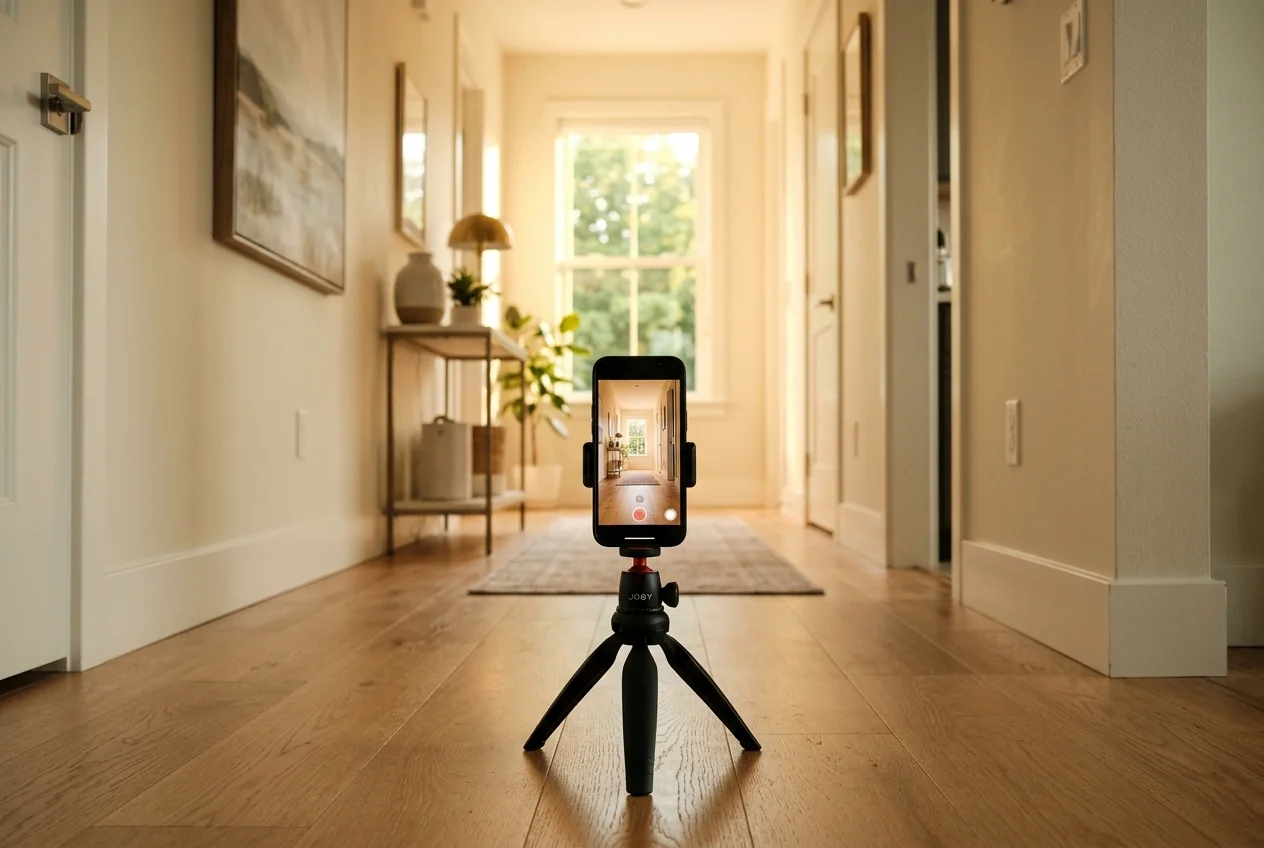
Reels succeed when they earn attention fast and stay easy to watch without sound. A Reel can show a home, but it should also teach something or answer a real question.
Hook formulas that work for property and local content
The first moments decide whether a stranger stays. Hooks work best as on-screen text plus a matching first line in the caption.
Question hooks
- "What does [price band] actually buy in [area] right now?"
- "What does an inspection miss most often in older homes?"
- "What makes two similar listings sell at different speeds?"

Contradiction hooks
- "The nicest kitchen is not the upgrade that sells this house."
- "New paint is not the first fix for this room."
- "Open houses are not only for buyers."

Location hooks
- "Living near [landmark]: the 3 trade-offs locals accept."
- "[Neighborhood] in 20 seconds: streets, schools, and feel."
- "The commute from [area] is easier than it looks."

Reveal hooks
- "Before and after: the same room, staged two ways."
- "The view is the feature, not the square footage."
- "This layout looks small until the camera turns."
A vertical shot list for a listing walkthrough
A Reel needs a repeatable B-roll pattern. That consistency also makes editing and batching easier. A strong sequence looks like this:
- Approach shot to establish the street
- Entry and first wide frame
- One “wow” feature, held long enough to read
- Kitchen pull-back, then one detail
- Primary space wide frame
- View or backyard reveal
- Exit shot with the CTA on screen
On-screen text should stay short and avoid the top and bottom UI zones. Keep it readable without sound, then use voiceover as a bonus.
For deeper structure, a listing video playbook helps standardize shots across every listing.
Caption and end-screen CTA templates
Captions should do three things: repeat the hook, add context, then send the viewer into a next step.
Reel caption template
Line 1: Repeat the hook in plain language.
Lines 2–4: Add the context the video cannot show.
Last line: One clear CTA that matches the goal.

CTA options
- "DM 'MAP' for the neighborhood guide."
- "Reply 'LIST' and an agent sends current homes in this price band."
- "Comment 'CHECKLIST' for the seller prep list."
Hashtags still work best as a routing signal, not as a magic trick. Keep sets consistent by pillar and market, and use hashtag sets for Instagram and TikTok to stay organized.
Stories that build trust and start conversations
Stories win when they feel current and reply-friendly. A daily Story line should move one thing forward: familiarity, trust, or a DM thread.
A daily 5–7 frame storyboard
A Story sequence should feel like a mini-walkthrough of the day, with one planned interaction.
Daily Story storyboard
Frame 1: Where the agent is today (showing, listing prep, local stop).
Frame 2: One question sticker that fits today’s work.
Frame 3: Work-in-progress clip (prep, notes, signage, staging detail).
Frame 4: Poll: two options, two kitchens, or two neighborhoods.
Frame 5: One useful local tip (parking, commute, event, vendor).
Frame 6: Proof frame (short testimonial, “just sold” context, win).
Frame 7: One next step with a DM keyword or a link sticker.
Question and poll prompts that produce replies:
- “Relocating soon: which area feels closest to the right fit?”
- “What part of the buying process feels unclear right now?”
- “Which finish reads more timeless in this kitchen?”
Open house tools belong in Stories. A countdown builds return visits. A link sticker gives a clean path to registration or a guide.
DM triggers that do not feel awkward
A DM trigger works when the keyword matches a specific promise. The keyword should relate to the content pillar.
Examples:
- Local pillar: “DM ‘GUIDE’ for the neighborhood map and short notes.”
- Education pillar: “Reply ‘COSTS’ for the buyer cost checklist.”
- Listings pillar: “Reply ‘LIST’ for homes that match this layout.”
One practical rule keeps Story conversations alive: the automated first reply should be followed by a short human message that asks one question.


Stage your first listing in under 5 seconds
15 space types, 10 styles, MLS-compliant by default. All 11 tools on one account. Free trial credits, no credit card.
Start staging freeThe capture layer that turns views into appointments

Lead generation starts in the post, but it closes in the handoff. A clear chain removes friction and keeps follow-up clean.
The end-to-end chain with named handoffs
A workable funnel looks like this:
Hook in Reel or Story → CTA → DM keyword or Story link sticker → landing page → email delivery → CRM entry tagged “Instagram” → booked call.
The landing page should match the CTA. One promise. One field. One button. A dead homepage link creates drop-off.
A short lead magnet list that fits the five pillars:
- Relocation or neighborhood guide
- Curated “homes in this price band” list
- Seller prep checklist
- Open house schedule
- Buyer timeline and process guide
For the broader follow-up system behind those offers, broader lead generation tactics help map touchpoints beyond Instagram.
Delivery, follow-up, and what stays out of the lead magnet
A simple delivery window protects the lead: deliver the promised guide within one business day, because intent drops fast once the viewer closes the app.
Lead magnets should carry the “what” and “how.” Save the “should this person do it” for a call. That line matters for sensitive topics like pricing, timing, and motivation.
Commission and fee figures also belong in the conversation, not in the downloadable asset. A static PDF travels beyond the intended audience and creates price anchoring without context.
For link destinations, landing pages built to convert reduce friction and improve follow-through.
A weekly cadence that fits real schedules
Consistency matters, but only if the schedule is sustainable. A workable starting rhythm looks like three Reels a week, one carousel, and Stories most days. That is a target, not a platform rule.
Batching keeps the rhythm alive:
- One shoot block: capture vertical B-roll for listings, local, and behind-the-scenes
- One edit block: cut Reels, pull stills for the carousel, prep Story frames
- One caption block: write hooks, CTAs, and DM keywords in one sitting
- One scheduling block: load posts for the week, then focus on DMs
Tools can reduce the scheduling friction. Later and Buffer are often recommended as planning tools for batching and maintaining a steady cadence, alongside Instagram Insights for performance tracking, as described in a real estate Instagram guide.
Coffee & Contracts publishes a real estate-focused template library and content guidance, including a 7-day free trial for its templates.
Where listing visuals come from and how to label them

Instagram guides often assume content already exists. Real estate content usually starts with listing photography and a walkthrough, then gets repurposed into vertical.
Shoot vertical from day one. A recycled horizontal MLS frame cropped into a vertical feed reads like a cropped MLS frame. Vertical capture also keeps on-screen text readable and keeps the “before and after” reveal clean.
Transformation content performs because it tells a story fast:
- Empty rooms staged for the buyer’s eye
- Dated rooms refreshed with a plausible finish level
- Exteriors shown in brighter conditions or at dusk
One workflow shortcut helps teams fill the content calendar without new shoots. AI-based editing can turn a listing photo into multiple social-ready versions.
AI HomeDesign is one option agents use for this step. It bundles virtual staging, photo editing, and renovation visuals across 11 tools in one shared credit pool, with free regenerations, starting from $0.24 a photo. It is MLS-compliant by default and preserves original fixtures and structure.
Visual strategy matters as much as editing. Visual marketing and staging impact can help choose which rooms and transformations earn a Reel.
Digitally staged or materially altered images also need clear labeling on Instagram. Use a visible on-frame label plus a caption line, because captions get truncated and images get reshared.
Suggested disclosure language:
- “Virtually staged.”
- “Virtually staged image. Furniture added digitally.”
- “Photo enhanced. Lighting and color adjusted.”
Compliance and the mistakes that quietly cap an account
Real estate Instagram posts count as advertising. That includes captions, Stories, DMs, and comment replies. Small errors compound when templates scale.
Checklist
0 of 5 doneThe National Association of REALTORS® maintains a social media guidance hub that helps teams review policy basics.
MLS policy still sets the tone for photo handling. A quick review of MLS rules on listing photos helps keep disclosures consistent across platforms.
Common mistakes with a clear fix:
- Listings-only posting: add local and education pillars for discovery.
- No location signal: add market language to the name field, captions, and hooks.
- Unanswered DMs: set a five-minute reply standard during active posting windows.
- Dead link in bio: replace it with one focused landing page.
- Stale Highlights: refresh them monthly so new followers see current proof.
- Chasing follower count: track saves, shares, profile visits, and DM threads.
Paid promotion can extend what already works, but it should not replace the capture layer. A paid promotion for top-performing posts fits best after a Reel proves it can earn saves and shares.
Frequently asked questions
How often should a real estate agent post on Instagram?
A workable starting target is three Reels a week, one carousel, and Stories most days. That cadence gives Reels enough volume to earn discovery while Stories keep daily trust alive. There is no platform-mandated number. A schedule that stays consistent for months beats a heavier plan that collapses after a busy week.
Do Reels or photo posts get more reach for real estate?
Reels are built for discovery because Instagram can show them to non-followers in feeds that prioritize short video. Photo posts and carousels usually work better for depth, like a step-by-step process or a before-and-after set. A practical split uses Reels to be found and carousels to be understood, then reads the account’s Insights for confirmation.
How can an agent get followers to DM instead of just liking a post?
A direct DM CTA plus a specific keyword offer drives replies. The keyword should match a clear resource, like a neighborhood guide or a seller prep checklist. Story polls and question stickers also work because they give a one-tap entry into a conversation. Fast replies matter because the viewer is still active on the app in that moment.
Can MLS listing photos be posted on Instagram?
Usually yes for an agent’s own listings, but rights and permissions still apply. Photography is licensed rather than owned, so the license should cover social use and the photographer should be credited when required. Posting another agent’s listing needs permission. Brokerage advertising policy and state identification rules also apply to captions, Stories, and DMs.
Does virtual staging need to be disclosed on Instagram?
Yes, any digitally staged or materially altered image should be labeled as virtually staged wherever it appears, including Instagram. A visible on-frame label plus a caption line works best because captions get truncated and images get reshared without them. Clear disclosure also prevents a buyer from arriving at a showing expecting furniture that was never present.
Which Instagram metrics matter most for real estate lead generation?
Saves, shares, profile visits, and DM conversations matter more than follower count because they signal intent. Saves usually mean the content taught something. Shares suggest a viewer passed the post to a decision-maker. Profile visits show curiosity about the agent. DM conversations create the handoff point that can become a CRM record and an appointment.