Independent landlords often feel two pressures at once: tenants expect fast replies, and every vacant day drains cash flow. In that squeeze, ai property management stops being a tech trend and starts looking like a practical way to protect income.
Most “AI for property management” advice still assumes an enterprise budget and an on-site team. Owners with a handful of units need a different filter: tools that fit a real week of self-management, keep humans in the loop, and avoid compliance mistakes that can cost far more than any subscription.
This guide maps the AI tool categories landlords actually use in 2026, from marketing a vacancy to screening, leasing, maintenance, and pricing.
Why ai property management Is Finally Practical for Small Portfolios
Inbox overload usually hits first. A single vacancy can trigger a flood of messages, and response time shapes who books a showing. That is where a small landlord feels outgunned by larger operators who have staff and systems.
Tooling has shifted toward lighter, modular setups. Many functions now sit inside platforms landlords already touch, and add-ons can plug into a simple workflow instead of forcing a full software migration. That is the practical reason the same owner can run more units without adding office hours.
One pattern matters more than any feature list: tasks that repeat at high volume pay back first. Marketing, inquiry response, and application triage create the biggest pile of repetitive work during a turnover. A landlord can treat AI as an assistant for that pile, then keep judgment calls for the moments that carry legal and financial risk.
For a broader view of where these capabilities fit across the industry, how AI is changing rental property management gives a useful baseline. Retail-focused operators also describe similar adoption pressures, especially around staffing and service expectations, in a look at where AI is proving value for landlords.
Marketing the Vacancy: Listing Visuals That Earn Inquiries

Listings lose momentum fast when photos look dim, empty, or inconsistent across rooms. Prospects form a judgment in seconds, and the scroll does not wait for a showing to “explain” a layout. For small landlords, that makes visuals a high-leverage category because it directly affects inquiry volume.
AI Virtual Staging gives empty units a furnished look without moving a couch. It can also help standardize style across a portfolio so the listing set feels intentional instead of random. AI photo edits add another layer: Image Enhancement can fix exposure and color, AI Item Removal can clean up leftover clutter, and Day to Dusk can make an exterior shot feel more inviting.
AI HomeDesign fits this vacancy-marketing slot because it combines AI Virtual Staging with editing tools in one workflow. The practical play is simple: keep one “hero” photo per main room that sells the lifestyle, then keep several unedited originals that show the space plainly. For deeper execution details, the AI virtual staging guide explains common pitfalls, and AI-powered property listings covers how visuals and listing distribution work together.
Disclosure matters. Landlords can reduce risk by labeling altered visuals clearly in the image set and description. A plain line works: “Virtually staged image. Furnishings are digital and not included.” Some MLS Rules and portals also expect a Virtually Staged Watermark on the image itself. Local standards vary, so landlords should check the rules used by their listing channels.
Listing Copy and Syndication Without Sounding Like a Bot

Bad rental copy usually fails in one of two ways. It reads like a legal notice, or it reads like fluff that hides the real trade-offs. AI can help, but only if it pulls from accurate inputs and stays grounded in what the unit actually offers.
A simple workflow starts with a facts sheet. Landlords can list the unit’s basics, the non-negotiables, and the top few amenities tenants ask about most. Then an AI writer can turn that into clean paragraphs, a bullet list, and a short “first line” for platforms that truncate text. The AI-generated listing copy article goes deeper on prompts and structure.
A prompt that stays practical often beats a long prompt that tries to sound clever. Example: “Write a rental listing description for a two-bedroom apartment. Tone: straightforward, not salesy. Must include: pet policy, parking, laundry, commute options, and move-in requirements. Avoid: exaggerated language and vague claims. End with a call to schedule a showing.”
Copy also draws a line between what belongs in public and what stays internal. Public-facing copy should include objective rules like rent, deposit, occupancy limits, and clear qualification requirements. Internal notes should hold anything subjective, such as “good fit for,” plus any scoring logic used for screening. For a high-level view of where automation fits without becoming impersonal, an overview of AI in property management workflows offers a useful framing.
Leasing Automation: Chatbots, Scheduling, and Rent Collection

Leasing bottlenecks usually happen outside office hours. Prospects browse at night, ask a question, then move on if no one replies. A small landlord can compete by using automation for first-response speed and basic qualification, then stepping in when a prospect looks real.
An AI leasing chatbot can answer repetitive questions, share showing times, and collect basic pre-qualification details. A tight script avoids trouble. It should ask the same questions of every prospect and keep them focused on objective criteria like move-in date, number of occupants, pets, and income verification steps.
The next layer is scheduling and follow-up. Automation can send directions, reminders, and a link to apply right after a showing. That is also where lead capture matters, since many prospects never apply on the first pass. The workflow in AI chatbots for real estate pairs well with AI lead generation for rental inquiries, even for owners who only run a few units.
Rent collection automation belongs in the same “reduce repetitive work” bucket. Autopay, receipts, late reminders, and a consistent ledger reduce disputes. Landlords can keep fee figures and negotiation flexibility out of chatbot scripts, then place the exact numbers in the lease and payment portal where they belong.
AI Tenant Screening That Stays Fair and Defensible
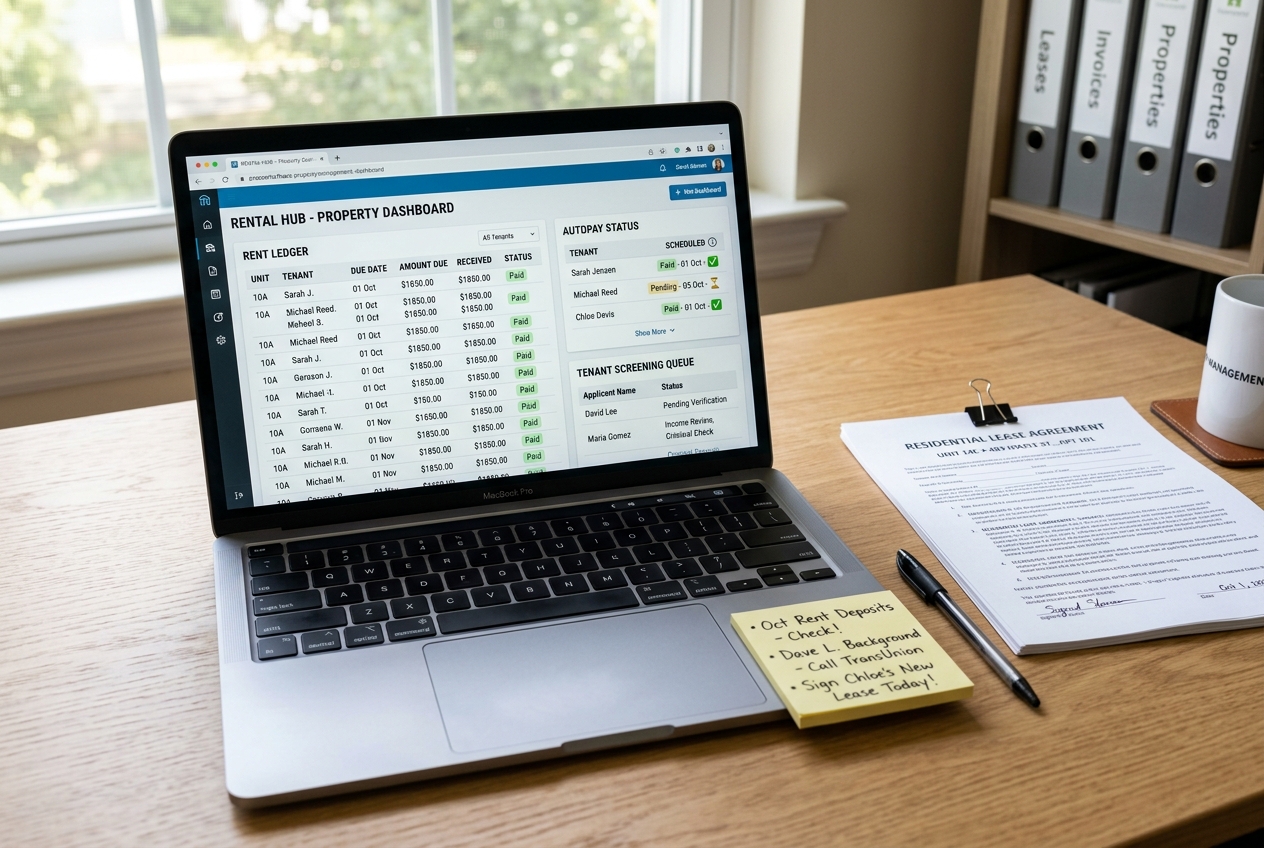
Screening sits at the intersection of speed and risk. Landlords want to move fast on a vacancy, but tenant selection carries fair housing exposure and reputational risk. AI helps most when it reduces manual review time without becoming the decision-maker.
The safest role for AI in screening is decision support. It can flag missing documents, detect possible fraud signals, and organize applicant data into a consistent summary. It can also help landlords apply the same criteria every time by turning a written policy into a repeatable checklist.
A practical compliance posture starts with written standards before any applicant appears. Landlords can define income verification rules, minimum credit standards if used, and a consistent approach to rental history checks. Then the landlord reviews the AI summary against those written standards.
Several situations call for extra caution or a different approach entirely. Subsidized housing, voucher programs, and local source-of-income rules often require specific processes. Roommate situations and co-signers also complicate simple scoring. So do applicants with limited credit history, recent divorce, or relocation for work. In those cases, AI can still organize facts, but a landlord should slow down and document the reason for any decision.
AI Rent Pricing Tools and the Regulatory Blind Spots
Price mistakes cost money in both directions. Overpricing creates vacancy, and underpricing leaves income on the table for months. AI rent pricing tools try to reduce guesswork by pulling comps and market signals into a suggested range.
Used well, these tools act like a second opinion. They can help landlords sanity-check a number before publishing a listing, especially when the local market shifts quickly. They also help separate “nice to have” upgrades from upgrades that actually move rent.
Used poorly, they create legal and strategic risk. Some jurisdictions have raised concerns about algorithmic rent-setting, especially models that rely on shared market data or reduce price competition. That makes this category a “use with caution” area in 2026. Landlords should treat AI suggestions as research, not autopilot, and should verify local rules before relying on any automated rent recommendation.
A helpful reading list can clarify what vendors claim these platforms do and where scrutiny has focused. The AI-powered property management platform landscape outlines common features and where they show up in modern systems.
Predictive Maintenance, Documents, and a Modular Stack for 2026
Reactive maintenance usually costs more than planned work. That is true even before counting tenant frustration, after-hours calls, and the risk of secondary damage. Small landlords can borrow an “operations” advantage by pairing simple sensors with smarter triage.
Smart property management often starts with water risk. Leak detectors and shutoff alerts can prevent the kind of damage that turns a small repair into a vacancy. HVAC monitoring and filter reminders also reduce emergency calls. On the ticket side, AI can categorize requests, summarize a tenant’s message, and route it to the right vendor with the right photos.
Document automation sits quietly in the background, but it matters for owners juggling different lease types. AI can pull key dates, renewal windows, and obligations from a lease so they do not live only in someone’s memory. It can also draft addenda and renewal offers based on a landlord’s template, with a final human review.
A modular stack keeps costs down and keeps control with the owner. A practical sequence looks like this: improve listing visuals, generate grounded listing copy, automate first-response and scheduling, use screening summaries to speed review, sanity-check rent against comps, then add maintenance triage and sensors. Short-term and mid-term rental hosts run a different stack, with more emphasis on dynamic pricing and guest messaging cadence. For landlords comparing broader tool categories beyond AI features alone, broader real estate software stack offers an expanded map.
AI still should not do certain jobs. It cannot inspect a unit, verify a repair quality, negotiate with a difficult tenant, or make final tenant decisions safely. In 2026, the best use case remains the same: let automation handle volume, and keep judgment where the risk lives.
Frequently Asked Questions
How much does AI property management software cost for a small landlord?
Cost depends on how modular the stack is. Many landlords start with one or two tools, such as listing photo edits or inquiry automation, then add screening and maintenance features later. A practical target is to keep the monthly spend below the cost of a single vacant day, so the tools pay back quickly if they reduce downtime.
Is AI tenant screening legal under fair housing laws?
AI screening can be legal, but landlords still carry the compliance responsibility. The safest approach uses AI to summarize documents and flag issues, not to make automatic accept or reject decisions. Landlords should apply the same written criteria to every applicant, document decisions, and check state and local rules that add protections beyond federal law.
Does AI rent pricing software create legal risk for landlords?
It can. Some regulators have raised concerns about algorithmic rent-setting, especially models that rely on shared market data or reduce price competition. Landlords can lower risk by using these tools as a research input, not a set-and-forget engine, and by checking city and state guidance before relying on automated rent recommendations.
Can AI virtual staging help rent out a vacant unit faster?
AI virtual staging can make an empty unit look livable in listing photos, which usually increases inquiry volume. More inquiries often means more qualified showings, and that can shorten vacancy. Landlords should label staged images clearly, keep at least some original photos in the set, and avoid edits that misrepresent permanent features or condition.
Do short-term rental hosts need different AI tools than long-term landlords?
Yes. Short-term and mid-term rental hosts focus on nightly pricing changes, fast guest messaging, and review management. Long-term landlords focus more on screening, leases, and maintenance workflows. Some tools overlap, such as listing optimization and message templates, but the priorities differ because guest turnover is higher and pricing moves more often.
Can AI fully automate property management for a solo landlord?
Full automation is not a safe goal. AI can handle high-volume work like answering common questions, drafting listings, organizing applications, and triaging maintenance requests. But final tenant selection, property inspections, emergency response decisions, and vendor oversight still require human judgment. The strongest workflow uses AI for speed and consistency, with a human review at every high-risk step.