A lead that arrives after hours rarely waits for a morning callback. A buyer can ask about a listing at night, compare options in minutes, and book a tour elsewhere before the first follow-up happens.
A real estate chatbot closes that response gap with an AI chatbot for real estate sites, ads, and messages. It captures contact details, asks qualifying questions, and routes the right leads to the right next step. For the bigger picture on the tech stack behind this shift, see how AI is transforming real estate.
Chatbots also create clean, structured data that can power better marketing. That matters inside broader real estate marketing strategies where speed, relevance, and follow-up discipline decide who wins the client.
Real Estate Chatbot Lead Capture That Works After Hours
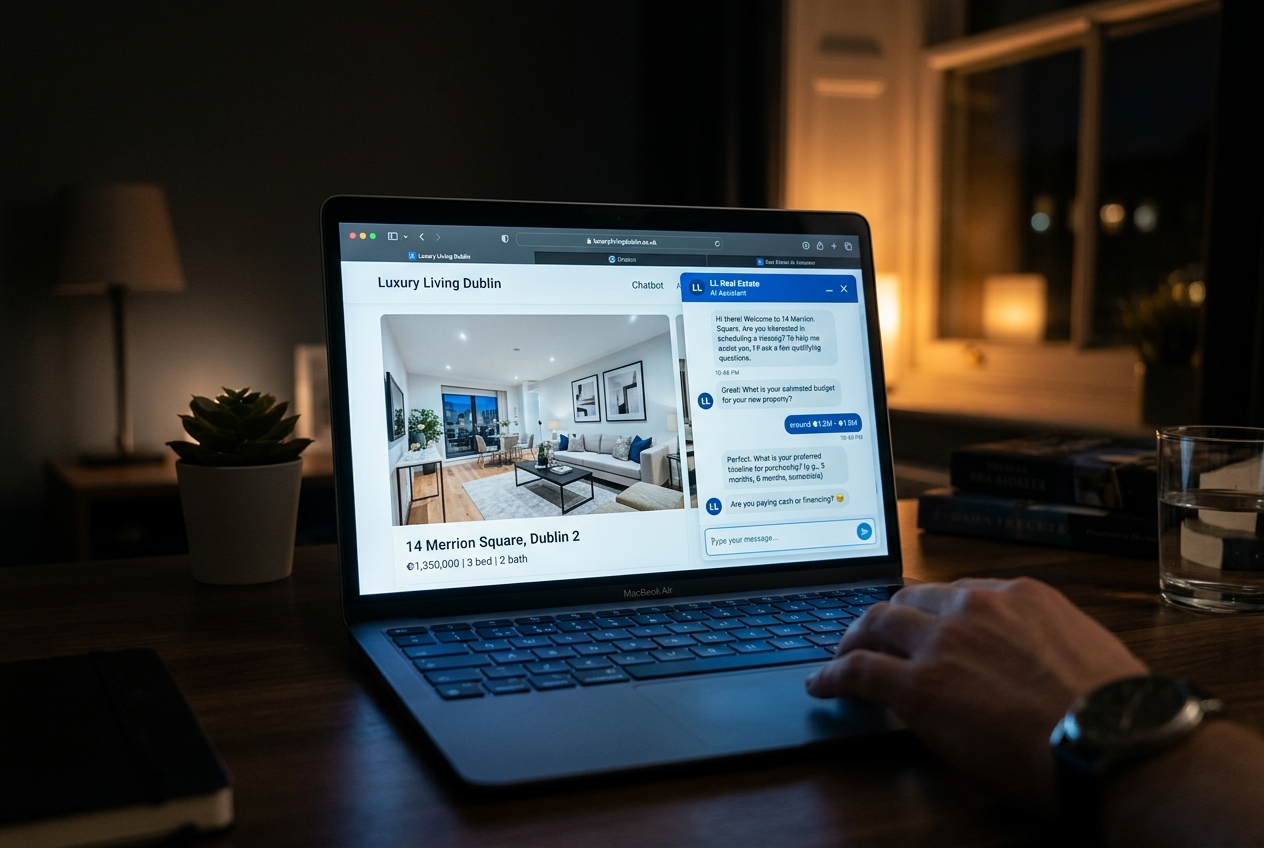
Leads show up at inconvenient times for a simple reason. Home search happens in the gaps between work and family. A chatbot covers that gap without adding a second phone line or a larger team.
A strong lead capture bot does more than collect an email. It starts a short conversation that reduces friction. It answers basic questions fast, then asks for the few details an agent needs to act. That shift, from form-fill to conversation, increases the odds that a visitor stays engaged.
The best deployments treat the bot like a front desk. It handles first contact, sets expectations, and routes requests. That includes buyer inquiries, seller valuation requests, and rental availability questions. It also reduces the volume of low-intent conversations that steal time from showings and negotiation.
Chatbots fit into the same playbook as AI for real estate marketing and lead generation. Ads and portals drive clicks, but conversion depends on response speed and relevance. A bot supports both, even when an agent sleeps.
How AI Chatbots Qualify Leads Using BANT
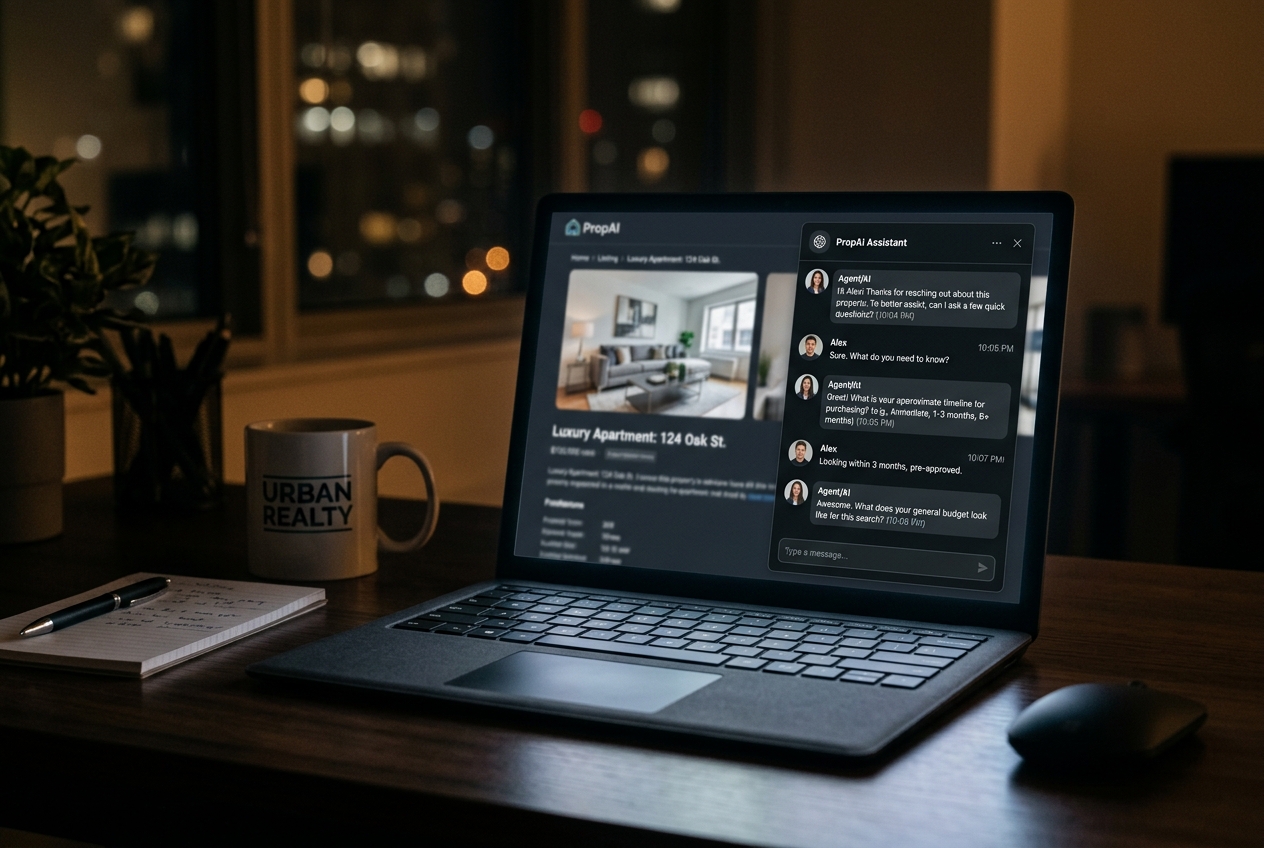
Many bots fail because they ask the wrong questions. A serious qualification flow keeps the conversation short, avoids invasive prompts, and produces a clear next action. BANT offers a simple structure: budget, authority, need, and timeline.
A practical funnel looks like this:
- Greeting and intent detection: the bot identifies buyer, seller, or renter intent.
- Listing context: the bot confirms the address, MLS link, or neighborhood so questions stay relevant.
- Preference capture: bedrooms, areas, and deal-breakers enter the record.
- BANT questions: the bot collects budget range, decision-maker status, reason for moving, and timeline.
- Lead scoring and routing: the bot tags the lead as hot, warm, or nurture.
- CRM sync and agent handoff: the bot creates or updates the contact and alerts the right person.
Agents need a clear service rule for follow-up. Hot leads should get a human response in 0 days, meaning the same calendar day. Warm leads should get a response within 1 day. That window protects trust, because the bot already set a fast tone.
The chatbot deliverable should stay tight and actionable. It should pass contact details, intent, property context, key preferences, BANT answers, consent for follow-up, and a conversation transcript. Agents should save sensitive items for a live call, like exact financing documents, divorce details, legal disputes, or negotiation posture.
Copy Paste Chatbot Scripts for Buyer Seller and Rental Leads

Scripts decide whether a bot feels helpful or pushy. The best scripts sound like a calm assistant and keep questions in plain language. They also avoid steering language and never ask about protected classes.
A script can start neutral, then branch by intent. These templates work as a base layer, then teams can adapt field names to match a CRM.
Buyer inquiry script
Bot: hi, thanks for reaching out. is this question about buying, selling, or renting?
Lead: buying
Bot: got it. is this about a specific home, or a general search?
Bot: what price range is comfortable?
Bot: which areas or ZIP codes are on the short list?
Bot: what is the ideal move timeline?
Bot: has a lender pre-approval been started?
Bot: is there an agent already involved in the search?
Bot: thanks. a quick next step is easiest. would a showing request or a call work better?
Bot note: if timeline is soon and pre-approval is started, tag as hot and route to an agent.
Seller valuation request script
Bot: thanks for the message. is this request for a home value estimate, a listing consultation, or both?
Bot: what is the property address?
Bot: what type of property is it, such as condo, single-family, or multi-family?
Bot: what is the target timeline to sell?
Bot: what is driving the move, such as upsizing, downsizing, or relocation?
Bot: have any major updates been done, like kitchen, baths, or roof?
Bot: great. an agent can review details and suggest a pricing range. should a call be scheduled, or should the estimate be sent by email first?
Bot note: if timeline is soon, route to an agent and offer a calendar link.
Rental availability script
Bot: thanks for reaching out. is this about a specific rental listing?
Bot: what address or listing link is being asked about?
Bot: what move-in date works?
Bot: what monthly budget range fits?
Bot: how many occupants would live in the home?
Bot: any must-have features, like parking, pets, or in-unit laundry?
Bot: thanks. a showing request can be set up. should available times be shared for a tour?
Bot note: do not pre-screen based on protected classes. route qualification to published rental criteria.
For more ways to generate variations, tone options, and follow-up messages, see ChatGPT prompts for real estate agents.
Multi-Channel Deployment, Scheduling, and CRM Integration
A bot placed only on a website misses a large share of conversations. Buyers start on mobile, message inside social apps, and expect a response where the question started. A multi-channel plan also spreads risk, since a portal rule change can cut traffic overnight.
Channel choice should match intent. Website chat fits listing pages and valuation landing pages. Instagram and Facebook DMs fit new leads who react to short-form video. SMS works for showing reminders and quick confirmations. WhatsApp can work well in markets where it already dominates, but teams need to follow platform policy and local consent rules.
| Channel | Best for | Setup complexity | Compliance notes |
|---|---|---|---|
| Website widget | listing inquiries and seller capture pages | low | add consent language and a privacy link |
| high-response message threads | medium | follow WhatsApp Business policy and opt-in rules | |
| Instagram DMs | inbound from reels and stories | medium | avoid collecting sensitive data in DMs |
| Facebook Messenger | local community and ad traffic | medium | disclose automation and route to a human when needed |
| SMS | confirmations and reminders | medium | follow TCPA-style consent rules where applicable |
Scheduling often delivers the biggest lift. A bot that can offer tour slots turns interest into a commitment. When the conversation moves to events, a bot can also promote a virtual open house and route the lead into the right follow-up sequence.
CRM integration should happen on day one. The bot should create a record, tag intent, attach the transcript, and set tasks. Clean CRM data enables better follow-up and supports related automation like AI-generated property descriptions.
The Chatbot to AI Virtual Staging Workflow for Personalized Visuals
Leads often share preferences before an agent ever speaks with them. A chatbot can capture style cues, like modern versus traditional, plus room priorities like home office, nursery, or outdoor space. That data should not sit in a transcript.
A simple workflow turns those inputs into better visuals. The chatbot stores preferences in the CRM, then triggers a personalized follow-up that matches the stated style. For a buyer who values a home office, the follow-up can feature an office image first. For a buyer who wants a lighter style, the follow-up can prioritize that look.
AI HomeDesign fits as the visual layer in that handoff. Teams can use virtual staging for realtors to generate listing-ready images in a style that matches the chatbot data. That keeps the experience consistent from first click to first tour request.
This approach also supports clearer buyer conversations. Instead of abstract taste talk, agents can share two staged options and ask for a preference. That supports faster decisions and can reinforce the benefits of virtual staging for listings that show empty, dated, or hard-to-furnish spaces.
ROI, Compliance, and No-Code vs Custom Builds in 2026
A chatbot ROI model should start with time and conversion, not vanity metrics. Solo agents usually gain time back first, because the bot reduces repetitive calls and missed after-hours inquiries. Mid-size brokerages gain consistency, because every lead gets the same baseline questions. Enterprise teams gain reporting, because standardized conversations produce clean pipeline data.
A simple formula keeps planning honest: incremental closings from faster response minus chatbot costs and setup time. Teams should track lead-to-appointment rate, appointment show rate, and time-to-first-human-response. Those metrics show whether the bot qualifies or just chats.
Fair housing compliance needs explicit design, not a disclaimer buried in settings. Bots should avoid filtering based on neighborhood proxies for protected classes. Scripts should also avoid steering, and routing rules should never deprioritize a lead for biased reasons. Data privacy matters too. GDPR and similar laws can treat chat logs as personal data, so teams should set retention, access, and deletion rules.
AI-edited visuals also need clear Disclosure. When AI Virtual Staging changes a photo, agents should label it clearly and follow MLS Rules in the market. Safe language includes: “Virtually staged. Furniture and decor added digitally.” Teams should avoid commission or fee figures inside the chatbot transcript, since that topic often needs context and varies by agreement. For a broader stack review, see best real estate tools for agents.
| Criteria | No-code platform | Custom build |
|---|---|---|
| Time to launch | fast | slower |
| Team technical skills | low required | higher required |
| CRM complexity | standard integrations | tailored API work |
| Compliance control | strong if configured | strongest with governance |
| Long-term scaling | good for most teams | best for complex orgs |
Emerging trends deserve monitoring, not panic. Voice AI can handle inbound calls and run the same qualification script by phone. Predictive lead scoring can rank leads based on behavior before a chat even starts.
Frequently Asked Questions
What is an AI chatbot for real estate?
An AI chatbot for real estate is a conversational tool that replies instantly on web and messaging channels, understands intent, and asks qualifying questions. Unlike a basic live-chat widget, it can handle varied phrasing, route buyers versus sellers, and pass structured data into a CRM. It also supports automated scheduling and nurture follow-up when an agent is unavailable.
Can a real estate chatbot qualify leads automatically?
A chatbot can qualify leads by asking a short set of questions and applying BANT logic. Budget, decision-maker status, need, and timeline create a practical priority score. Strong systems tag leads for fast agent follow-up, while lower-intent leads enter nurture messages with listing suggestions, open house invites, or a request to update timing and financing status.
Is it legal to use AI chatbots to screen real estate leads?
Chatbots can create legal risk if they steer, discriminate, or filter using protected-class proxies. Fair housing laws still apply, even when automation makes the decision. A safe approach audits scripts, keeps routing rules neutral, and escalates sensitive questions to a human. Many teams also add a brief automation disclosure and a privacy link at the start of chat.
How much does a real estate chatbot cost?
Costs vary widely by approach. No-code platforms often offer entry tiers and predictable monthly subscriptions, while custom builds can reach into the thousands with ongoing maintenance. A fair comparison uses opportunity cost: a bot covers after-hours response and repetitive intake at a lower ongoing cost than adding staff for first-touch coverage in every time window.
What questions should a real estate chatbot ask buyers?
Buyer scripts work best with a small set of intake questions: price range, preferred areas, timeline, financing status, and whether an agent is already involved. The bot can also ask for must-haves and deal-breakers to improve relevance. Detailed motivation, negotiation posture, and document collection usually belong in a live conversation after trust is established.
How should virtually staged images be disclosed in listings?
Agents should follow MLS Rules and local advertising standards, since requirements vary. A clear Disclosure label near the image reduces confusion and protects trust. Common wording includes “Virtually staged. Furniture and decor added digitally.” Teams should keep the original photo available, avoid misrepresenting fixed features, and use a Virtually Staged Watermark when platform rules require it.