A listing often moves from photo shoot to publication within a tight window. The gap between those two steps is where delays most often occur. Most listing photos require adjustments before publication. Exposure levels may vary between rooms, interior lighting can create color shifts, and camera angles can make architectural lines appear tilted. These corrections are part of real estate photo editing services that prepare images for listing use.
As the number of images increases, editing can become time-consuming. Many agents choose outsourcing real estate photo editing to keep listings moving without spending hours on post-processing. This decision is less about avoiding the work and more about managing time, volume, and turnaround during listing preparation.
To understand when outsourcing makes sense, it helps to look at where editing fits in the path from photography to publication.
How Real Estate Photo Editing Services Fits Into Listing Preparation
Editing prepares photos for consistent presentation across listing platforms. Tasks such as color correction, perspective alignment, and real estate image enhancement help make images clearer and easier to interpret.
After a photo shoot, photos move from capture to selection and then into editing before they appear in a listing. These corrections are part of real estate photo editing services that prepare images for listing use.
A typical real estate photo editing workflow follows this sequence:
- Property photography
- Image review and selection
- Photo editing and correction
- Listing creation
- Publication on property platforms
Photography captures the structure and layout of a home, but lighting conditions and camera angles can introduce small distortions. Walls may appear slightly angled, interior lighting can shift color tones, and exterior skies may look dull under overcast conditions. Editing corrects these issues so images represent the property more accurately.
In practice, this stage prepares photos for consistency across listing platforms. Buyers often compare multiple properties in a single browsing session. Images with balanced brightness, correct perspective, and clear detail make it easier to interpret the space.
Because editing requires time and attention to detail, many agents choose outsourcing real estate photo editing, especially when managing multiple listings or tight schedules.
What Real Estate Photo Editing Services Typically Include
Most real estate photo editing services include a set of standard adjustments that prepare listing photos for publication. These edits improve clarity and visual balance without altering the property itself.
Here are the most common photo editing tasks agents outsource:
Exposure and Brightness Adjustment
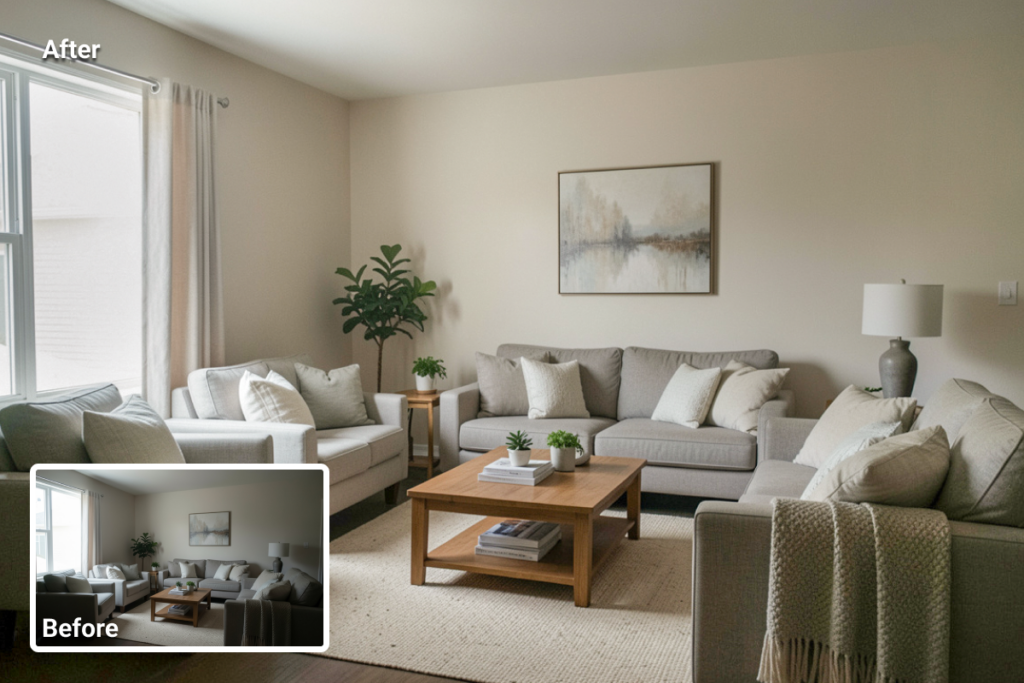
Interior lighting often varies from room to room, especially in properties with mixed natural and artificial light. Editors adjust exposure to create more balanced lighting across the image so no area appears too dark or overly bright. This helps present the space more consistently across listing photos.
Color Balance Correction

Indoor lighting can introduce yellow, blue, or mixed tones depending on the light source. Editors correct white balance so wall colors, flooring, and materials appear more natural and consistent. This is especially important when buyers compare multiple listings side by side.
Perspective Alignment
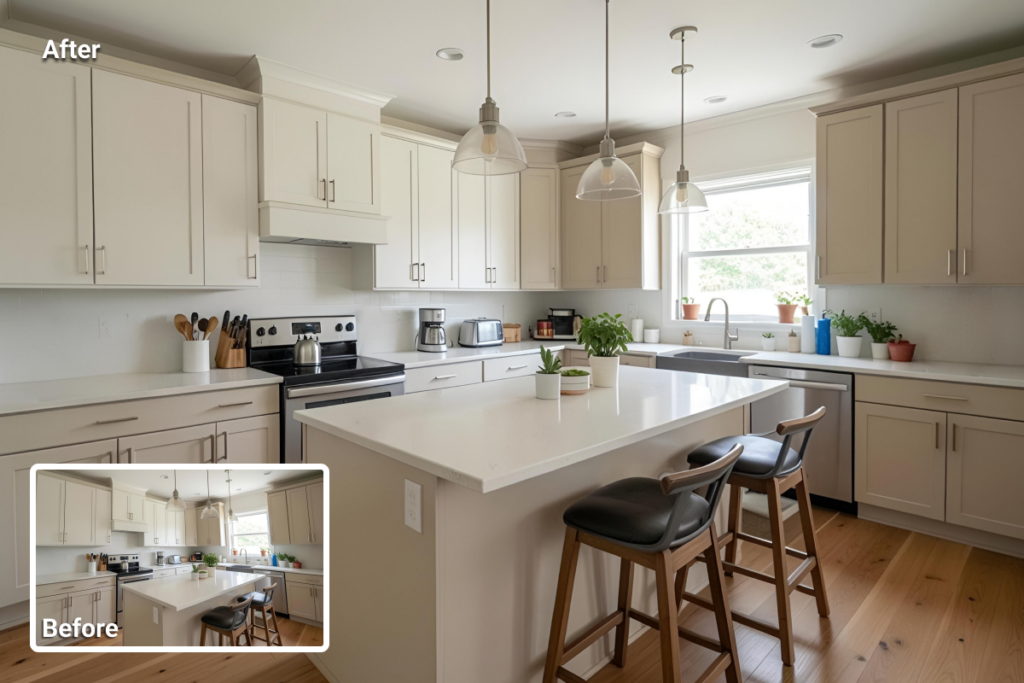
Wide-angle lenses are commonly used to capture full rooms, but they can cause vertical lines to tilt slightly. Editors correct perspective so walls and architectural lines appear straight and proportionate. This makes the space easier to interpret visually.
Sky Replacement
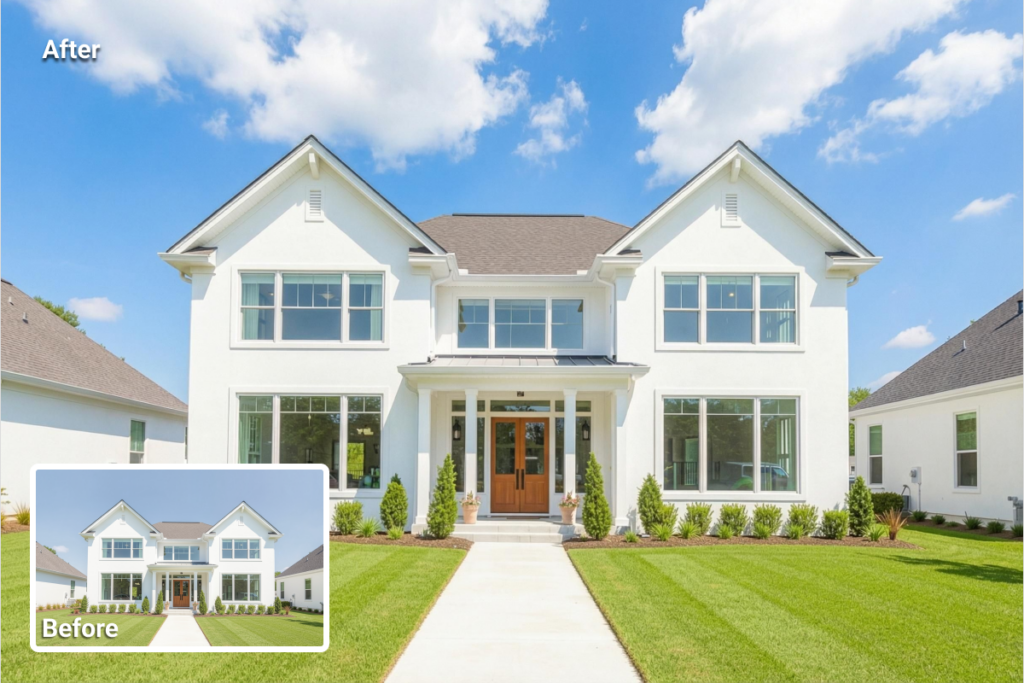
Exterior photos taken under overcast or flat lighting conditions may lack contrast. In some cases, editors replace the sky to improve overall presentation while keeping the property itself unchanged. This helps exterior images appear clearer without misrepresenting the structure.
Object and Clutter Removal
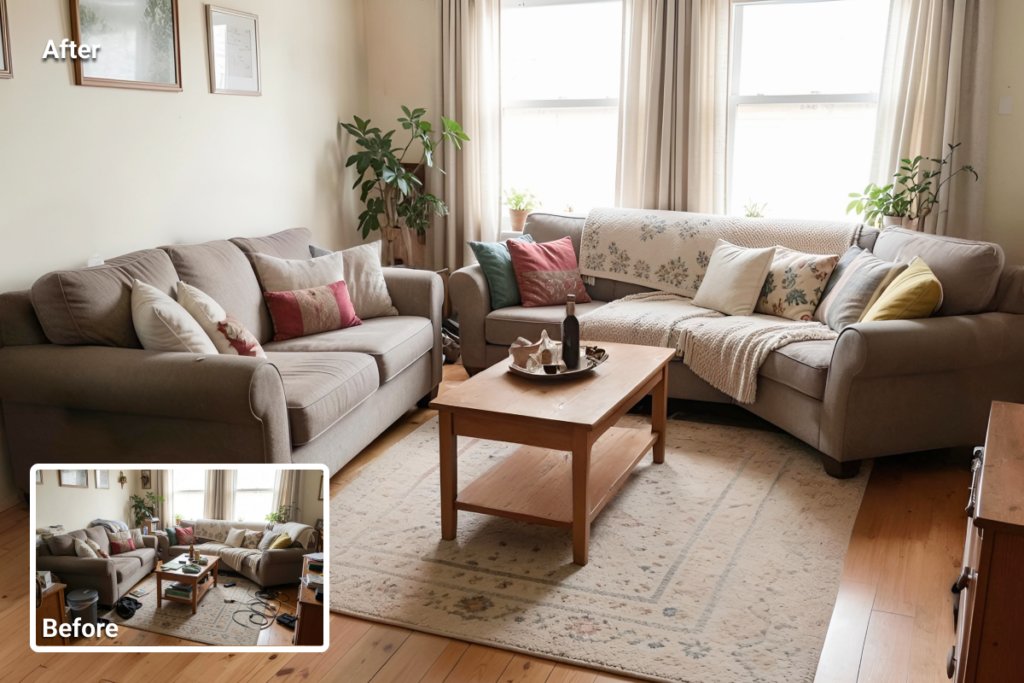
Listing photos may include small distractions such as cables, bins, or personal items that draw attention away from the space. Many providers offer AI real estate item removal to remove these elements while preserving the rest of the image. This allows the property to appear cleaner without altering its structure.
Detail Enhancement
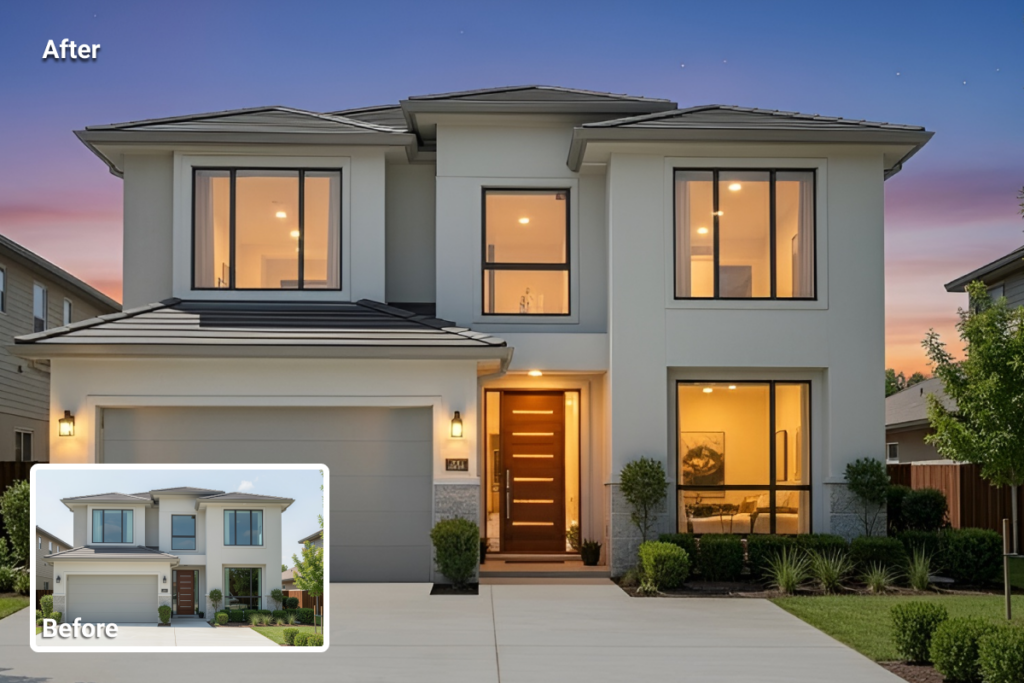
Textures in flooring, cabinetry, or stone surfaces may appear soft in raw images. Editors sharpen detail and balance contrast as part of AI real estate image enhancement, so important surfaces appear clearer in online listings. This can help buyers read the material quality of a space more easily.
Some providers also offer day-to-dusk conversion for exterior photos. This edit recreates evening lighting conditions that highlight interior lights and outdoor features. It is often used when agents want exterior images to feel warmer and more visually finished.
Why Many Agents Outsource Real Estate Photo Editing Services
Editing tasks may appear straightforward at first glance. In practice, preparing dozens of listing photos requires sustained attention and time. For many agents, outsourcing becomes a practical way to keep listings moving without slowing down other parts of the workflow.
When Editing Starts Competing With Core Tasks
Agents manage showings, negotiations, listing updates, and client communication throughout the day. Editing large batches of images can interrupt these responsibilities and delay other tasks. Outsourcing allows the editing stage to move forward while agents stay focused on property marketing and client work.
When Listing Volume Increases
A single property listing may include twenty to thirty images. When multiple listings are active at the same time, the number of photos can increase quickly. Outsourcing real estate photo editing helps maintain listing timelines without extending working hours.
When Adjustments Become Repetitive
Tasks such as perspective alignment, brightness correction, and color balancing often repeat across many images from the same shoot. While each edit is small, the total workload can become time-consuming. Dedicated editors perform these adjustments regularly and can complete them more efficiently.
When Consistency Matters Across Listings
Property portfolios often include homes with different lighting conditions and architectural styles. Editing helps standardize brightness, color, and perspective across these variations. External providers typically apply consistent correction standards, which helps maintain a more uniform visual presentation.
For many agents, the decision to outsource editing is less about avoiding the work and more about keeping the overall listing workflow efficient and consistent.
When Outsourcing Photo Editing Makes the Most Sense
Some listing situations increase pressure on the preparation process. In these cases, outsourcing becomes less of a preference and more of a practical requirement.
When Multiple Listings Need to Go Live at Once
In active markets, several listings may need to be prepared at the same time. Each property requires a full set of edited images before marketing can begin. As volume increases, editing can quickly become a bottleneck. Outsourcing helps keep all listings moving without delaying publication.
When Turnaround Time Directly Affects Listing Performance
Property marketing often follows tight timelines. Agents may move from photography to publication within a short window. When editing slows this process, it can delay visibility and early buyer interest. External editing support helps reduce this gap and keeps listing timelines consistent.
When Vacant Properties Need Visual Context
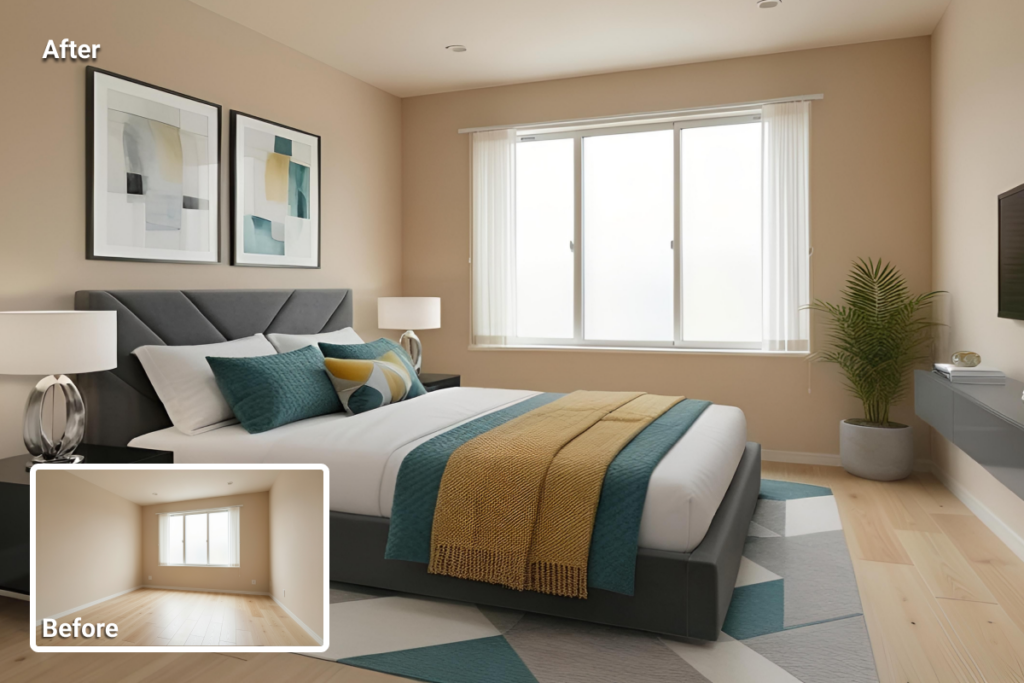
Empty rooms can be difficult to interpret in listing photos. Without furniture, buyers may struggle to understand scale, layout, or intended use. Many agents address this by using AI virtual staging to add visual context without changing the property itself.
Vacant listings often require both correction and staging, which increases the amount of editing work involved. In these cases, outsourcing helps manage both tasks more efficiently while keeping the listing process on track.
What to Evaluate When Choosing a Photo Editing Provider
Agents who decide to outsource real estate photo editing often compare a few practical factors that affect how smoothly listing preparation runs. Turnaround time, revision handling, and consistency all influence how easily edited photos move from selection to publication. A good fit reduces friction rather than adding extra coordination.
Turnaround Time
Editing delivery speed directly affects listing schedules. Some providers deliver within a few hours, while others operate on longer timelines.
When timelines are tight, slower turnaround can delay publication. If editing delays the listings, outsourcing stops being optional.
Pricing Relative to Listing Volume
Providers may charge per image or per property. Agents managing multiple listings often compare pricing based on expected photo volume. A structure that aligns with volume helps keep costs predictable.
Revision Policies
Agents may occasionally request small adjustments after receiving edited photos. A clear revision policy defines how these corrections are handled and whether additional charges apply. This becomes more important when working under time constraints.
Editing Consistency
Listings appear more professional when all images follow a consistent visual style. Reviewing sample edits helps agents understand how a provider handles different lighting conditions and maintains consistency across properties.
Range of Editing Capabilities
Some providers focus on basic corrections, while others offer additional services such as object removal, lighting adjustments, or staging. A broader service range allows agents to manage different listing needs through a single provider.
These factors help narrow down which providers fit a given workflow. The next step is understanding how outsourcing compares to handling editing in-house.
How AI Tools Are Changing Real Estate Photo Editing Workflows
Real estate photo editing workflows no longer follow a single path. In the traditional model, agents typically sent images to an external provider and waited for the edited files before moving forward with a listing.
Today, editing can happen in parallel with other listing tasks. Many platforms allow agents to upload photos and apply routine corrections directly, which makes it easier to handle basic edits in-house. At the same time, outsourcing remains relevant for more complex edits or when workload exceeds available time.
Platforms such as AI HomeDesign reflect this shift by giving agents direct access to automated editing features for listing visuals. Instead of replacing outsourcing, these tools change how it is used within the workflow.
As a result, real estate photo editing workflows have become more flexible. Some agents continue to outsource all edits, while others combine in-house tools with external support depending on the situation.
Final Thought
Real estate marketing workflows rely heavily on visual presentation. Property photos often require corrections before they appear in listings, which places editing at the center of the listing preparation process.
Many agents choose outsourcing real estate photo editing when listing activity increases or deadlines become tight. External editing providers prepare images while agents focus on marketing, negotiations, and client communication. Outsourcing photo editing is rarely about the edit itself. It’s about keeping the listing process moving.
At the same time, newer editing tools allow certain adjustments to be handled in-house. In practice, many agents combine automated tools with external editing support depending on the needs of each listing.
Ultimately, the decision to outsource is less about the edit itself and more about keeping the overall listing process efficient, consistent, and on schedule.
Agents often outsource editing when listing volume increases or when marketing schedules require fast publication. External editors can prepare large batches of images while agents focus on other listing tasks.
Typical editing tasks include exposure correction, color balancing, perspective alignment, object removal, sky replacement, and detail enhancement.
Outsourcing allows editing to proceed while agents handle marketing activities such as pricing, listing descriptions, and client communication. This approach often shortens the time between photography and listing publication.
Agents should make that decision based on workload, timing, and the type of edits a listing needs. AI tools often help with routine corrections that need a fast turnaround, while outsourcing remains useful for larger photo sets or cases where agents prefer not to handle the editing themselves.