Real estate agents face a marketplace more crowded than a rush-hour subway. Buyers today have endless information and options, which means agents need effective real estate marketing strategies that stand out without relying on noise.
In this guide, this article introduces 10 real estate advertising ideas, including claiming a Google Business Profile, building a website, running Facebook ads, creating social media content, sending direct mail, staging open houses, using branded promotional items, partnering with local professionals, hosting webinars, and applying AI tools that help attract buyers and sellers across different budgets.
1. Claim Your Google Business Profile
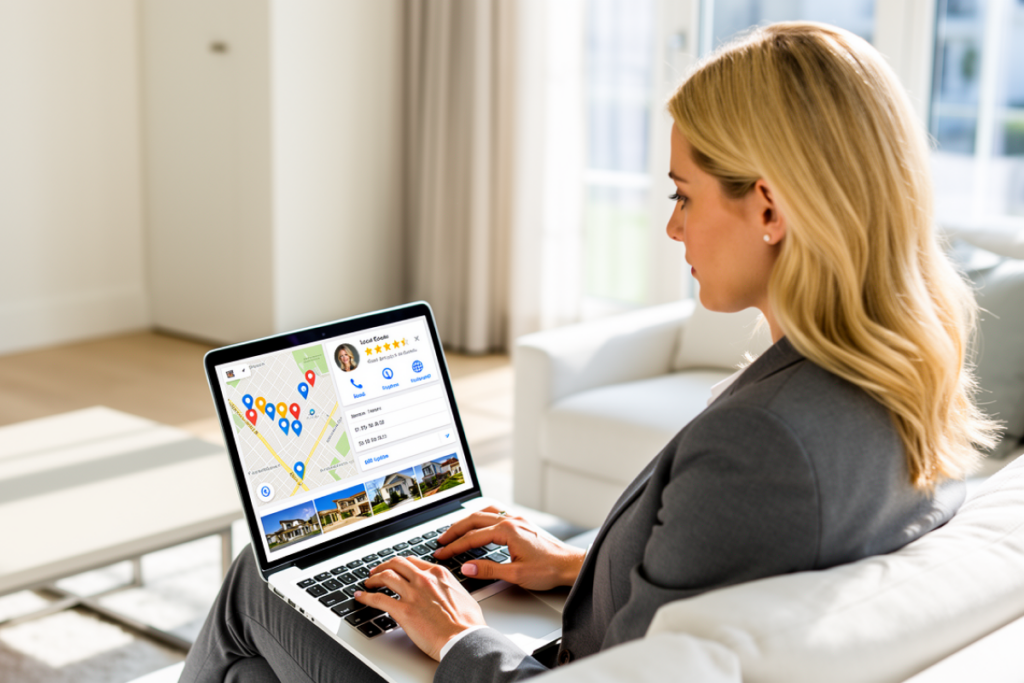
If an agent is not visible on Google Maps, local visibility drops significantly. A Google Business Profile puts contact details at the top of local search results when someone searches for “real estate agent near me” or similar terms. According to Businesswire , 84% of consumers used the internet to find information about local businesses in 2025, and that number continues to rise.
Setting up a Google Business Profile takes less than an hour and works continuously. Adding recent property photos, encouraging client reviews, and keeping contact information current strengthen local presence. It functions as a digital storefront that remains visible at all times.
2. Build a Simple, Functional Website
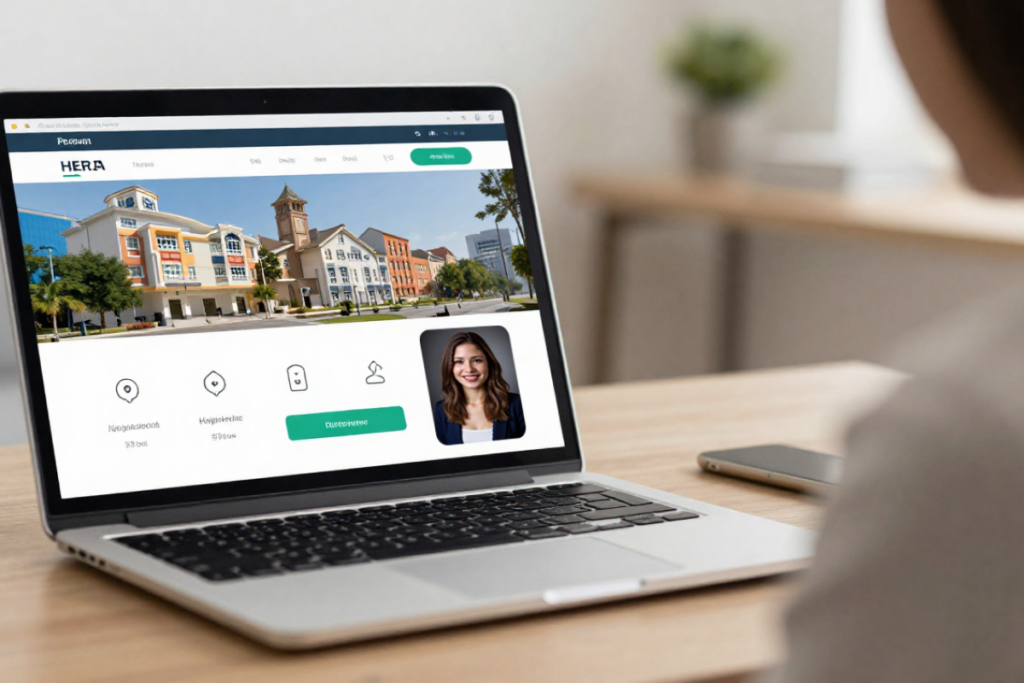
In discussion around SEO for real estate agents, the importance of having a website is clear. According to NAR, 97% of home buyers used the internet during their home search. Without a website, visibility among these buyers remains limited.
For agents without an existing site, creating one is still practical. It does not need to rival Zillow or Realtor.com in complexity. It needs clarity: professional background, neighborhoods served, and clear contact information.
Platforms like WordPress, Squarespace, or Wix make it possible to build a professional site without coding. Including a blog with local market updates, home-buying tips, and neighborhood spotlights positions the agents as a knowledgeable resource rather than just a salesperson.
3. Run Targeted Facebook Ads
Use Facebook’s targeting options to reach specific buyer and seller audiences based on location, demographics, and life events.
Facebook remains one of the widely used social media platforms for real estate agents, and its advertising system offers detailed audience targeting. Campaigns can target users by age, income range, location, life events, and permitted behavioral signals.
Carousel ads can display multiple listing photos, while video formats support virtual property tours. The platform’s built-in lead generation forms allow interested buyers to submit contact details without leaving Facebook.
4. Create Engaging Social Media Content
Social media offers wide reach, but engagement depends on publishing content that aligns with audience interests. Viewers engage more consistently with content that feels relevant and personally meaningful. A mixed content plan with clear structure helps maintain consistency, such as sharing new listings early in the week, posting home maintenance tips midweek, and spotlighting local businesses toward the weekend.
People tend to work with agents they recognize and trust. That trust develops when a social presence feels human rather than purely promotional. Everyday moments, behind-the-scenes updates, or candid situations from showings often build more familiarity than polished ads.
Short, informal video formats help convey authenticity, but format alone is not sufficient. Interaction plays a central role. Responding to comments and messages signals availability and credibility. Social media performs best when it functions as a conversation rather than a one-way broadcast.
5. Send Direct Mail Campaigns

While many real estate advertising ideas focus on digital channels, physical mail still stands out because it interrupts attention differently. A well-designed “Just Sold” postcard does not compete with notifications or inbox clutter; it reaches homeowners directly.
Direct mail works best when it targets specific neighborhoods where presence is expanding and the next step is clearly defined. Including a clear call to action, such as a QR code linking to recent sales, a direct phone number, or an invitation to a local market update increases response potential. The tactile experience of mail creates attention and recall that digital ads rarely achieve.
6. Host and Stage Open Houses Effectively
An open house is more than unlocking the door and hoping people show up. Staging, decluttering, depersonalizing, and adding fresh flowers or baked cookies all contribute to making the property memorable and peaceful.These small touches help buyers see themselves living in the place. These small touches help buyers picture daily life in the space.
Set up a sign-in sheet to gather contact information, and ensure the experience reflects professionalism and preparation. Provide neighborhood information packets, local school rankings, and nearby amenities.
Follow up within 24 hours with everyone who attended. While not every attendee becomes a buyer for that property, consistent follow-up helps build relationships with future clients who may not be ready to buy yet.
7. Distribute Branded Promotional Items
Pens, coffee mugs, calendars, and keychains might seem old-fashioned, but function as physical brand reminders that cost little per impression. Distributing them at open houses, community events, and to past clients extends name recognition beyond digital channels. Each time a branded item is used, contact details remain visible.
Selecting items with practical value increases retention. A quality refrigerator magnet featuring contact information and a few local emergency numbers offers ongoing utility while keeping the agent top of mind.
8. Form Partnerships with Local Professionals
Some of the most effective real estate advertising ideas do not resemble advertising. Strategic partnerships with mortgage brokers, home inspectors, contractors, and interior designers create access to shared clients through established trust.
A structured referral loop, where professionals recommend each other’s services, benefit all parties. Clients receive access to vetted experts, partners gain qualified leads, and the agent strengthens a reputation for adding value beyond the transaction.
Co-hosting educational events, such as a first-time homebuyer workshop where a mortgage broker explains financing and the buying process is outlined clearly, expands reach without relying solely on paid advertising.
9. Organize Free Educational Webinars

Educational webinars position the agent as a knowledgeable resource by sharing practical insights. Monthly sessions on topics such as “5 Things Every First-Time Buyer Should Know,” “How to Price Your Home in Today’s Market,” or “The Truth About Real Estate Commissions” provide structured value. Platforms like Zoom make hosting accessible and cost-effective.
Promotion through social media, email newsletters, and local community groups increases attendance. A conversational format with dedicated Q&A time improves engagement. While attendees may not act immediately, consistent education strengthens recall when buying or selling decisions arise. Recording sessions and repurposing them as YouTube videos or blog content extends long-term value.
10. Apply AI Technology to Your Marketing
Artificial intelligence has moved from experimental use to everyday business operations. AI tools can draft listing descriptions, blog posts, and social media captions efficiently.
AI chatbots on real estate websites answer common questions 24/7 and capture leads outside standard working hours. Photo enhancement tools improve listing images by adjusting lighting and color balance. Platforms like ChatGPT support personalized email campaigns at scale.
The Case of Maggie, a Brooklyn-Based Real Estate Agent
Maggie, a Brooklyn-based real estate agent, combined targeted Facebook advertising with AI-enhanced listing photos to promote a one-bedroom condo in Williamsburg.
Instead of broad citywide targeting, she focused on nearby young residents, using location- and interest-based filters to reach a more relevant audience.
She used AI tools to enhance lighting, adjust color balance, and stage the property because the seller’s budget did not allow physical staging. Over several weeks, the campaign generated steady buyer interest and led to multiple in-person showings.
The property sold within a few weeks at a price close to the initial asking range. As Maggie noted, precise audience targeting and professional-quality visuals played a meaningful role in helping the listing stand out in a competitive market.
Final Thoughts
Effective real estate marketing is not about finding one perfect tactic. It involves applying a focused set of real estate advertising ideas consistently and adjusting them based on measurable results. The approaches covered here work because they reach potential clients where they already spend time.
Not every tactic suits every agent. Some professionals see stronger performance through content and social engagement, while others achieve better returns from targeted advertising or local outreach. The priority is selecting strategies that align with operational capacity and budget, tracking performance, and refining execution over time.
Markets change, platforms evolve, and tools improve, but the fundamentals remain consistent: adapt real estate digital marketing strategies, maintain visibility, provide value, and keep contact pathways clear for prospective clients.
The next client is already searching, and marketing execution determines which agent gains that attention.
FAQs
Most agents allocate 8–12% of their expected annual commission income to marketing, starting with low-cost channels and scaling based on results.
Paid channels like Facebook and Google Ads usually deliver leads within days, while tactics like content marketing and direct mail take longer but build higher-quality prospects.
Yes. Tactics such as Google Business Profile optimization, partnerships, webinars, and consistent social content can generate leads without ongoing ad spend.
Paid ads can produce short-term results, while organic strategies like SEO, referrals, and local visibility typically show impact over several months.
New agents often benefit most from digital channels due to lower costs and easier tracking, then add offline tactics as their local presence grows.