Deciding whether to rent or sell a property is not always simple. Selling can provide a lump sum, while renting may create ongoing income. The right option depends on financial needs, local market conditions, and long-term plans.
A homeowner relocating for work may need to decide whether to sell now or rent out the property for extra income. Someone who inherits a house may face a similar choice between taking the cash from a sale and keeping the home as a long-term asset.
In both cases, renting vs. selling a house can be difficult to evaluate, especially when local market conditions and broader real estate trends continue to shape pricing, demand, and timing.
Rent or Sell Your House: What Each Option Really Means

Selling Your Home
Selling your home gives you access to equity in one lump sum and removes the ongoing responsibilities of ownership. Depending on your situation, that money may support a move, reduce financial pressure, or help fund your next purchase or investment.
Financial implications
- Immediate equity access: Selling gives you a large amount of cash at once, which can support a home purchase, investment, debt reduction, or other financial goals.
- Transaction costs: Selling also comes with costs, including agent commissions, closing costs, and, in some cases, capital gains taxes.
- Market conditions: Your return depends heavily on timing. A strong seller’s market may increase your profit, while a slower market may lead to lower offers or longer selling times.
Lifestyle considerations
- Relocation needs: If you are moving for work, family, or personal reasons, selling may make the transition easier.
- Emotional factors: Selling can also be emotionally difficult, especially when the property holds personal memories or long-term attachment.
Property condition
- Necessary repairs: Homes that need major repairs may attract fewer buyers or sell for less unless the price reflects the condition.
- Staging and presentation: Strong presentation can improve buyer interest. Small upgrades, repairs, and better listing visuals may help the property feel more market-ready.
Renting Out Your Home

Renting out your home creates ongoing income and allows you to hold onto the property as a long-term asset. It can also preserve future appreciation potential, but it comes with landlord responsibilities, financial risk, and day-to-day management demands.
Financial considerations
- Steady income stream: Rental income can help cover mortgage payments, taxes, insurance, and other ongoing housing costs.
- Tax benefits: In many cases, landlords can deduct expenses such as mortgage interest, property taxes, insurance, maintenance, and management fees.
- Long-term appreciation: Keeping the property allows you to benefit if home values rise over time.
Landlord responsibilities
- Tenant management: Renting means handling tenant screening, lease terms, rent collection, and communication throughout the lease period.
- Maintenance and repairs: Ongoing upkeep is part of the job and affects both tenant satisfaction and long-term property value.
- Legal compliance: Landlords also need to understand local rental laws, lease requirements, and tenant protections to avoid disputes and legal issues.
Market dynamics
- Rental demand: Before renting, it is important to evaluate how strong rental demand is in your area and how likely the property is to stay occupied.
- Competitive pricing: The rent needs to match local market conditions while still covering your costs and supporting your financial goals.
To compare both paths more clearly, the table below outlines the main advantages and drawbacks of selling versus renting out your home.
Selling vs. Renting: Pros and Cons
| Selling Your Home | Renting Your Home | |
|---|---|---|
| Pros | An immediate lump sum of cash | Steady rental income |
| No landlord responsibilities | Continue building equity over time | |
| Potential for significant profit if the market is strong | Tax deductions for expenses like mortgage interest, repairs, and management fees | |
| Eligible for capital gains tax exemptions if it was your primary residence | Flexibility to sell later and benefit from future appreciation | |
| Frees up equity for your next home or investment | Keeps your options open if you may want to return | |
| Cons | Loss of future appreciation potential | Landlord responsibilities, such as maintenance, repairs, and tenant management |
| Transaction costs such as agent commissions, closing costs, and repairs | Financial risks such as vacancies, late payments, and property damage | |
| Emotional difficulty if you’re attached to the home | Upfront costs to prepare the home for rent and possible property management fees | |
| Market timing risks, such as having to sell in a buyer’s market | Rental income can fluctuate with market conditions |
When It Makes More Sense to Sell or Rent
The choice between selling and renting should reflect your finances, local market conditions, and future plans. Selling may make more sense when you need access to cash for your next move, do not want the responsibilities of being a landlord, or can take advantage of strong home prices.
Renting may be the better option when you plan to return to the area, want to keep the property as a long-term asset, or live in a market with steady rental demand and reliable income potential.
A Simple Framework for Deciding Whether to Rent or Sell
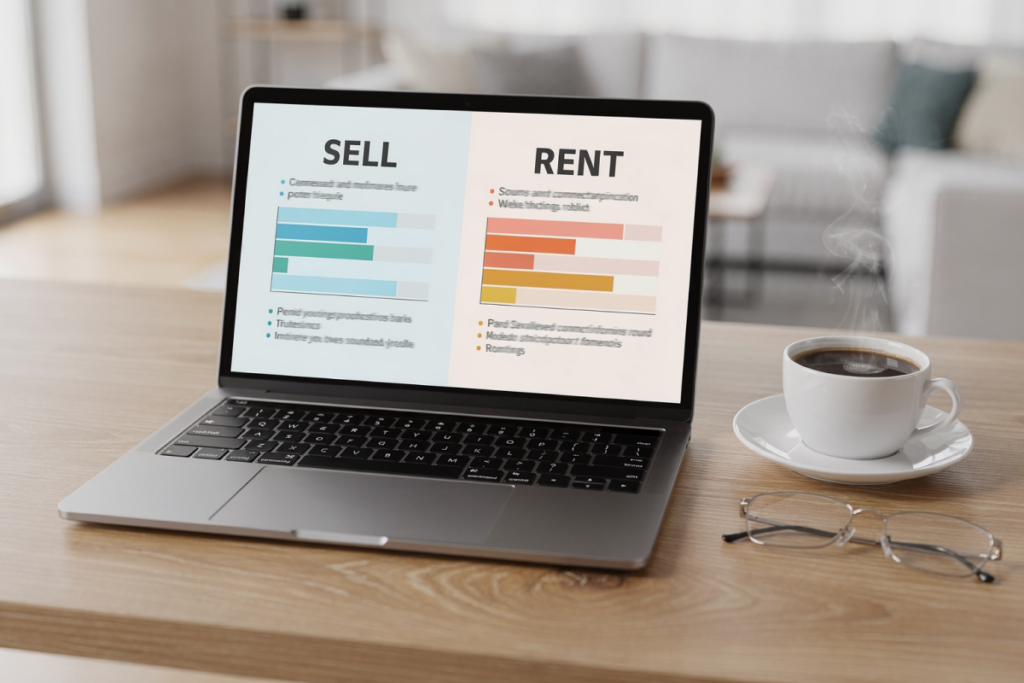
The decision becomes easier when it is broken into a few practical factors. The framework below looks at four areas that can shape the right choice: your finances, local market conditions, future plans, and the property itself.
1. Financial Position and Goals
Start with the most immediate question: do you need cash now, or are you in a position to wait for longer-term returns?
Need short-term access to cash?
Selling may make more sense if you need funds for a new home, debt payments, or another investment.
Able to hold the property for long-term income?
Renting may be the stronger option when immediate liquidity is not the priority and long-term income or appreciation matters more.
Do you have enough cash reserves?
A stable emergency fund makes it easier to handle vacancies, repairs, and unexpected rental costs. Without that cushion, selling may offer more financial stability.
How does the return compare in each scenario?
A side-by-side comparison can make the decision clearer:
Net rental income = monthly rent − monthly expenses
Monthly expenses may include property taxes, insurance, maintenance, mortgage payments, property management fees, and a vacancy reserve.
After-tax sale profit = sale price − total selling costs
Selling costs may include agent commissions, closing costs, the remaining mortgage balance, home preparation costs, and any applicable capital gains tax.
2. Market Conditions
The right choice also depends on what is happening in both the sales market and the rental market.
Is it a seller’s market?
High demand and low inventory often support stronger sale prices, which may make selling more attractive.
Is the rental market strong?
High rental demand and low vacancy rates can make renting a more reliable option.
What do interest rates look like?
Higher rates can reduce buyer demand and make selling more difficult. In that environment, renting may be worth considering. Lower rates often bring more buyers into the market and can create better selling conditions.
Does timing matter locally?
Seasonality can affect both paths. Spring and summer often support stronger home sales, while some rental markets, especially in university areas, see higher demand in late summer.
3. Lifestyle and Future Plans
The property may be a financial asset, but the decision also needs to fit your life.
Do you expect to live there again?
If returning is a real possibility, renting may preserve more flexibility. If not, selling may be the more practical option.
Are you relocating for the long term?
Managing a rental from another city or country can be difficult unless you plan to hire a property manager.
Are you comfortable being a landlord?
This decision is not only about income. It also depends on how much time, stress, and responsibility you are willing to take on.
4. Property-Specific Factors
Some homes are simply better suited to one path than the other.
What condition is the property in?
A move-in-ready home may be easier to rent. A property that needs major repairs may require more upfront investment before it can perform well as a rental.
How suitable is the location for renting?
Homes near universities, hospitals, or strong transit links often perform better as rentals. In some higher-end markets, selling during a strong pricing window may make more sense.
What type of home is it?
Condos with high HOA fees may leave less room for positive rental cash flow. Single-family homes often appeal to longer-term tenants and may offer stronger appreciation over time.
Expert Tips for Selling or Renting Out Your Home

If the decision leans toward selling, the next step is preparation. How the property looks, how it is priced, and how it is marketed can all affect the final outcome.
Prepare the Property for Sale
Before listing, make sure the home is in strong condition. Minor repairs, fresh paint, and thoughtful staging can improve buyer perception and help the property show better in listing photos and in person.
Work With the Right Agent and List at the Right Time
An experienced real estate agent can help you price your home competitively, market it effectively, and negotiate more confidently. Timing also matters. In many markets, listing when demand is high and inventory is low can improve both speed and sale price.
If renting makes more sense, the focus shifts from presentation to long-term management. A rental can generate steady income, but it also requires clear systems and realistic planning.
Screen Tenants Carefully
A careful screening process helps reduce the risk of missed payments, property damage, and avoidable disputes. Credit history, references, and prior rental behavior can all help you evaluate whether a tenant is likely to be reliable.
Set Clear Rental Terms From the Start
Clear terms make the rental easier to manage. Lease length, payment deadlines, maintenance responsibilities, deposit conditions, and communication expectations should be agreed on early and documented clearly.
Plan for Expenses and Insurance
Set aside a reserve fund for vacancies, unexpected repairs, and routine maintenance so cash flow is not disrupted when issues come up. It is also a good idea to require renters insurance.
That protects the tenant’s belongings and may also reduce liability-related disputes. For more details, read this renters insurance guide.
Price the Rental Strategically
The rental price plays a major role in attracting tenants and keeping the property occupied. Review similar listings in the area and set a price based on local demand, property condition, and amenities. Overpricing can lead to longer vacancies, while underpricing can reduce long-term returns.
How to Make the Right Decision
The final decision should reflect both short-term needs and long-term goals. In that sense, deciding whether to rent or sell is not only a housing choice but also a financial and lifestyle decision.
Selling gives you access to equity and removes the responsibilities that come with ownership. Renting allows you to keep the property and create ongoing income. The better option is the one that fits your finances, future plans, and level of risk more clearly.
FAQs
What are some common deductible expenses for rental property owners?
As a landlord, you can typically deduct expenses such as mortgage interest, property taxes, insurance, repairs, maintenance, utilities, and property management fees. Improvements, however, must be depreciated over time rather than deducted all at once.
What are the main downsides of renting out a property?
Renting out a property adds ongoing responsibilities and financial risk. Common challenges include maintenance costs, tenant issues, vacancies, property damage, and the time required to manage the rental effectively.
What are the tax implications if I convert my primary residence into a rental property?
When you convert a primary residence into a rental, you may be able to claim depreciation while the home is rented out. If you sell later, you may also face depreciation recapture and capital gains taxes, depending on your situation.
What should I consider before turning my home into a rental property?
Important factors include rental demand in the area, landlord responsibilities, maintenance costs, legal requirements, and the property’s ability to generate enough income after expenses.