Small apartments often appear tighter in listing photos than they feel in person. Limited floor area, camera perspective, and empty rooms can make compact layouts difficult for buyers to interpret.
Without visual cues, listing images may make a space look smaller or less functional than it actually is.
Real estate marketing studies consistently show that listing photos strongly influence buyer engagement, particularly for compact urban properties where layout interpretation depends heavily on visual cues.
This is where virtual staging for small apartments becomes valuable. By adding furniture digitally, agents can clarify the layout, show how different areas function, and make compact rooms easier to understand in property photos. Clear staging decisions help buyers recognize how the apartment could work as a living space.
Clear visual layouts help buyers evaluate a property more quickly because they can immediately understand how the space might function in everyday living.
Modern AI virtual staging makes this process faster and more accessible for agents preparing listing photos. Instead of coordinating physical furniture or staging logistics, agents can stage property images digitally and present the layout clearly, helping buyers understand how a small apartment can function comfortably.
Why Small Apartments Need a Different Staging Strategy
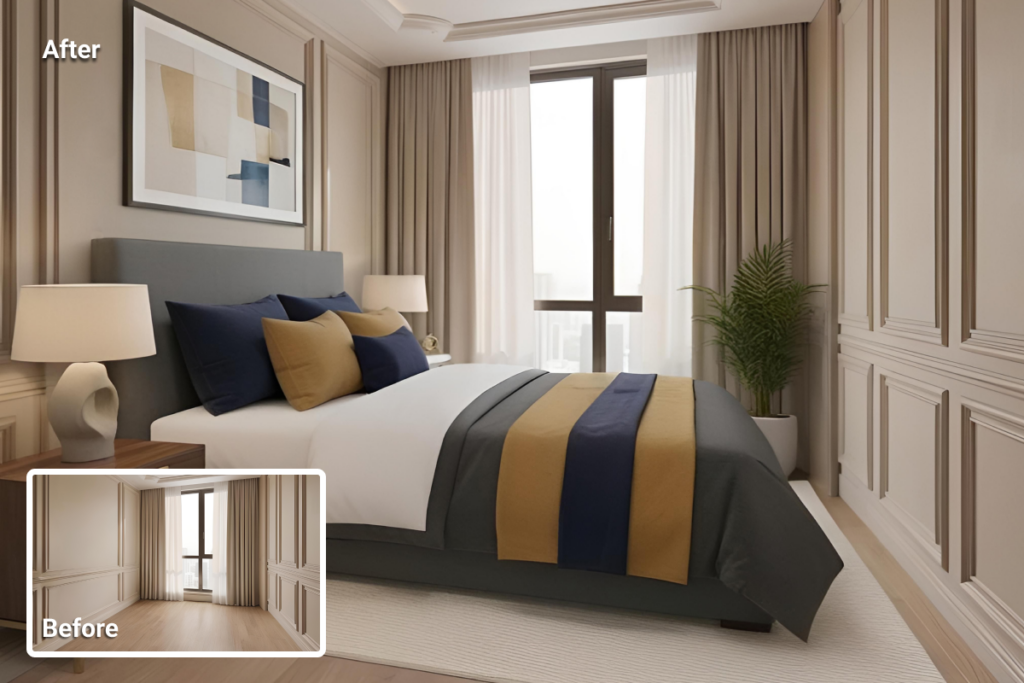
Understanding the differences between virtual staging vs real staging helps agents choose the most practical approach for compact property listings. When physical staging is not feasible, listing photos must communicate the layout clearly so buyers can interpret how the space functions.
Compact properties require a different staging approach because small rooms photograph differently from larger homes. Camera perspective, furniture scale, and room proportions all influence how spacious a room appears in listing images.
Wide-angle photography is commonly used in real estate because it captures more of a room in a single frame. In small apartments, however, this perspective can reduce perceived depth and make walls or furniture appear closer together than they feel in person.
Real estate photographers often rely on wide-angle lenses to capture full room views, but in compact interiors, this perspective can exaggerate spatial compression and make rooms appear tighter than they actually are.
Empty rooms can make this problem worse. Without visual cues such as furniture placement, buyers may struggle to understand how a compact room functions or how much usable space it actually offers.
This is where virtual staging for small apartments becomes especially useful. Accurate digital staging introduces visual reference points that clarify layout, show how different areas function, and help buyers better interpret the space.
Layout Principles That Work Best in Small Apartments
Staging strategies for small apartments should focus on clarity rather than decoration. Effective virtual staging for small apartments relies on practical layout principles that help rooms appear balanced and easy to interpret in listing photos.
Use Minimal Furniture and Proper Scale
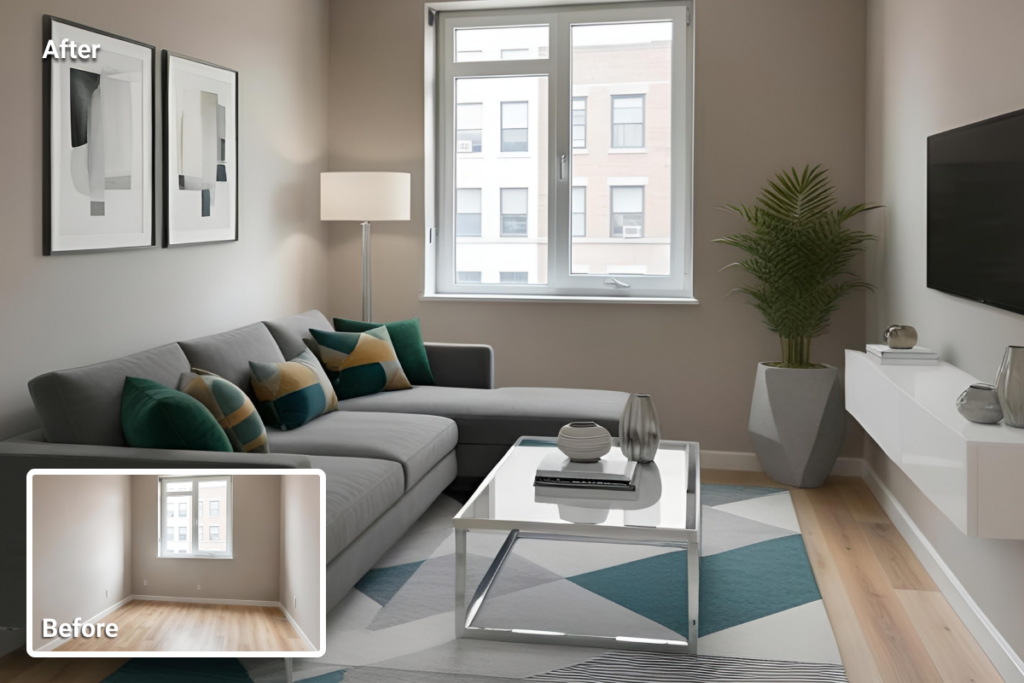
Small apartments benefit from simple layouts that highlight usable space. Instead of filling a room with decorative pieces, staging should include only the necessary furniture to demonstrate how the space functions. This helps increase spatial clarity in listing photos and makes the floor area easier to read.
Furniture scale also plays a major role in how spacious a room appears. Oversized pieces can quickly make a compact room feel tighter in photos, while slim sofas, small dining tables, and low-profile furniture help maintain visible floor space and visual balance.
AI HomeDesign’s virtual staging system analyzes the room’s dimensions and depth from the original photo to help select furniture that is scaled appropriately for the space.
By combining minimal layouts with furniture that fits the room’s proportions, staged images present compact apartments more clearly and make the layout easier to understand.
Define Functional Zones in Studio Layouts
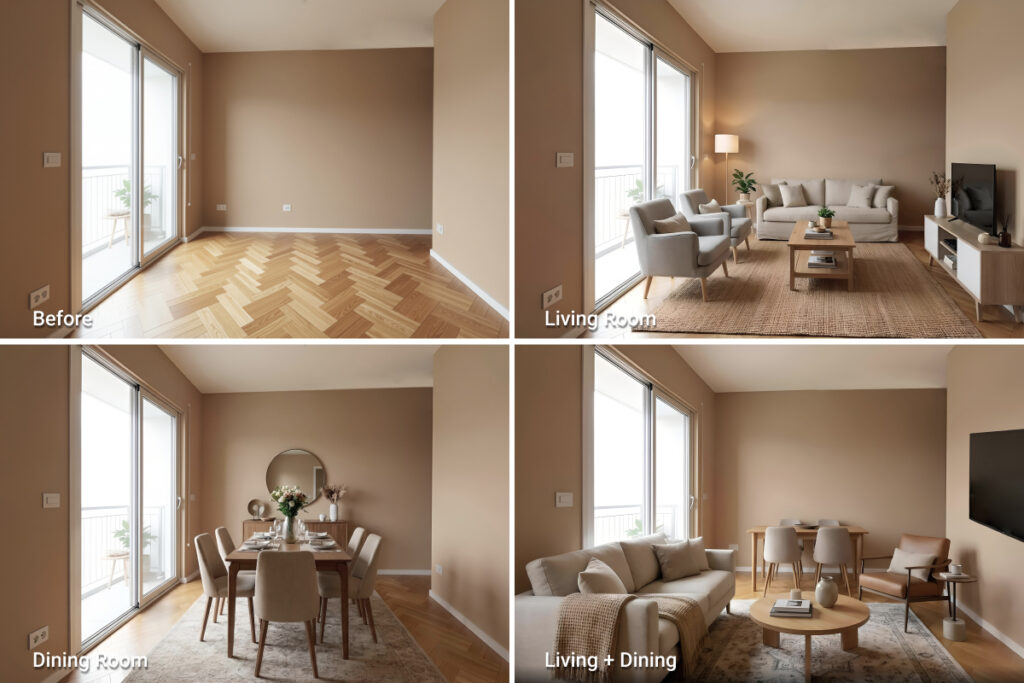
One benefit of virtual staging for small apartments is that it can show multiple possible functions for the same space.
Studio apartments often combine several living functions within one open space. Without staging, buyers may find it difficult to understand where sleeping, dining, or relaxation areas should be located.
Virtual staging can visually separate these zones. For example, bed placement may define the sleeping area, while a small sofa and table can illustrate how a living space might work within the same room.
Keep Walkways and Sightlines Open
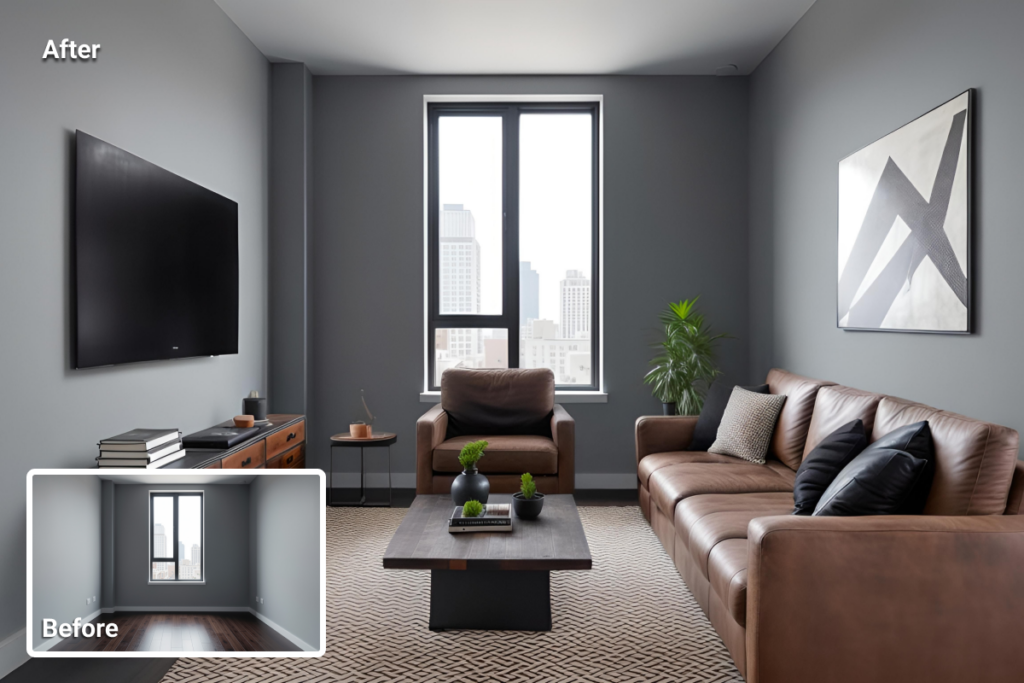
Clear pathways help rooms feel more open in listing photos. When furniture blocks sightlines or narrows walking paths, the room can appear crowded.
Staging layouts that leave visible floor space between furniture pieces can improve perceived room size. Buyers can see how movement through the space might work and how the apartment flows from one area to another.
One of the main advantages of virtual staging is the ability to test different layout arrangements without physically moving furniture.
Common Virtual Staging Mistakes in Small Apartments
While staging can improve listing clarity, certain mistakes may reduce its effectiveness in compact properties.
Using Oversized Furniture
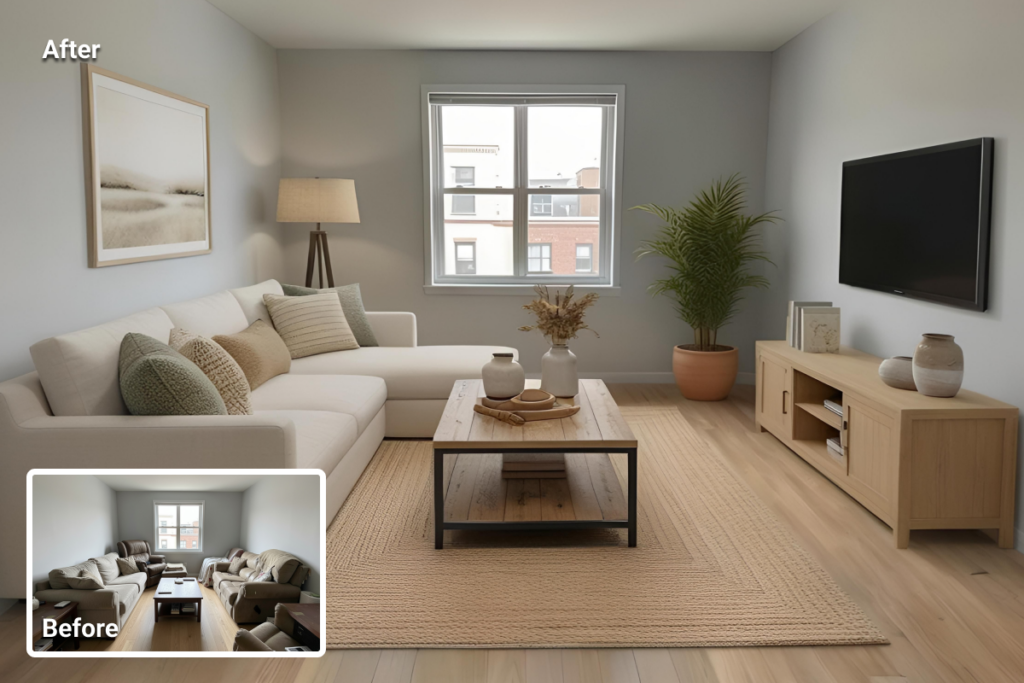
Large furniture pieces often dominate small rooms. When sofas, tables, or beds are too large for the room, the space can appear cramped in real estate photos.
Choosing furniture that matches the scale of the room helps maintain balance and keeps the layout easy to interpret.
Adding Too Many Decorative Elements
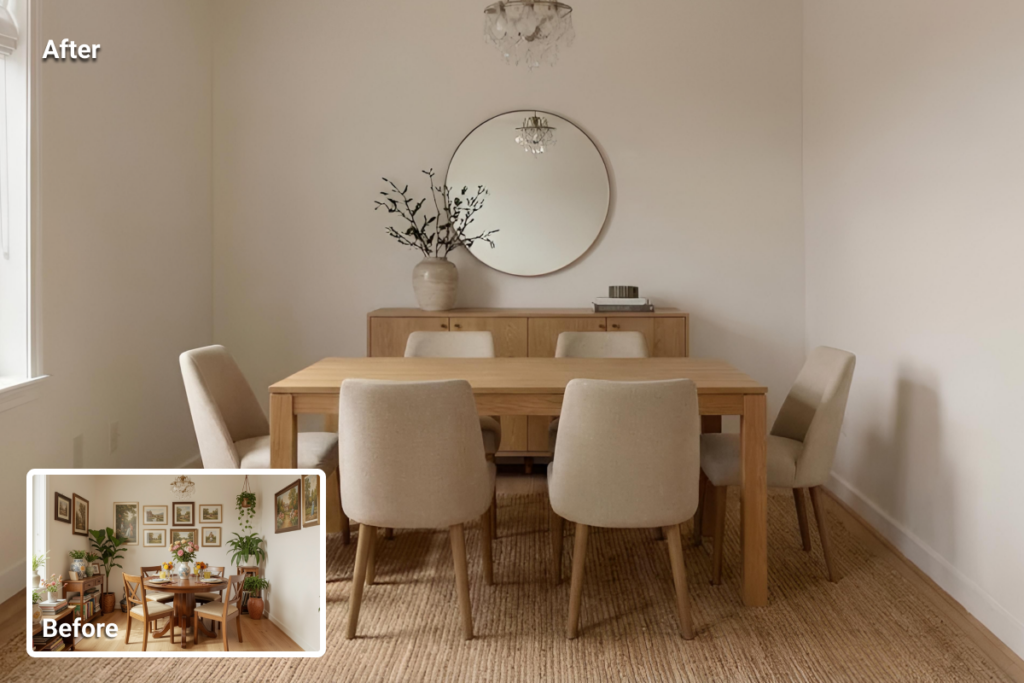
Decorative objects can quickly clutter compact rooms. Too many accessories may distract from the layout and reduce spatial clarity.
For small apartments, staging should prioritize function over decoration. Simple layouts allow buyers to focus on how the room works rather than on decorative details.
Ignoring Camera Perspective
Furniture placement should align with the camera angle used in listing photography. If furniture blocks the view of the room’s depth or floor area, the space may appear smaller than it actually is.
Staging layouts should support the camera perspective so buyers can see the full layout clearly.
Overcrowding Multi-Purpose Rooms
Studio apartments often require one room to serve several functions. However, overcrowding the space with multiple furniture sets can reduce clarity.
Simpler layouts that define key zones, such as sleeping and living areas, help buyers interpret the space more easily.
How AI Virtual Staging Helps Stage Small Apartments More Effectively
Preparing listing photos traditionally requires coordinating furniture, staging professionals, and scheduling. For small apartments, these logistics can add time and cost to the listing process.
Digital staging offers a simpler approach. Agents can upload listing photos and apply staged furniture layouts, allowing them to test multiple layout arrangements and quickly choose the option that presents the compact space most clearly.
Platforms like AI HomeDesign allow agents to stage property photos quickly without the logistics associated with physical furniture.
For compact properties, this AI-driven workflow generates staged images with furniture scale and layouts that match the room’s proportions, helping agents prepare listing visuals faster while avoiding the coordination normally required for physical staging.
When Virtual Staging Works Best for Small Apartment Listings
Certain listing situations make virtual staging especially useful for small apartments.
Empty apartments are one of the most common situations. Without furniture, buyers may struggle to interpret how the space could function as a home. Staging introduces visual cues that make the layout easier to understand.
Rental units also benefit from staging. Since furniture is often removed between tenants, listing photos may show empty rooms that appear smaller than they actually are.
Studio apartments represent another scenario. Defining sleeping, living, and dining areas through staged layouts helps buyers understand how the available space can be used.
Newly renovated units can also benefit. Even when a property has updated finishes, empty rooms may still appear unclear in listing photos. Staging helps demonstrate how the refreshed space can function as a complete living environment.
Agents often evaluate the cost of virtual staging when deciding how to prepare listing images for compact properties. Because digital staging avoids the logistics of physical furniture, it typically costs far less than traditional staging.
Before and After: How Staging Changes Small Apartment Listings
The impact of virtual staging for small apartments becomes clearer when comparing empty listing photos to staged ones.
In empty photos, small apartments often provide very little context. Buyers may see the room itself but still struggle to understand how the space functions or how the layout might work as a living environment.
Once the image is staged, the same room becomes easier to interpret. Furniture placement shows how the space can be used, clarifies the layout, and helps define the function of each area. In studio apartments especially, this added clarity can significantly influence how buyers evaluate the property.
Conclusion
Small apartments can be harder to present effectively because listing photos often flatten space, reduce visual depth, and leave more room for interpretation. In compact properties, even small decisions about layout, furniture scale, and room definition can influence how clearly buyers understand the apartment.
This is why staging becomes especially important for these listings. When staging defines the layout clearly, images help buyers see how different areas function, how the spaces connect, and how much usable room the apartment provides.
This is the real value of virtual staging for small apartments: it does not change the property itself, but presents it in a way that is clearer, more readable, and easier for buyers to evaluate.
With AI virtual staging, agents can create these listing visuals quickly without the time, cost, and coordination required for physical staging. The result is a clearer presentation of compact spaces and a stronger visual foundation for the listing.
Small apartments often appear tighter in listing photos because camera perspective and limited floor space reduce visual depth. Staging helps clarify the layout and shows buyers how the available space can function as a living environment.
Virtually staging a small apartment adds furniture and layout structure to listing photos. This helps buyers see how each room functions and how different areas of the space can be used.
Virtual staging does not change the physical size of a room. However, it can improve how spacious the space appears by showing clear layouts, appropriate furniture scale, and defined functional areas.
Virtual staging is especially useful when listing photos show empty apartments, studio layouts, rental units between tenants, or newly renovated properties where buyers may struggle to interpret the space.