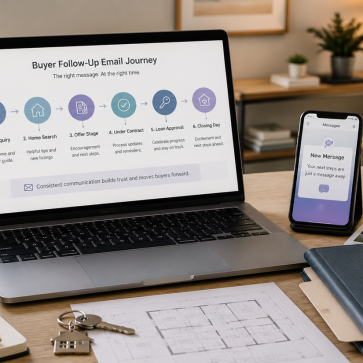
Real estate email templates work best when they match the buyer’s stage, not just the agent’s follow-up schedule. A first inquiry, a showing reminder, an offer update, and a closing-week email all need different timing, tone, and next steps.
For homebuyers, too many emails can feel pushy. Too few can make the agent seem absent. The goal is to send helpful messages that answer the buyer’s immediate question and move the conversation forward. As part of broader real estate marketing strategies, email follow-up should support the buyer’s decision process instead of interrupting it.
Below are seven real estate email templates for key moments in the homebuyer journey, from first contact to post-closing follow-up. Each one is written to feel clear, timely, and easy to personalize.
Why Email Templates Should Match the Homebuyer Journey
Real estate email templates work better when they match where the buyer is in the decision process. A buyer who is still researching neighborhoods does not need an offer-strategy email yet. A buyer who is close to closing does not need another broad market overview.
The buyer journey usually moves through several stages:
- Awareness
- Financial preparation
- Home search
- Offer and negotiation
- Under contract and due diligence
- Mortgage and final approval
- Closing
Each stage needs a different tone, level of detail, and call to action. Early-stage buyers usually need education and reassurance. Active buyers need relevant listings, showing support, and clear next steps. Buyers under contract need timelines, reminders, and practical checklists.
Personalization Beats Broadcasting
Generic listing blasts rarely feel helpful. Stronger emails reference what the buyer actually cares about, such as location, budget, bedroom count, commute, school district, or property type.
That does not mean every email needs to be fully custom-written. A good template gives the agent a clear structure, while personalization makes the message feel relevant.
The templates below were selected for four things: stage fit, clear CTA, easy personalization, and practical use in real buyer follow-up. This framework is especially useful for agents helping first-time homebuyers, who often need simpler explanations and better timing throughout the process.
Template 1: Awareness Stage — Market Education Email
Early-stage buyers are often not ready for a sales pitch. They may be comparing neighborhoods, watching prices, or trying to understand whether now is the right time to buy. At this stage, the email should feel helpful, local, and low-pressure.
This template works well for new leads from open houses, website sign-ups, social media inquiries, or buyer guide downloads.
Quick reference
Email Template
Subject line: What’s happening in [City] real estate right now
Preview text: A quick update for buyers watching [Neighborhood]
Hi [First Name],
I noticed you were interested in homes around [Neighborhood/City], so I wanted to share a quick market update.
Right now, [insert local market insight: inventory trend, average days on market, price movement, or buyer competition]. For buyers, that usually means [brief practical takeaway].
At this stage, you do not need to rush. It helps to understand what is changing locally, what your budget can realistically cover, and which neighborhoods are worth watching.
If useful, I can send you a short buyer guide for [City/Neighborhood] with current market notes and first steps.
Best,
[Agent Name]
Why This Email Works
The email gives value before asking for a call. It also uses local context, which makes the message feel more relevant than a generic “Are you ready to buy?” follow-up.
Keep the CTA light. A buyer at the awareness stage may not be ready to book a showing yet, but they may reply to a helpful resource or neighborhood-specific update.
Personalization Notes
Use one current local detail, such as inventory, price range, days on market, or a neighborhood trend. Avoid old numbers. Market stats should be refreshed regularly so the email does not weaken trust with informed buyers.
Template 2: Financial Preparation Stage — Mortgage Readiness Email
Many buyers browse listings before they are financially ready to make an offer. That does not always mean they are unqualified. Often, they are still unsure about budget, pre-approval, or what the next financial step should be.
This email helps move the buyer from casual browsing to financial clarity without making the message feel pushy.
Quick reference
Email Template
Subject line: Know your buying power before the right home appears
Preview text: A simple first step before serious home shopping
Hi [First Name],
I noticed you’ve been looking at homes in [City/Neighborhood], and I wanted to share one helpful next step before the search gets more serious.
Getting pre-approved does not mean you have to buy right away. It simply gives you a clearer picture of your budget, monthly payment range, and what type of offer you may be able to make when the right home appears.
It can also help you move faster in a competitive situation, especially if a property checks most of your boxes.
If you would like, I can connect you with a trusted lender or walk you through what the pre-approval process usually looks like.
Best,
[Agent Name]
Why This Email Works
The message frames pre-approval as clarity, not pressure. That matters because buyers at this stage may still be nervous about affordability or unsure whether they are ready to speak with a lender.
The CTA should stay simple: offer a lender introduction or a short conversation about the process.
Personalization Notes
Reference the buyer’s search area, property type, or timeline if available. Avoid specific interest rates or payment estimates unless they come from a lender and are current. Rate details can date the email quickly and create accuracy issues.
Template 3: Home Search Stage — Personalized Listing Update Email
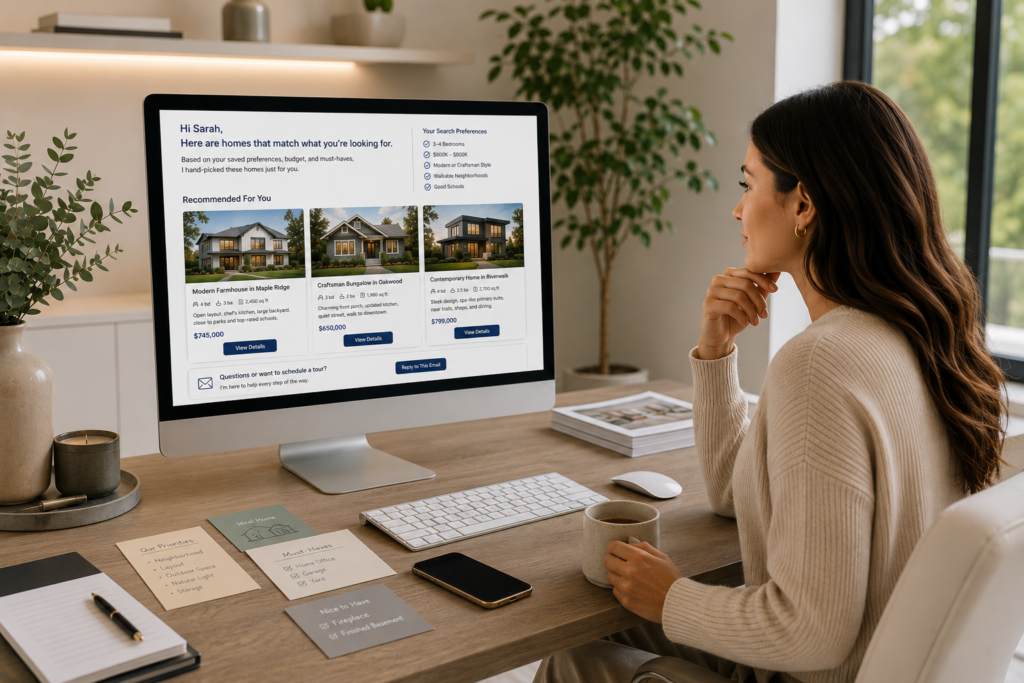
Generic listing alerts are easy to ignore. A personalized listing email works better because it reflects what the buyer already said they wants: location, price range, bedroom count, property type, or must-have features.
This template works best for active buyers who have shared search preferences and are ready to view homes.
Quick reference
Email Template
Subject line: [First Name], new [bedroom count]-bed homes in [Neighborhood]
Preview text: A few listings that match what you’re looking for
Hi [First Name],
A few new homes came up that match your search for [bedroom count]-bedroom properties in [Neighborhood/City] around [Price Range].
I picked these because they seem close to what you mentioned:
- [Listing Address or Short Description] — [Key feature]
- [Listing Address or Short Description] — [Key feature]
- [Listing Address or Short Description] — [Key feature]
The photos give a good first look, but layout, natural light, and room flow are always easier to judge in person.
Would you like me to schedule a showing for any of these this week?
Best,
[Agent Name]
Why This Email Works
The email feels useful because it reflects the buyer’s actual search criteria. Instead of sending a broad MLS blast, the agent is narrowing the options and explaining why each listing may fit.
Keep the CTA simple. At this stage, the next step is usually a showing request, not a long consultation.
The Role of Listing Visuals
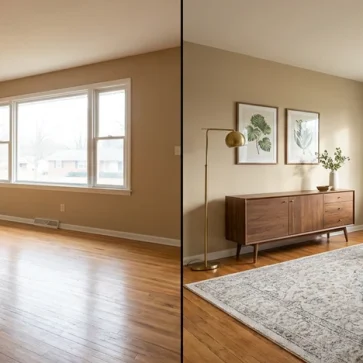
Listing photos can strongly influence whether a buyer clicks through or asks for a showing. Clean, well-lit interiors help the buyer understand the space faster. For vacant rooms, virtual stagingcan also make layout, scale, and room function easier to read.
Agents who regularly market vacant listings can compare tools through the best virtual staging software for real estate roundup before choosing a staging workflow.
Personalization Notes
This template works best when the CRM supports merge fields or saved-search data. Useful fields include first name, neighborhood, price range, bedroom count, property type, and timeline.
If those fields are not connected, agents may end up editing every email by hand. That can still work for a small number of active buyers, but it becomes harder to scale.
Template 4: Offer and Negotiation Stage — Winning Offer Strategy Email
This email should only go to buyers who are close to making an offer. If they are still comparing neighborhoods or browsing casually, offer strategy can feel premature. But once a buyer has toured a property and shown serious interest, this message helps them understand what makes an offer competitive.
Quick reference
Email Template
Subject line: Before you make an offer, here’s what to know
Preview text: A few details can make the offer stronger
Hi [First Name],
Since you’re interested in [Property Address/Neighborhood], I wanted to outline what we should review before writing an offer.
A strong offer is not only about price. It usually includes a few important pieces:
- Offer price: How the price compares with recent sales and current competition.
- Earnest money deposit: How much you are comfortable putting down to show serious intent.
- Inspection contingency: How much protection you want after the home inspection.
- Financing contingency: How your loan timeline affects the offer.
- Appraisal contingency: What happens if the appraisal comes in lower than the offer price.
The right strategy depends on the property, the seller’s situation, and the current market. Before you decide, we can walk through the options and choose an approach that protects you while keeping the offer competitive.
Would you like to schedule a short offer strategy call today?
Best,
[Agent Name]
Why This Email Works
The email gives the buyer structure before a high-pressure decision. It explains the main parts of an offer in plain language without overwhelming them with legal or financing detail.
The CTA is also specific. At this stage, the buyer does not need a generic “let me know.” They need a focused offer strategy conversation.
Personalization Notes
Customize this email by property and market condition. In a multiple-offer market, the tone may need to be more urgent and strategic. In a slower market, it can be more measured and educational.
Avoid giving legal or lending advice outside your role. For contract language, financing questions, or contingency risk, direct the buyer to the appropriate professional.
Template 5: Under Contract Stage — Due Diligence Checklist Email
Once an offer is accepted, buyers often feel both excited and overwhelmed. Inspections, appraisal, title review, lender requests, and contract deadlines can all arrive quickly. A clear due diligence email helps the buyer understand what happens next and who is responsible for each step.
Quick reference
Email Template
Subject line: Congratulations — here’s your under-contract action plan
Preview text: Key next steps, deadlines, and contacts
Hi [First Name],
Congratulations again on getting your offer accepted for [Property Address]. Now that you are under contract, there are a few important steps we will move through together.
Here is the current action plan:
- Inspection period: [Insert timeframe or deadline]
You will schedule the home inspection with [Inspector Name/Company]. The inspection helps you understand the property’s condition before moving forward. - Title review: [Insert timeframe or deadline]
[Title Company/Attorney Name] will review title details and help confirm that the property can transfer properly. - Appraisal: [Insert expected timing]
Your lender will order the appraisal to confirm the property’s value for the loan. - Lender requests: Ongoing until final approval
Please watch for any document requests from [Lender Name]. Quick responses can help keep the closing timeline on track. - Final walkthrough: Usually close to closing
We will schedule a walkthrough before closing to confirm the property is in the expected condition.
Deadlines can vary by state, contract terms, lender requirements, and local process, so we will confirm each key date together.
If any part of this feels unclear, reply here and I’ll walk you through it.
Best,
[Agent Name]
Why This Email Works
This email reduces uncertainty at a stressful stage. Instead of sending scattered updates, the agent gives the buyer a simple checklist with timing, contacts, and next steps.
The tone should stay calm and organized. Buyers do not need every legal detail in this email. They need to know what is happening next and who to contact.
Personalization Notes
Customize this email with the property address, inspection deadline, lender name, title company, and any local contract requirements.
Avoid giving legal advice. If the buyer has questions about contract language, contingencies, or state-specific obligations, direct them to their attorney or the appropriate professional.
Template 6: Mortgage and Final Approval Stage — Loan Status Update Email
The underwriting stage can feel quiet and stressful for buyers. They may be waiting on final approval, lender requests, appraisal updates, or closing confirmation. A short loan-status email helps them understand what to expect without creating confusion.
Before sending this email, the agent should confirm the status with the lender or loan officer.
Quick reference
Email Template
Subject line: Your loan is in underwriting — here’s what to do next
Preview text: A few reminders before final approval and closing
Hi [First Name],
I wanted to send a quick update on where things stand with your loan for [Property Address].
Based on the latest update from [Lender Name], your loan is currently [insert status: in underwriting / pending final approval / waiting on documents / cleared to close]. If the lender needs anything else, they will contact you directly.
Until closing, it is important to avoid any major financial changes, including:
- Opening new credit cards or loans
- Making large purchases
- Changing jobs without speaking to your lender
- Moving large sums of money between accounts
- Ignoring document requests from the lender
The current estimated closing date is [Closing Date], but we will continue confirming timing as we move closer.
If you receive any lender requests and are unsure what they mean, send me a note and I can help point you to the right person.
Best,
[Agent Name]
Why This Email Works
This email gives buyers reassurance during a stage where silence can create anxiety. It also reinforces important pre-closing behavior without overwhelming the buyer.
The message should stay factual and lender-confirmed. Avoid guessing about approval status, funding, or closing certainty.
Personalization Notes
Customize this email with the property address, lender name, confirmed loan status, and estimated closing date.
Do not send loan-status details unless they have been confirmed by the lender. For financing advice, approval questions, or document requirements, direct the buyer back to the loan officer.
Template 7: Closing Day — What to Bring Checklist Email
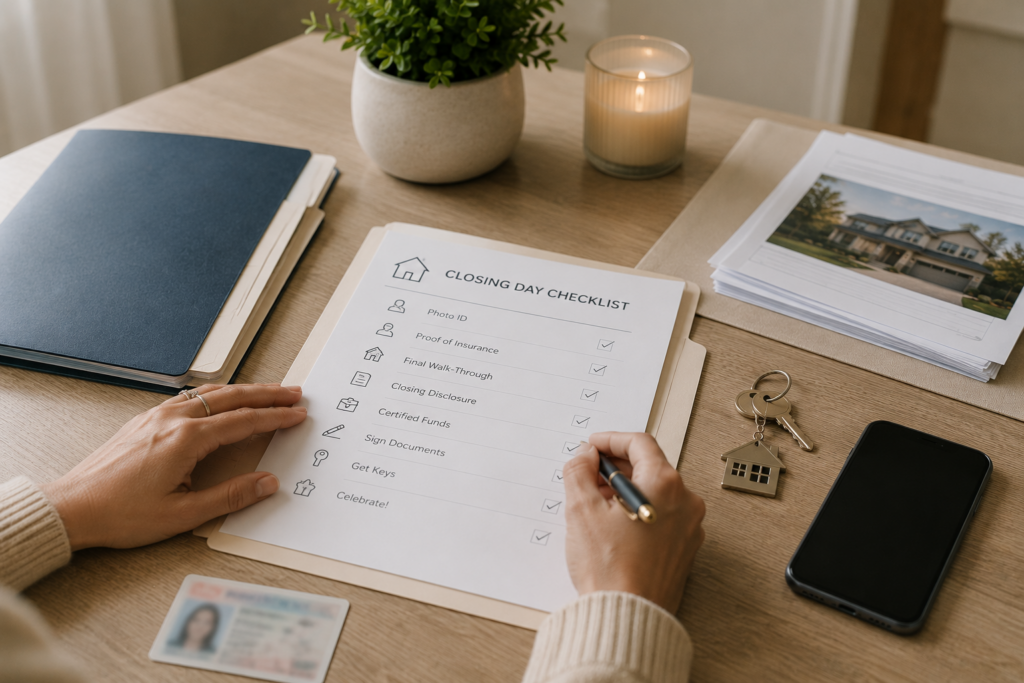
Closing day can feel exciting and stressful at the same time. Buyers may be thinking about keys, moving plans, utilities, and final paperwork. A short checklist email sent one or two days before closing helps them arrive prepared.
Quick reference
Email Template
Subject line: Tomorrow is closing day — here’s what to bring
Preview text: A quick checklist before your appointment
Hi [First Name],
Tomorrow is closing day for [Property Address]. I wanted to send a quick checklist so you know what to bring and what to expect.
Please bring:
- A valid government-issued photo ID
- Any final documents requested by [Title Company/Attorney/Lender]
- Proof of homeowner’s insurance, if requested
- Confirmation of your closing funds, if applicable
- Any additional paperwork already requested by the closing team
Your closing appointment is currently scheduled for:
Time: [Closing Time]
Location: [Closing Location]
Contact: [Title Company/Closing Contact]
One important reminder: do not rely on wire instructions sent by email unless you have verified them directly with the title company or closing attorney using a trusted phone number. If anything looks different or unexpected, call before sending funds.
I’ll be available if any last-minute questions come up. Excited to see you at the finish line.
Best,
[Agent Name]
Why This Email Works
This email gives buyers a simple checklist at the moment they need it most. It reduces last-minute confusion and shows that the agent is still guiding the process through the final step.
The wire fraud reminder is essential. It should be direct, easy to understand, and separate from the rest of the checklist so buyers do not miss it.
Personalization Notes
Customize this email with the closing time, location, title company, closing contact, property address, and any documents requested by the lender or attorney.
Do not include wire instructions in the email body. Buyers should verify wiring details directly with the title company or closing attorney through a trusted phone number.
Tool Comparison: AgentSequence vs. ActiveCampaign vs. Follow Up Boss
The right email platform depends on how much automation an agent needs and how much setup time they can handle. A solo agent may need ready-made real estate sequences. A marketing manager may prefer deeper segmentation. A growing team may need CRM integrations, lead routing, and shared visibility.
| Dimension | AgentSequence | ActiveCampaign | Follow Up Boss |
|---|---|---|---|
| Best for | Solo agents and new agents | Marketing teams needing customization | Teams and brokerages |
| Setup time | Low | Higher | Moderate |
| Real estate templates | Built around real estate use cases | Requires more manual setup | Partial, depending on workflow |
| CRM depth | Light | Moderate | Stronger real estate CRM |
| Automation strength | Real estate-specific sequences | Advanced segmentation and workflows | Lead routing and follow-up actions |
| Lead-source integrations | More limited | Broad generic integrations | Strong real estate lead-source integrations |
AgentSequence
AgentSequence is the simplest fit for agents who want real estate-specific email campaigns without building every workflow from scratch. It is useful for solo agents, new agents, or teams that need a lighter automation tool focused on follow-up sequences.
The tradeoff is CRM depth. Agents who need advanced lead routing, reporting, or team pipeline visibility may outgrow it.
ActiveCampaign
ActiveCampaign is better for users who want advanced automation, segmentation, and email marketing flexibility. Its platform supports CRM, SMS, WhatsApp messaging, transactional email, and more than 1,000 app integrations.
The tradeoff is setup complexity. ActiveCampaign is not built only for real estate, so agents may need to create or adapt buyer follow-up workflows themselves.
Follow Up Boss
Follow Up Boss fits teams that need a real estate CRM with lead routing, shared inbox workflows, and portal integrations. It has direct integrations with Realtor.com and Zillow, which makes it relevant for teams managing paid portal leads.
The tradeoff is that it may be more platform than a solo agent needs if the only goal is sending a few buyer follow-up templates.
Reply Detection and Follow-Up Control
Reply detection matters because a drip campaign should not keep sending generic emails after a buyer has responded. Without that pause, the automation can feel careless.
Real estate-specific tools can save setup time, while broader platforms can offer more customization. The best choice depends on whether the agent values speed, control, or team-level CRM depth.
How to Choose the Right Email Automation Tool by Team Size and Budget
The right email automation tool depends on three things: team size, contact volume, and how much setup time the agent can realistically manage. A solo agent may need a simple real estate-ready sequence. A growing team may need lead routing and CRM visibility. A marketing manager may need deeper segmentation and custom workflows.
Solo Agents and New Realtors
Solo agents and new realtors usually need speed and simplicity. A tool like AgentSequence can work well when the goal is to launch buyer follow-up campaigns without building every workflow from scratch.
This is the best fit for agents with a smaller contact list, limited setup time, and a clear need for homebuyer journey emails.
Growing Teams and Brokerages
Growing teams often need more than email automation. They may need lead assignment, shared visibility, pipeline tracking, and integrations with major lead sources.
Follow Up Boss is a stronger fit for this stage because it supports team-based CRM workflows and lead management. It makes more sense when multiple agents need to respond to inbound leads, track conversations, and coordinate follow-up.
Marketing Managers and ISAs
Marketing managers and inside sales agents may need more control over segmentation, triggers, and multi-step campaigns. ActiveCampaign can fit that need because it offers broader automation flexibility.
The tradeoff is setup time. Since it is not built only for real estate, teams may need to create buyer journey workflows, tags, segments, and automations manually.
Layering Listing Visuals Into Email Campaigns
Whatever platform an agent uses, the home search stage depends heavily on the quality of the listing visuals. Strong photos, clear room views, and staged interiors can make listing emails feel more useful and easier to act on.
For vacant homes, virtual staging can be added to the email workflow as a visual asset. The email platform handles delivery and follow-up, while the staged images help buyers understand the room’s scale, layout, and potential.
Tools That May Still Work for Simpler Campaigns
General email platforms like Mailchimp or Constant Contact can still work for newsletters, market updates, and basic nurture campaigns. They are not always the best fit for real estate-specific buyer journeys, especially when agents need reply handling, lead-source integrations, or CRM-based follow-up.
Agents can build workarounds in general platforms, but the setup time may outweigh the savings. For buyer-stage automation, a real estate-focused CRM or sequence tool is usually easier to manage.
Final Though
The right email tool depends on team size, lead volume, and setup time. Solo agents usually need simple templates. Growing teams need CRM depth, lead routing, and portal integrations. Marketing managers may need deeper segmentation and custom workflows.
Still, timing matters more than the tool. A strong email sent at the wrong stage can feel pushy or irrelevant. Map each buyer to the right journey stage before triggering a sequence.
Home search emails also need strong visuals. Clean real estate photo editing and properly prepared listing images can make property emails easier to trust and act on. Agents should also know how to prepare real estate photos for MLS so the same images work across listing platforms and email campaigns.
Start with the seven core templates. Add more automation only after the basic journey-stage mapping works.