AI in real estate has changed how listing images are created, but it has not changed the standards that govern what can be published. In the United States, local Multiple Listing Services (MLSs) may differ in details, yet one principle remains consistent: listings must represent the property truthfully, and disclosure is required when edits alter what buyers see. This is the foundation of AI compliance in MLS listings, and it now belongs inside the workflow, not at the very end. This is also where many listing teams underestimate how early compliance decisions actually begin.
A few years ago, the path to a property listing was straightforward. A photographer captured the home, an editor refined the photos, and the listing was submitted to the MLS. Today, many agents create property listings using AI with multiple rounds of visual revision before upload. Images are enhanced, spaces are staged, and environments are adjusted. As a result, compliance becomes part of how visuals are created from the beginning, not a final check before submission.
How AI Fits Into Listing Images Now
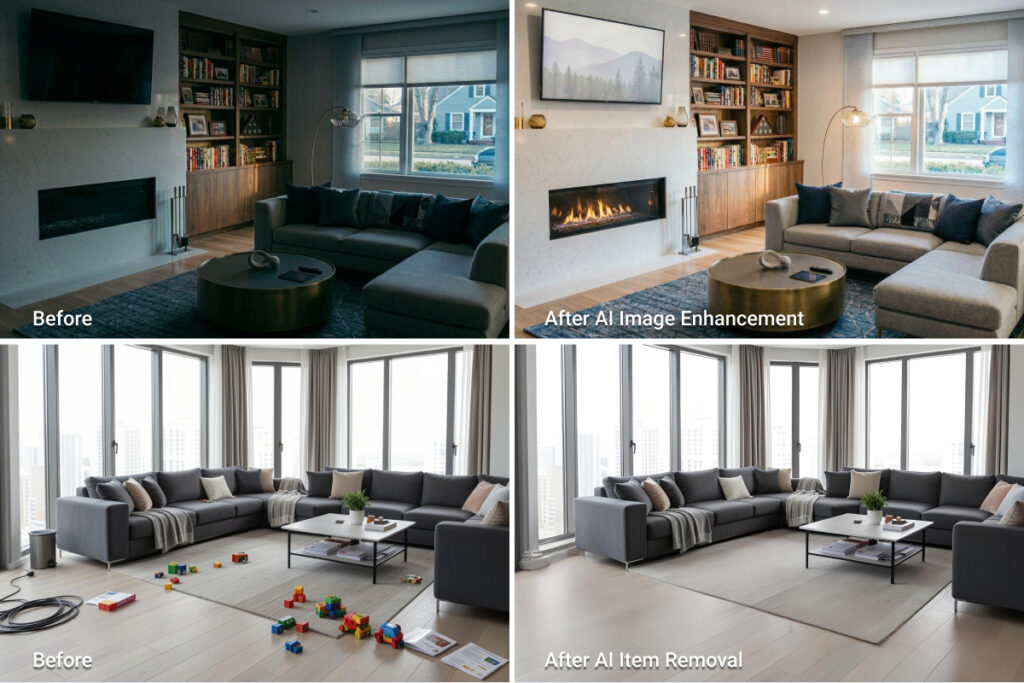
AI tools now support color correction, object removal, virtual staging, and day-to-dusk editing. Some platforms also allow agents to generate multiple visual variations of the same space. Tools such as AI HomeDesign operate within this broader ecosystem, alongside editing teams and brokerage workflows. The common thread is speed and flexibility. The challenge comes next: determining which version still reflects the property as it is. In practice, this is where most uncertainty starts.
At that point, real estate listing compliance becomes critical. Basic enhancements, such as adjusting brightness or refining composition, are generally acceptable. Risk emerges when an edit changes how a buyer interprets condition, scale, layout, or surroundings. At that point, MLS compliance rules and MLS photo guidelines matter more than the software used to produce the image.
MLS Compliance Rules Still Set The Line
For agents, the starting point remains simple: listings must present the property truthfully. The National Association of Realtors (NAR) reinforces this through Article 2 and Article 12, which address misrepresentation, concealment, and truthful advertising.
It also emphasizes that MLS data must remain complete and accurate, as it is relied upon across the market. Together, these standards define the foundation of real estate listing compliance for listing photos and property representation.
This principle explains why AI real estate compliance is not a separate legal framework. AI tools can extend what is technically possible, but they do not change what is permitted.
In practice, agents must maintain a clear boundary between enhancing an image and altering how the property is represented. AI expands options, not rights. In practice, most compliance issues don’t come from obvious manipulation, but from small edits that gradually change how a space is perceived.
Editing vs Misrepresentation: MLS Rules for AI-Created Images
The key question is simple: does the image still represent the property truthfully? This principle underpins MLS photo guidelines and should guide any evaluation of AI-generated images in real estate.
Edits remain acceptable when they correct exposure, color, perspective, or minor distractions without altering the physical characteristics of the home.
Risk increases when changes affect built features, conceal damage, modify views, distort room size, or suggest finishes that do not exist.
Once an image begins to introduce elements that are not part of the property, it crosses into misrepresentation. In this context, AI compliance in MLS listings ensures that visual enhancement does not become visual distortion.
How to Evaluate AI-Edited Listing Images
MLS rules do not evaluate how an image was created, but how it represents the property. In practice, this turns compliance into a simple evaluation process rather than a checklist.
A useful way to assess any AI-edited listing image is to look at three levels of change:
Enhancement: Does the image clarify what is already there?
Adjustments such as exposure, color balance, perspective correction, or minor object removal improve readability without altering the property itself. These edits support understanding and generally remain within MLS guidelines.
Alteration: Does the edit change how the space is interpreted?
When edits begin to influence perceived size, condition, layout, or surroundings, the image moves into a higher-risk area. These changes may still be acceptable in some cases, but they require careful judgment and often clear disclosure.
Invention: Does the image introduce something that does not exist?
If an edit adds features, removes permanent elements, or creates a version of the property that cannot be experienced in reality, it crosses into misrepresentation. At this stage, the issue is no longer enhancement but accuracy.
Across different MLSs, the wording of rules may vary, but the boundary remains consistent: listing images should help buyers understand the property as it is, not as it could be imagined.
AI Virtual Staging Legality: Where MLS Draws the Line
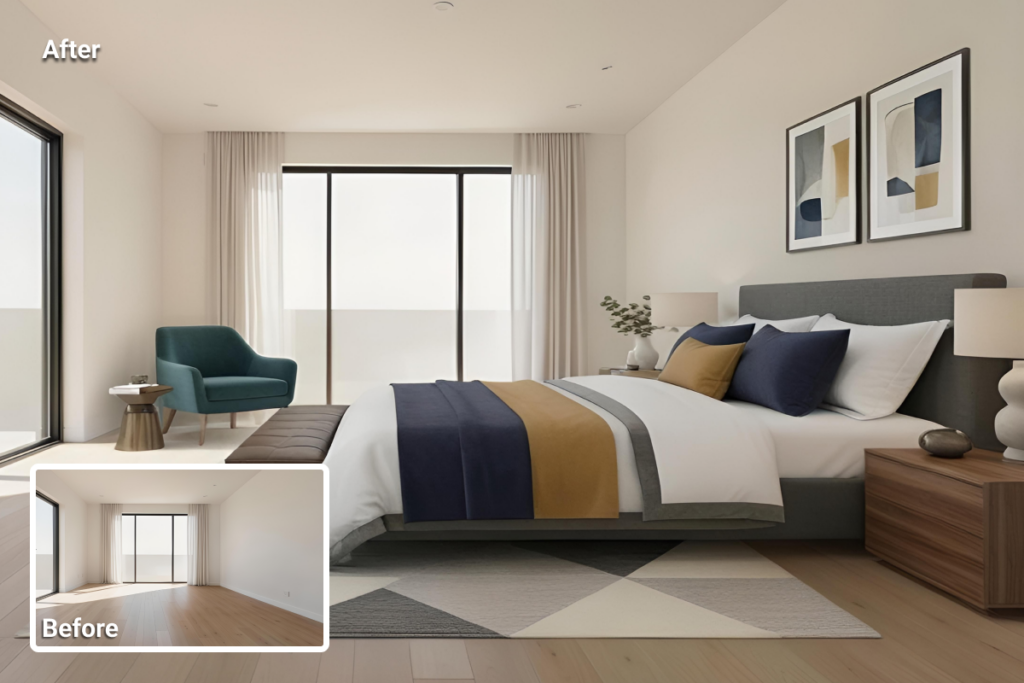
Virtual staging receives the most scrutiny because it helps buyers interpret empty spaces, but it can also move a room away from its actual condition. This is also where most disagreements between agents and MLS reviewers tend to happen.
AI virtual staging is generally acceptable when it introduces furniture, rugs, or decor without altering permanent features of the property.
Local MLS rules help define that boundary. MRED permits virtual staging for personal property items but prohibits edits that introduce impossible views or remove external elements beyond the owner’s control, such as power lines or nearby highways.
It also requires disclosure for virtually staged photos. CRMLS applies stricter standards for digitally altered images, requiring clear labeling and placement of the original, unaltered photo immediately before or after the edited version in the listing.
These examples show that MLS compliance for virtual staging may vary by region, while the underlying principle remains consistent.
For that reason, AI virtual staging legality cannot be based on visual preference alone. If staging alters the perceived size, structure, view, or likely use of a space in a misleading way, it crosses into misrepresentation.
A well-staged image can clarify how a room functions. A misleading one can lead to listing rejection, complaints, or loss of buyer trust.
For agents evaluating different approaches, virtual staging vs real staging also helps define where digital enhancement ends and property representation begins.
Disclosure Requirements for Real Estate Images

Disclosure requirements for real estate images apply whenever an edit changes how a property is presented in a way that buyers should understand.
This includes many staged, altered, or AI-generated visuals. The purpose of disclosure is not procedural; it is to preserve clarity and maintain trust in how the property is represented.
In many cases, this step is only revisited when a listing is flagged or questioned.
The National Association of Realtors (NAR) states that virtually staged listing photos must be clearly labeled. CRMLS requires specific disclosures such as “digitally enhanced,” “digitally altered,” or “virtually staged.” Requirements can vary by MLS, but the implication is consistent: disclosure is expected whenever edits influence interpretation.
For that reason, disclosure should be considered early in the listing process, not added at the final stage. As AI-generated and edited images become more common, transparency becomes part of how listings are constructed, not just how they are reviewed.
Why Trust and Accuracy Matter
AI compliance in MLS listings is not just about avoiding rejection. It protects the credibility of the entire listing. Property photos guide decisions about which homes are worth time, travel, and attention.
When images drift too far from the actual property, that expectation breaks quickly, weakening confidence in both the listing and the agent.
Ethical AI in real estate marketing still depends on professional judgment. Listing photos should help buyers understand the home, not interpret or question it.
Real estate data accuracy standards extend beyond written details and apply directly to the visual presentation.
Agents looking at the broader context can connect this to real estate marketing strategies. Visuals may attract attention, but compliance determines whether that attention holds under scrutiny.
Strong marketing can generate interest, but trust erodes when images suggest more than the property can deliver.
Final Thought
Across all MLS rules, the same boundary applies: enhance what exists, disclose what changes perception, and avoid creating what does not exist.
AI compliance in MLS listings begins at the moment an image is created or edited, not at the point of submission.
While tools and workflows continue to evolve, the underlying requirement remains unchanged: listings must represent the property clearly, accurately, and without misinterpretation.
MLS standards do not evaluate how an image was produced, but how it reflects the property itself. This is why compliance must be part of the entire listing process, from the first visual adjustment to the final upload.
When that standard is met, listing visuals support both marketing performance and buyer confidence. When it is not, the risk extends beyond rejection to credibility loss and reduced trust in the listing.
FAQs
It requires agents to treat AI-edited images as part of property representation, not just marketing. The image must remain accurate, and any required disclosure should be handled before submission.
In many cases, yes. Basic edits such as lighting correction, color adjustment, or straightening are often acceptable as long as they do not change the facts of the property.
The risk starts when an edit changes how a buyer understands the home. That can include hiding damage, changing permanent features, altering views, or making rooms look different from reality.
It can be, but local MLS rules may differ. In general, virtual staging is more acceptable when it adds temporary items like furniture without changing the structure, layout, or condition of the property.
Edits that hide defects, change permanent features, alter views, or make the property look materially different from reality create the most risk.