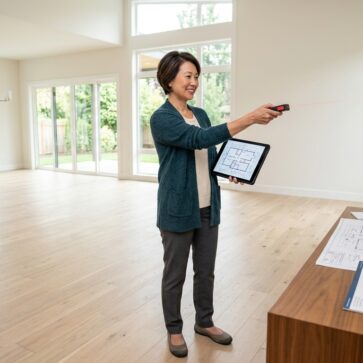
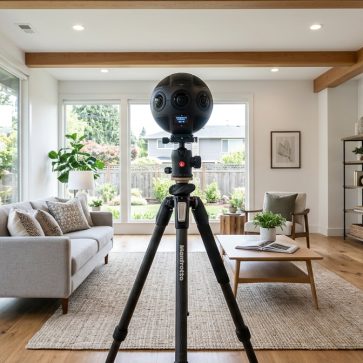
Real estate trends 2026 are pushing listing photography in a more restrained direction. Cleaner framing, controlled natural light, and less visual clutter are helping properties look more modern and easier to scan, especially on mobile. Buyers move quickly through online listings. In response, agents and photographers are relying more on workflows such as flambient lighting, AI decluttering, and intentional composition.
What Minimalist Real Estate Photography Means in 2026
Across listing portals, cleaner and less crowded images are becoming more common in photography that feels easiest to scan. That shift reflects how buyers now encounter homes: quickly, visually, and often on smaller screens.
The goal is to let a room’s proportions, layout, and natural light carry the image instead of competing with personal items or excessive styling.
The goal is to let a room’s proportions, layout, and natural light carry the image instead of competing with personal items or excessive styling. Techniques such as flambient lighting are often used to create a brighter, more balanced look without making the image feel flat.
Why the Shift Matters
The market logic behind this shift is straightforward. National Association of REALTORS® (NAR) reports that home search is overwhelmingly digital. Its 2025 buyer research also shows buyers typically looked at a median of seven homes during their search.
That compressed process increases the importance of first impressions, especially when listing photos do much of the early persuasive work.
Cleaner presentation also fits current editing workflows. AI decluttering tools, for example, are becoming more common because they help remove visual distractions more quickly than a fully manual process.
Vendor data points in the same direction: Phixer reported in 2024 that decluttered listing photos received more views than cluttered ones, suggesting that simpler presentation can improve engagement.
There is also a compliance boundary. California AB 723, effective January 1, 2026, requires conspicuous disclosure when real-estate images are digitally altered and requires access to the original, unaltered image.
More broadly, NAR’s Article 12 requires REALTORS® to present a true picture in advertising and marketing. Minimalism, then, is not a license to misrepresent a property. It is a clearer visual strategy that still has to stay within ethical and legal limits.
The Four Trends Shaping Minimalist Listing Photography in 2026
Minimalist listing photography in 2026 is being shaped by four connected shifts: cleaner lighting, faster AI-assisted editing, tighter composition, and more lifestyle-driven framing. Together, these trends are changing how listing images are produced and adapted across digital channels.
1. Cleaner Lighting
The first shift is technical. Flambient lighting has become a more common way to create bright, balanced interiors without the heavy halos, muddy midtones, or exaggerated contrast often associated with older HDR processing. It helps photographers produce cleaner images that still feel natural.
2. Faster AI-Assisted Editing
Layered on top of that foundation is the workflow shift driven by generative AI. AI virtual staging and decluttering tools make it easier to simplify a room visually. They do so without the time and cost of physical staging or slower manual editing.
That does not make every result better by default, but it does make cleaner presentation faster and more scalable across listing workflows.
3. Tighter Composition
The third shift is compositional. Images with clearer focal points and less visual noise tend to read more easily across smaller digital formats.
That is pushing some photographers toward tighter framing and more selective composition rather than relying only on wide, room-encompassing shots.
4. More Lifestyle-Driven Framing
The fourth shift is editorial. Story-driven lifestyle photography is becoming more common than plain room documentation in listing visuals. Morning light across a kitchen counter, or a quiet corner beside a window can add emotional clarity without overcrowding the frame.
What makes these trends notable in 2026 is how strongly they reinforce one another. Cleaner lighting supports more natural-looking edits. Decluttered rooms make tighter compositions easier to execute.
Lifestyle-focused images work best when the technical foundation is already strong. A January 2026 Delta Media survey, reported by WAV Group, found that 97% of brokerage leaders said their agents were using AI, suggesting that AI-assisted workflows are no longer limited to early adopters.
Why Flambient Lighting Defines the Clean, Bright Aesthetic
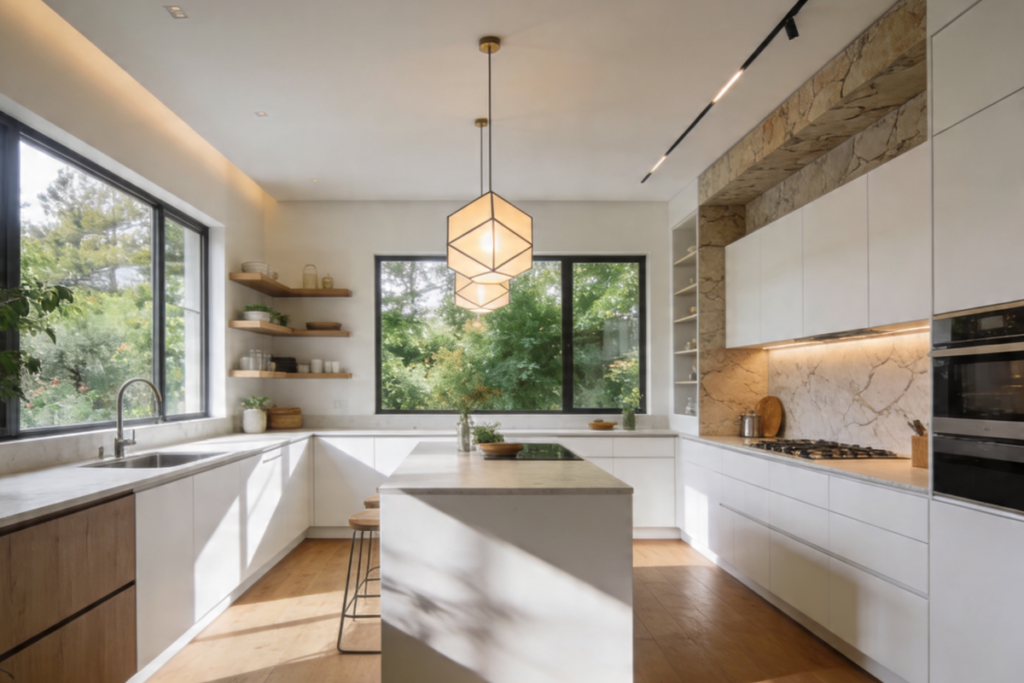
In a bright white kitchen, the core problem of interior photography becomes obvious as soon as the camera faces the window. Expose for the room and the windows blow out. Expose for the windows and the room goes dark. Neither result shows the space the way a buyer should see it.
Flambient lighting solves this by combining two exposures: one lit with flash and one captured in pure ambient light, then merging them in post to create a single image that feels brighter and more evenly balanced.
Why Flambient Works for Minimalist Real Estate Images
Minimalist listing photography depends on visual quiet: no harsh shadows cutting across countertops, no orange color casts from tungsten bulbs, and no blown-out rectangles where windows should be. Each of those artifacts adds visual noise that pulls attention away from the space itself.
Flambient helps correct all three: the flash layer fills shadows more evenly, the ambient layer preserves the room’s natural color temperature, and a dedicated window pull restores exterior detail that a single exposure would usually lose.
A Concrete Three-Bracket Workflow in a White Kitchen
A practical flambient shoot in a white kitchen involves three captures from a locked tripod position. First is a flash exposure. It uses speedlights or a strobe bounced off the ceiling to keep the windows under control while filling the room with clean, neutral light.
Second is a pure ambient exposure, with the flash off, that preserves the room’s natural warmth. Third is a dedicated window pull: a bright ambient or HDR bracket exposed specifically for the exterior scene visible through the glass.
In Lightroom, these three layers are merged using luminosity masking or manual brush work. The flash layer forms the base, the ambient layer softens any artificial flatness, and the window pull is painted in to restore detail through the glass.
The result is a kitchen image that feels bright, balanced, and more natural than a single exposure could produce.
Equipment Considerations: Speedlights vs. Strobes
Room size largely determines which light source makes the most sense. Speedlights, which are portable and battery-powered, work well in bathrooms, hallways, and mid-size bedrooms, where lower output is rarely a limitation.
In open-plan living areas or spaces with high ceilings, a monolight strobe with a larger modifier can produce more even coverage. It can also reduce the number of repositioning shots needed.
That setup is even more effective when paired with the best cameras for real estate photography and the best lens for real estate photography.
Flambient as the Foundation for AI Editing
A clean flambient base image makes later editing more reliable. AI tools used for virtual decluttering real estate images or sky replacement tend to work better when the source file has consistent exposure, neutral color balance, and clearly defined edges.
Starting with a muddy, shadow-heavy JPEG means the edit has to compensate for problems that should have been resolved during the shoot. A well-executed flambient capture creates a cleaner starting point for any downstream editing workflow.
How AI Decluttering and Occupied-to-Vacant Editing Work
Photographing an occupied home rarely produces a clean visual starting point. A family living room may include toys on the floor, personal photos on the walls, mismatched furniture, and the everyday clutter of daily life. Together, those details can pull attention away from the space itself.
AI decluttering tools address this by analyzing a room image and identifying objects that read as personal or distracting. They then remove those elements to create a cleaner, more neutral frame.
The occupied-to-vacant workflow takes that logic further. Instead of simply tidying the scene, the AI reconstructs how the room might look if it were empty. It fills in surfaces hidden behind furniture, rugs, or décor.
The result is a blank-canvas image that can make layout, scale, and architectural details easier to read.
Cost and Speed Compared to Physical Staging
The practical difference between AI editing and traditional staging is substantial.
AI virtual staging usually costs far less than physical staging and can be completed much faster, without the coordination involved in furniture delivery, setup, and scheduling. That speed and cost difference help explain why adoption has moved quickly.
For example, a photographer might shoot a lived-in family room in the morning and deliver a cleaner, vacant-looking version later the same day, without moving furniture or relying entirely on manual real estate photo editing.
What Edits Are Permissible in 2026
In practice, the key distinction is between edits that improve presentation and edits that misrepresent the property. Edits such as decluttering, color correction, or virtual staging are generally treated differently.
By contrast, edits that conceal defects, alter the property’s structure, or remove permanent external features create greater risk. That boundary matters before any image is published or uploaded to an MLS.
Shooting for Mobile-First and Vertical Composition
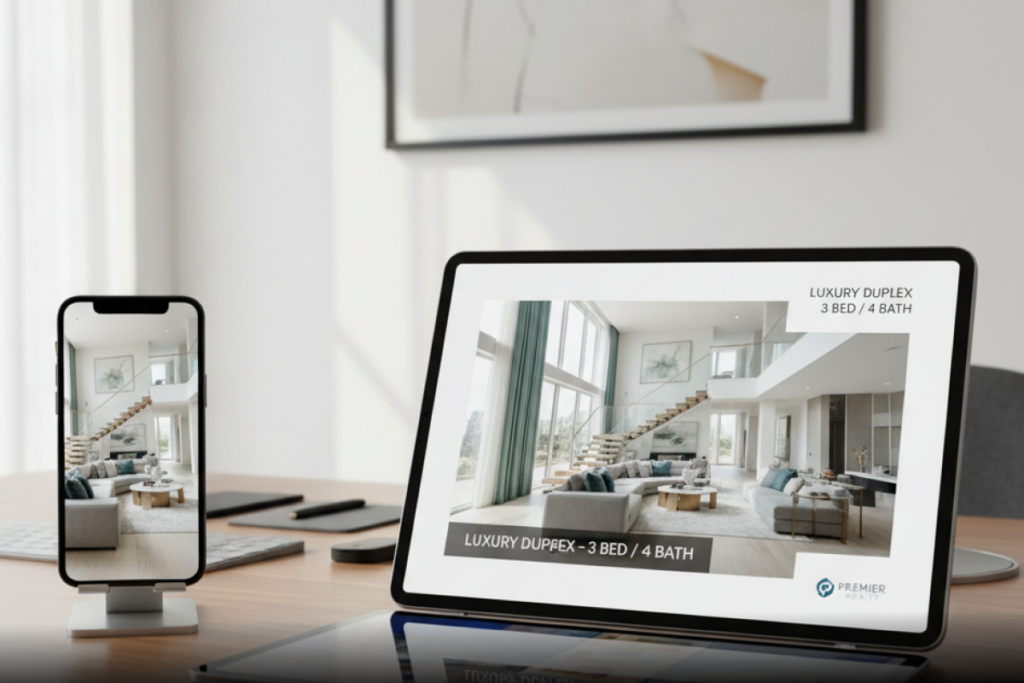
Most listing photos are still composed for a horizontal MLS grid: wide, rectilinear, and shot at roughly chest height. That framing works well on desktop and within standard listing layouts, but it is less effective on platforms built around mobile viewing.
Social platforms such as Instagram Reels and TikTok have made vertical content more familiar. On smaller screens, a tall crop often gives a space more presence than a letterboxed wide-angle image.
The technical difference is simple: MLS layouts still favor horizontal images, while social and mobile-first platforms are better suited to vertical framing.
Changing orientation is not just a crop decision. It changes which architectural details feel most prominent. A staircase photographed horizontally can recede into the overall room, while a vertical frame can emphasize height, rhythm, and structural flow more clearly.
Practical Framing Adjustments
Practical adjustments for vertical composition include tighter crops that remove dead ceiling space. Foreground anchors such as a countertop edge or stair tread can help create an entry point, while vertical lines like columns or doorframe reveals guide the eye upward.
These same principles can apply whether the images are being captured with a professional camera setup or for faster social content created through workflows such as iphone 17 real estate photography.
Shooting both orientations at the same property is often the most efficient distribution strategy. A wide horizontal image can serve the MLS, while a second vertical version of the same space can be used for social.
The added time is usually modest, and it allows one property visit to produce assets suited to multiple platforms.
How Story-Driven Photography Sells a Lifestyle, Not Just a Room
Many listing photos answer only part of the question. They document square footage, ceiling height, and cabinet count. Those details matter, but they are not always the elements that create emotional pull.
Story-driven photography works differently. Instead of only recording the room, it tries to show what life in that space might feel like.
That approach fits minimalist styling precisely because it depends on restraint. Morning light across a bare kitchen counter with a single ceramic coffee cup. A clean reading nook with one folded linen throw and a hardcover book.
A bathroom vanity holding only a single orchid. Each element is there to suggest a moment, not to fill the frame. The result feels calm, intentional, and lightly aspirational without looking crowded.
The Psychology Behind the Frame
Buyers respond to more than floor plans and room dimensions. They also respond to cues about comfort, routine, and atmosphere.
Because home search now begins online and early impressions are often formed through images, a single photograph can do more than document the room. It can help the viewer imagine how the space might feel in daily life.
Briefing for Lifestyle, Not Documentation
Whether the brief goes to a photographer on location or to ai real estate photo editing services, the wording shapes the result.
A documentary brief asks for full-room coverage and broad visibility. A lifestyle brief is more specific about light direction, prop count, and tone. For example, it might specify cool morning light, one surface object, and editorial framing.
That difference in language leads to a different kind of image. The more clearly the mood is described, the less the final result depends on post-production to create interest.
Pairing Stills with Short-Form Video
Story-driven stills gain additional reach when paired with short-form vertical video for platforms like Instagram Reels. A slow pan across the same reading nook or a brief clip of steam rising from the kitchen counter can carry the same narrative into motion without requiring a full production budget.
The still anchors the MLS listing; the video clip feeds social discovery. Together, they create a more consistent visual system across listing and social channels.
How to Combine Professional Photography with AI Staging
Professional photography and AI staging work best as complementary parts of the same workflow. The photo shoot establishes the lighting, angles, and overall image quality.
AI staging and editing then build on that base to simplify, restage, or reformat the final visuals for different channels. The stronger the original capture, the more convincing the staged result tends to be.
In-House AI Editing vs. Outsourced Photo Editing Services
The trade-off between handling AI edits in-house and outsourcing them to a photo editing service usually comes down to speed, cost, and consistency.
In-house tools can produce results quickly, but they also require the agent or photographer to manage visual consistency across the full set of images.
Outsourced services add review and revision support. That can help catch uneven color, framing inconsistencies, or edits that feel too obvious, even if turnaround is slower.
When AI Staging Alone Is Enough and When It Isn’t
Empty or lightly furnished rooms are often strong candidates for AI virtual staging without much physical preparation before the shoot. Heavily cluttered or damaged spaces usually benefit from at least some decluttering on site first.
AI can remove distractions in post, but it cannot fully compensate for poor natural light, blocked architectural features, or weak composition. The shoot itself sets the ceiling for what AI can improve.
Day-to-Dusk and Other Permissible Enhancements
Edits such as sky replacement or day to dusk conversion are generally treated differently from alterations that materially misrepresent the property. A twilight sky can improve presentation without changing the structure of the home, but disclosure remains essential.
Since January 1, 2026, California AB 723 has required conspicuous disclosure for digitally altered real-estate images. It also requires access to the original, unaltered version through a link, URL, or QR code.
More broadly, visual edits should improve presentation without concealing defects or changing the property in misleading ways.
Sequencing Deliverables for Maximum Reach
A well-structured shoot can produce several useful deliverable sets from the same property visit. The MLS set focuses on wide, horizontal room images suited to listing portals.
A social set can use tighter vertical compositions designed for mobile viewing. Virtually staged variants of key rooms can then extend the package further, helping buyers visualize layout and use without replacing the need for accurate base photography.
2026 Compliance Guide for AI-Edited Listing Photos
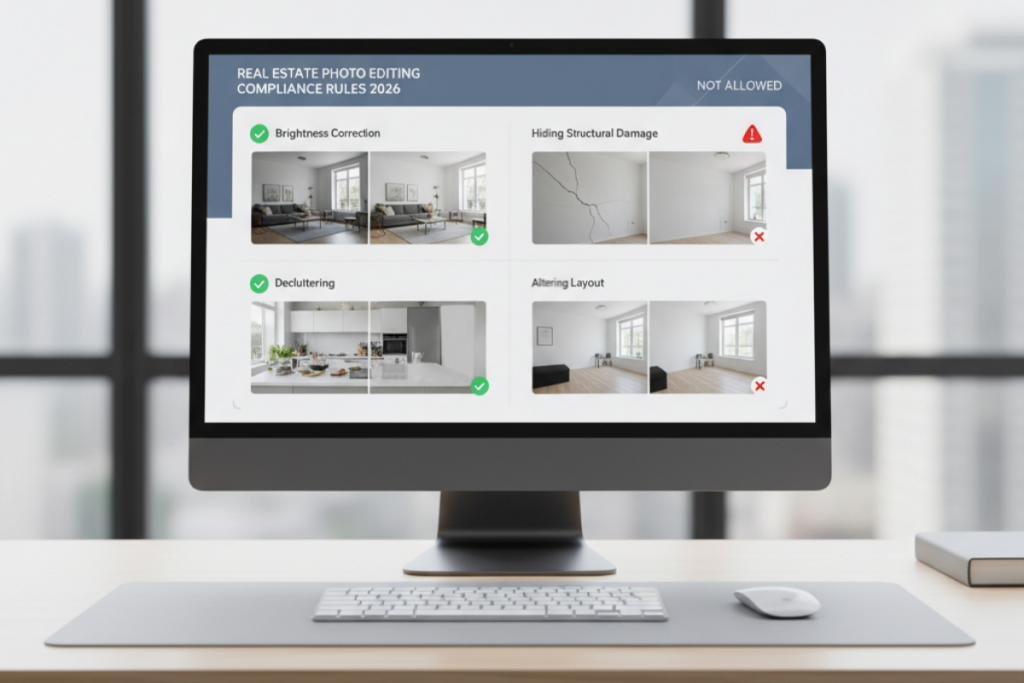
In California, disclosure is no longer just a best-practice issue. Since January 1, 2026, AB 723 has required real estate brokers and salespersons to disclose when an advertising image has been digitally altered. It also requires access to the original, unaltered version through a public website, URL, or QR code.
At the national level, the more relevant NAR principle is Article 12, which requires REALTORS® to present a true picture in their advertising and marketing.
That does not mirror California law line by line. But it supports the same broader expectation: visual marketing should clarify a property, not mislead buyers about what is actually there.
Acceptable vs. Misleading Edits
The clearest compliance boundary is the difference between presentation and misrepresentation. Basic color correction, brightness adjustment, cropping, decluttering, and virtual staging are generally treated more favorably when they do not conceal defects or materially misrepresent the property.
By contrast, edits that hide structural damage, remove permanent neighboring features, or change the property’s actual layout create much greater compliance risk.
A Practical Compliance Checklist
A safer workflow is to build disclosure into the editing process from the start rather than adding it at the end. In practice, that means treating every materially altered listing image as something that needs clear labeling, an accessible original, and a final check against local MLS rules.
- Add a clear disclosure that the image has been digitally altered.
- Provide access to the original, unaltered image through a public URL or QR code.
- Make sure the edit improves presentation without concealing material defects or changing the property in a misleading way.
- Apply the same disclosure approach consistently across all materially altered listing images.
- Check local MLS rules before publishing, since implementation may vary by market.
Even when an edit is compliant, it may still be the wrong choice for the property, the room, or the marketing goal.
When Minimalist AI Editing Is the Wrong Choice
Luxury furnished properties often sell a lifestyle as much as a layout. Buyers expect to see curated furniture, layered materials, and design details that help justify the asking price.
Applying occupied-to-vacant editing to those images can remove exactly the elements that make the property distinctive. The same logic applies to historic homes, where original moldings, hardwood floors, and ornate fireplaces are part of the value, not visual distractions to be neutralized.
Rural and land-heavy listings present a different mismatch. When the main value lies in acreage, outbuildings, or the surrounding landscape, a minimalist interior treatment can shift attention away from the property’s real selling points. Buyers evaluating a farmstead or equestrian property need context that interior decluttering alone cannot provide.
When Less Editing Is the Better Choice
Over-editing creates a different kind of problem. Images that look too clean or too artificial can feel less believable and less inviting. Real estate visual marketing still depends on warmth, context, and a sense that the home is livable.
When a property already shows well, pre-shoot preparation such as cleaning, minor repairs, and thoughtful styling is often a better choice than relying too heavily on post-production.
The ROI Case for Minimalist Real Estate Photography
The business case for minimalist real estate photography is not only aesthetic. It is operational. Cleaner images are easier to adapt across listing and social channels, and they can often be produced with less cost and coordination than a fully staged physical setup.
Why the ROI Is Operational
That efficiency becomes more visible when AI tools enter the workflow. Virtual staging and decluttering can reduce preparation costs and shorten turnaround times, making stronger listing visuals more accessible across a wider range of properties.
Instead of treating polished photography as a luxury add-on, many teams now use minimalist editing and staging workflows as part of broader real estate marketing strategies.
The return comes from producing more usable marketing assets with less friction and faster delivery across channels.
Final Thought
Minimalist real estate photography in 2026 reflects a broader shift in how listings are produced, edited, and presented across digital channels.
Clean, decluttered, light-forward images are not right for every property, but they are becoming central to how many listings are prepared for online presentation.
The stronger workflow combines good photography with selective editing rather than treating AI as a substitute for capture quality.
Flambient technique, thoughtful composition, and restrained post-production all help create images that feel clear, credible, and easy to use across platforms.
Compliance also belongs inside that workflow. In California, AB 723 makes disclosure a legal requirement for digitally altered real estate advertising images.
At the national level, National Association of REALTORS® Article 12 reinforces the broader expectation that marketing should present a true picture of the property.
Any workflow that includes AI real estate photo enhancement should also include a clear disclosure process from the start.
The underlying principle is simple: show what is there, disclose what has changed, and make sure the image supports the experience a buyer will actually have when they walk through the door.
FAQs
Does California AB 723 apply to listing photos posted only on social media, or only to MLS submissions?
AB 723 applies broadly to digitally altered images used in advertisements or other promotional material for the sale of real property, not just MLS submissions. That can include social media posts used to market a listing. If the altered image appears in marketing material, California agents should assume the disclosure requirement applies there as well.
Can I use AI virtual decluttering on a tenant-occupied rental property without the tenant's consent?
That question goes beyond image disclosure and can raise privacy, lease, and local landlord-tenant issues. The safer approach is to obtain written tenant consent before photographing and digitally altering occupied rental-unit images for marketing. Because the legal answer can vary by jurisdiction and lease terms, this is one of the cases where local legal advice is worth getting.
If I shoot with flambient technique, do I still need AI editing, or does the in-camera result meet minimalist standards?
Flambient technique creates a strong foundation by improving exposure balance, controlling shadows, and producing cleaner color. It can reduce how much editing is needed, but it does not eliminate post-processing entirely. Tasks such as window pulls, minor cleanup, color refinement, or object removal may still require editing, so flambient capture and AI editing are usually complementary rather than interchangeable steps.
How do MLS boards outside California handle disclosure requirements for AI-edited images?
Outside California, disclosure requirements vary by MLS and brokerage. The broader National Association of REALTORS® standard comes from Article 12 and Standard of Practice 12-10, which require a true picture in advertising and prohibit misleading internet content and images, but local MLS implementation is not uniform. Agents and photographers working across markets should check the specific rules of the MLS where the property is being listed.
Is vertical composition compatible with standard MLS photo upload requirements, or will images be cropped automatically?
Many MLS systems still favor horizontal image formats for primary listing photos, so vertical images may display poorly, be cropped, or fit less naturally within standard gallery layouts. The safer workflow is to shoot with both formats in mind: capture vertical compositions for social channels and horizontal versions for MLS use. Because display behavior can vary by platform, it is best to confirm the image specifications of the local MLS before delivery.