Moving Checklist for Home Sellers and Buyers
Moving checklist for home sellers and buyers, organized by countdown dates with seller, buyer, and shared tasks, plus utilities, rent-backs, and a printable page.
In short
- Two calendars matter: the earliest possession date should control the whole countdown.
- Roles prevent misses: seller, buyer, and shared tasks avoid duplicate work and wrong timing.
- Handoffs reduce friction: a leave-behind packet and documented inventory prevent post-closing problems.
A moving checklist sounds simple until a household sells and buys at the same time. Two contracts create two calendars, but the same boxes, utilities, and move crew sit in the middle.
Most lists blur roles. Seller tasks (photos, showings, what conveys) differ from buyer tasks (walkthrough, lock changes, move-in rules). The tasks that derail a move often belong to the other side of the deal.
This countdown plan pins each action to the date that controls it, then splits it into seller tasks, buyer tasks, and shared tasks. Start by locking the dates below.
How to Use This Moving Checklist
Pick one “control date” first. The earliest possession date sets the countdown, even if the other closing lands later. That single choice prevents early utility shutoffs and last-minute storage chaos.
Agents sharing this with clients can send it 60 days before the control date, or within 2 days of contract acceptance. That window gives time to book movers, schedule installs, and fix listing prep problems.
The printable version appears at the end. The detailed version above is still useful, because it explains timing, ownership, and common handoffs that checkboxes alone miss.
This checklist works best when it stays about logistics. Save negotiation strategy, pricing talk, and personal financial details for a call with the agent and closing team.
60+ days out
Seller focus: prep for photos and showings
Buyer focus: plan move-in constraints
Shared focus: quotes and calendar plan
30 days out
Seller focus: confirm what stays
Buyer focus: book installs and walkthrough plan
Shared focus: utilities and packing system
14 days out
Seller focus: end services cleanly
Buyer focus: rekey plan and records
Shared focus: change of address and confirmations
7 days out
Seller focus: leave-behind items ready
Buyer focus: final walkthrough
Shared focus: essentials and final packing
moving day
Seller focus: possession and key handoff
Buyer focus: document condition on arrival
Shared focus: inventory, payments, photos
first 72 hours
Seller focus: stop old-address loose ends
Buyer focus: safety and systems
Shared focus: unpack in a smart order
At-a-glance focus areas by phase and transaction role.
60+ Days Out: Decisions, Quotes, and Pre-Listing Prep

The first real risk shows up early: packing for the move can make the home look worse for photos and showings. A practical plan starts with a declutter order that helps both goals.
This phase also sets the “live-in vs move-out” decision for sellers. A household that moves out early gains packing speed, but trades away furnished rooms for marketing.
Empty rooms can photograph cold and smaller. Some teams solve that gap with AI HomeDesign, which covers virtual staging, photo editing, and renovation visuals across three hubs and 11 tools, seven of them renovation, available via web app, B2B, REST API, and an MCP server. One account and one shared credit pool supports free regenerations, from $0.24 a photo, with MLS-compliant output by default.
Sellers who plan listing photos around move-out should also plan disclosure. Many MLS rules require clear labeling for edited or virtually staged photos, so buyers understand what they see. Disclosure: “This image has been virtually staged.”
Seller tasks
Buyer tasks
Shared tasks
30 Days Out: Book the Move, Utilities, and Smart Packing

Mover calendars and internet installs tend to create the first hard deadlines. Booking both early reduces the need for rushed packing and short-notice storage.
This phase also prevents the classic utility mistake: shutting off service based on closing, not possession. Possession controls the last day the seller needs lights, water, and HVAC.
Sellers who expect empty photos can keep the explanation short and separate from the rest of the moving plan. A deeper background page on how AI virtual staging works can sit alongside listing prep notes without turning the checklist into marketing.
Packing works best with a system that makes unpacking fast. The goal is simple: every box lands in the right room, and the most important boxes surface first.
Seller tasks
Buyer tasks
Shared tasks
| Service | Cancel at old address | Activate at new address | Practical lead time |
|---|---|---|---|
| electricity | day after possession | day before possession | avoid same-day gaps |
| gas | day after possession | day before possession | confirm pilot-light policies |
| water and sewer | day after possession | day before possession | ask about billing cycles |
| trash | after final pickup | before move-in week | check local service days |
| internet | after possession | before move-in day | book first, longest scheduling |
Utility timing aligned to possession rather than closing.
When Closing Dates Do Not Line Up: Rent-Backs, Overlap Days, and Storage
Misaligned closings are common, and the best fix is often a coordination fix, not faster packing. The schedule problem usually shows up as a possession gap, not a paperwork gap.
A rent-back is one common option when a sale closes before a purchase. The seller stays in the home after closing for an agreed time and rate, under a written addendum. Details vary by contract and state, so the closing agent and agent should confirm utilities, insurance, and access rules in writing.
Buying first can be easier on logistics, but it can create a short stretch of two payments. Some owners also decide to pause the sale and revisit whether to rent it out instead of selling if timing pressure grows.
Same-day double closings are workable, but they need tight choreography. Funds, keys, and the moving truck all follow different clocks, so the team should confirm possession time, not just “closing date.” If timing pressure starts affecting pricing or prep, tactics for selling a house quickly can help shorten the overall runway.
Seller tasks
Buyer tasks
Shared tasks
14 Days Out: Change of Address, Records, and Confirmations
Address changes break moves because they hide inside other tasks. Payroll, insurance, and medical records often require separate logins, forms, or calls.
A priority order helps. Tier one items protect money, coverage, and identity. Tier two items protect care and school continuity. Tier three items reduce annoyance but rarely break a closing.
Many households land in both roles at once, which is why this list stays split. A quick skim of NAR’s profile of home buyers and sellers helps explain how often households juggle both sides of a transaction.
Confirmations matter as much as forms. Movers, elevators, and parking access each fail in different ways, and most failures show up as “nobody had the right name on file.”
Seller tasks
Buyer tasks
Shared tasks
7 Days Out: Essentials, Walkthroughs, and Final Details
The final week is about access and proof. Keys, codes, and condition photos prevent disputes. A short essentials plan prevents the “missing toothbrush” spiral that slows unpacking.
Sellers also need a plan for the last clean and the last trash day. Buyers need a walkthrough plan that checks contract items, not cosmetic preferences.
A “do not load” bag should stay out of every moving pile. It should travel in a personal car, not the truck. The same rule applies to closing documents and medications.
This week is also a decision point for what movers will refuse. Hazardous items and fuels often require separate disposal plans.
Seller tasks
Buyer tasks
Shared tasks
Moving Day and the First 72 Hours

Moving day fails when the timeline splits into three versions: the movers’ schedule, the closing schedule, and the household’s schedule. The fix is a single written run sheet that covers both addresses.
Documentation protects both sides. Date-stamped photos of empty rooms and major items help if a claim or question appears later. Inventory checks prevent missing boxes from turning into an argument after the truck leaves.
Unpacking should start with safety and sleep, not decor. Beds, bathrooms, and basic kitchen function come first. Everything else can wait.
Buyers who plan quick cosmetic changes can save time by testing options before buying supplies. Some teams use tools to visualize renovations before committing to finishes.
At the old address
In transit
At the new address
First 72 hours in the home
Printable One-Page Checklist, Handoff Packet, and Mistakes
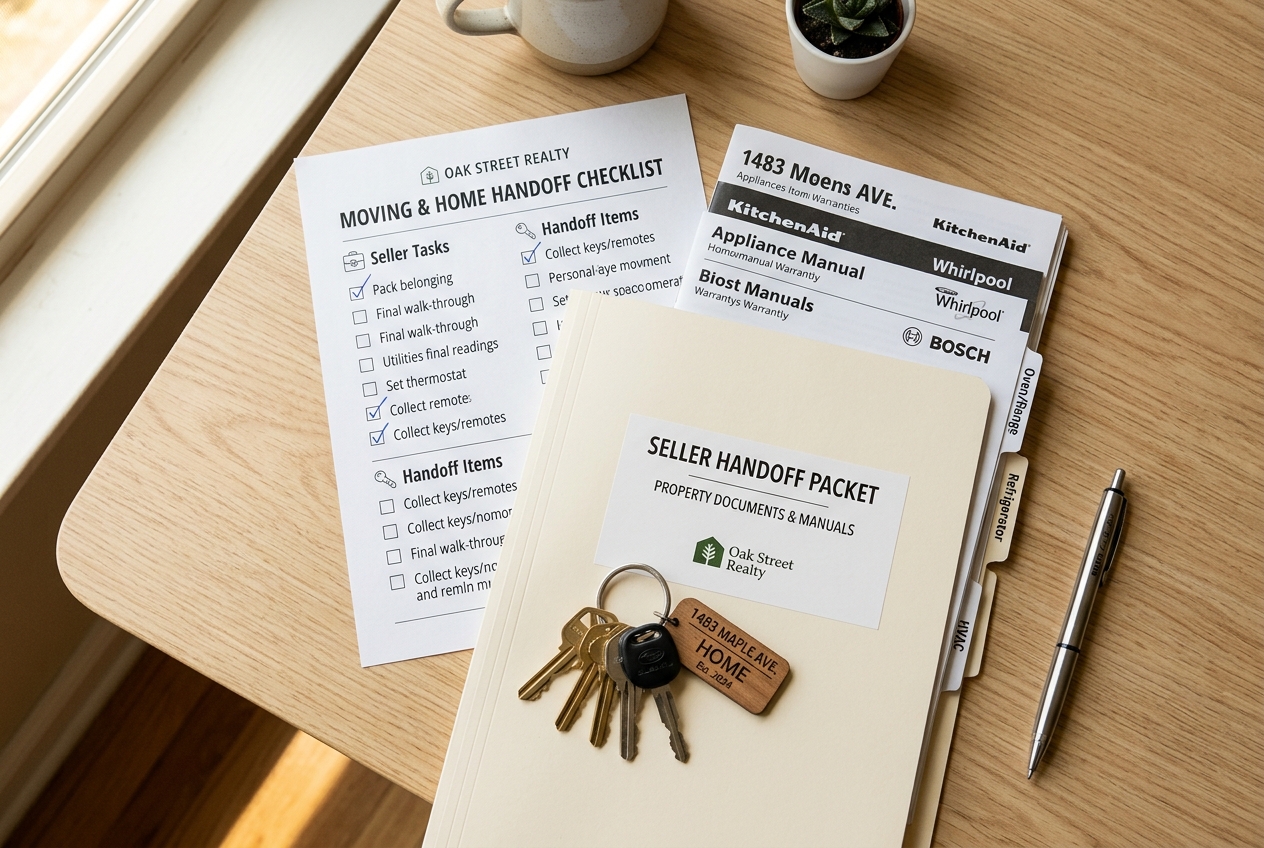
Good handoffs prevent weeks of post-closing texts. A seller handoff packet costs little time and reduces confusion about alarms, filters, and warranties.
Common move mistakes also track back to role confusion. Sellers pack like tenants and forget photos and showings. Buyers treat the walkthrough like a quick look instead of a contract check.
Real estate teams often share a single moving resource with both sides of a deal. Commission and fee details rarely belong in a moving checklist, because they distract from execution and vary by agreement.
Sellers who pack while a home is still showing should protect the “photo rooms” until the listing is live and under contract. A short guide to room-by-room styling for listing photos can help decide what stays out until the last moment.
Seller handoff packet
Mistakes to avoid
One-page version
Agents who want a broader client share library can pair this with a broader real estate marketing guide for the listing side of the timeline.
Frequently Asked Questions
How far in advance should a moving checklist start?
Most households get the best results by starting at least 60 days before the earliest possession date. That window leaves time for decluttering, mover quotes, listing prep, and internet installation lead times. When a household sells and buys at once, working backward from the earliest possession date prevents utility gaps and storage surprises.
What happens if the sale closes before the purchase closes?
Common options include negotiating a rent-back, arranging short-term housing with storage for the gap, or asking both sides about shifting a closing date. Rent-back terms, insurance, and utility responsibility vary by contract and area, so the household should confirm details in writing with the agent and closing team.
When should utilities be canceled at the old house?
A practical rule is to cancel utilities the day after possession or key handoff at the old address, not the closing date. Service at the new address often starts the day before possession. Internet and fiber installs often require the most scheduling lead time, so they can be booked early.
What are sellers expected to leave for the new homeowners?
Anything the contract says conveys must stay. Beyond contract items, many buyers appreciate a clear handoff packet: labeled keys and remotes, alarm and keypad codes, appliance manuals and warranties, filter sizes, paint colors, trash and recycling days, and a short vendor list for providers familiar with the home.
Is mover valuation coverage the same as insurance?
Mover valuation coverage sets a liability limit, not an insurance policy on belongings. The minimal tier often ties reimbursement to weight, while higher tiers cost more and cover more. A household can also check renters or homeowners coverage for goods in transit and document valuables before packing.
What should be checked during the first 48 hours in a new home?
Priority tasks include rekeying exterior locks, resetting keypad codes, locating the main water shutoff and breaker panel, testing smoke and carbon monoxide detectors, replacing the HVAC filter, and checking for leaks under sinks and near the water heater. After safety checks, unpack beds, bathrooms, and the kitchen first.