Styldod vs AI HomeDesign: Service vs Self-Serve Staging
Styldod vs AI HomeDesign breaks down service vs self-serve staging: turnaround, revisions, true cost per photo set, coverage, and MLS disclosure checks.
The hardest part of picking a staging solution is not the furniture style. It is the workflow: does a team hand off listing photos and wait for a delivered draft, or does a team run the tool and finish the set in the same sitting. That is the decision behind styldod vs ai homedesign.
A clean comparison also needs to separate wait time from operator time. Both routes can produce publishable visuals, but they fail in different ways on a tight listing calendar.
For the deeper product context behind this head-to-head, see our full AI HomeDesign review, then come back to the service-versus-software choice.
At a glance
Styldod vs AI HomeDesign Is a Workflow Choice
The clean split is who operates the tool. Styldod’s Expert Services flow works like a production order: photos go into an order wizard, a design team produces drafts, and the account tracks statuses until delivery. AI HomeDesign works like a studio app: the operator uploads, chooses options, and generates multiple renders in the same session.
That difference matters because staged visuals tend to influence buyer engagement, even when the home is not physically staged. The National Association of REALTORS covers how staging supports buyer visualization in its Profile of Home Staging research.
A practical decision flowchart for most listing teams looks like this:
Readers still shortlisting beyond these two models can scan the wider field of virtual staging and AI home design alternatives later.
What the Service Model Buys
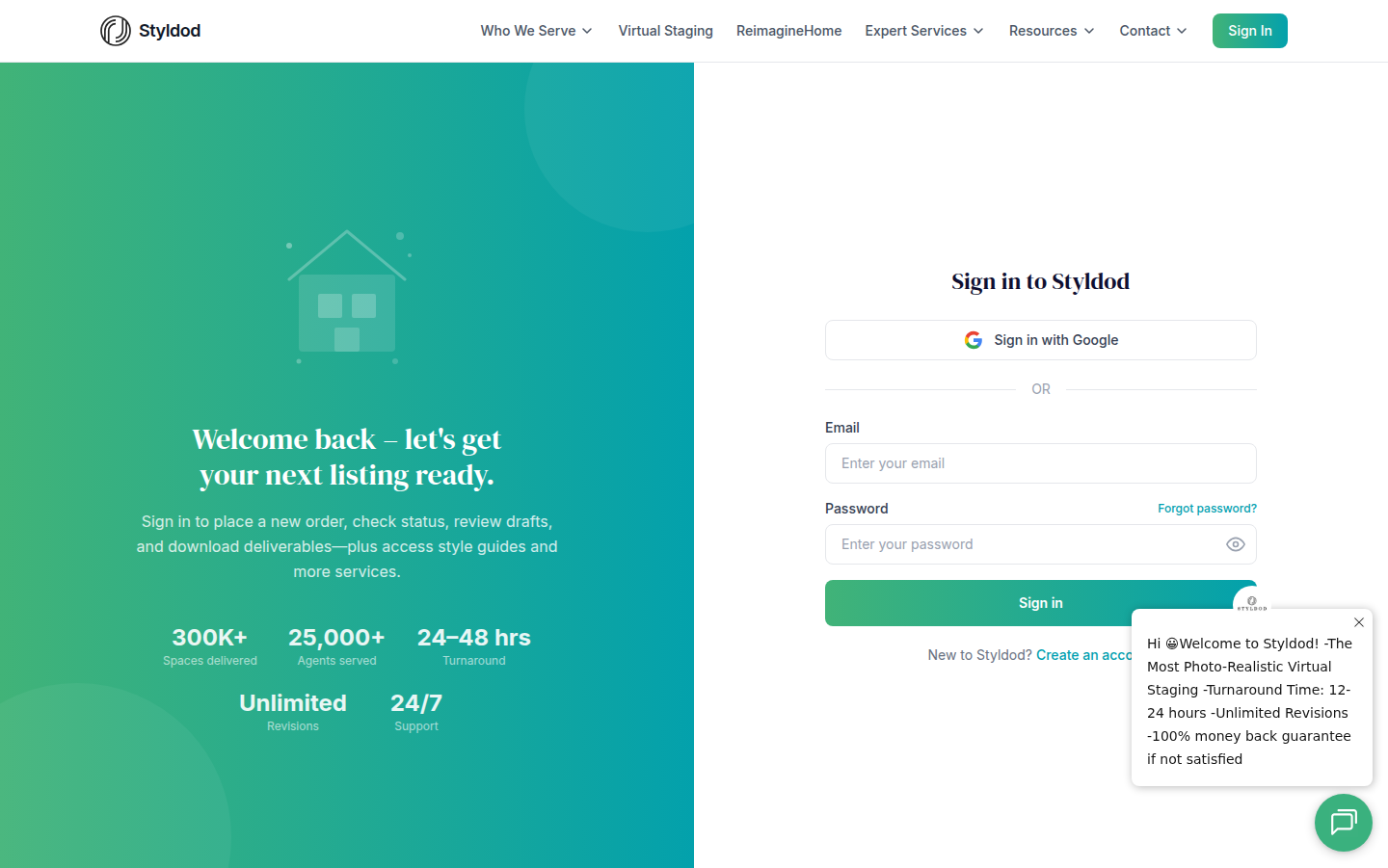
Styldod’s experience starts behind a sign-in wall, which changes how teams shop. The catalog, the ordering flow, and the order history sit inside the app, so teams usually create an account before they can verify what is available for their region.
A walkthrough of the live app shows the sign-in screen with email and password plus a Google option.
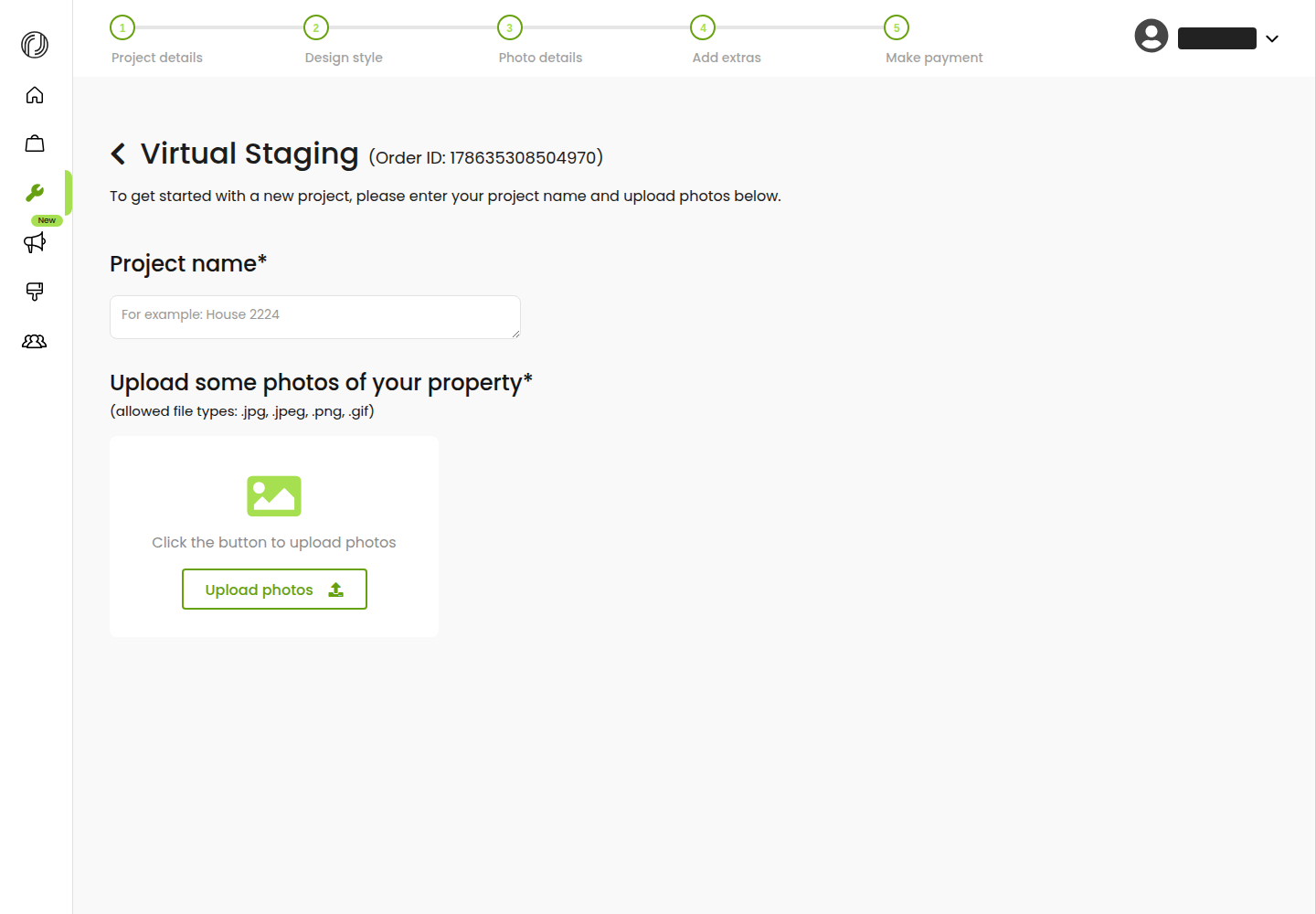
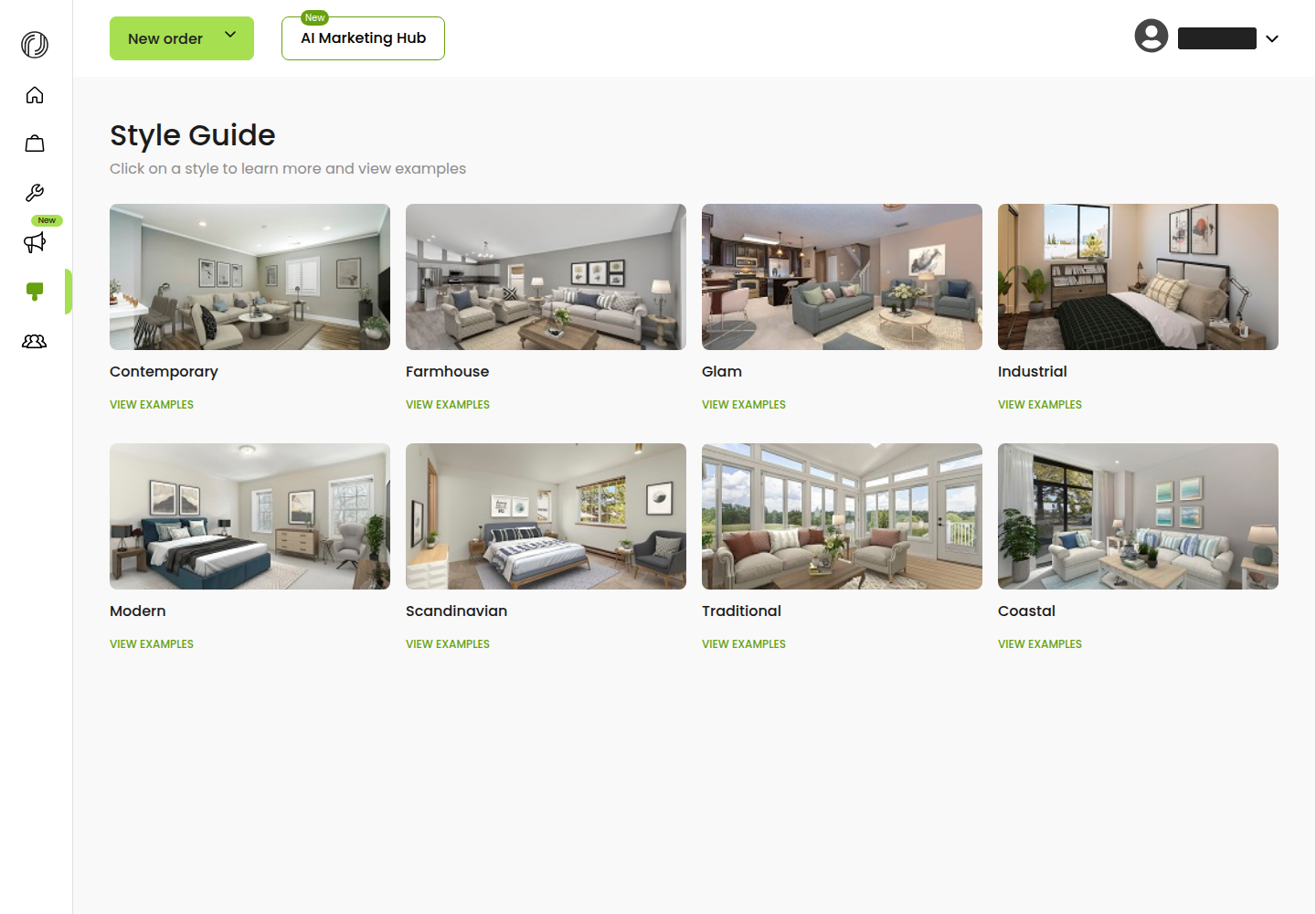
From there, Styldod behaves like an ordering and delivery layer for human-produced listing media. The left navigation surfaces Home, My Orders, Services, AI Marketing Hub, a Style Guide, and My Team. That structure fits teams that want a single dashboard to track what is in flight.
The core workflow runs through a five-step order wizard: project details and upload, design style, per-photo instructions, extras, then payment. The app issues an Order ID, which lets coordinators pause and resume orders without losing the draft.
This model buys two things that matter in luxury and high-stakes listings: human QA and a revision promise. Styldod promotes unlimited revisions and a money-back guarantee, which can be valuable when a room needs consistency across multiple angles or when a seller has precise feedback on staging taste.
Styldod also sells beyond images. Floor plans, 360° tours, 3D rendering, and single-property video sit in the same catalog, so teams can keep non-photo deliverables in the same order history and avoid juggling vendors.
What the Self-Serve Model Buys
AI HomeDesign is designed for operators who want to finish a set without a queue. Login lives behind the avatar at the bottom of the sidebar, and first-time use runs a short questionnaire on role and goal. After that, the operator flow stays consistent across tools.
The upload step supports batches and re-use. The Studio organizes work as Projects for a property and Single Files for one-off edits, and it also supports imports from a listing URL so teams do not always re-upload from a drive.
In the editor, the right-side panel forces a key discipline: selecting Space first, then Style. That sequence keeps furniture scale consistent across a set.
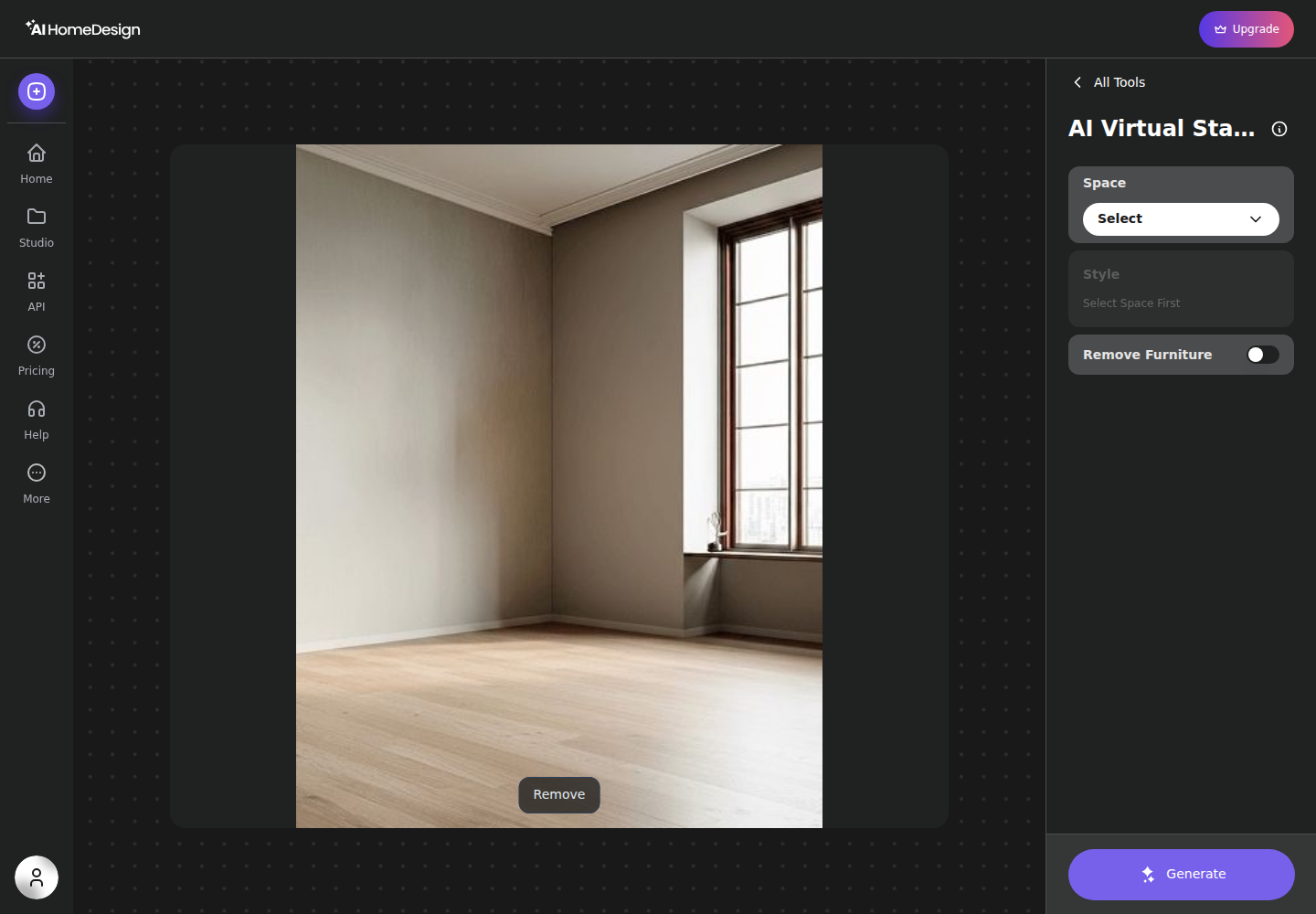
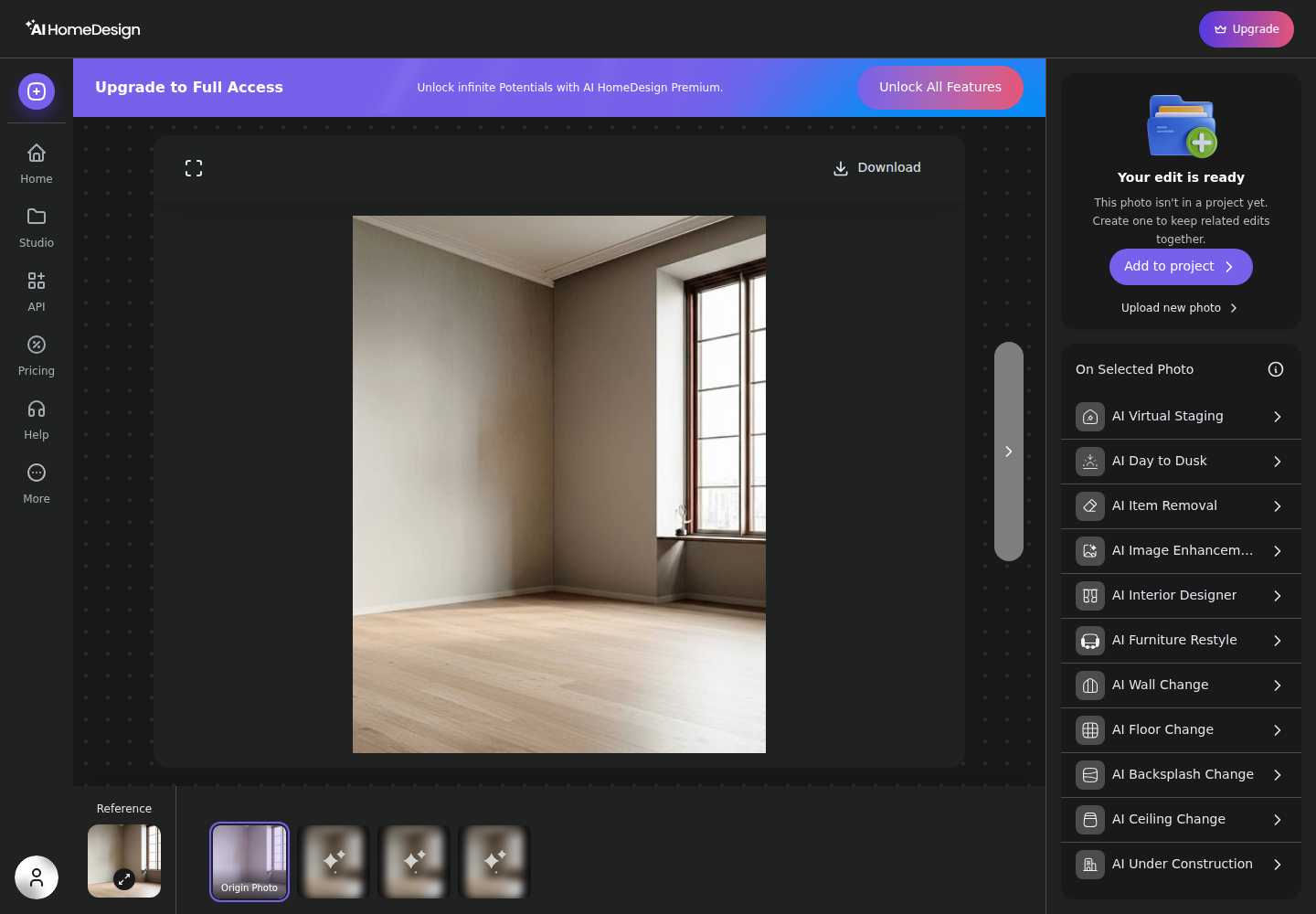
AI Virtual Staging uses a simple unit of work: one generation spends one credit and returns four renders for that photo. The result screen makes review fast, with Before and After, download, and a strip of the four options.
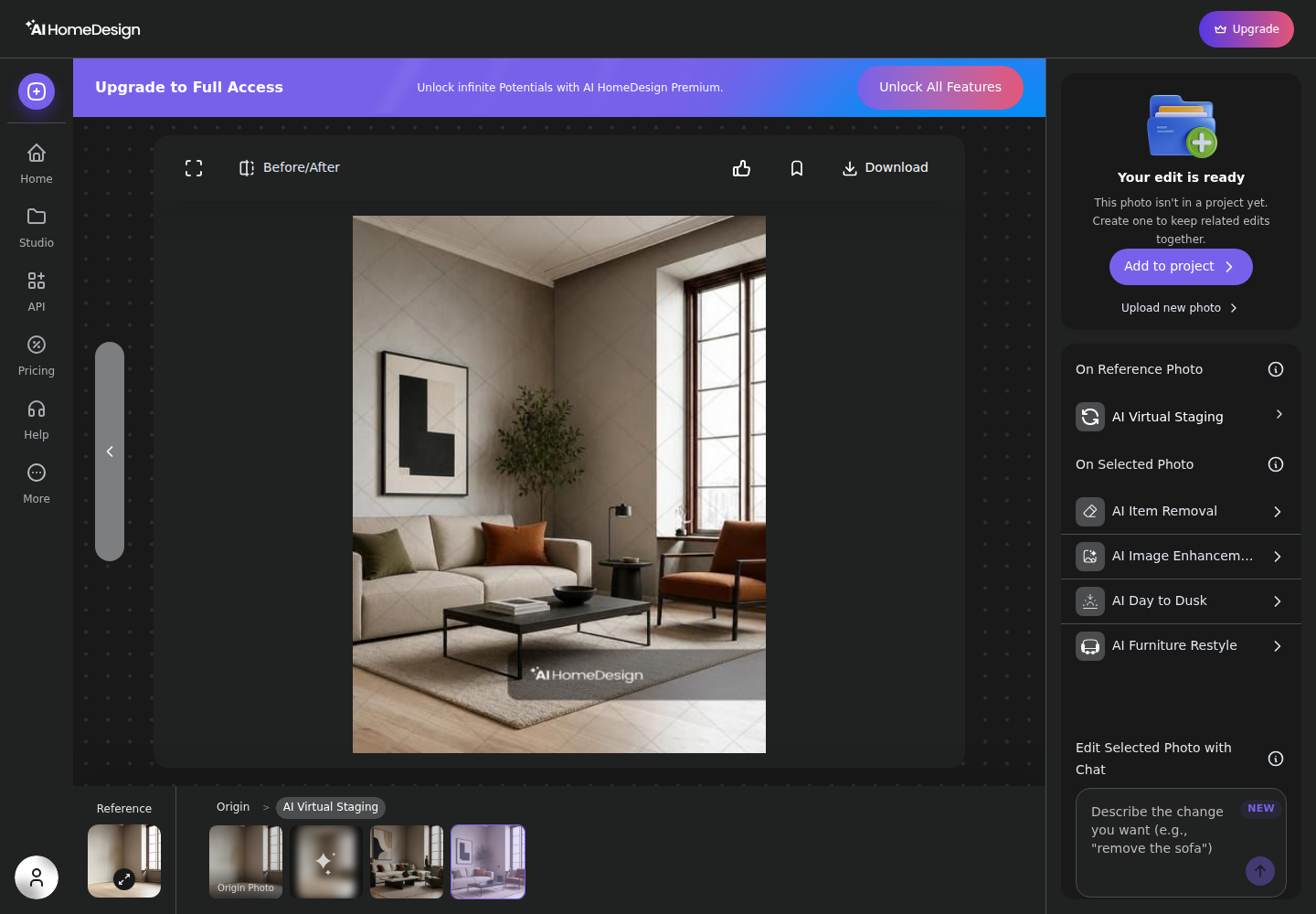
The other difference is chaining. From the result screen, the chosen render can move straight into AI Item Removal, Image Enhancement, or AI Day to Dusk without exporting and re-uploading. Teams that run many listings also get one account and one credit pool across staging, photo editing, and renovation tools, which makes it easier to standardize output.
The clean entry point for staging inside the platform is AI virtual staging.
Stage your first listing in under 5 seconds
14 space types, 10 styles, MLS-compliant by default. All 11 tools on one account. Free trial credits, no credit card.
Start staging freeTurnaround and Revision Loops Under Real Deadlines
A service workflow and a self-serve workflow each impose a different “clock.” With Styldod, the clock is the stated turnaround plus any review and revision loops. With AI HomeDesign, the clock is the operator’s hands-on time, since renders return in-session.
Styldod’s stated service turnaround is 24–48 hours. That timeline can fit many listings, but it can also collide with reality when a listing goes live tomorrow morning, when a seller asks for changes late, or when a photo set needs a second review round for style consistency.
Self-serve flips that risk. A coordinator can stage, enhance, and export the same afternoon, but that speed requires attention and a repeatable process. Teams that do not have an owner for the work can still struggle, even when generation is fast.
This is where a hybrid play often makes sense. Operators can run the bulk of the set in-session, then outsource the two problem rooms that need a human eye for multi-view consistency or seller-driven revisions.
For teams comparing fast self-serve vendors in this lane, the closest apples-to-apples read is Edensign versus AI HomeDesign.
Pricing Compared as Photo Counts Change
Pricing rarely fails on the first image. It fails when a listing needs a full set and the set needs more than one job.
Styldod prices most media as pay-per-item with rates described as “starting from” and localized by region. That can be efficient for occasional work, because a team can buy exactly what it needs and stop. It also means a 12-photo staging order can become a real line item once the regional rate is confirmed inside the wizard.
AI HomeDesign prices by monthly credits, and the per-photo math is transparent on the plans. Yearly billing posts the lowest published per-photo rate on Enterprise, which is useful when a team stages full sets and also runs editing tasks like AI Day to Dusk. For a deeper look at how twilight pricing typically works across vendors, see what day-to-dusk editing actually costs per image.
A practical cost table for planning uses the same three photo counts that show up in real galleries:
Two details often change the crossover point. First, one AI HomeDesign credit returns four renders, which can reduce spend when only one of several options is needed. Second, add-on jobs compound quickly under per-item ordering when the same set needs staging plus item removal plus a twilight exterior.
When a team wants a second self-serve benchmark for subscription economics, Collov AI head-to-head shows another approach to low per-image cost.
MLS Rules and Disclosure for Edited Listing Photos
MLS safety is not “service versus AI.” It is process.
Teams can treat the deliverable as a compliance bundle: the final export set, the untouched originals, and a short note that lists which photos were edited and how. The in-person or phone conversation can cover what does not belong in the MLS media set, like negotiation strategy, seller objections, or any commission or fee details tied to the listing agreement.
A practical disclosure line for staged images is simple and readable: “Virtually staged. Furniture added digitally.” MLS rules vary by board and jurisdiction, so teams confirm exact wording with their own MLS.
Local MLS policy pages are the first stop for that check, such as NorthstarMLS. Data standards also evolve, so teams that publish across systems can track industry-facing changes through bodies like RESO product updates.
A simple QC checklist helps regardless of vendor:
This checklist also defines the edge cases where the standard approach may not apply. Distressed properties often require extra caution around defect visibility. Rural listings can need exterior land context that a staging-only workflow does not address. New builds may need renovation concepts across multiple rooms, which increases review time no matter the tool.
The clear pick
Choose AI HomeDesign when
AI HomeDesign fits operators who need a full photo set finished today and want one credit pool across staging, photo editing, and renovation, including high-volume teams that need Enterprise API access.
Choose Styldod when
Styldod fits teams that prefer to hand off production for a smaller batch of images and value a human QA pass plus unlimited service revisions, especially when the listing timeline can absorb a 24–48 hour queue.
Frequently Asked Questions
Is Styldod a human service or an AI tool?
Styldod sells both delivery routes. Expert Services works as a done-for-you service where real designers produce the listing media and orders move through tracked statuses before delivery. Styldod also points teams to REimagineHome for self-serve generation and to Smart Media Module for enterprise workflows, so the core choice is who operates the tooling on a given listing.
Does Styldod let agents revise staging requests?
Styldod promotes unlimited revisions for its service-delivered staging, which can be valuable when a seller wants changes or when a room needs consistency across multiple angles. The trade-off is time: each revision round still moves through a review loop, so teams should account for the extra day risk on tight go-live schedules.
How much does AI HomeDesign cost per photo?
AI HomeDesign publishes per-photo economics by plan tier, with lower effective cost at higher volume. Each generation spends one credit and returns four renders, which changes the “cost per usable image” math compared with tools that return only one output per run. Paid plans download without watermarks, and Enterprise adds API access.
Which option fits a listing going live soon?
Self-serve usually fits tighter calendars because generation returns in-session. A service model can still work when the shoot lands several days before go-live and the team can accommodate review cycles. Many operators use a hybrid approach: run most of the set self-serve, then outsource the few rooms that need heavy revisions.
Do virtually staged images need disclosure on the MLS?
Teams should assume disclosure is required for virtually staged or materially edited images, but exact rules vary by MLS and jurisdiction. A safe practice is to label staged photos clearly, keep the unedited originals, and avoid edits that alter fixtures, structural elements, or views. Local MLS policy pages provide the most reliable wording.
Can Styldod and AI HomeDesign be used together?
Yes. A practical split is to use self-serve generation for speed and batch volume, then place a service order for the few images where a human QA pass earns its cost, such as multi-angle luxury spaces or rooms with seller-driven revisions. This keeps the bulk of the gallery moving without waiting on a full-service queue.