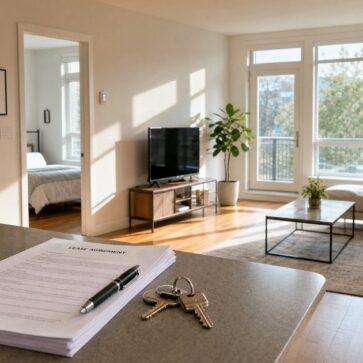
Luxury virtual staging helps high-end properties present scale, atmosphere, and lifestyle without the cost or delay of physical staging. But in premium real estate, the margin for error is smaller. A poorly staged image can make an expensive home feel generic, artificial, or misaligned with the buyer’s expectations.
For luxury listings, Virtual staging needs more than attractive furniture. The room proportions, lighting, materials, design style, and visual restraint all have to match the property’s caliber.
This guide explains the decisions that separate credible luxury virtual staging from generic edits that can weaken a premium listing.
Why Generic Virtual Staging Fails Luxury Listings
A buyer reviewing a high-end listing online forms an impression within seconds. If the furniture looks mass-produced, the shadows feel inconsistent, or the materials clash with the room’s architecture, the image can weaken confidence in the presentation.
Luxury listings need a higher level of visual alignment. The staging should complement the property’s proportions, finishes, and architectural details rather than compete with them. A room with coffered ceilings, marble flooring, custom millwork, or oversized windows cannot rely on the same furniture choices used for standard vacant rooms.
Generic virtual staging often fails because it treats the space as a blank container. In luxury real estate, the architecture already carries part of the value. Staging should support that value with realistic lighting, appropriate scale, refined materials, and enough restraint to let the property remain the focus.
The Fill-the-Room Problem
Generic staging often follows a simple rule: fill visible space with furniture. That may work for standard vacant rooms, but luxury staging needs more restraint.
In a grand room, negative space can support the sense of scale, proportion, and architectural value. The goal is not to make every corner look occupied. The goal is to make the room feel intentional.
Material accuracy creates another challenge. Polished stone, brushed metal, lacquered wood, custom millwork, and large glass surfaces all expose weak staging faster than flat walls or basic flooring. If shadows, reflections, or furniture textures feel slightly wrong, the image can make a premium property look less credible.
This does not mean virtual staging is the problem. The benefits of virtual staging still apply to luxury listings: faster presentation, lower staging costs, and more flexibility across design styles.
The difference is that high-end listings need a more selective approach to furniture choice, lighting, scale, and realism. As ai in real estate tools become more advanced, luxury staging should be judged less by how much it adds and more by how precisely it fits the property.
Photography Requirements: High-Resolution Inputs Set the Ceiling
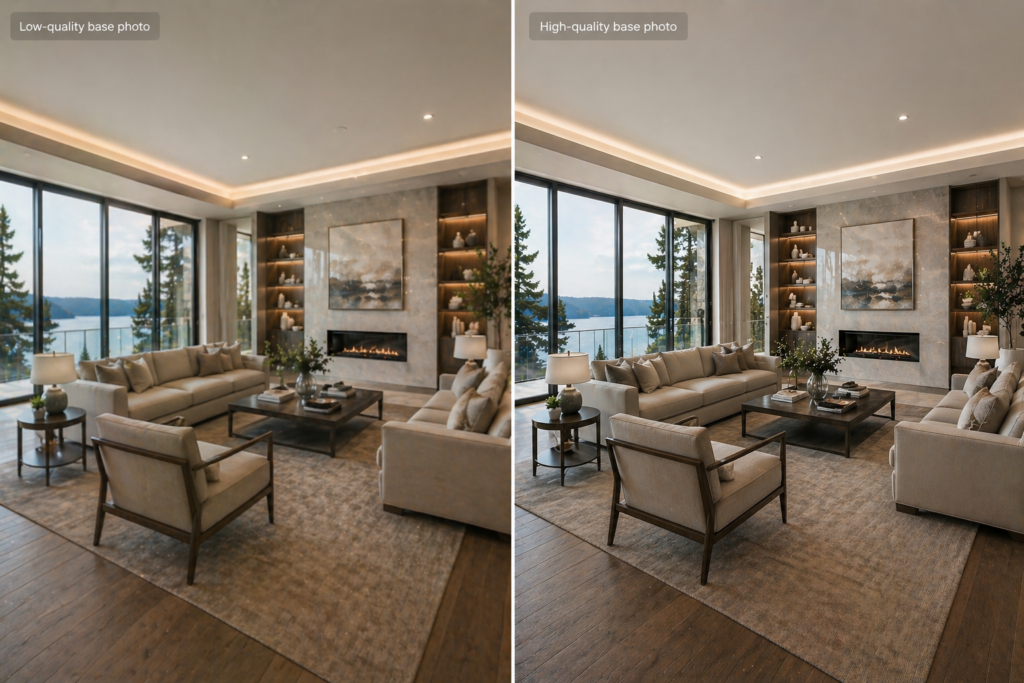
Virtual staging quality is limited by the source image. When the input lacks detail, balance, or accuracy, the staged result looks less convincing. In luxury listings, that drop in realism can affect how buyers perceive the property before they ever visit.
Architectural Accuracy vs. Speed-Based Shooting
The difference between standard and architectural photography shows up clearly after staging. Images with corrected vertical lines, balanced exposures, and preserved material detail allow furniture, lighting, and textures to integrate more naturally.
When those elements are missing, staging tends to look slightly off. Furniture may feel misaligned, lighting inconsistent, or materials less believable. In high-end listings, even small inconsistencies can weaken the overall presentation.
Lighting and File Quality Impact on Staging Realism
Lighting conditions directly affect how well staged elements blend into a space. Clean window detail, soft shadows, and consistent color temperature help staged furniture appear anchored and realistic. Harsh shadows, blown highlights, or uneven lighting make integration harder and increase the risk of visible artifacts.
File quality plays a similar role. Higher-resolution images retain the tonal and surface detail needed for realistic staging, especially on materials like stone, glass, and wood. Lower-quality or heavily compressed images reduce that detail and limit how natural the final result can appear.
Proper real estate photo editing starts at capture, because staging builds on what is already visible. For luxury listings, the goal is not just a clean photo, but a strong visual foundation that supports believable, high-end staging.
How to Choose the Right Luxury Virtual Staging Platform
The right platform should protect the value already visible in the property. In luxury listings, staging has to work with marble, millwork, ceiling height, window scale, and architectural proportion instead of covering them with generic furniture.
What the Evaluation Criteria Look Like
Start with output realism. Review examples that include high-end materials, large rooms, reflective surfaces, and architectural details similar to the listing.
Furniture quality also matters. The library should include refined, well-scaled pieces that feel appropriate for the property’s style rather than generic assets placed into an expensive room.
Format options can also affect presentation. Static staged images may be enough for some listings, while panoramic staging, 3D tours, or digital brochures can help when buyers are remote or when the property is marketed privately.
The key is to match the format to the sales strategy, not choose features for their own sake.
Understanding the Cost Gap
Luxury virtual staging should be judged by value, not only by price per image. A low-cost tool can still work if the output looks realistic and fits the property.
A higher-cost service may be justified when it includes designer review, custom styling, revisions, or advanced formats such as 3D tours.
Compared with physical staging, virtual staging can reduce logistics, shorten preparation time, and give agents more flexibility across design directions.
Agents researching virtual staging cost and roi should compare not only the image price, but also turnaround time, revision control, visual realism, and how well the staged result supports the listing’s price point.
Platforms Worth Evaluating
Compare platforms by output quality, revision options, turnaround time, supported formats, and fit for luxury interiors. AI HomeDesign, Luxury Staging Pro, Ideal House, VirtualStaging.com, and other virtual staging providers may serve different needs depending on budget, speed, and level of customization.
Several options are worth comparing: AI HomeDesign, RealVisionAI, Luxury Staging Pro, IdealHouse AI, and VirtualStaging.com. IdealHouse AI is notable for bespoke styles, including Asian Isfahan and Moorish decor, which can differentiate architecturally unique properties.
A review of the best virtual staging software for real estate can help narrow the shortlist, but the final decision should come from testing the platform on one or two real listing photos before using it across a premium campaign.
Design Philosophy for High-End Listings: Minimalism, Negative Space, and Lighting
Generic staging often tries to fill a room. Luxury staging edits it. In high-end listings, restraint matters: fewer pieces, stronger focal points, and enough negative space to let scale, proportion, and architecture remain visible.
Lighting as a Design Layer
Lighting should support the staging, not flatten it. Natural light, ambient light, and accent lighting need to feel consistent within the same image.
Shadows should follow the room’s architecture, and highlights should bring attention to premium materials such as marble, brushed metal, wood grain, glass, or lacquered surfaces.
When lighting feels believable, staged furniture appears anchored in the room. When it feels flat or inconsistent, even high-quality furniture can look pasted in.
How to Brief a Luxury Staging Platform
A strong staging brief should define three things: the property’s architectural character, the target buyer profile, and the desired emotional response.
“Contemporary minimalist for a new-build penthouse” leads to a different result than “Moorish-inspired styling for a historic estate.” The more specific the brief, the easier it becomes to match furniture, materials, and decor to the property instead of applying a generic design preset.
Furniture Placement and Focal Point Hierarchy
Anchor pieces should define the room’s main axis. Secondary pieces should support that axis without competing for attention. In a luxury living room, the focal point may be a fireplace, a view, a sculptural staircase, a ceiling detail, or custom millwork.
Multiple Design Scenarios for the Same Property
Virtual staging can also support multiple design directions for the same property. One version might use contemporary minimalism, while another might lean into Mediterranean, Moorish-inspired, Persian-inspired, or classic European styling, depending on the home’s architecture and buyer profile.
This is where virtual staging vs traditional staging becomes especially relevant. Physical staging usually commits the property to one visual direction.
Digital staging allows agents to test or present multiple aesthetics with less logistical complexity, as long as each version still feels realistic and aligned with the property.
Off-Market and International Buyer Strategy: 3D Tours and Immersive Formats
Off-market sales are especially common at the top end of some luxury markets. In London, Hamptons reported that 51% of £1m+ homes sold off-market, which shows why private presentation assets matter for high-end listings.
When a property is marketed through private networks, polished visuals help agents present it quickly, clearly, and selectively to qualified buyers.
Physical staging can take time to coordinate, especially for large or architecturally complex homes. Luxury virtual staging gives agents a faster way to prepare presentation-ready visuals for private showings, digital brochures, investor decks, or direct outreach.
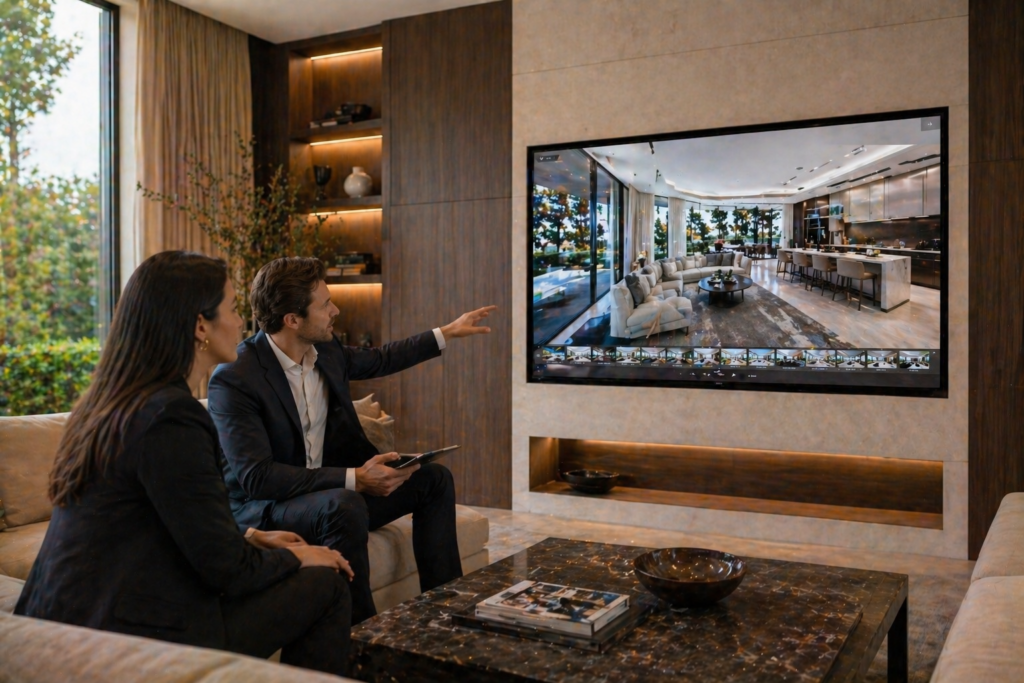
Static images still matter, but they may not be enough for remote buyers. International buyers often need more spatial context before deciding whether a property is worth a visit.
Panoramic staging, 3D virtual tours, and immersive walkthroughs can help them understand room flow, proportions, views, and material quality more clearly than still images alone.
Packaging Assets for Private Client Presentations
A strong private presentation can combine several asset types into one cohesive package. Staged gallery images create the first impression.
Secure gallery links help maintain confidentiality. Embedded tour links allow buyers to explore the property on their own device before scheduling a private showing.
For premium listings, every visual asset should support the property’s existing character rather than overwrite it. Architectural details, material finishes, views, and room scale need to remain believable across staged images, brochures, and immersive formats.
The goal is not just to make the property look furnished, but to create a digital presentation that feels credible enough to begin a serious buyer conversation.
Ethical Disclosure and Legal Requirements for Luxury Virtual Staging
Misrepresentation risk increases when listing images change how a property physically appears. Luxury virtual staging should help buyers understand scale, layout, and lifestyle potential without altering the property’s actual condition, architecture, views, or permanent features.
Where the Line Falls
Virtual staging can add furniture, decor, and lifestyle context, but it should not change the physical reality of the property.
The ethical boundary is clear: staged images may show how a room could be used, but they should not hide defects, remove structural elements, change views, alter floor plans, or create features that do not exist.
Because regulations vary by market, agents should review local requirements around Virtual staging legality and confirm applicable MLS or brokerage guidelines before publishing staged images.
California’s AB 723 is one example of how this issue is becoming more formalized. Effective January 1, 2026, California AB 723 requires brokers and salespersons to disclose digitally altered real estate images and provide access to the original image through a public URL, QR code, or included copy.
Disclosure and Transparency
Clear disclosure is not only a best practice. In some markets, it is a formal MLS requirement. Canopy MLS, for example, requires AI-enhanced and virtually staged photos, renderings, or virtual tours to include clear disclosure directly on the image or within the tour.
It also requires the original image to appear immediately before or after the altered version, or to be easily accessible alongside it.
For luxury virtual staging, the safest approach is to label staged images clearly and provide unstaged versions wherever the listing platform, MLS, brokerage policy, or local law requires it.
This also aligns with NAR’s Article 12 principle that REALTORS® should present a “true picture” in advertising and marketing.
Preserving Architectural Integrity
Luxury virtual staging should preserve custom architectural details with full fidelity. Marble veining, custom millwork, ceiling treatments, window placement, views, and structural elements are selling features, not design canvases. Altering them can move the image from staging into misrepresentation.
The goal is to help buyers understand how a space can function without changing what the property is. In high-end and off-market contexts, where buyers may review digital assets before a private showing, transparency protects both the listing’s credibility and the agent’s reputation.
Measuring Success: ROI and Sales Velocity for Luxury Listings

attracts attention but does not generate qualified conversations, the visual presentation may be reaching the wrong buyer profile or failing to build enough confidence.
For luxury virtual staging, success should be measured through the quality of buyer response, not only the number of views.
Useful indicators include qualified inquiry rate, time on market, repeat engagement with visual assets, private showing requests, and feedback from serious buyers or buyer agents.
Engagement Tracking for 3D Tours
For 3D tours and immersive luxury real estate formats, engagement data can show how buyers interact with the property before requesting a showing.
Useful signals include session duration, repeat visits, rooms viewed most often, and whether users return to key spaces such as the primary suite, living area, terrace, or view-facing rooms.
These signals do not prove purchase intent on their own, but they can help agents understand where interest is forming.
If engagement is strong but offers are not materializing, the issue may sit elsewhere: pricing, market timing, buyer pool size, property condition, or the sales process after the first inquiry.
Cost Comparison and Iteration
Physical luxury staging can become expensive, especially for large homes, custom furniture needs, logistics, and longer listing timelines. Virtual staging lowers the cost of testing different visual directions, which makes iteration more practical.
That flexibility matters. If one design direction feels too cold, formal, or minimal, agents can test another version without reshooting the property or replacing physical furniture.
A contemporary minimalist look might work for one buyer profile, while a warmer residential style may make the same space feel more livable.
Realistic expectations still matter. Inventory levels, pricing strategy, buyer demand, location, and broader market conditions all shape listing performance alongside staging quality.
Virtual staging can strengthen presentation, but it should be measured as part of the full marketing and sales strategy, not treated as a standalone cause of faster sales.
Final Thought
Luxury virtual staging is not just standard staging applied to a more expensive property. It requires better source photography, more selective design choices, and a stronger commitment to realism.
For high-end listings, the goal is not to fill empty rooms quickly. The goal is to present scale, architecture, materials, and lifestyle potential in a way that feels believable to serious buyers.
Poorly matched furniture, flat lighting, or unrealistic textures can weaken that impression before a showing begins.
The practical split is simple. Lower-priced or standard listings may only need clean, attractive staging that helps buyers understand room function.
Luxury listings need a more careful workflow: high-resolution photography, restrained furniture placement, realistic lighting, and design choices that fit the property’s character.
For agents managing their own workflow, DIY virtual staging with AI can be a reasonable starting point for simpler listings.
At the luxury level, the photography brief, platform selection, and design direction should be handled with the same care as the listing strategy itself.
Speed remains one of virtual staging’s strongest advantages, especially for private presentations or time-sensitive campaigns where physical staging is difficult to coordinate.
The real value is not only a finished image, but a repeatable workflow that lets agents prepare credible, high-end visuals when the right buyer opportunity appears.
Can luxury virtual staging be used for furnished properties that need a style refresh rather than empty rooms?
Yes. Furnished properties may need digital furniture removal, decluttering, or item replacement before restaging. The removal quality matters because poorly erased furniture can leave shadows, warped flooring, or texture artifacts that make the final staged image less believable. For furnished luxury properties, agents should review sample removal work before using the same provider across a full listing.
How should luxury virtual staging handle unusual architectural features like curved walls, double-height spaces, or bespoke fireplaces?
Unusual architecture needs careful perspective, scale, and furniture placement. Curved walls, double-height rooms, sculptural stairs, and custom fireplaces can make fully automated staging less reliable if the platform treats the room like a standard rectangular space. For highly distinctive properties, a workflow with revision control or human design review is usually safer than relying only on one-click output.
Is there a minimum property price point below which luxury-tier staging is not cost-justified?
No universal price threshold exists. The decision depends on the buyer profile, listing strategy, property complexity, and expected presentation standard. A lower-priced but architecturally distinctive home may still need careful staging, while a simpler high-priced property may not require the most customized workflow. The key question is whether the staging quality matches the expectations created by the listing price and marketing position.
Can the same staged images be used across MLS listings and private off-market presentations?
Often yes, but disclosure should remain consistent. MLS platforms may have explicit labeling rules, while private presentations may depend more on brokerage policy, local law, and ethical practice. Staged images should be clearly identified as staged wherever they are used, especially when buyers may rely on them before seeing the property in person.