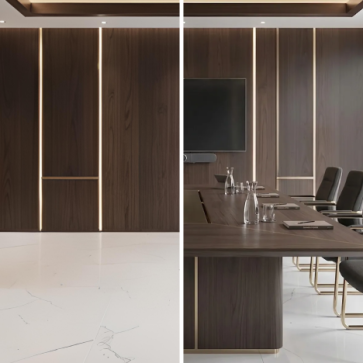
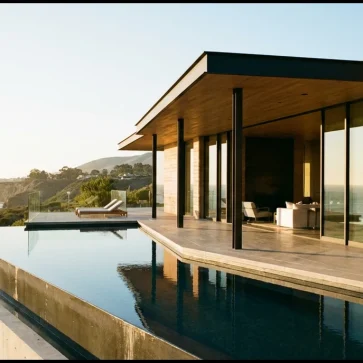
AI-driven systems now handle editing, staging, object cleanup, exterior adjustments, and image analysis for property listings. Instead of correcting each detail manually, AI evaluates the image as a whole. It applies changes based on patterns learned from similar spaces, while professionals retain control over final decisions.
Agents and photographers use AI in real estate photography to prepare listing images more efficiently, reduce turnaround time. The sections below explain where this technology fits within existing workflows, how it differs from manual methods, and what to consider when choosing tools designed for professional listing use.
Traditional vs. AI-Assisted Real Estate Photography
Real estate photography has traditionally followed a manual workflow. A photographer captures the property, then edits the images using different tools before delivering them to the agent. Lighting fixes, color correction, object cleanup, staging, and twilight edits are handled in separate steps, often requiring revisions and extra time.
Even minor changes add effort in manual workflows. Removing an object involves detailed retouching. Virtual staging requires measuring the space and placing furniture one piece at a time. Twilight images demand careful exterior adjustments to balance light and atmosphere. While these methods are effective, they slow listing preparation and rely heavily on individual availability and technical skill.
AI in real estate photography changes this process. Instead of handling each adjustment separately, the system analyzes the image and applies corrections based on visual patterns learned from similar spaces. Agents and photographers still control how a property is presented, but the technology reduces repetitive tasks and deliver more consistent results across listings.
AI in Real Estate Photo Editing and Enhancement
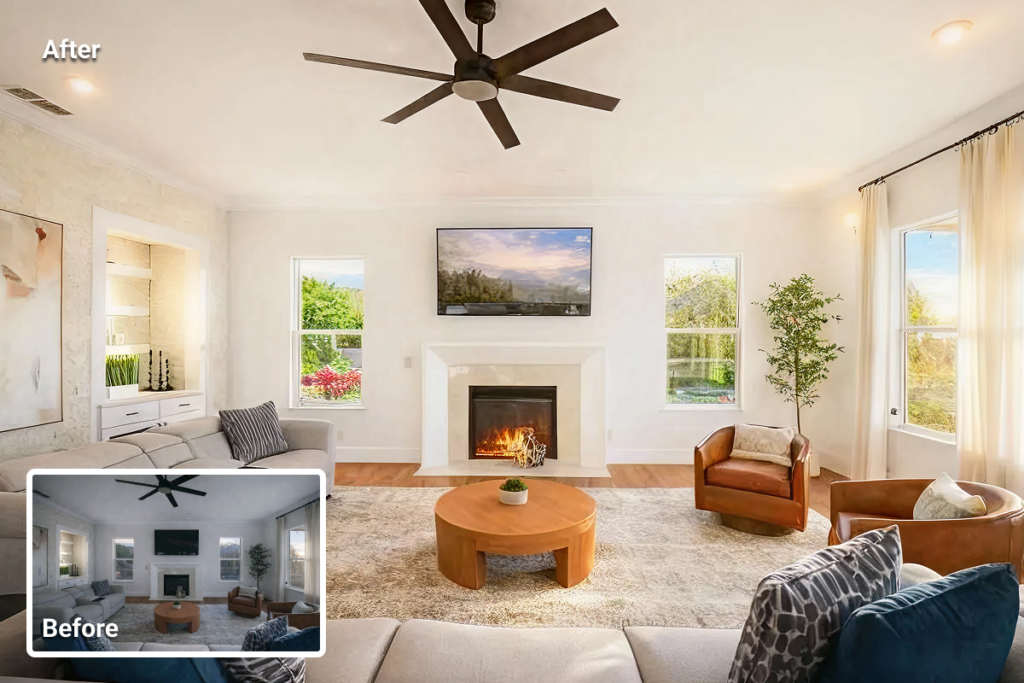
AI in real estate photography changes how photo editing works. Instead of adjusting settings one by one, the system analyzes the image as a whole. It reviews lighting, color temperature, and visual noise in a single pass, then applies corrections based on patterns learned from comparable interior and exterior spaces. The result is a unified adjustment rather than a series of disconnected edits.
Control matters more than novelty in real estate listings. Automated photo editing reduces repetitive manual work while preserving original geometry, materials, and proportions. AIHomeDesign’s photo editing tools are built around this constraint. Edits remain realistic, visually consistent, and suitable for listings, without introducing exaggerated effects or stylistic artifacts that can weaken a property’s presentation.
AI Virtual Staging, Item Removal, and Interior Changes
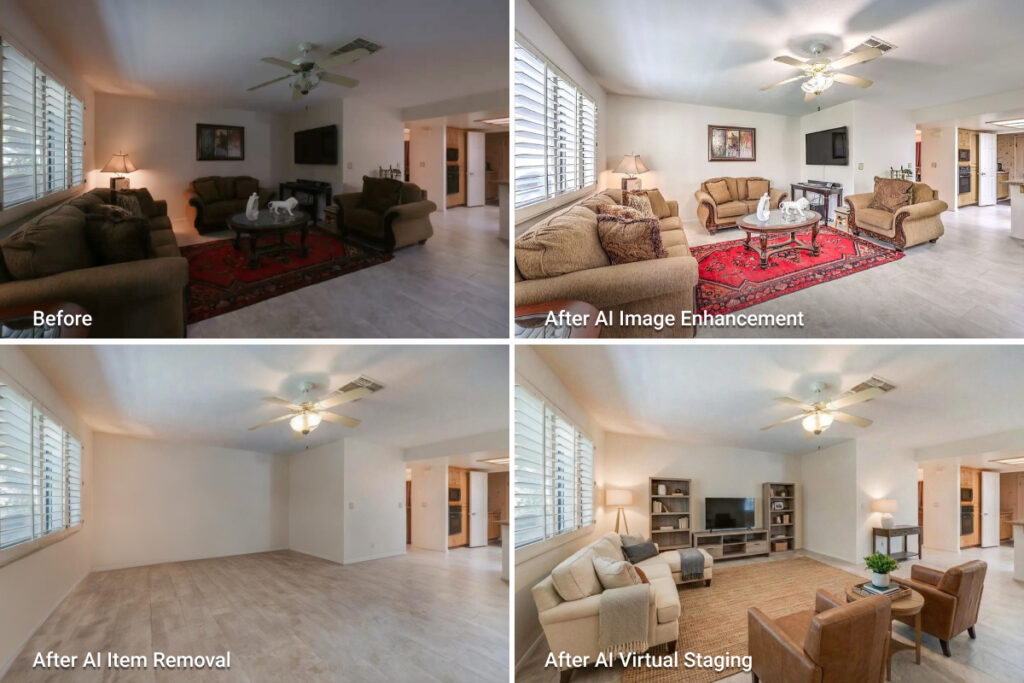
Virtual staging and object removal have long played a role in real estate photography, but they traditionally required careful manual work. Editors needed to reconstruct room perspective, match camera angles, and place furniture piece by piece. Removing existing objects also involved detailed masking and retouching, especially in rooms with reflective surfaces or complex textures.
Artificial intelligence now handles these tasks with greater speed and accuracy. Instead of working through each adjustment manually, the system analyzes a room’s structure, depth, and layout, then applies changes while preserving architectural integrity and realistic proportions.
For staging, this level of accuracy ensures that furniture is placed in proportion to the space and aligned with the room’s structure. For object cleanup, the system removes unwanted elements without affecting surrounding details such as floors, walls, or shadows.
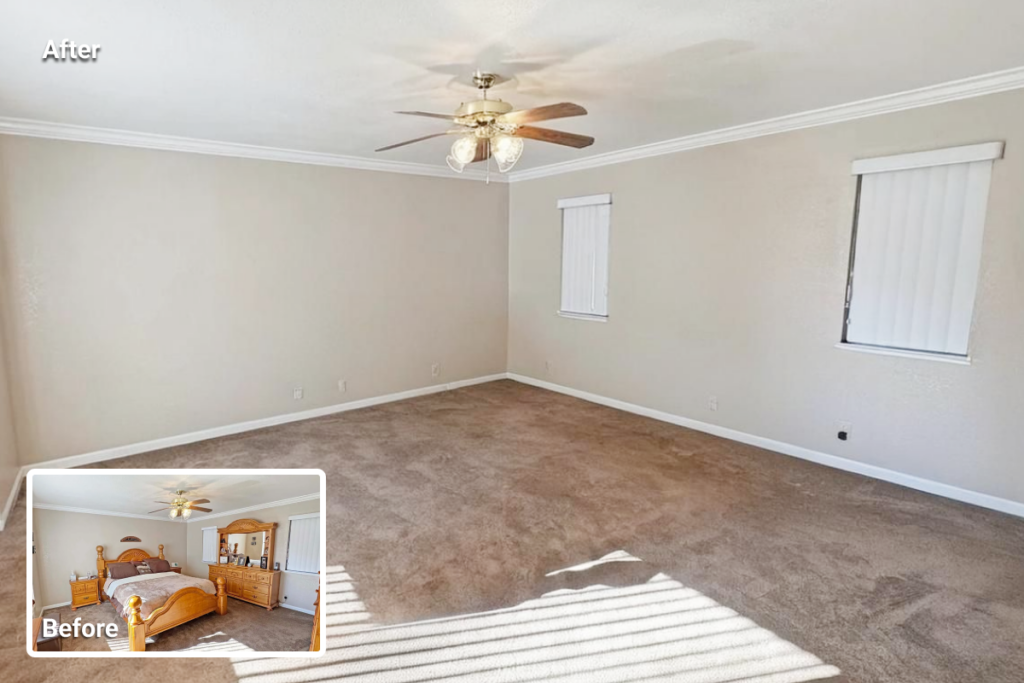
Interior changes follow a similar pattern. When a room is already furnished but looks visually dated or inconsistent, automated systems adjust materials, finishes, or colors while keeping the original layout intact. This allows agents and photographers to present alternative interior looks without reconstructing the scene from scratch.
AIHomeDesign’s Virtual Staging follows this approach by focusing on listing-ready visuals rather than decorative experimentation. The tool respects room dimensions, perspective, and realism. Whether the goal is furnishing an empty space, clearing visual clutter, or presenting a different interior style, the result improves visual appeal while preserving structural accuracy and architectural authenticity.
Day-to-Dusk and Exterior Adjustments with AI
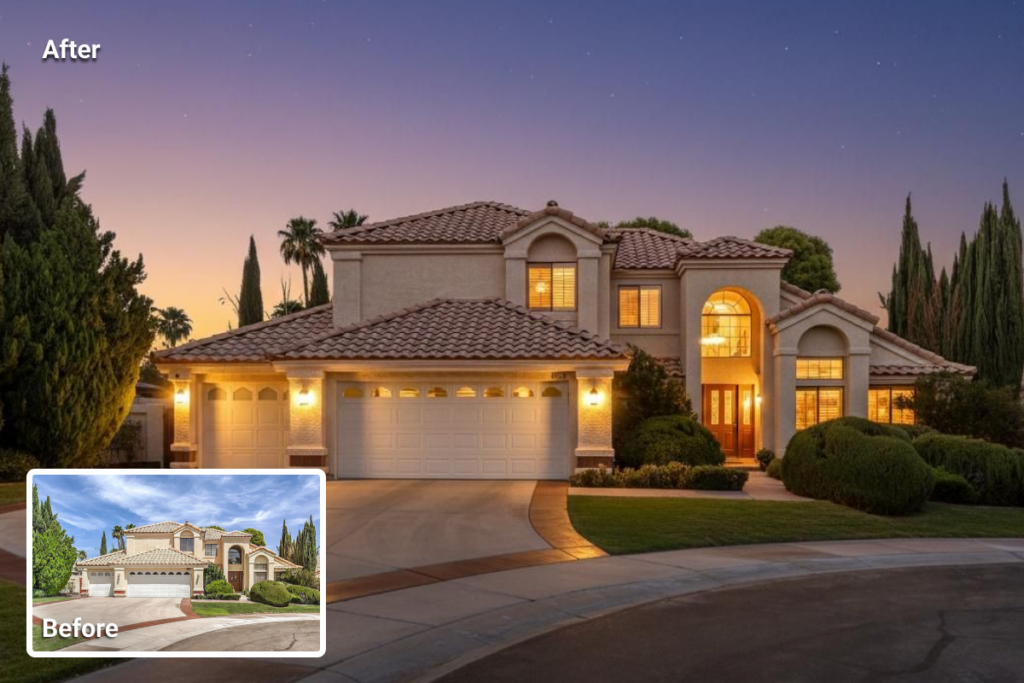
Exterior images often present a different set of challenges. Natural light changes quickly, weather conditions are unpredictable, and scheduling a separate shoot for twilight photos is often impractical. Traditionally, editors created twilight images through manual editing to sky color, window lighting, and exterior illumination to avoid an artificial result.
AI in real estate photography changes how day-to-dusk editing works. The system analyzes the relationship between the building, the sky, and existing light sources. Instead of manually painting light into windows or replacing the sky using professional photo editing software, AI adjusts exterior lighting and atmosphere while preserving architectural details. The goal is to produce a twilight-style image that stays consistent with the original structure and surroundings.
For agents, this approach makes it possible to adapt exterior photos taken in daylight for listings that benefit from a twilight presentation. When used carefully, AI-based day-to-dusk edits provide a controlled alternative to manual workflows, without requiring additional site visits or complex editing steps.
Choosing AI Tools for Professional Real Estate Work
Real estate and AI now intersect across many workflows. In AI in real estate photography, however, not every tool meets the requirements of listing use.
Some tools favor visual impact over accuracy. This approach can introduce distortions, inconsistent lighting, or unrealistic materials. Others limit the types of rooms or layouts they can handle, which reduces flexibility. These issues can make images unsuitable for real estate listings. For professionals, the key question is not whether to use AI, but which tools respect the constraints of real estate imagery.
AI HomeDesign addresses these professional requirements by focusing on listing-ready output. Its tools prioritize realistic results, clear review options, and consistent behavior across photo editing, standard staging, item removal, and exterior adjustments.
These features make AI HomeDesign suitable for agents, photographers, and brokerages who already understand professional photography standards and need tools that operate within those boundaries rather than around them.
AI Applications Beyond Photography
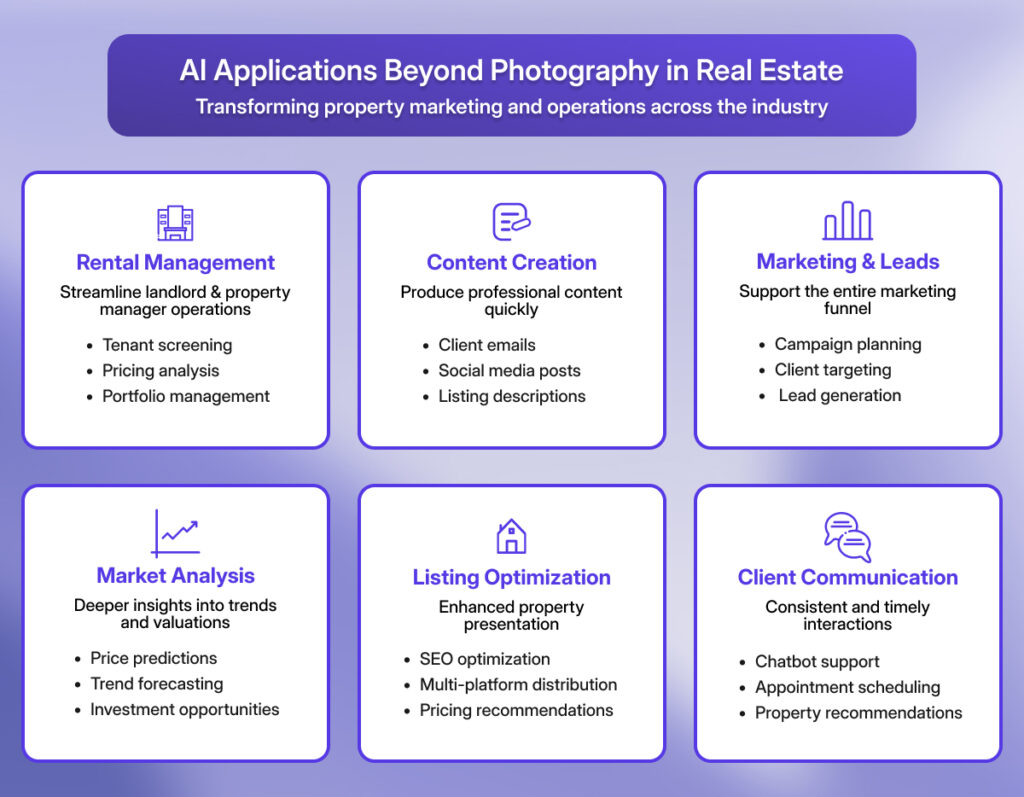
AI now plays a role beyond photography across the real estate industry. Automated systems support many areas of property marketing and operations. AI for rental properties helps landlords and property managers with tasks such as tenant screening, pricing analysis, and portfolio oversight.
Agents also use tools like ChatGPT prompts in real estate to handle everyday writing tasks, including client emails, social media content, and initial listing drafts.
Writing property descriptions with AI has become a common practice for agents who want to save time on repetitive tasks. Beyond individual listings, AI in real estate marketing now supports campaign planning and client targeting to market analysis, property listing, and lead generation. These applications follow the same principle seen in photography tools: they reduce repetitive work while leaving professional judgment in human hands.
FAQ
No. AI handles technical, repeatable steps, but decisions about composition, room selection, and presentation remain with the agent or photographer. The output still needs human review before it’s used in a listing.
Most listing platforms allow edited images as long as they represent the property accurately. AI-assisted edits that correct lighting, remove clutter, or furnish empty rooms are allowed on most property listings, provided they do not misrepresent size, layout, or permanent features.
When choosing an AI tool for real estate work, look for systems built specifically for listings, not general image manipulation. The priority should be predictable results, realistic output, and the ability to review edits before publishing, rather than visual experimentation.
Results depend on image quality and the type of adjustment needed. Well-lit photos with clear structure tend to produce more reliable outcomes, while images with extreme angles, heavy clutter, or severe exposure issues may still require closer review before use.
AI tools themselves are not the issue; how they are used is. As long as edits do not alter permanent structures or misrepresent the property’s size or layout, AI-assisted photos are generally acceptable. Professional platforms are built with these listing constraints in mind.