Marketing Ideas for Real Estate Agents in 2026
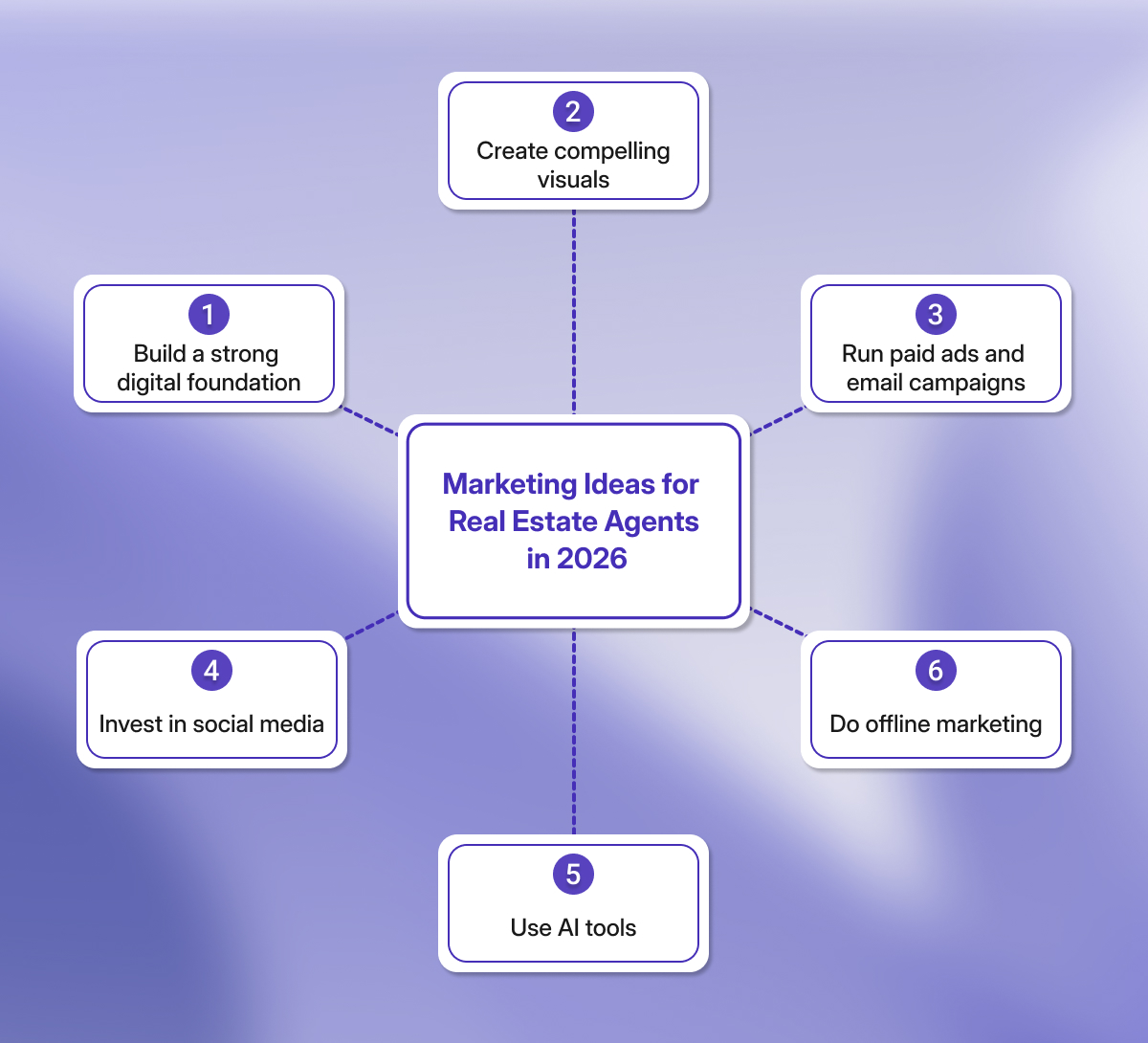
- Build a strong digital foundation: Claim and optimize your Google Business Profile, maintain a professional website, and invest in local SEO to appear in relevant geographic searches.
- Create compelling visual content: Use professional photography, virtual staging, and video tours to help buyers emotionally connect with listings.
- Expand reach with paid ads and email: Run targeted Google and Meta campaigns, send regular newsletters, and host webinars to nurture leads over time.
- Build social media presence: Participate in real estate communities and build your own content hub around first-time buyers, investors, neighborhood updates, and market insights.
- Use technology and AI tools: Apply AI to content creation, deploy chatbots for inquiries, use CRM systems to track leads, and integrate virtual tour platforms.
- Don’t forget offline marketing: Network in person, send direct mail postcards, host open houses, and sponsor community events.
1. Build Your Digital Foundation
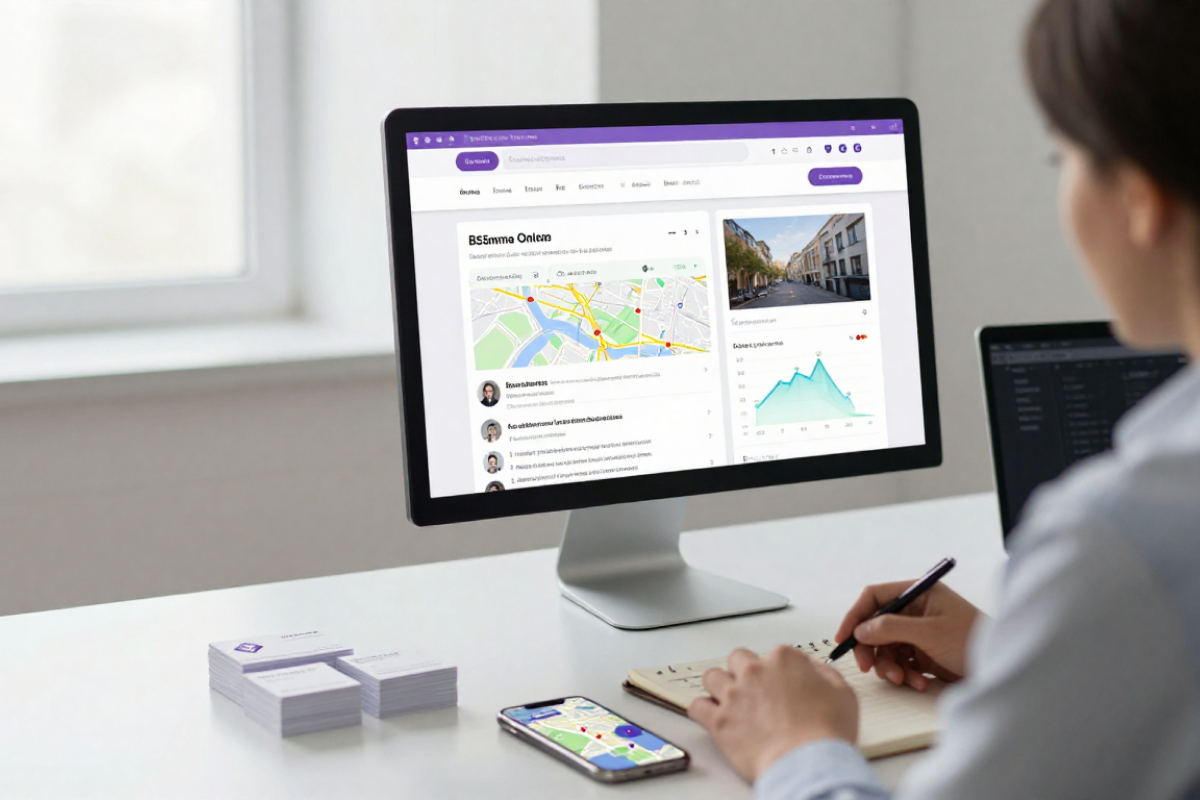
As discussed in our guide to digital marketing for real estate, a strong digital foundation rests on three core elements that work together to establish online visibility. All three are closely connected to Google.
Start with a Google Business Profile. This is one of the foundational real estate marketing strategies every agent should prioritize. When buyers search for agents in a specific area, Google prominently displays local business profiles near the top of the results, making this profile a key driver of visibility.
A professional website forms the second pillar of a strong digital foundation. It allows agents to showcase listings, share expertise through blog content, highlight client stories, and provide market updates. Over time, this helps establish long-term credibility and local authority in your market.
The third pillar is local SEO, which helps websites appear in geographic searches. When someone searches phrases such as “real estate agent in [your city]” or “homes for sale in [neighborhood],” effective local SEO increases the likelihood that your site appears prominently in search results.
While learning the fundamentals of SEO for real estate agents is valuable, you don’t need to manage it on your own. Many agents choose to work with SEO professionals who handle the technical details allowing them to focus on clients and listings.
2. Create Compelling Visuals and Engaging Descriptions for Your Listings
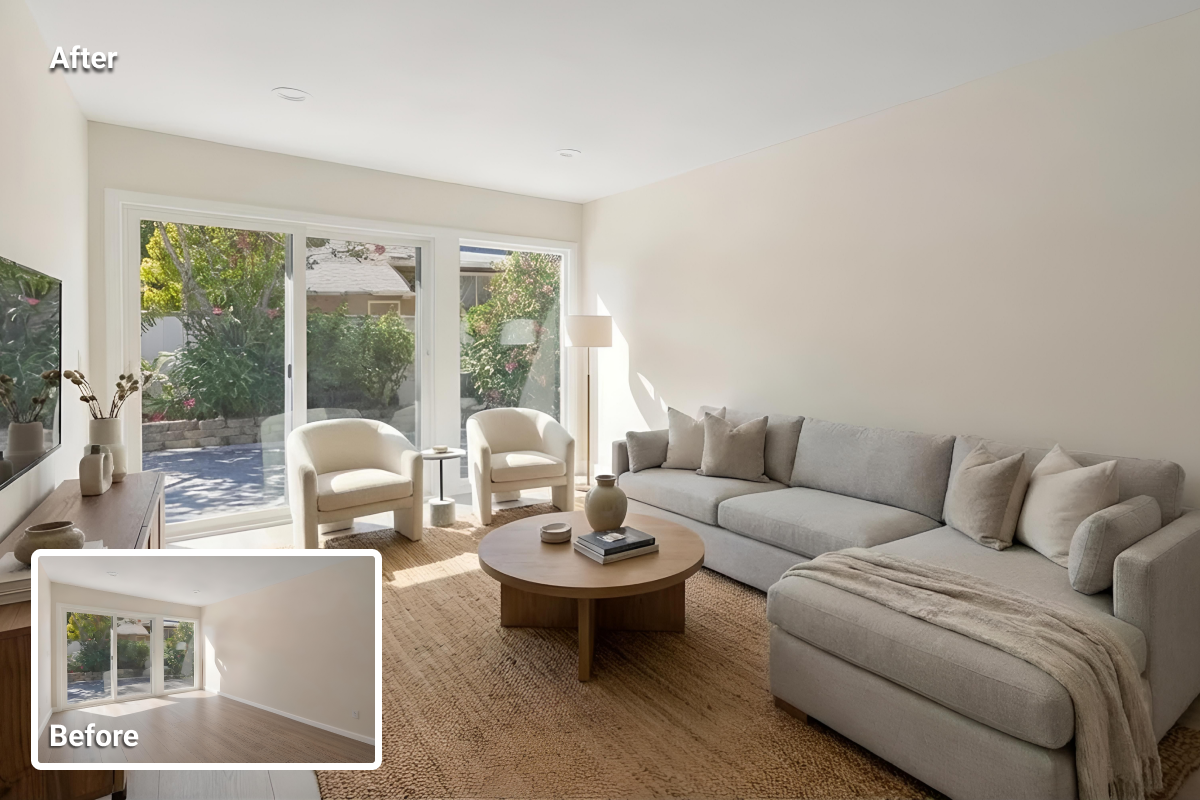
Buyers decide within seconds whether a listing feels worth their time. The faster they can picture life in the space, the more likely they are to engage. When attention is that limited, enhancing your listing visuals is what makes buyers pause, click, and explore further.
If a home is empty or the furniture dates the space, virtual staging can help present the property more effectively without the cost or logistics of physical staging. It strengthens the first impression, makes rooms feel more livable, and allows agents to showcase a style that aligns with the target buyer.
Video content serves a similar purpose for listings that benefit from added context. A short walk-through or a simple room-to-room clip helps convey layout, flow, and scale, particularly in open floor plans or homes where spatial relationships matter.
Beyond visuals, writing engaging property descriptions helps turn initial interest into inquiries. The most effective descriptions reinforce what buyers already notice in the photos, highlight a small number of high-impact features, and end with a clear, simple call to action.
While strong visuals and descriptions are essential, it is equally important to understand listing intricacies and remain compliant with MLS specifications across all marketing materials.
3. Expand Your Reach with Paid Ads, Email Campaigns, and Webinars

While organic methods build long-term visibility, paid advertising and email marketing can create immediate touchpoints and support ongoing relationship building.
While organic methods build long-term visibility, paid advertising and email marketing create immediate touchpoints and support ongoing relationship building.
Start by growing an email list from website visitors, open house attendees, and past clients. Segment contacts by active buyers, potential sellers, past clients, and industry partners to keep messaging relevant. Monthly newsletters that include market updates, new listings, and practical tips tend to perform well.
Paid advertising can accelerate visibility beyond organic reach. Google Ads allow agents to appear prominently for search queries such as “homes for sale in [your area]” or “sell my house fast.” Facebook and Instagram offer precise targeting by location, age, income range, and interests, making it possible to reach newly engaged couples, recent movers, or families with young children.
Webinars add another layer by positioning you as a knowledgeable local resource while delivering real value. Effective topics include first-time home buying, preparing a home for sale, or current market trends in [Your City]. Promote these sessions through email and social media, record them for those unable to attend live, and follow up with attendees to continue the conversation.
4. Invest in Social Media

Of all real estate marketing strategies, social media remains one of the most accessible ways to generate visibility and leads. Beyond promoting your listings on social media, agents can build exposure by participating in relevant discussions and engaging with established groups, pages, and local communities.
A practical starting point is joining active top real estate communities on social media to connect with people in your market. These spaces offer valuable insight into what buyers and sellers are asking, which concerns surface repeatedly, and how other agents address those questions through content
Over time, consider building your own social media hub around a clear focus, such as first-time buyers, local investors, or neighborhood-specific updates. Content like listing highlights, short walkthroughs, open house clips, neighborhood snapshots, market notes, and occasional client stories help establish consistency and keep audiences engaged.
5. Use Technology and AI Tools

Modern marketing increasingly relies on technology, making AI an integral part of any effective real estate marketing strategy. Today, there are countless real estate apps that support agents across the listing lifecycle, from enhancing real estate listings and targeting clients to tracking interactions and helping move deals forward.
AI writing tools can draft blog posts, property descriptions, and social media captions that agents later refine and personalize. At the same time, chatbots handle initial inquiries, respond to common questions, and schedule appointments around the clock, improving responsiveness without adding manual workload.
Real estate video marketing has also become one of the highest-engagement formats in the industry. YouTube functions as the second-largest search engine after Google, making it essential for property tours and market updates. Short-form videos on Instagram Reels, TikTok, and YouTube Shorts capture attention quickly, and even a thirty-second property highlight can drive meaningful traffic and engagement.
CRM systems track leads and client interactions, MLS apps allow agents to update listings from anywhere, and platforms like Matterport create immersive virtual tours. In addition, document signing tools and marketing automation platforms streamline transactions and simplify social media scheduling.
6. Do Not Forget Offline Marketing
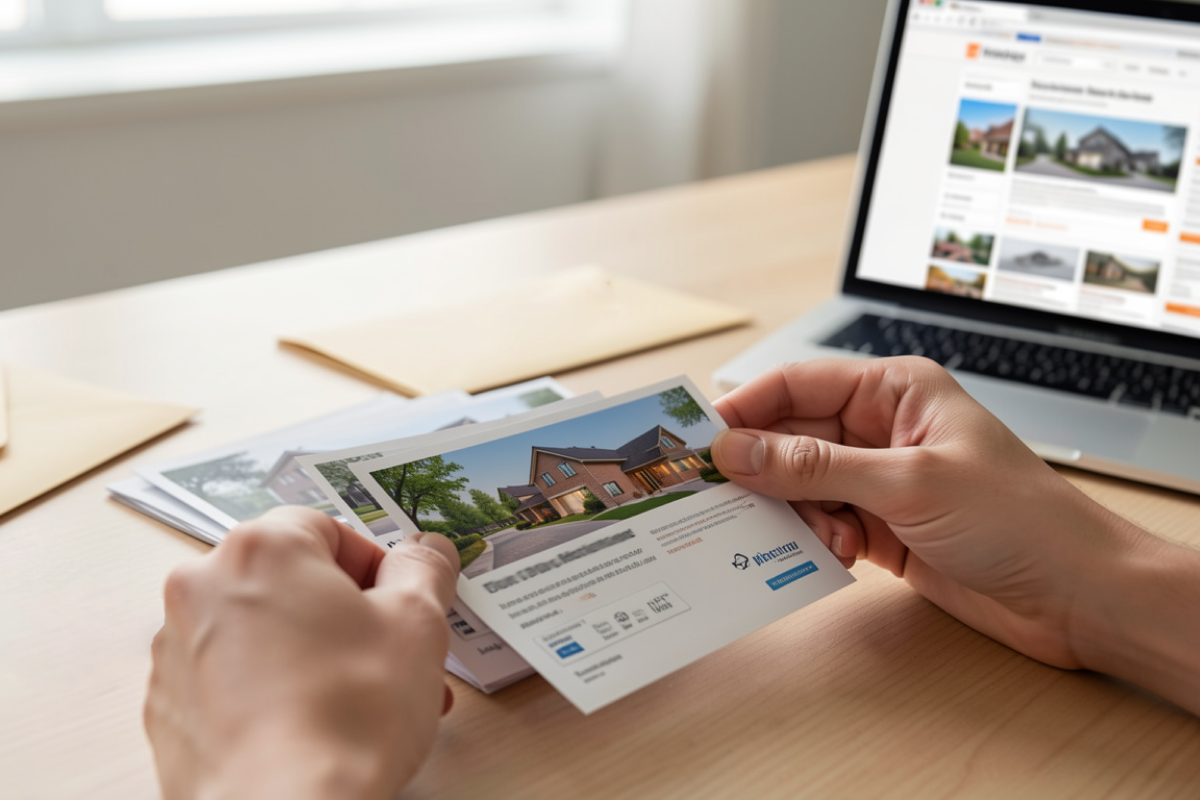
Digital marketing plays a central role in modern real estate, but traditional methods continue to deliver results. The most effective real estate marketing strategies combine both online and offline real estate advertising tactics to create multiple touchpoints with potential clients. In many cases, in-person interactions still build trust faster than online engagement alone.
Start by getting involved locally. Joining your local chamber of commerce, real estate associations, or community organizations can strengthen visibility and credibility. Activities such as volunteering for local causes or sponsoring community sports teams help reinforce name recognition while building genuine trust.
Direct mail remains a reliable channel when used strategically. Postcards announcing new listings or recent sales can also reinforce brand presence and local awareness. Professional brochures may include QR codes linking to visual tours, while local magazine placements and community newsletter sponsorships offer focused geographic reach.
Open houses remain a proven lead generation tactic. Beyond attracting active buyers, they often connect agents with neighbors who may be considering selling. Promote each open house through a mix of yard signs, online listings, social media, and neighborhood flyers. Create a welcoming environment with simple refreshments and printed information, then collect visitor details through sign-in sheets or digital forms and follow up promptly after the event.