AI in real estate refers to software systems that analyze large volumes of property, market, and user data to support tasks such as pricing, photography, marketing, and property management. These systems help agents, buyers, and investors interpret complex information that would be difficult to process manually and bring greater consistency to everyday decisions.
This guide explains the primary areas where AI is applied across the real estate industry and how each area fits into the broader property ecosystem.
Where AI Fits in the Real Estate Landscape
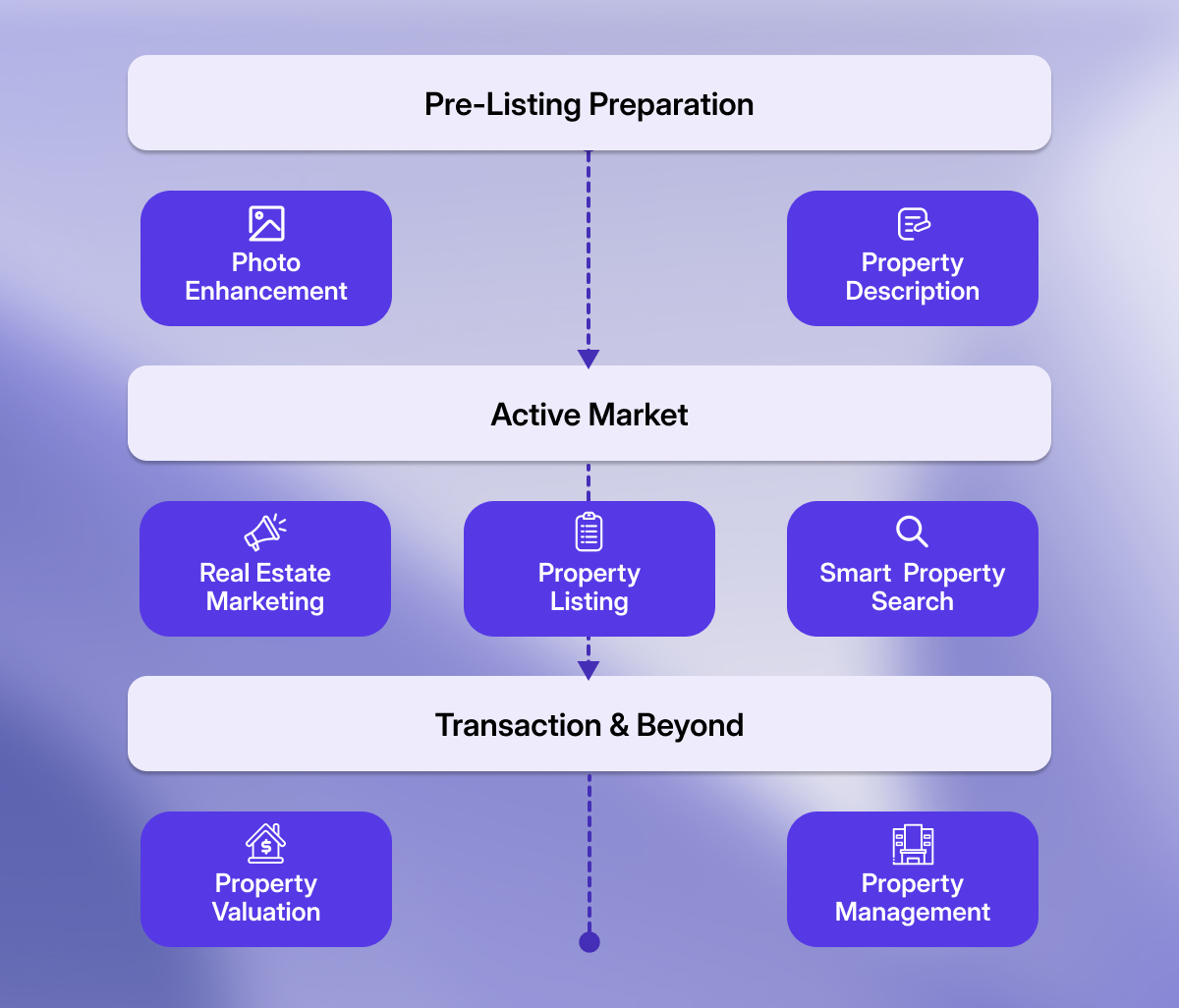
AI in real estate relies on several technical methods that process large volumes of property, market, and user data. Machine-learning models analyze patterns in past transactions and neighborhood data, computer-vision systems evaluate listing photos, and language models handle written queries, descriptions, and other text.
Together, these methods allow software to compare outcomes, interpret visual information, and generate structured insights that support agents and consumers during a purchase or rental process.
Real estate-related platforms apply the same foundations across valuation tools, listing systems, rental management software, and marketing products. Because each use case applies these methods differently, the rest of this guide moves through the core applications one section at a time.
AI in Real Estate Marketing
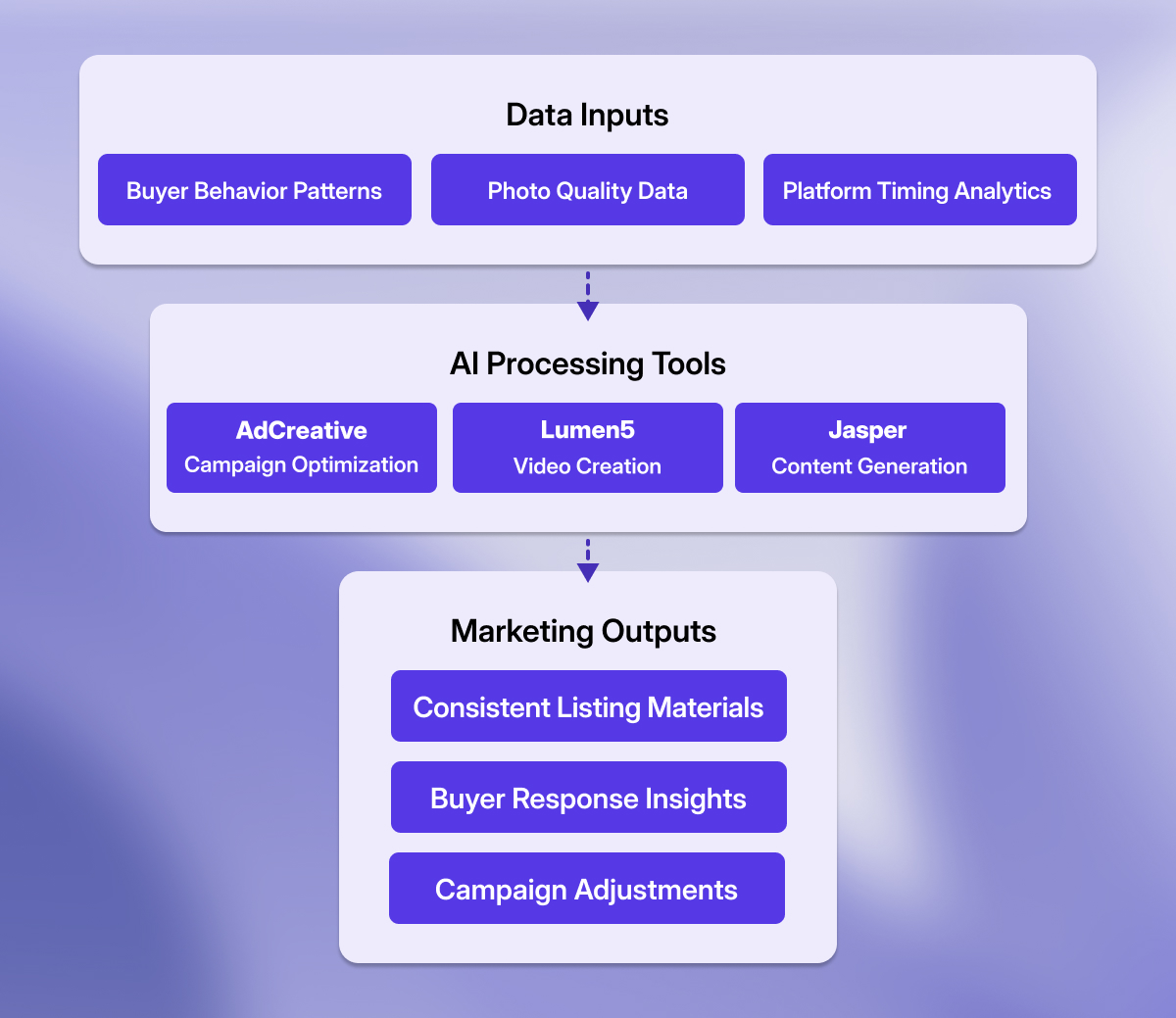
Real estate marketing has always depended on understanding of buyer behavior, photo quality, and timing across different platforms. Recent AI tools for real estate marketing now process far more data than manual workflows can handle, which is why many teams rely on them when planning, testing, or adjusting campaigns. AdCreative, Jasper, and Lumen5 are commonly used to support marketing content production and campaign execution.
These tools help agents prepare listing materials with more consistent quality and give teams clearer insight into how buyers respond to different types of content across major platforms. In the U.S., companies such as Zillow, Redfin, and Compass apply similar data-driven methods when ranking listings, recommending related homes, and determining which properties appear in more visible positions.
AI For Property Listings
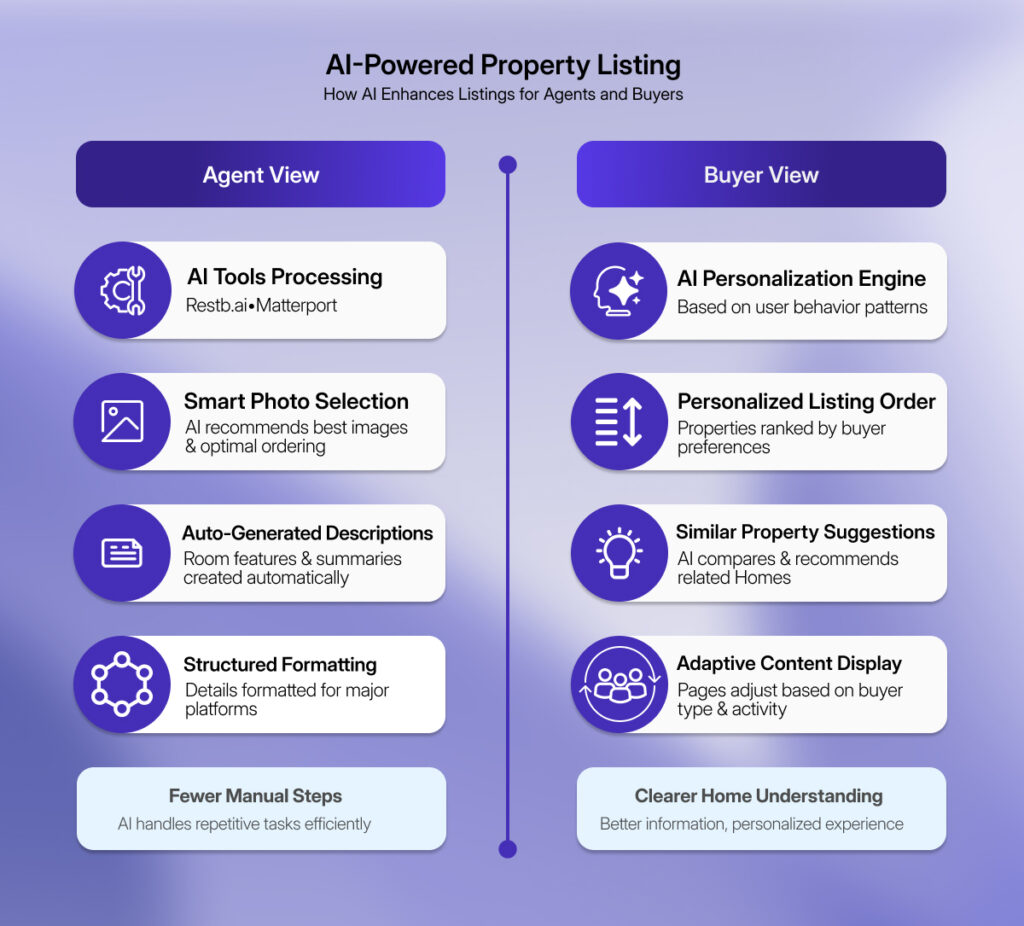
Listing properties with AI has made listing workflows faster and far more efficient. Modern property listings rely on AI-driven features that help buyers understand homes more clearly and help agents present information with fewer manual steps. Today’s listing platforms use models that analyze user behavior, compare similar properties, and adjust on-screen results based on patterns observed in past activity.
This directly influences listing orders, property recommendations shown beside each listing, and how listing pages adapt to different buyer preferences.
AI also supports the content displayed inside each listing. Tools like Restb.ai and Matterport can identify room features, generate summaries, and produce structured property details that align with the format requirements of major listing platforms. Some systems also assist with photo selection or recommend which images should appear first based on how buyers engaged with similar listings.
AI in Real Estate Photography
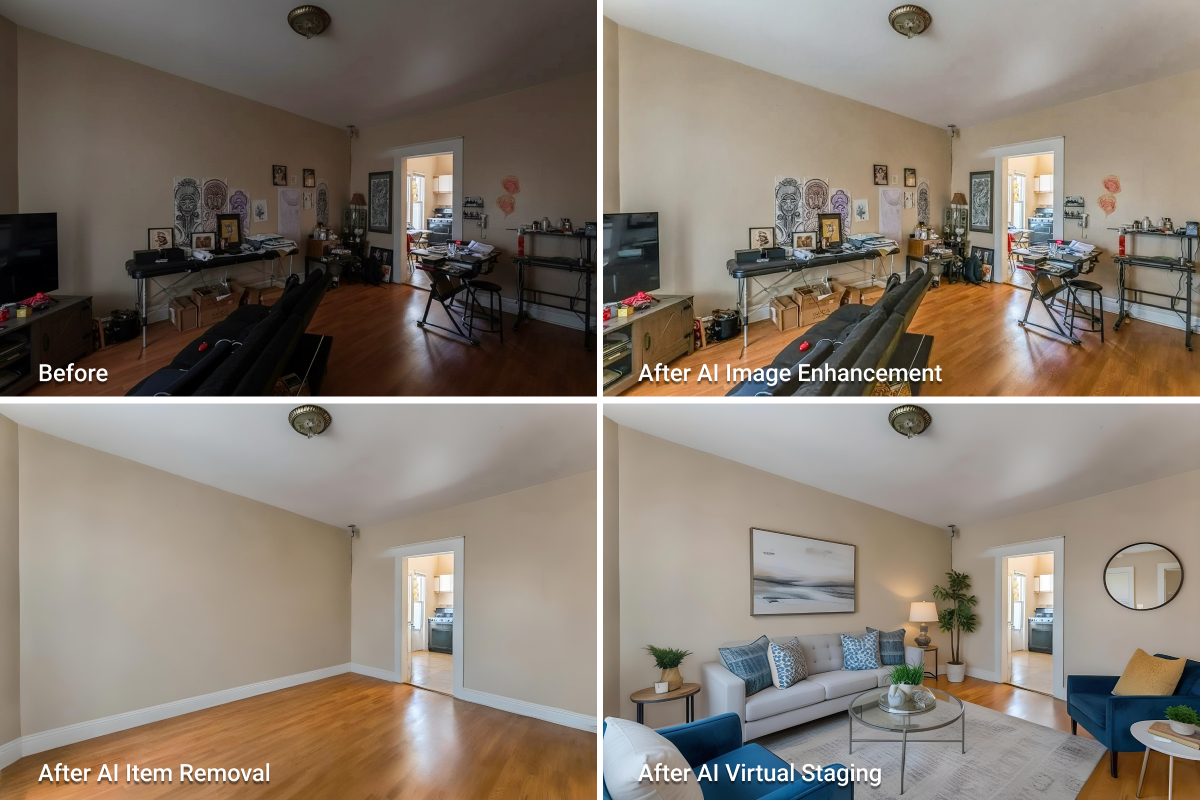
The applications of AI in real estate photography extend far beyond basic photo enhancement. Many listing photos now pass through automated tools before reaching buyers, which helps agents present properties with clearer lighting, cleaner rooms, and more consistent visual presentation.
Such tools correct lighting issues, fix distorted lines, balance colors, and remove small visual distractions. Systems that read room content also assist with photo sequencing by estimating which images should appear first based on typical buyer viewing patterns. Several tools offer day-to-dusk conversion, window-view correction, and item removal, which helps agents present each room with more clarity.
Virtual staging also sits close to real estate photography because both rely on photo-based interpretation. AI virtual staging tools such as AI HomeDesign, Virtual Staging AI, and Collove AI can arrange furniture, create interior styles, and form staged versions of empty rooms from basic photos. These options give buyers a clearer understanding of how a space functions when the original room offers limited visual context.
AI for Property Descriptions
Writing property descriptions requires careful attention to room details, neighborhood context, and the overall structure of a listing page. While this work is well within an agent’s expertise, it is often time-consuming. Today, many AI tools can generate property descriptions in seconds with a high level of accuracy, and AI tools that write property descriptions are now widely used across real estate workflows.
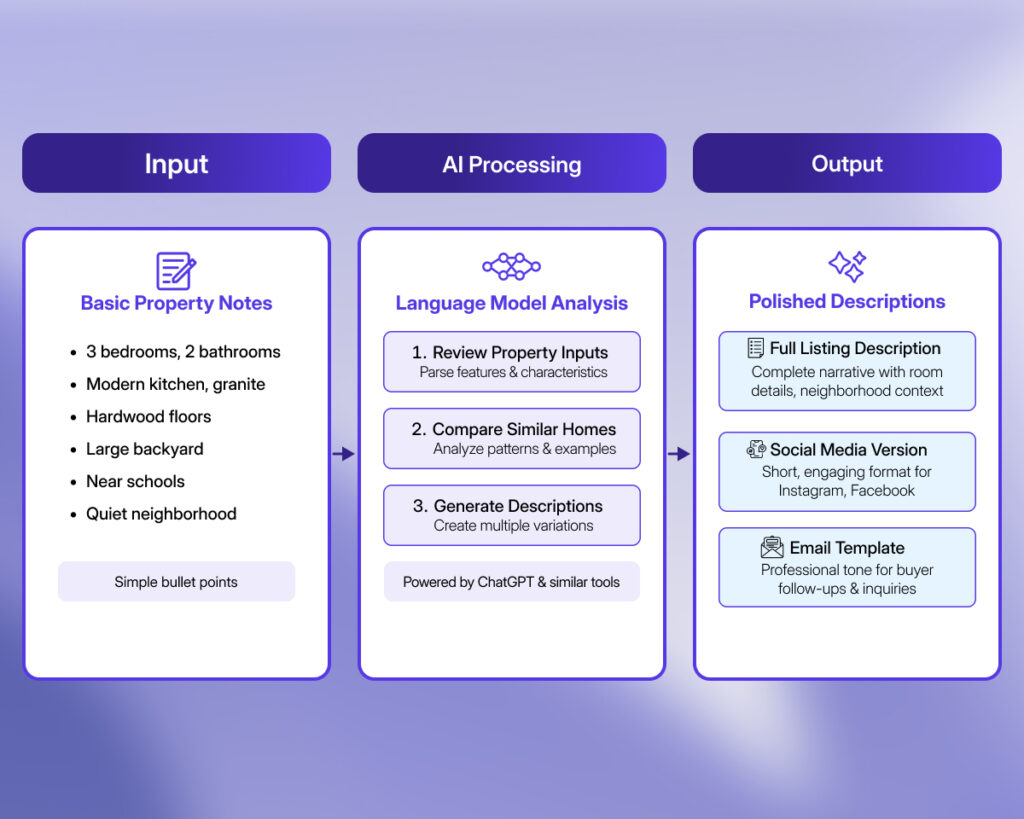
Modern AI tools support agents by generating draft descriptions, summarizing features, and preparing text that aligns with the format and tone of major listing platforms. These systems analyze basic property inputs, compare them with similar homes, and produce descriptions that follow a clear, readable structure.
Language models also help agents create variations for different audiences. They can expand simple notes into full descriptions, adjust tone for different marketing goals, or generate shorter versions for social platforms.
Many agents now use general-purpose tools such as ChatGPT to draft property descriptions, write follow-up messages, prepare buyer responses, and create ideas for listing improvements.
These assistants can interpret simple text inputs, identify room features, and generate content blocks that reflect common real estate patterns. Agents still review and refine the final output based on local rules and property-specific context, but the initial draft often saves significant time.
AI in Property Search
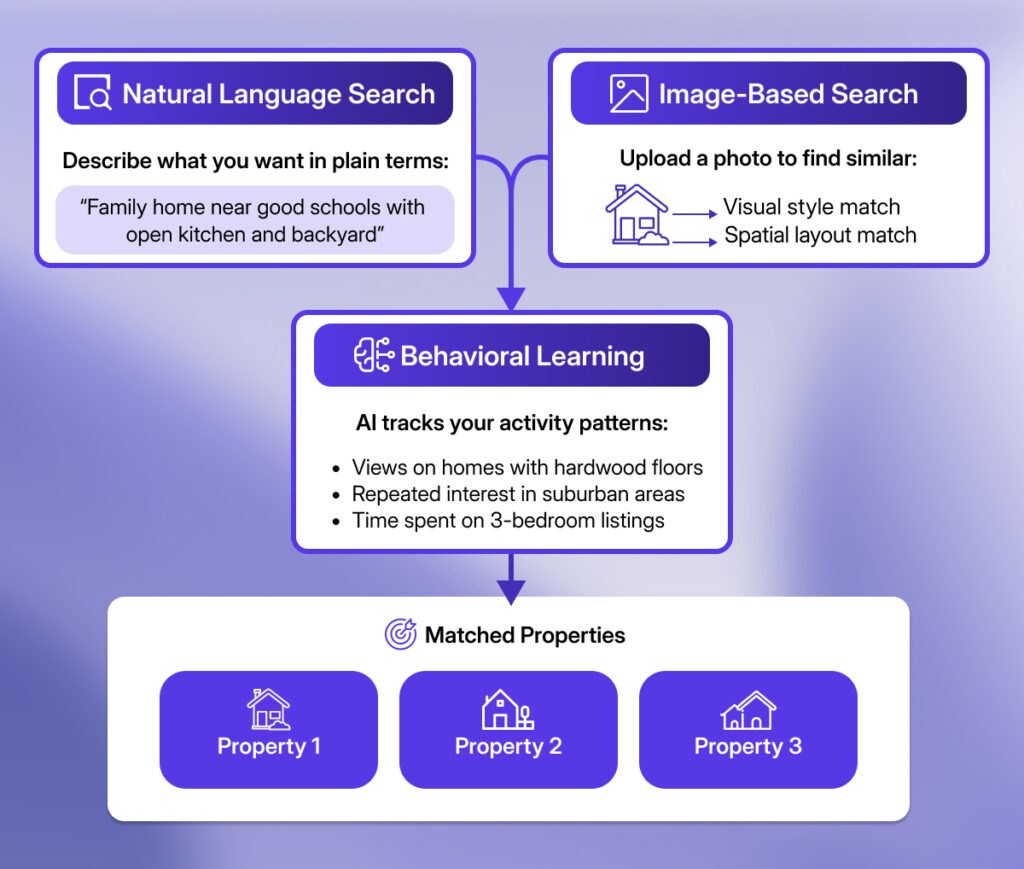
Another key application of AI in real estate focuses on how buyers search for properties. A few years ago, homebuyers often struggled to sort through large volumes of listings, and search filters did not always capture the details they had in mind. Modern property search tools address this gap by interpreting natural language, analyzing user behavior, and comparing each query against large property datasets. This allows buyers to describe what they want in plain terms rather than relying only on preset filters.
Property search platforms now support queries that include lifestyle needs, layout preferences, and location details. When a buyer types a sentence describing their priorities, these systems interpret the request and generate a list of homes that match those conditions. The same approach also helps platforms recommend related properties when a buyer shows repeated interest in a specific type of home.
Some companies also use image-based search capabilities. These systems analyze photos of rooms or building exteriors and identify listings with similar visual characteristics. This is especially useful for buyers who focus more on visual style, finishes, or spatial layout.
AI in Property Valuation
As the use of AI in real estate becomes more prevalent, buyers increasingly expect more accurate and data-supported pricing insights. After narrowing buyers their options through modern search tools, buyers usually look for a clearer understanding of where each property sits within the market price range. Modern valuation models now process far larger datasets than manual methods can handle.
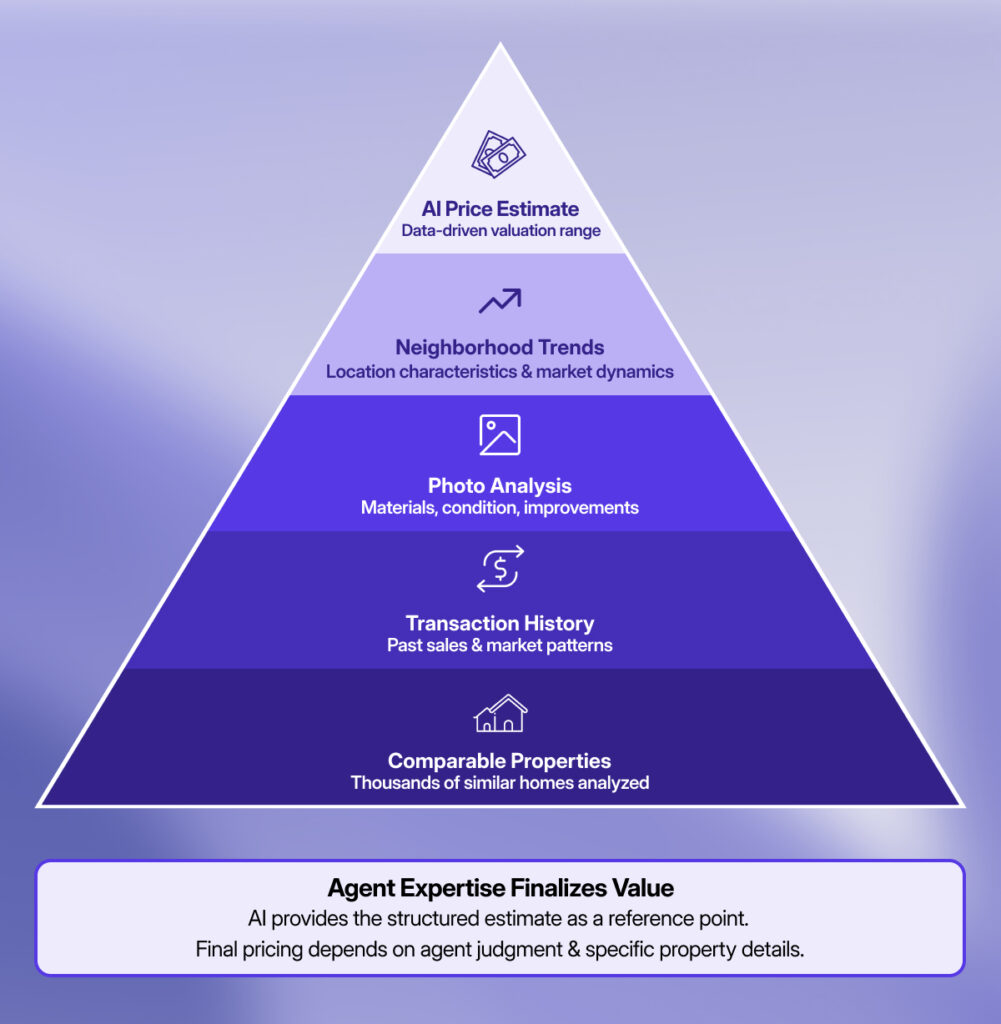
These systems study past transactions, listing photos, neighborhood trends, and recorded property features. The output provides buyers, sellers, and agents with a structured price estimate that supports early stage pricing discussions.
Many platforms compare a target property against thousands of similar homes. They review square footage, layout, renovation history, location characteristics, and broader market patterns. Some systems also read listing photos to detect materials, property conditions, or visible upgrades. The estimate serves as a reference point, while final pricing still depends on agent expertise and property specific factors.
Several U.S. companies rely on valuation models built on these methods. Zillow’s automated estimate model (Zestimate) is the most widely recognized example, and other organizations, including Redfin and Quantarium, apply similar data-driven valuation approaches.
AI for Rental Properties and Property Management
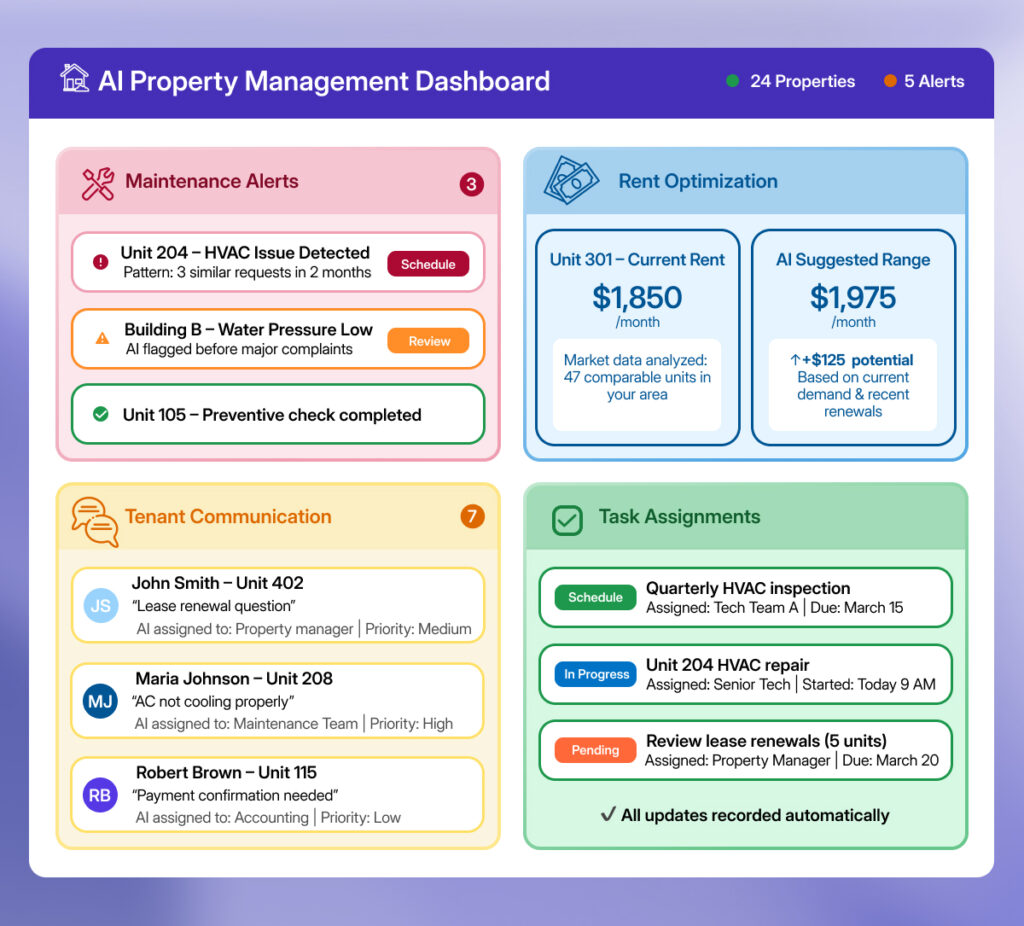
Price estimates help owners understand the position of a property in the real estate market, but long-term decisions often depend on how the property performs as a rental. Smart property management systems now use AI models to support tasks that require constant monitoring. These systems review rent patterns, maintenance records, and tenant activity, and they generate insights that help owners and managers handle daily operations with more structure.
Modern tools can log maintenance requests, detect repeated issues, and highlight items that may need attention before they escalate into larger problems. Some systems review market data to suggest rental ranges that match current demand in a specific area. Others sort incoming messages, assign tasks to the right team members, and record updates without requiring manual tracking.
AppFolio, Doorloop, and Buildium are among the most widely recognized examples of property management platforms that incorporate AI-driven features. These systems use large operational datasets to support maintenance planning, rental pricing decisions, and tenant communication workflows.
Risks and Limitations of AI in Real Estate
Although AI in real estate offers clear advantages, several limitations affect how its results should be interpreted. The points below highlight the most common areas where professional review and caution are still necessary.
Data quality varies across sources
Property records, listing photos, and market feeds may contain outdated or incomplete information. When input data is inconsistent, the resulting output often reflects those same gaps.
Local rules affect how automated tools can be used
Real estate markets operate under strict standards for advertising, disclosures, and fair housing practices. Any automated system must operate within those rules just as closely as manual workflows.
Privacy concerns remain part of the discussion
Listing platforms process photos, behavioral data, and communication records. These data points require careful handling to prevent exposure of personal or sensitive information.
Models lack the context that agents apply naturally
Seller motivation, property condition, neighborhood nuance, and timing often influence real-world decisions. AI systems cannot interpret these factors with the same depth as an experienced professional.
Estimates and suggestions can differ across platforms
Each company builds its AI models on different datasets, training methods, and update cycles. This often leads to variations in pricing ranges, ranking logic, or recommended actions across platforms.
The Future of AI in Real Estate
Future AI developments in real estate are moving toward tighter integration between platforms, property data, and daily agent workflows. Several of these directions already appear in early products, and each builds on technology that is already in active use.
Search tools will interpret more complex buyer needs
Current systems already read natural language. The next phase will support multi-step queries, lifestyle constraints, and location trade-offs within a single request.
Valuation systems will draw on richer housing data sources
Future models will review repair history, renovation timeline, neighborhood activity, and long-term market patterns. These estimates will update dynamically as new data becomes available.
Photo-based tools will expand beyond staging and corrections
Future products may identify repair risks, detect outdated features, or generate multiple realistic interior styles from a single room photo.
Agent workflows will include more model-assisted tasks
Description drafting, reply preparation, message sorting, and document review will increasingly start with AI-generated drafts that agents refine using local expertise and client context.
Rental platforms will rely on broader operational data
Maintenance trends, tenant behavioral patterns, and neighborhood indicators will feed into systems that help property managers plan operations and improve communication.
These developments will not replace professional judgment. Instead, they add structured insight layers, while final decisions remain with professionals who understand the local markets, property nuance, and client needs.
Final Thoughts
AI now supports multiple stages of the real estate lifecycle, from the first listing photo to the final pricing review. The applications outlined in this guide show how different systems assist buyers, agents, owners, and property managers in practical, measurable ways.
Each area continues to evolve as platforms collect more data and refine their models. Real estate professionals still interpret the outputs and make the final decisions, but AI now provides a consistent layer of structured insight that strengthens those decisions.
FAQ