Real Estate Industry Insights 2026: Market Trends, Agent Careers, and Transaction Strategy

Table of Contents

Real estate work in 2026 rewards strong market awareness, careful pricing, and clear client guidance. Transaction patterns have changed in recent years. Buyers are older, financing conditions influence offers more strongly, and buyers compare listings more carefully before making decisions.

Industry structure also affects outcomes. Brokerage models shape how agents operate, licensing costs influence career entry, and listing preparation standards affect how properties compete for buyer attention.

This guide explains the major market patterns, career realities, and transaction practices shaping real estate in 2026.

Overview of the Real Estate Industry in 2026

Understanding real estate trends in 2026 requires looking beyond price movements.

Several forces shape how the industry operates. These include buyer demographics, brokerage models, financing conditions, and listing preparation standards.

Together, these factors determine how transactions move from listing to closing.

Buyer and Seller Behavior in Real Estate Trends 2026

Buyer and Seller Behavior in Real Estate Trends 2026

The NAR Profile of Home Buyers and Sellers provides one of the most widely cited snapshots of buyer demographics and transaction behavior in the United States.

Agents and analysts often use the National Association of Realtors’ profile as a baseline for understanding who is purchasing homes, how transactions are structured, and how buyer priorities shift from year to year.

According to the Profile of Home Buyers and Sellers, the median age of first-time homebuyers has risen in recent years as higher home prices and financing conditions lengthen the time many buyers spend saving for a purchase.

The patterns below summarize several consistent findings from recent reports and help frame the buyer and seller behavior shaping real estate trends in 2026.

  • Buyers enter the market later than in previous cycles.

  • The share of first-time buyers has declined compared with historical norms.

  • Most buyers still rely on a real estate agent during the purchase process.

  • Financing remains the main path to ownership.

  • Cash purchases are more common in higher-price segments.

  • Move-in-ready homes often sell faster in mid-price ranges.

  • Detached single-family homes remain the most common purchase type.

  • Most sellers list their homes with professional representation.

These patterns explain why accurate pricing, strong listing presentation, and clear buyer guidance remain essential to successful transactions.

Brokerage Models and Leading Real Estate Companies

Real estate brokerage competition in the United States now centers on three primary models:

  • franchise networks
  • independent regional firms
  • cloud-based brokerages.

Each structure balances brand recognition, operational support, lead generation systems, and commission structures in different ways, shaping how agents build their businesses and serve clients.

For many agents, choosing a brokerage is one of the earliest strategic decisions in their careers. The model influences marketing support, training access, and income potential.

Franchise networks

Large national brands operate through franchise offices that share a common brand and training systems. These networks often provide structured onboarding, marketing resources, and referral pipelines.

Independent regional firms

Regional brokerages tend to focus on specific metropolitan areas. Their advantage often comes from local market expertise, long-standing community relationships, and repeat client networks.

Cloud-based brokerages

Digital-first brokerages operate with fewer physical offices and lower overhead. Many attract agents with flexible work structures and alternative commission models.

Commission splits, cap systems, and team structures vary widely across these models. Because of these differences, the brokerage environment can strongly influence how quickly agents build sustainable income.

Top Real Estate Companies in the U.S.

Large national brands maintain strong agent counts and established referral pipelines.

Regional firms often hold local market share through neighborhood familiarity and repeat clients, while cloud brokerages attract agents who prefer lower overhead and flexible work structures.

A closer look at the best real estate companies in the U.S. shows how leading brokerages structure agent support, lead generation systems, and commission models across these different frameworks.

Where Real Estate Agents Find Opportunity

Population movement strongly influences real estate activity. Cities with strong job growth and relatively affordable housing tend to generate more property transactions.

Several factors often signal a strong opportunity for agents:

  • job growth and new employers entering a region

  • population inflow into expanding metropolitan areas

  • housing prices that remain accessible for mid-income buyers

When these conditions appear together, agents typically see increased demand for both buyer representation and listing services. These markets often attract first-time buyers, move-up households, and relocating professionals.

High-price coastal markets operate differently. These areas rely more on equity-driven sellers, homeowners who already hold significant property value. Transactions often involve larger down payments and a smaller buyer pool, which can slow decision timelines.

Income potential also varies by state. Licensing requirements, agent density, and average days on market all influence how agents perform across regions.

A state-by-state comparison of the best states for real estate agents shows how demand levels, competition, and transaction pace differ across markets.

Costs and Entry Path for New Real Estate Agents

Costs and Entry Path for New Real Estate Agents

Many people assume licensing is the highest cost when entering real estate. In reality, licensing is often the smallest expense during the first year.

Most early expenses fall into three main categories:

1. Licensing and Education

These costs include:

  • pre-licensing courses

  • exam fees

  • background checks

2. Association and MLS Membership

Agents must typically join professional associations and gain access to the Multiple Listing Service (MLS). The MLS is the shared database agents use to list and search properties.

These memberships allow agents to access property data and collaborate with other professionals.

3. Marketing and Business Setup

Marketing often becomes the largest investment. Typical expenses include:

  • signage

  • photography

  • advertising

  • website tools

  • client outreach systems

New agents also need time to build a client pipeline. It often takes several months before closing the first transaction. Because of this delay, financial planning and savings are important during the first year.

The cost to become a real estate agent varies by state and brokerage, but the expense categories remain similar across most markets.

Core Practice Areas That Drive Real Estate Transactions

Real estate markets change from year to year. However, some professional skills consistently shape transaction outcomes.

Three areas matter most: accurate pricing, strong contract knowledge, and clear client guidance. Agents who develop reliable systems around these practices often experience fewer failed deals and smoother negotiations.

The sections below explain the core practices that influence real estate transactions in 2026, including pricing strategy, working with first-time buyers, and advising homeowners on whether to sell or rent.

Pricing Discipline and CMA Use

Accurate comparative market analysis (CMA) sets the foundation for the listing strategy. Overpricing increases days on market and weakens negotiation position. 

Underpricing may attract early interest, but it can also create appraisal gaps later in the transaction. Agents who maintain updated local comps and monitor absorption rates bring clarity to conversations that might otherwise rely on assumptions, opinions, or loosely defined real estate terms.

A practical walkthrough of CMA in real estate shows how agents build comp sets and translate comparable sales into a defensible listing price. 

Guiding First-Time Homebuyers

Guiding First-Time Homebuyers

Financing structure, inspection sequencing, and offer terms drive outcomes for new buyers. Our guide on working with first-time homebuyers explains how consistent communication, transparent pricing discussions, and clear timelines reduce uncertainty throughout the transaction.

Many first-time buyers also need help comparing loan scenarios and understanding how contingencies affect offer strength. Early education often leads to more realistic search criteria and fewer contract revisions.

These discussions also revolve around common real estate questions about pricing strategy, offer timing, inspection contingencies, and negotiation leverage.

Sell or Rent? Advising Homeowners on the Right Decision

Real estate trends directly influence the decision to sell or rent a property. Buyer demand, rental rates, financing conditions, and expected time on market all shape how homeowners evaluate their options.

Local price growth compared with rental demand usually determines whether selling or renting makes more sense. In markets where home values are rising faster than rents, selling may capture stronger equity gains, while stable rental demand can support long-term income strategies for owners willing to manage a property.

Periods with limited inventory and active buyer pools, selling may produce stronger proceeds and faster closings. In contrast, markets with stable rental demand and rising lease rates can make holding the property more attractive for steady income and long-term equity growth.

Local absorption rates and vacancy levels often provide the clearest signal for timing this choice. A deeper breakdown of this decision appears in our guide on whether homeowners should sell or rent their property.

Listing Presentation and Buyer Response

Listing Presentation and Buyer Response

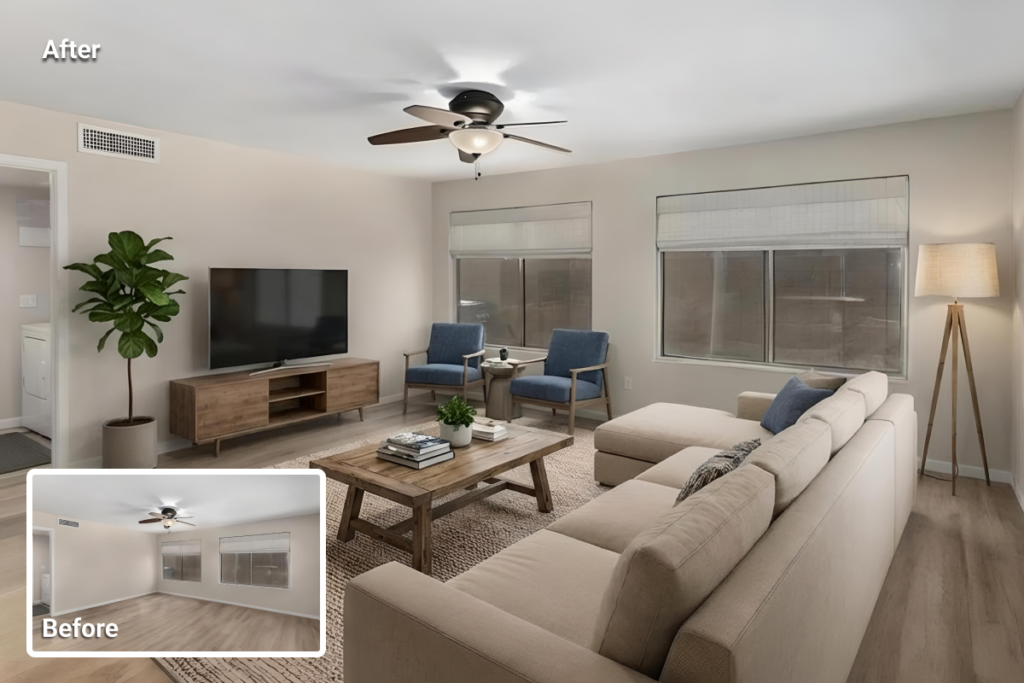
Listing preparation often shapes the first impression buyers form about a property. Data summarized in the NAR home staging statistics shows how staging and presentation influence buyer perception, showing activity and overall buyer response.

Well-prepared listings reduce buyer hesitation and often support smoother negotiations during inspection and appraisal. Agents also report that staged rooms help buyers understand scale, layout, and potential use of space more quickly during showings.

Because most buyers now begin their search online, the quality of listing visuals often determines whether a property receives early interest. In practice, clear photography, accurate lighting, and thoughtfully staged spaces help buyers interpret layout and scale more quickly when comparing multiple listings. As a result, presentation has become part of an agent’s marketing strategy rather than simply a finishing step before a listing goes live.

For many agents, improving listing presentation has become a practical response to changing buyer expectations and competitive market conditions.

Key Real Estate Trends in 2026

Many real estate trends in 2026 appear first in buyer behavior rather than in national headlines. Shifts in affordability and financing influence how buyers set budgets, how sellers price listings, and how long negotiations take.

Recent housing market outlook reports from the National Association of Realtors and major housing platforms consistently identify housing inventory levels, mortgage rates, and buyer demographics as the primary forces shaping real estate market conditions heading into 2026.

In many markets, small changes in rates or inventory can shift activity within weeks, so agents benefit from watching local indicators closely. Several patterns currently define how transactions unfold:

Buyer behavior trends

  • Older first-time buyers with longer saving periods
  • Higher reliance on dual incomes for mortgage qualification

Market dynamics

  • Offer activity tied closely to interest-rate movements
  • Limited entry-level inventory in many metro areas

Industry expectations

  • Continued reliance on agent guidance despite portal search tools
  • Higher expectations for listing conditions before showings begin

Technology and listing preparation

  • Increasing use of digital tools to prepare listing photos and marketing materials
  • Growing reliance on virtual staging and photo editing to improve listing presentation
  • Faster listing turnaround enabled by automated media preparation workflows

In practice, these patterns influence how clients think about price, condition, and risk. Many of these real estate questions also surface in listing meetings and buyer consultations, often framed around terms like “fair value,” “hot market,” and “buyer leverage.” Local comps and recent absorption data usually bring those conversations back to measurable facts faster than national headlines.

Understanding Real Estate Trends in 2026

In 2026, strong agent performance depends on clear judgment, repeatable processes, and reliable local evidence. Pricing discipline sets the tone, financing fluency keeps deals moving, and listing conditions shape buyer confidence before the first showing even begins.

Clients may arrive with strong opinions and familiar real estate terms, but outcomes usually follow the fundamentals: accurate comps, realistic timelines, and direct communication. 

These fundamentals hold up across real estate trends in 2026, even as market narratives change week to week. When decisions stay grounded in real data, transactions are easier to guide and less likely to fall apart late in the process.

In 2026, local absorption rates, months of inventory, median days on market, and price reductions provide faster signals than national headlines.

In many markets, several months pass before the first closing. Pipeline building, client acquisition, and contract familiarity all affect the timeline more than licensing completion.

Most buyers still complete purchases with professional representation because financing terms, inspections, and negotiations require guidance beyond property search.

Initial overpricing followed by multiple reductions often leads to longer market exposure and a weaker negotiating position. Accurate comparative market analysis at launch tends to produce better outcomes.

First-time buyers with financing and repeat sellers using accumulated equity tend to drive a large share of transactions, even when overall volume shifts.

A strong listing presentation helps buyers understand a property before visiting. Clear photography and staged rooms improve how buyers interpret layout, scale, and potential use of space. In competitive markets, well-presented listings attract more showing activity and faster buyer interest.

Try the Magic!

Sign up today and unlock your 3 free tires (with unlimited regenerations) of any service you want!

Read More