Real Estate Yard Signs That Sell: Design, Riders & Placement
Real estate yard signs can drive measurable leads with readable design, smart rider swaps, correct placement, and tracked QR or call-to-action workflows.
In short
- Design for speed: one dominant line, one clear call to action, and readable letter height.
- Plan the rider swaps: keep one post relevant from coming soon through sold, with strict open house cleanup.
- Track every sign: use a unique QR or URL and log results so cost per lead is visible.
A yard sign works like a three-second billboard. Drivers glance, decide, and keep moving. Most sign orders fail before the print shop ever starts, because the panel tries to say too much and sits in the wrong spot.
This playbook treats real estate yard signs as a measurable channel inside a wider real estate marketing strategy. The goal is simple: one message that reads from a moving car, riders that stay current through the listing lifecycle, and one trackable call to action that proves the sign produced calls.
The sections below focus on design rules, rider sequencing, placement mechanics, compliance checks, materials, and a tracking setup that agents can run on the next listing.
Why Real Estate Yard Signs Still Convert in 2026
A sign reaches two audiences that digital ads often miss. Drive-by buyers see it because they already travel the route. Neighbors see it because they live there. Those neighbors rarely buy the house, but they often become future sellers on the street.
The constraint is speed. A driver does not read, they recognize. That pushes every good sign toward the same structure: one dominant element, one secondary element, and everything else removed.
A yard sign also creates a physical placement problem. Lawn symmetry does not matter. Traffic direction matters. Sightlines matter. A sign that faces the wrong approach can sit “installed” and still be invisible.
The final reason signs still convert is measurability. A unique scan, URL, or tracking number turns the panel into a lead source that can be compared to other channels. Without tracking, the sign stays a cost line.
The 3-Second Read Rules for Panels and Riders
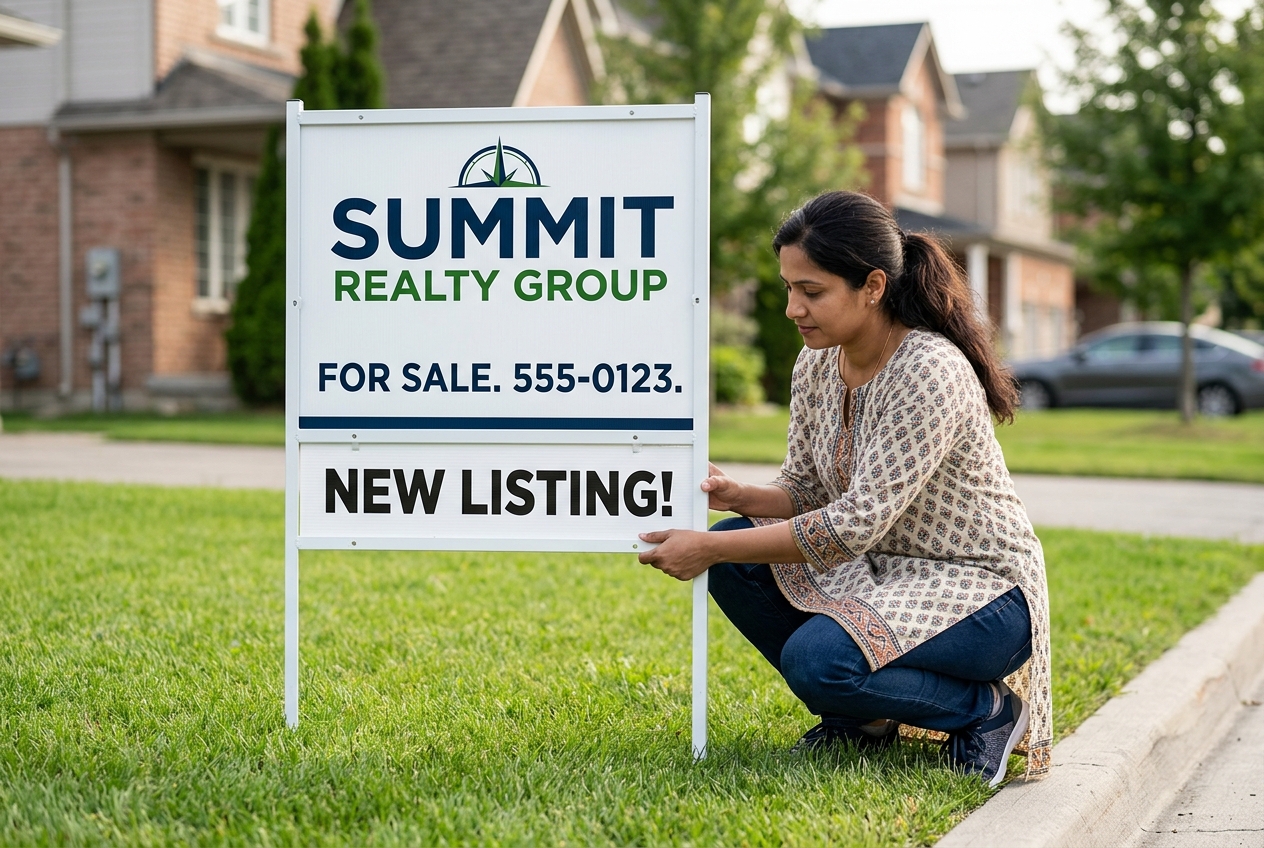
Drivers can only process a few elements at speed. The practical ceiling for the main panel is one brand identifier and one call to action. Riders can carry the phase message, but riders have their own ceiling: short words, high contrast, and no extra punctuation.
Legibility starts with letter height. A reliable rule of thumb uses roughly one inch of capital-letter height for every ten feet of readable distance. If the dominant line needs to read from about sixty feet, the dominant letters need to land around six inches tall. That single line often belongs to the brokerage name or team brand, because state advertising rules frequently require clear brokerage identification.
A speed check helps catch panels that look fine on screen but fail outdoors. At typical neighborhood road speeds, the usable view window is only a couple seconds. That is the reason phone numbers usually underperform as the “largest” element. A long number takes too long to read, and most drivers will not copy it safely.
Use one dominant element, then one clean call to action. A short, spoken-friendly URL or “text code” fits that job better than a full website path. If a QR code appears, the panel still needs a fallback path for people who do not scan.
Swipeable Layout Specs by Listing Tier
Luxury panels win with restraint. Mainstream resale panels win with discipline. Land and hard-to-find listings win with directions. The printing method matters less than hierarchy.
Luxury minimal layout: keep the panel calm and high contrast. Put brokerage identification in the dominant position, then place a discreet call to action below. Skip price. Skip feature lists. The rider does the lifecycle message, not the main panel.
Mainstream info-rich layout: keep one dominant line, then use a smaller secondary line for the call to action. Reserve the bottom band for legally required brokerage identification if the brand mark does not already satisfy it. Treat every extra line as a trade: more copy reduces letter height.
Land and lot directional layout: prioritize “how to find it” over “what it is.” The main panel carries the brand and the CTA. A rider carries “land” or “acreage” only when the property needs that filter to stop the right traffic.
This design discipline matches what works in other print touches, including just listed and just sold postcards. One message gets read. Five messages get skimmed past.
Rider Sequence Across the Listing Lifecycle
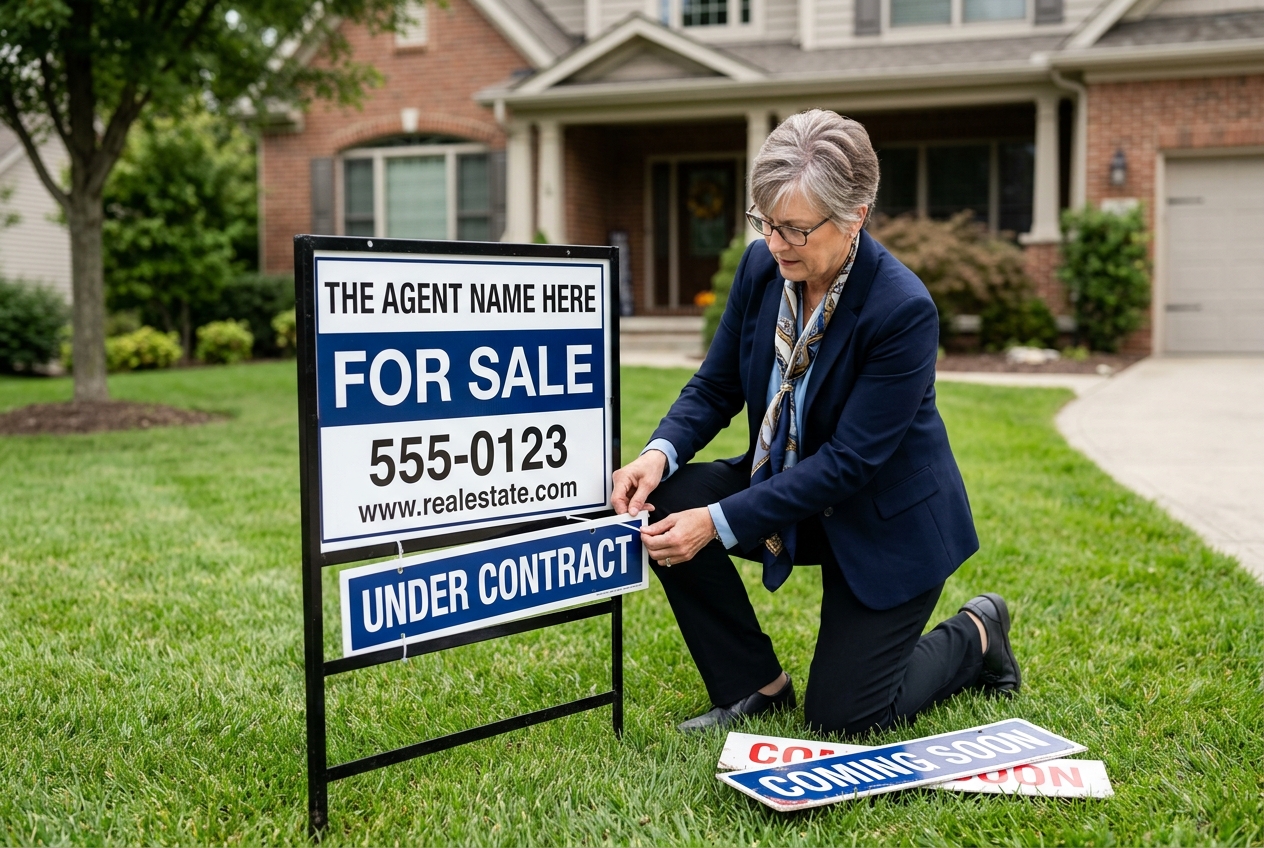
Riders keep one post working for months. They also keep the sign honest. A stale rider signals a stale listing, even when the property is active.
Coming soon: this rider speaks to future sellers as much as buyers. It signals momentum and builds neighborhood awareness. A coming soon rider can also fit inside a plan to sell a house faster by building early demand, but local rules vary on timing and advertising.
Just listed or new price: these riders work best when the message stays short. “Just listed” fits the driver brain. “New price” fits when the price actually changed, not when an agent wants more attention.
Open house: date-specific riders demand strict swaps. An “open house sat 1-3” rider left up on Monday costs credibility. Many teams treat open house riders as day-of hardware, not a weeklong banner. Pair the rider with open house ideas that bring in buyers so the sign supports an experience that converts.
Pending or under contract: this rider has one job. It tells the street that the listing moved. That message farms future listings.
Sold: the sold rider is not a victory lap. It is a farming impression. Keep it up only as long as local sign codes, HOA rules, and brokerage policy allow.
Real Estate Sign Placement That Wins the Drive-By
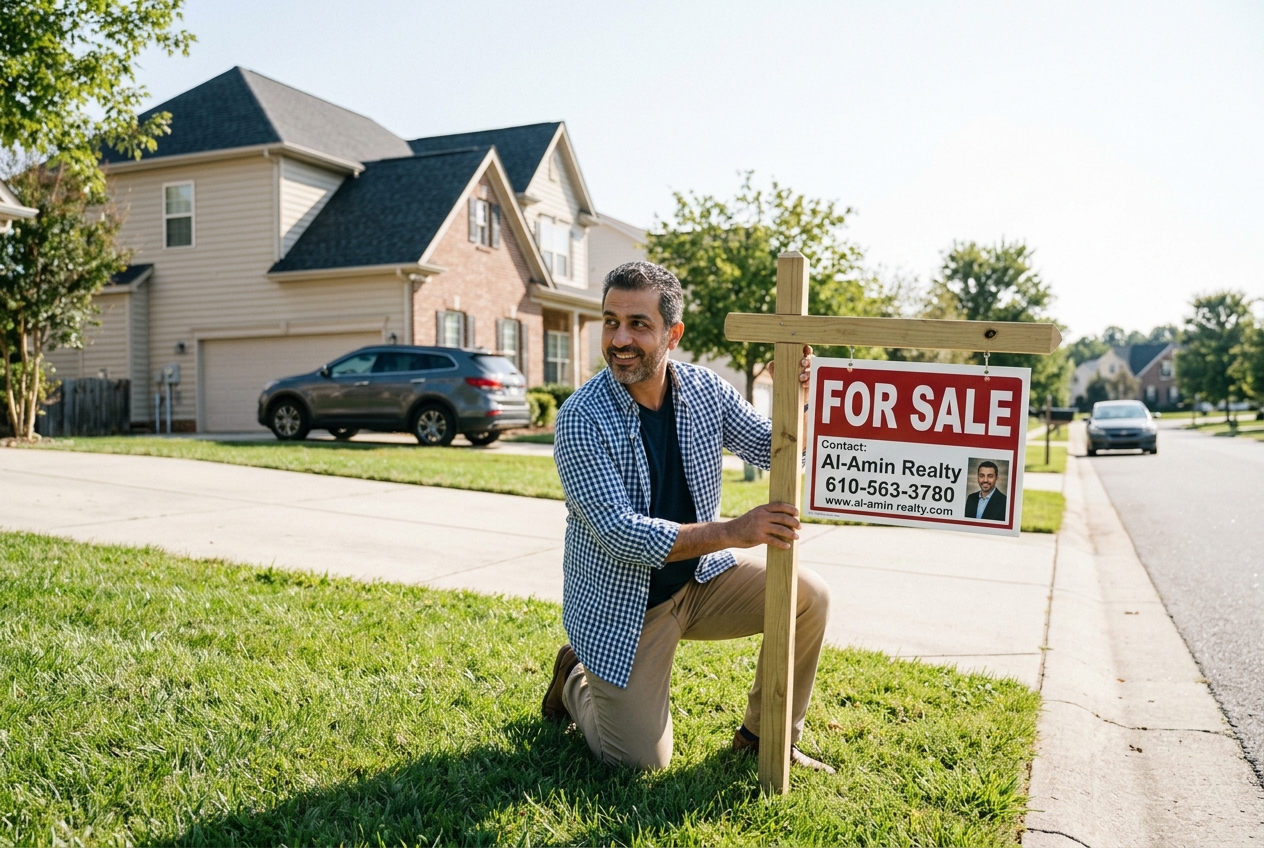
Most placement mistakes come from standing in the yard and looking outward. Drivers see the sign from the road inward, while moving and often while turning.
Start with traffic direction. The panel should face the dominant approach. On two-way streets, double-sided panels or double placement often matters more than color or font choice. For the primary face, a slight angle toward oncoming traffic often adds readable time. Many installers aim for a subtle angle, roughly ten to fifteen degrees, instead of keeping the panel perfectly parallel to the road.
Next, choose visibility over lawn symmetry. Place the post where parked cars, shrubs, and mailbox clusters do not block the lower third. The best check takes under a minute: walk a long sightline in both directions, stop where a driver first sees the sign, and read the dominant line without squinting.
Corner lots need a plan. The “pretty” placement can hide the sign from the most valuable approach. A two-sign strategy can solve it: one post for the main approach and one smaller directional sign for the secondary approach, kept within local limits.
Three common exceptions break the standard yard plan. Gated communities can ban signs or restrict placement. Urban zero-lot-line homes may have no safe setback outside the sidewalk zone. High-speed roads can make any on-lawn sign unreadable, pushing agents to directional signs at the nearest safe decision point.
Placement also sits inside the curb frame buyers photograph. Good curb appeal upgrades make the whole first impression easier to sell.

Stage your first listing in under 5 seconds
15 space types, 10 styles, MLS-compliant by default. All 11 tools on one account. Free trial credits, no credit card.
Start staging freeOrdinances, HOA Rules, and Brokerage Identification
Compliance removes more signs than weather ever will. Most removals have nothing to do with print quality. They come from right-of-way placement, size limits, time limits, or missing brokerage identification.
Municipal sign rules vary by city and county. HOAs add another layer through recorded CC&Rs and architectural rules. Some areas also regulate how long a sold rider can stay up. None of those rules translate cleanly across state lines, so the best approach is a fast pre-check on every listing.
Brokerage identification usually carries state-law weight. Many state real estate commissions treat yard signage as advertising and expect clear brokerage name display. Brand standards can shape layout, but legal identification should not become an afterthought.
Fair housing risk lives in copy. Panel and rider messages should describe the property and the offering, not the buyer. Keep language neutral and factual.
Materials and Post Setup for Wind, Sun, and Theft
Agents can treat materials as a job-match decision. Aluminum panels suit longer outdoor runs and repeat use. Corrugated plastic suits short-run directional and open house signage where loss and damage are common.
Night visibility matters in more places than expected. Reflective aluminum earns its keep on unlit roads, winter evenings, and listings that get heavy after-work drive-by traffic. Non-reflective aluminum still reads clean in daylight and under street lighting, and it often photographs better for social posts.
Ink and finish control fade. UV-resistant inks and a protective laminate help panels stay readable through sun and rain. A faded sign does not just look old, it suggests a stale listing.
Wind breaks weak installs. A stable post starts with enough depth, a tight stake or ground anchor, and tamped soil. Riders should use consistent mounting hardware so swaps do not warp corners over time.
The table below lists practical differences agents can evaluate when ordering.
| Supplier | Speed or turnaround notes | Notable sign support | Materials called out |
|---|---|---|---|
| Signs.com | produced today, ships tomorrow | free professional design services and post system options | multiple formats including posts and riders |
| Oakley Signs | ships within a few days after approval | brand-compliant templates for major brokerages | reflective and non-reflective aluminum plus corrugated plastic |
| BuildASign | fast production, varies by order | templates, logo upload, accessories like grommets and pre-drilled holes | aluminum and corrugated plastic with UV-resistant inks |
| Vistaprint | varies by order and shipping method | rider-specific guidance and mounting methods | corrugated plastic, aluminum, reflective aluminum |
Comparison of ordering considerations and material options across common suppliers.
A brochure box can add detail without shrinking type. Keep the box tidy and align it with the sign’s hierarchy, then offer a single-page handout like listing flyers.
Ordering and Tracking: From Print to Measured Leads

A sign becomes measurable the moment it carries one unique identifier. That can be a tracking phone number, a vanity URL, or a QR code that points to a unique page link.
QR codes need space and quiet zones to scan reliably. The scan usually happens from a stopped car or from the sidewalk, not from a moving lane. Place the code where a person can step closer without entering traffic, and pair it with a spoken-friendly fallback like a short URL.
The scan destination matters more than the code. A QR that lands on a slow page or a thin photo gallery wastes the attention the sign earned. The listing page should load fast, show a complete gallery, and include clear Disclosure when photos are edited. For virtually staged visuals, a practical label is: “This image has been virtually staged.” For edits like sky replacement or brightness correction, a practical label is: “This image has been digitally enhanced.” Agents should also follow local MLS Rules on the Virtually Staged Watermark and any required remarks.
For the gallery itself, some teams use tools like AI virtual staging to stage vacant rooms, run photo editing, and preview renovation options in one platform. AI HomeDesign groups eleven tools across three hubs, virtual staging, photo editing, and renovation. It delivers access through a web app, a B2B Solution, a REST API, and an MCP server. One account uses one shared credit pool, supports free regenerations, starts from $0.24 a photo, and stays MLS-compliant by default.
Track the sign like any other channel. Use UTM parameters on the QR destination link, log scans and calls weekly, and compute cost per lead over a fixed window such as forty-five days. That makes the sign comparable to other lead generation tactics.
Frequently Asked Questions
What is the standard real estate yard sign size?
Many agents default to a smaller yard panel for stake signs and a larger panel on a post system, with a separate rider sized to carry short status messages. Local sign codes often cap total sign area and height for residential listings, so size should follow code limits and viewing distance. Bigger panels only help if placement and letter height match the road.
How big should the text be on a yard sign?
A practical rule of thumb uses about one inch of capital-letter height for every ten feet of readable distance. The dominant line needs the biggest letters, and every extra line forces smaller type. Faster roads call for fewer words, not smaller text. If a phone number cannot be read in one glance, a QR plus short URL often works better.
What information should go on a real estate yard sign?
A clean sign carries one dominant identifier, one clear call to action, and any brokerage identification required by state advertising rules. Most panels perform worse when they add price, long URLs, multiple phone numbers, and feature lists. Those details fit better on the listing page, a flyer box, or an in-person conversation where questions can be answered safely.
Which sign riders do agents actually need?
A core rider set covers the lifecycle: coming soon, just listed or new price, open house, pending or under contract, and sold. Property-specific riders can help when they filter the right traffic, but they still need short copy and high contrast. Riders work best when they match the main panel’s typeface, colors, and mounting hardware.
Do I need a permit to put up a real estate sign?
Rules vary by jurisdiction. Many areas allow temporary residential real estate signs without a permit, but still regulate size, height, lighting, count, right-of-way placement, and how long a sold rider can remain. HOA covenants can be stricter than city code. The safest workflow is a quick check of city or county sign rules and the property’s CC&Rs before installation.